

The tiny homes market is projected to grow from $13.17 billion in 2025 to $14 billion in 2026, at a compound annual growth rate of 6.4%. Rising modular construction adoption, demand for compact housing, and expanding prefab tiny home kit options are all driving that number upward in 2026.
From experience, a well-designed small home floor plan can feel twice its actual size with the right interior design strategy behind it. The difference between a cramped 300 sq ft space and a comfortable one comes down entirely to layout decisions made at the very start of the design process.
This blog covers 17 small house floor plan examples with real dimensions, key features, and design psychology principles. Each entry includes a Foyr design tip you can apply directly to your next compact home project.

What Is Considered a Tiny Home and What Are Its Benefits?
A tiny home is a dwelling between 100 and 500 square feet, designed for efficiency, minimalism, and often mobility. It functions as a full residence on a fixed foundation or on wheels, with no auxiliary or temporary classification. The design constraints produce more carefully considered layouts than most standard residential builds deliver at any price point.
Let’s have a look at some of the key benefits of tiny house plans:
- Lower living costs: Building costs for a well-specified tiny home run between $30,000 and $100,000, far below the average US home price. Lower utility bills and reduced maintenance make the financial case strong for first home buyers working within a tight budget, thanks to the smaller footprint.
- Reduced environmental footprint: Tiny homes consume less energy to heat and cool and require fewer materials to build across every stage of construction. Many incorporate solar panels and rainwater collection, which compound energy savings over the building’s full life.
- Functional spaces over wasted square footage: Thoughtful design at the brief stage keeps construction costs controlled because there is no excess structure to build or heat. Small floor plans that resolve storage, circulation, and living functions together are among the biggest advantages of designing at this scale.
- Mobility and flexibility: Tiny homes on wheels offer relocation options that a fixed-foundation home cannot match at any budget level. For empty nesters and first-time homebuyers, that flexibility is a perfect choice that conventional house plans do not offer.
Small House and Tiny Home Plan Sizes at a Glance
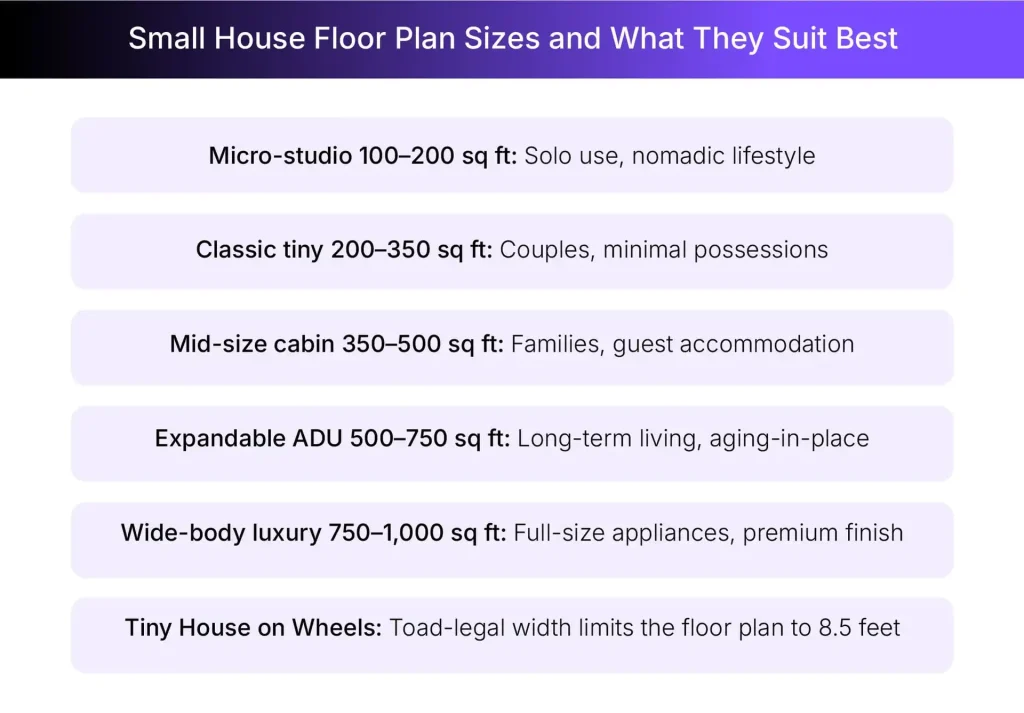
Knowing which size category a project falls into before selecting a layout prevents the most common and costly redesign mistakes.
| Plan Category | Square Footage | Best For |
| The Micro-Studio | 100 – 200 sq ft | Solo travelers and nomads |
| The Classic Tiny | 200 – 350 sq ft | Couples or individuals |
| The Mid-Size Cabin | 350 – 500 sq ft | Small families or guests |
| The Expandable ADU | 500 – 750 sq ft | Long-term living and aging-in-place |
| The Wide-Body Luxury | 750 – 1,000 sq ft | High-end residential living |

17 Best Small House and Tiny Home Floor Plan Examples for 2026
Here are the 17 best small house floor plan examples that cover the full range of sizes and site types.
1. The Classic Loft Studio
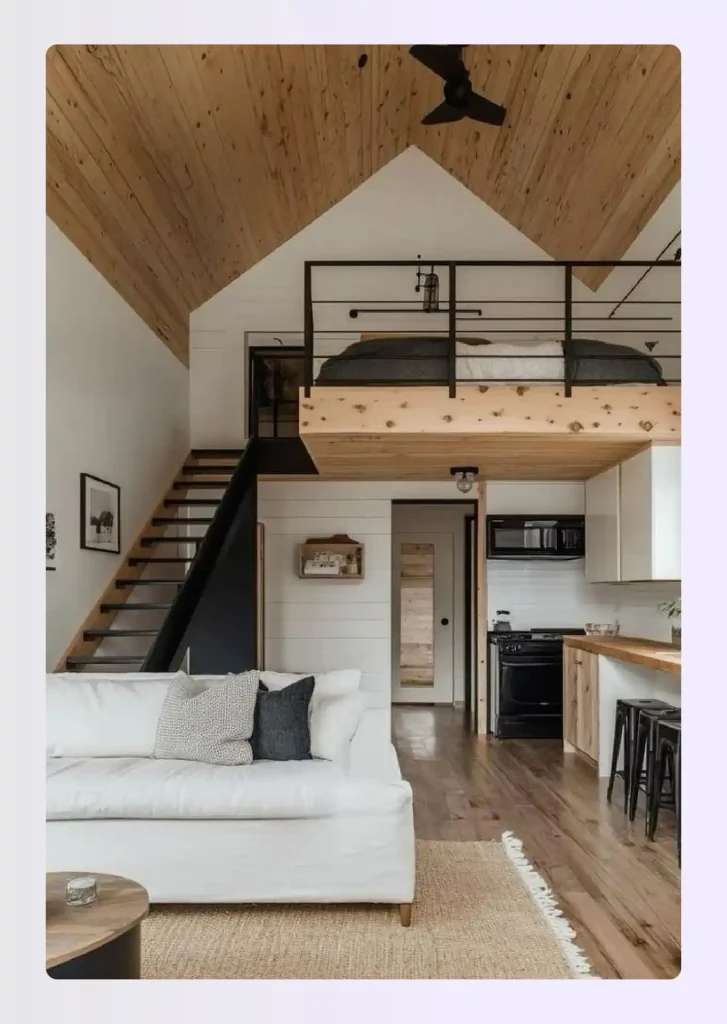
The classic loft studio stacks sleeping overhead and keeps the living area, kitchen, and bathroom on the ground floor where daily movement is most frequent. It is a perfect choice for a first home on limited space and remains the most recognized small house floor plan in its size category.
Ideal Size: 180 – 280 sq ft
Key Features:
- Sleeping loft with minimum 6.5-foot clearance at the sleeping surface
- Open kitchen and living zone on ground floor with clean lines
- Compact bathroom tucked under the loft staircase
- Large windows at the gable end for natural light
Foyr Design Tip: Use Foyr Neo to test ceiling height at the loft edge before committing to the staircase position, since 6.5 feet is the practical minimum for comfortable year-round use.
2. The Linear Single-Wall Plan
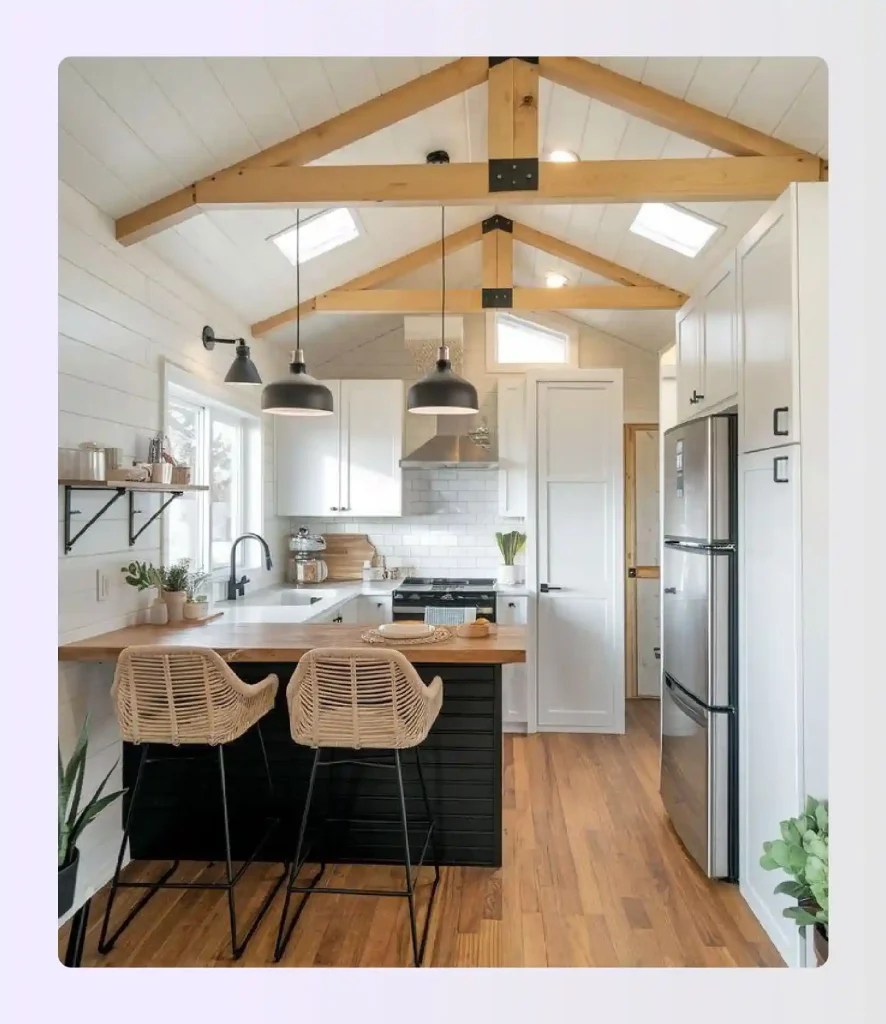
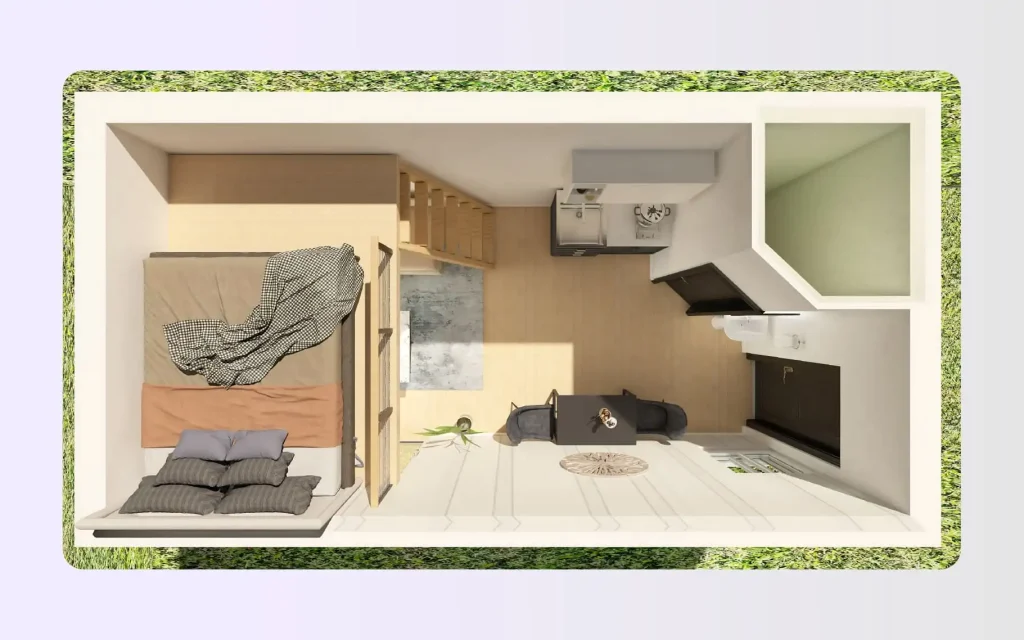
The linear plan runs kitchen and bathroom services along a single wall, leaving the opposite side of the small house floor plan completely open for furniture placement. It works best on projects where every inch of space counts, as in a converted container or a THOW trailer on a tight site.
Ideal Size: 150 – 250 sq ft
Key Features:
- Single-wall kitchen with compact appliances below 48 inches
- Open floor plan for flexible furniture placement
- Bathroom at one end to contain all plumbing in one zone
- No projecting cabinetry interrupting the circulation path
Foyr Design Tip: Use Foyr Neo’s drag-and-drop functionality to test compact appliance configurations along the service wall at real dimensions before locking the layout.
“I found a certain bigness in my little house — a sense of largeness, freedom, and happiness that comes when you see there’s no place else you’d rather be.”
— Dee Williams, Founder, PAD Tiny Houses (Source)
3. The Open-Concept Micro-Pod
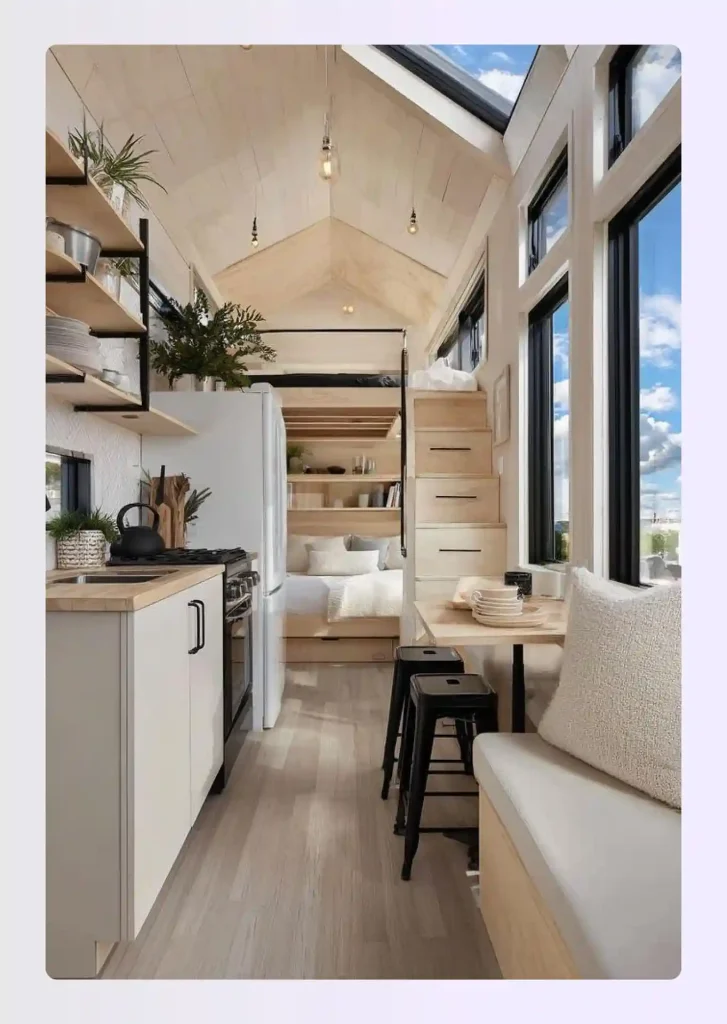
Source: Pinterest, Home Stratosphere
The micro-pod removes internal walls entirely and relies on material changes, ceiling treatments, and smart storage placement to define zones within one open room. It delivers the most functional living space per square foot of any layout in this collection of small house design ideas.
Ideal Size: 100 – 200 sq ft
Key Features:
- No internal partitions beyond the bathroom enclosure
- Zones defined through floor material changes and ceiling variation
- Wall-mounted storage to keep the floor plate clear
Foyr Design Tip: I often use Foyr Neo’s 3D walkthrough feature to experience how the open layout reads at eye level before the client sees it. This matters more at this scale than any other in the collection of small house plans.
| Pro Tip: A fold-down kitchen island on the service wall adds a prep surface without permanently reducing the open floor plate. |
4. The THOW (Tiny House on Wheels)
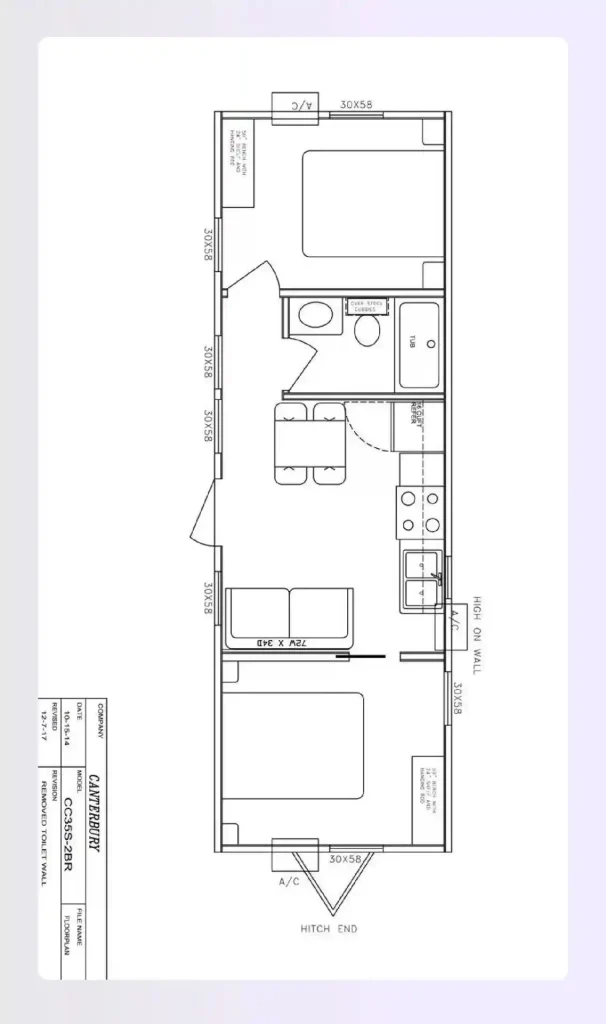
Source: Pinterest, Patsy Schlink
The THOW is constrained by road transport limits of 8.5-foot width and 13.5-foot height across most US states, making it one of the most demanding layouts in the tiny house plans category. Every design decision in this small house floor plan is tested against those hard dimensional boundaries from the first line drawn.
Ideal Size: 150 – 400 sq ft (depending on trailer length)
Key Features:
- Layout width held to 8 to 8.5 feet throughout
- Sleeping loft above the bathroom to maximize ground-floor ceiling height
- Exterior connections for water, power, and waste included in base plan
- Tongue-and-groove cladding for structural rigidity alongside aesthetic value
Foyr Design Tip: I always model the THOW in Foyr Neo at exact trailer dimensions from the start, so every clearance decision is checked against real road-transport constraints.
| Pro Tip:
Position the entry door on the long wall rather than the gable end to preserve the full trailer length for interior living space. |
5. The Urban Studio ADU
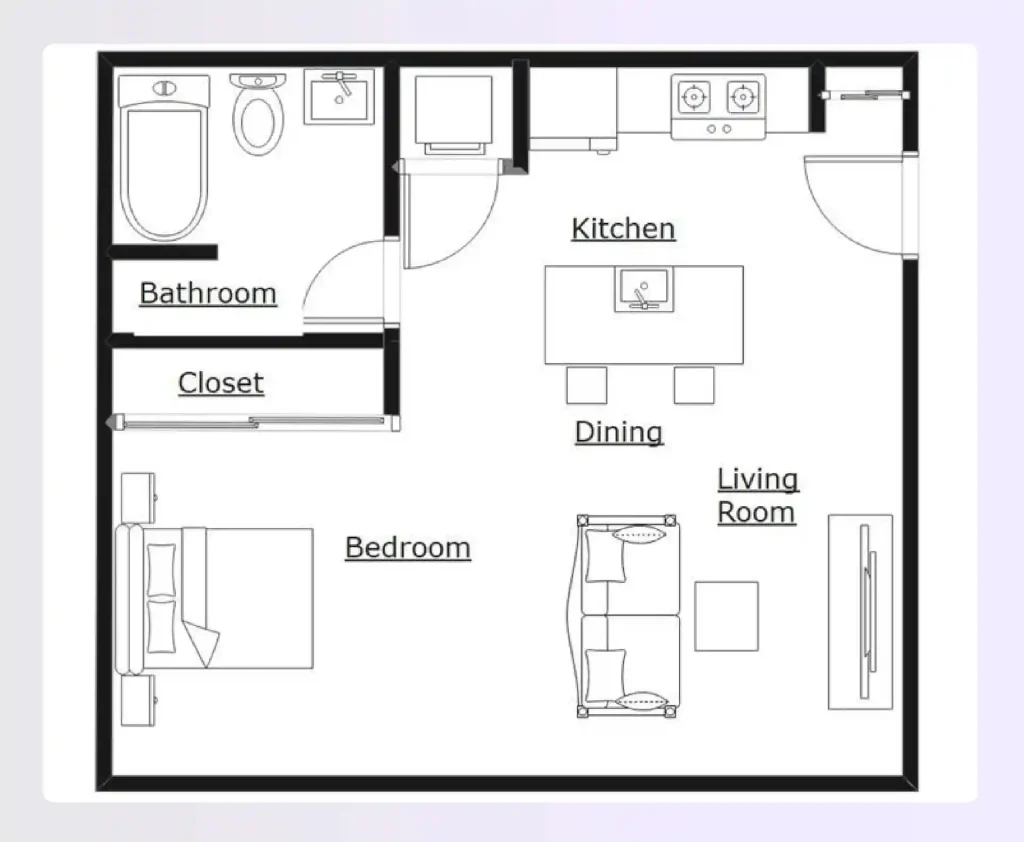
Source: Pinterest, Caitlin W
The urban studio ADU is a self-contained small house floor plan sitting on an existing residential lot as a secondary dwelling. It is one of the most commercially relevant home plans as ADU-friendly zoning is expanding across California, Texas, and Oregon.
Ideal Size: 300 – 600 sq ft
Key Features:
- Self-contained kitchen, bathroom, and sleeping area on one level
- Independent entry away from the main house for private access
- Soundproofing between party walls in the base specification
Foyr Design Tip: Build the ADU in context with the main house in Foyr Neo so clients see how both structures relate on the lot before anything goes to a permit application.
6. The Double Loft Family Plan
Source: Pinterest, Carla Miller
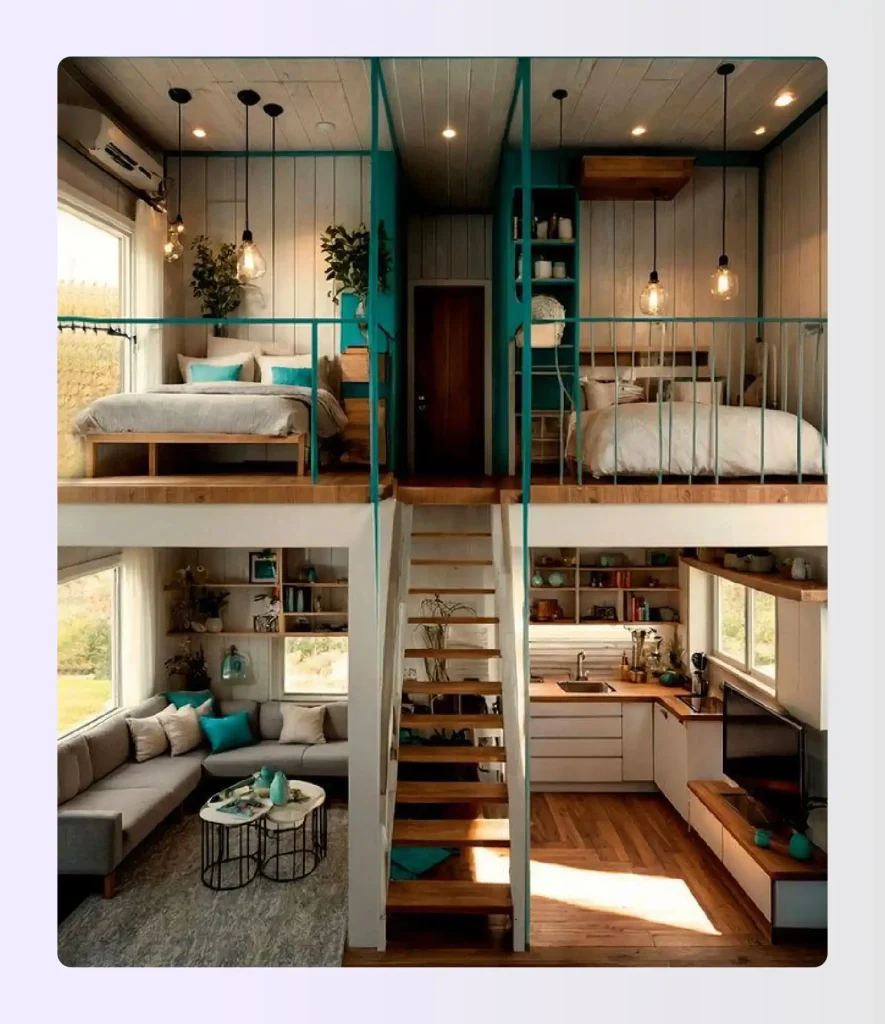
The double loft plan positions a sleeping loft at each end of the small house floor plan with shared living, kitchen, and bathroom in the center. It is the strongest tiny home floor plan for couples with one child or two adults needing genuinely separate sleeping spaces.
Ideal Size: 350 – 500 sq ft
Key Features:
- Shared open living and kitchen zone on the central floor
- Bathroom under one loft to contain plumbing in one zone
- Built-in storage in staircase risers for even greater efficiency
Foyr Design Tip: I prefer to test loft clearance heights in Foyr Neo’s 3D mode before finalizing staircases, because the second loft often creates a lower ceiling in the living area below.
7. The L-Shaped Two-Bedroom Layout
Source: Pinterest, Ninebark
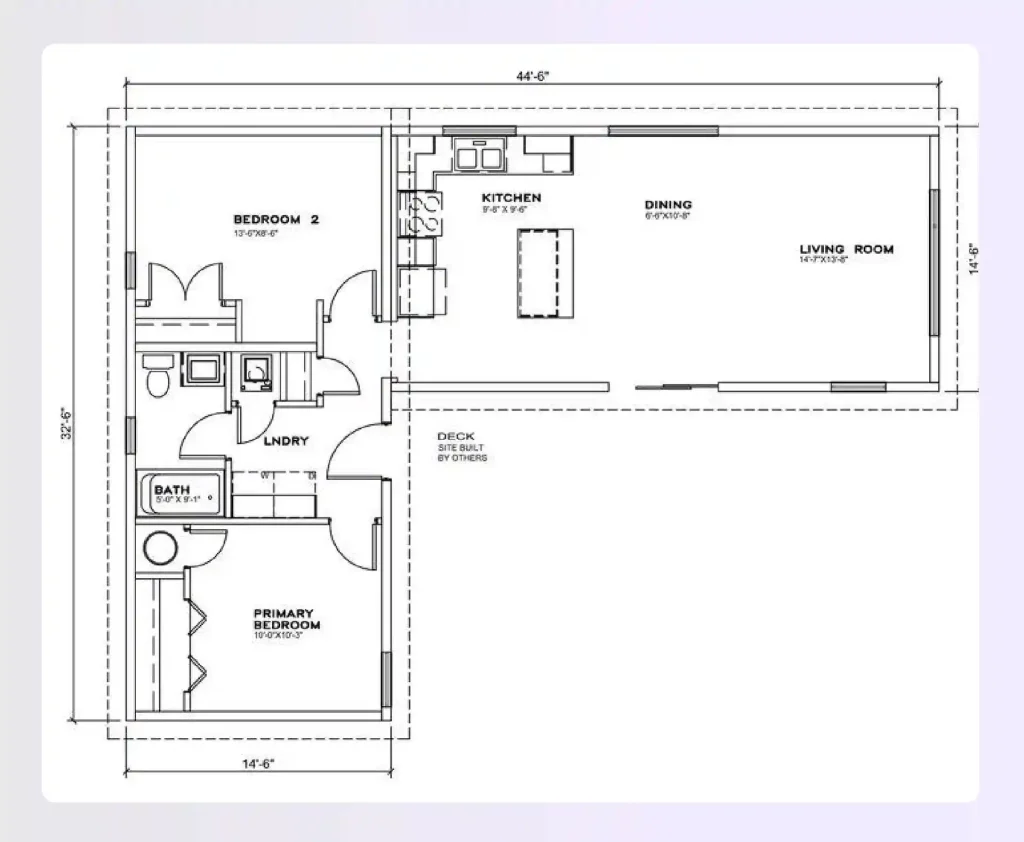
The L-shaped plan uses the corner junction to separate the master bedroom from the additional bedroom, giving each occupant acoustic separation without a corridor eating into the functional living space. You can incorporate additional features, such as a home office nook at the junction point, without extending the building footprint at all.
Ideal Size: 500 – 750 sq ft
Key Features:
- Master bedroom on one wing, second bedroom on the other
- Open layouts in shared living and kitchen at the junction
- Home office nook built into the corridor between the two wings
- Covered outdoor seating at the L-shaped exterior corner
Foyr Design Tip: Use Foyr Neo’s ruler tool to verify the corridor between wings clears 36 inches at the narrowest point to meet accessible housing standards.
For designers working through a compact home brief, this video covers the entire process of creating floor plans using Foyr Neo:
8. The Modern Farmhouse Cottage

Source: Pinterest, Paula Parish Dorsey
The modern farmhouse cottage brings board-and-batten cladding, a covered front porch, and a pitched roof together with an open-plan interior that delivers comfortable living year-round. It is among the strongest compact home options for curb appeal and home design quality within a modest size and budget.
Ideal Size: 400 – 650 sq ft
Key Features:
- Covered front porch extending usable living space across three seasons
- Open kitchen and living room with kitchen island as the focal point
- Master bedroom separated from the living area by a full-height partition
Foyr Design Tip: Test warm timber tones against the board-and-batten cladding using Foyr Neo’s material library before committing to the palette.
9. The Ground-Floor Bungalow
Source: Pinterest, Architectural Designs House Plans
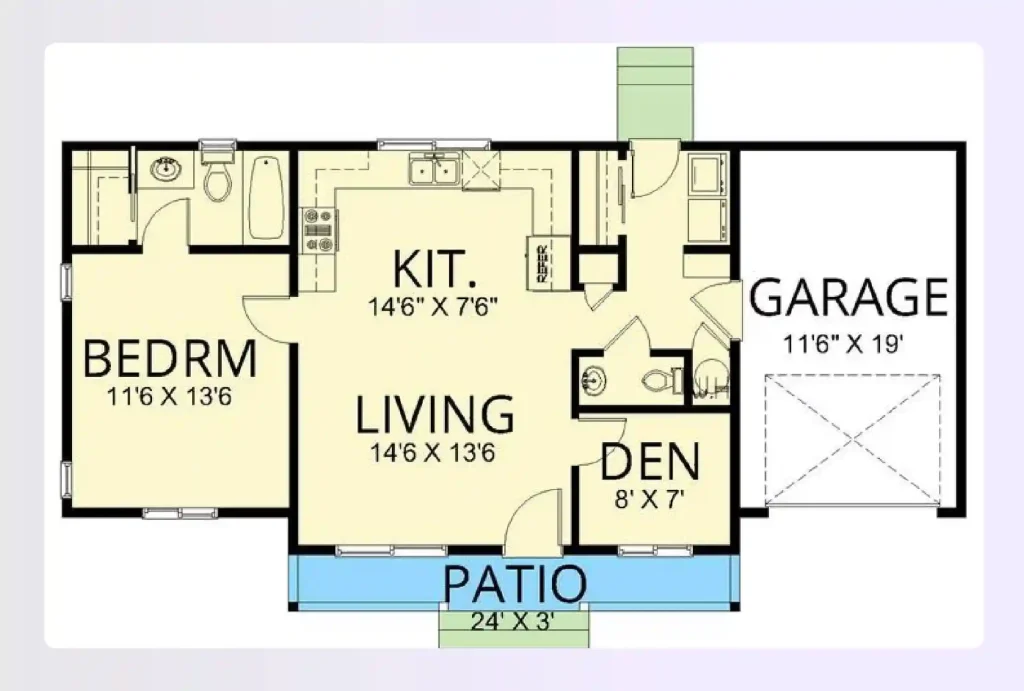
The ground-floor bungalow keeps every functional element on a single level, making it the most accessible small house floor plan in this category and the most practical choice for aging-in-place projects. There are no stairs, no loft, and no level changes at any point in this plan.
Ideal Size: 400 – 700 sq ft
Key Features:
- All rooms on one floor with no stairs or level changes
- Accessible bathroom with curbless shower and lever handles throughout
- Zero-threshold covered entry with accessible approach from the parking
Foyr Design Tip: Map the 60-inch wheelchair turning circle in the bathroom and kitchen early in Foyr Neo, because retrofitting that clearance after fixtures are placed is the most common costly correction on accessible small floor plans.
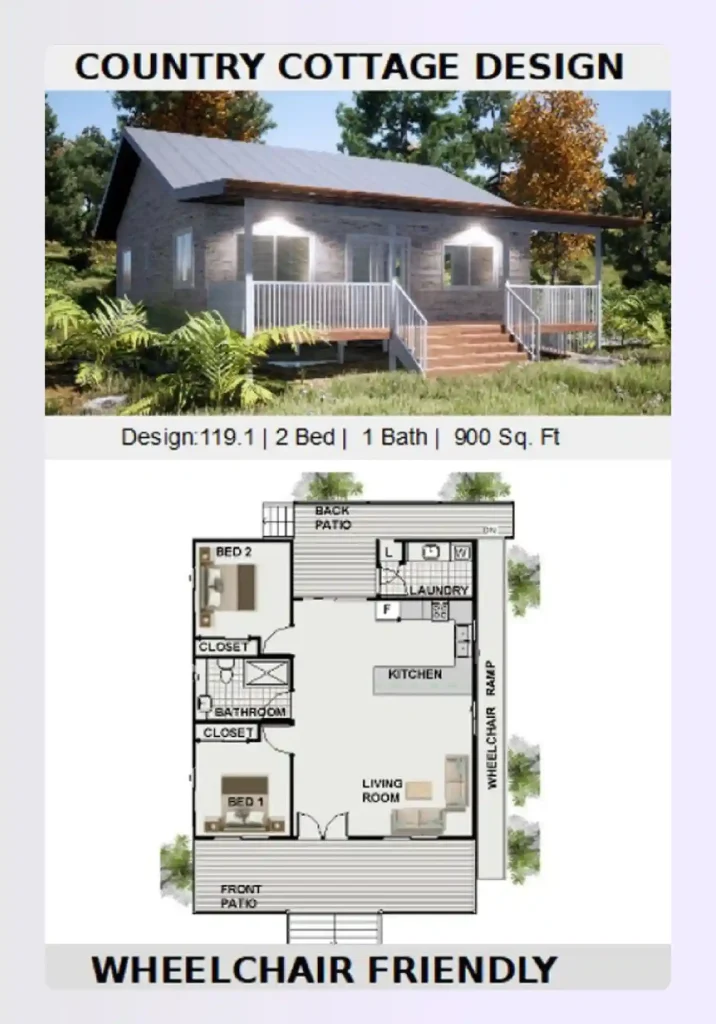
The universal access suite is a small house floor plan built to accessible housing standards from the very first draft, covering wider doorways, turning radii, grab bars, and lever handles. House plan modifications for accessibility are far easier when designed in from the outset rather than retrofitted after the structure is complete.
Ideal Size: 500 – 750 sq ft
Key Features:
- 36-inch clear doorways throughout the plan
- 60-inch turning circle in the bathroom and kitchen
- Grab bars at the toilet and shower are specified in the base plan
- Lever handles on every door and faucet as standard
Foyr Design Tip: I often use Foyr Neo’s 60,000+ 3D model library to populate the universal access suite with ADA-compliant vanities and lever hardware at real fixture dimensions before the layout goes to the contractor.
| Pro Tip:
Specify reinforced blocking behind bathroom walls at the design stage so grab bars can be repositioned later without any structural work. |
11. The Wide-Body Luxury Plan
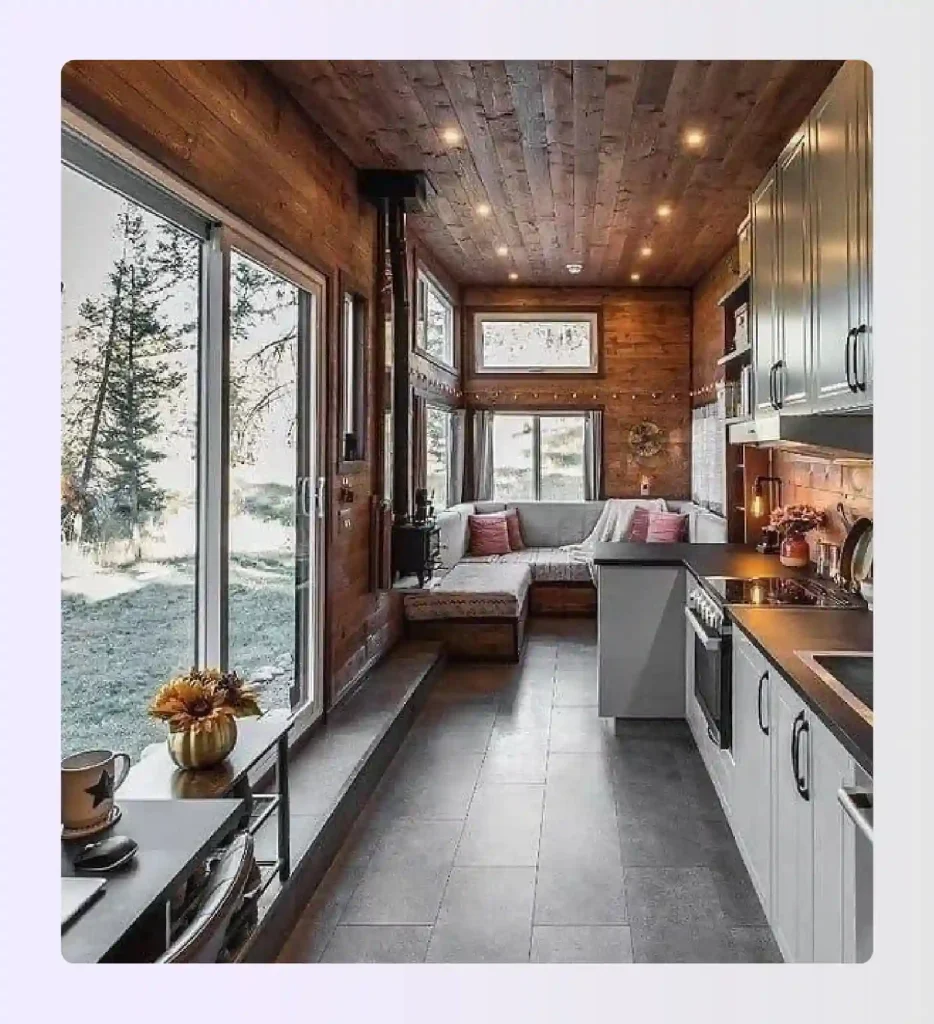
The wide-body plan uses a 10-to-12-foot structural width rather than the 8.5-foot THOW constraint, which opens the floor plate for full-size appliances and a proper master bedroom. Clients wanting to make the most of every inch of space will find this the most resolved layout in this collection of small house plans.
Ideal Size: 750 – 1,000 sq ft
Key Features:
- Master bedroom with a full closet rather than a wall-mounted rail
- Multi-use dining and home office zone replacing the formal dining room
- Airy environments through high ceilings and large windows on the long wall
Foyr Design Tip: I like to run the wide-body plan through Foyr Neo’s 12K render mode before the client presentation. I have seen that the spatial difference between an 8.5-foot and 10-foot structural width is far more convincing in photorealistic output than on a flat drawing.
12. The Single-Level Patio Home
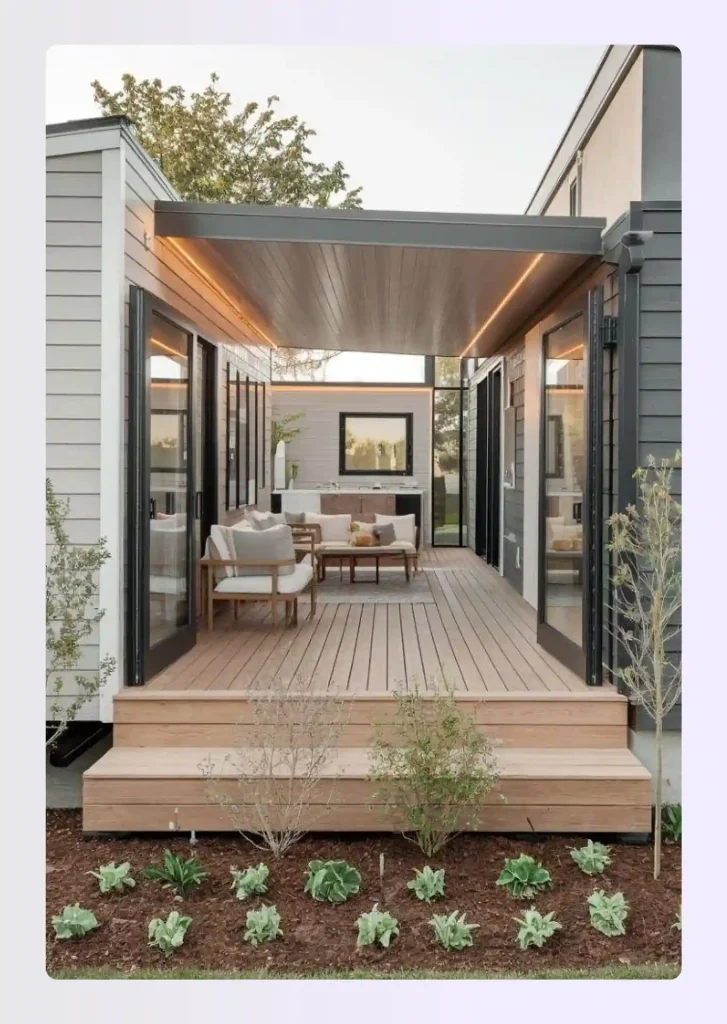
Source: Pinterest, Small Homes Ideas
The single-level patio home connects the interior to a private patio through large sliding glass doors, adding up to 200 sq ft of usable space across three seasons without increasing the building footprint. It is a strong, small house floor plan for compact lots in warmer climates where outdoor living extends the functional area.
Ideal Size: 400 – 650 sq ft interior plus patio
Key Features:
- Large sliding glass doors across the full living room wall
- Open floor plan across the kitchen, living room, and dining zone
- Larger common spaces are achieved through the indoor-outdoor extension
Foyr Design Tip: Model the patio as part of the full floor plan in Foyr Neo rather than adding it later. It is crucial because outdoor furniture placement must align with interior sightlines to ensure a seamless connection.
13. The Work-From-Home Hybrid
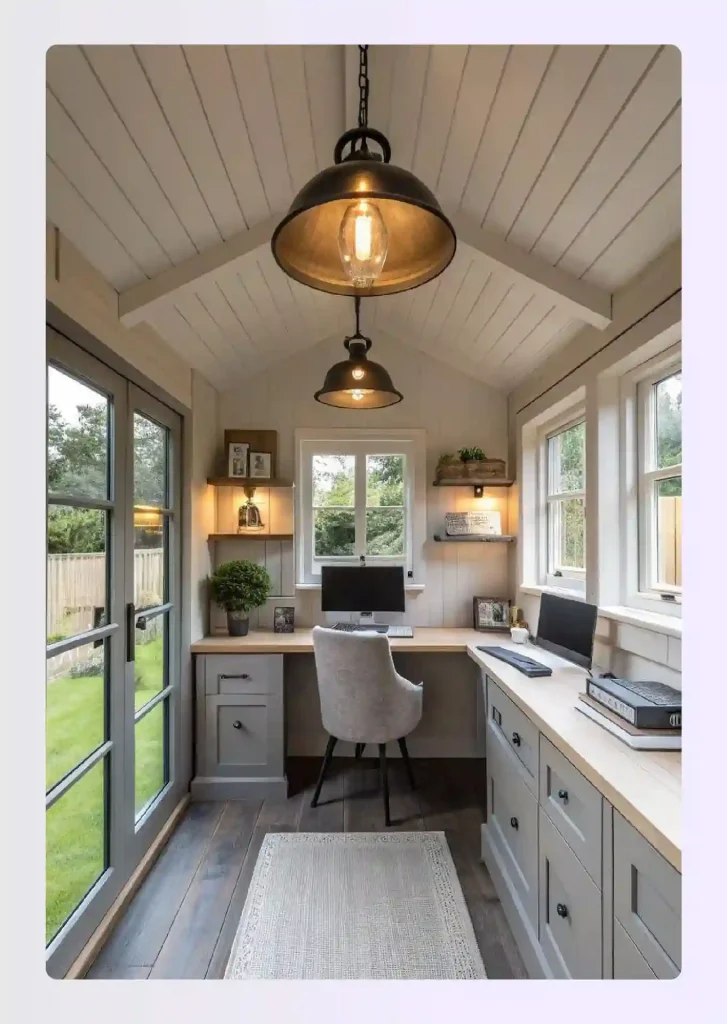
The work-from-home hybrid carves out a dedicated home office zone in the floor plan without adding square footage, using a partition wall or sliding panel to create the separation. Acoustic isolation between the office and living zones matters more to daily occupant comfort than the visual division does in practice.
Ideal Size: 350 – 600 sq ft
Key Features:
- Dedicated home office zone acoustically separated from the living area
- Full-size desk with natural light from a dedicated side window
- Power outlets and fiber points are specified at the desk position in the base plan
Foyr Design Tip: Test natural light at the desk position across different times of day in Foyr Neo’s lighting simulation before committing to the window position and avoiding a costly on-site correction.
“Not So Big living is about reapportioning money and resources out of square footage and into quality and character.”
— Sarah Susanka, Architect (Source)
14. The Off-Grid Utility Cabin
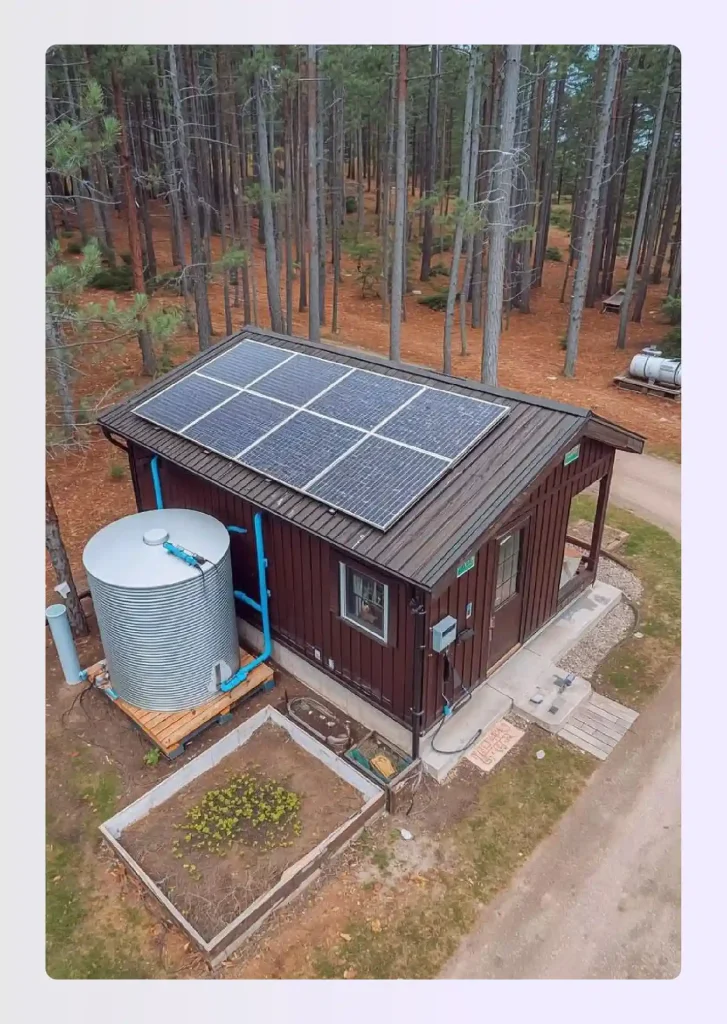
The off-grid utility cabin integrates solar panels, rainwater collection, and composting systems into the small house floor plan at the structural stage rather than retrofitting them as additions later. This is the right starting point for clients pursuing sustainable living on rural land without a grid connection available on site.
Ideal Size: 200 – 450 sq ft
Key Features:
- Solar panel mount integrated into the roof pitch at the design stage
- Rainwater collection connected to filtration under the bathroom floor
- Composting toilet and grey water management in the utility zone
- Super-insulated walls and triple glazing for energy efficiency
Foyr Design Tip: Model the utility zone in Foyr Neo at the schematic stage so clients understand how much floor area the off-grid systems occupy before the plan goes to the structural engineer.

15. The A-Frame Micro-Retreat
Source: Pinterest, A-Frame
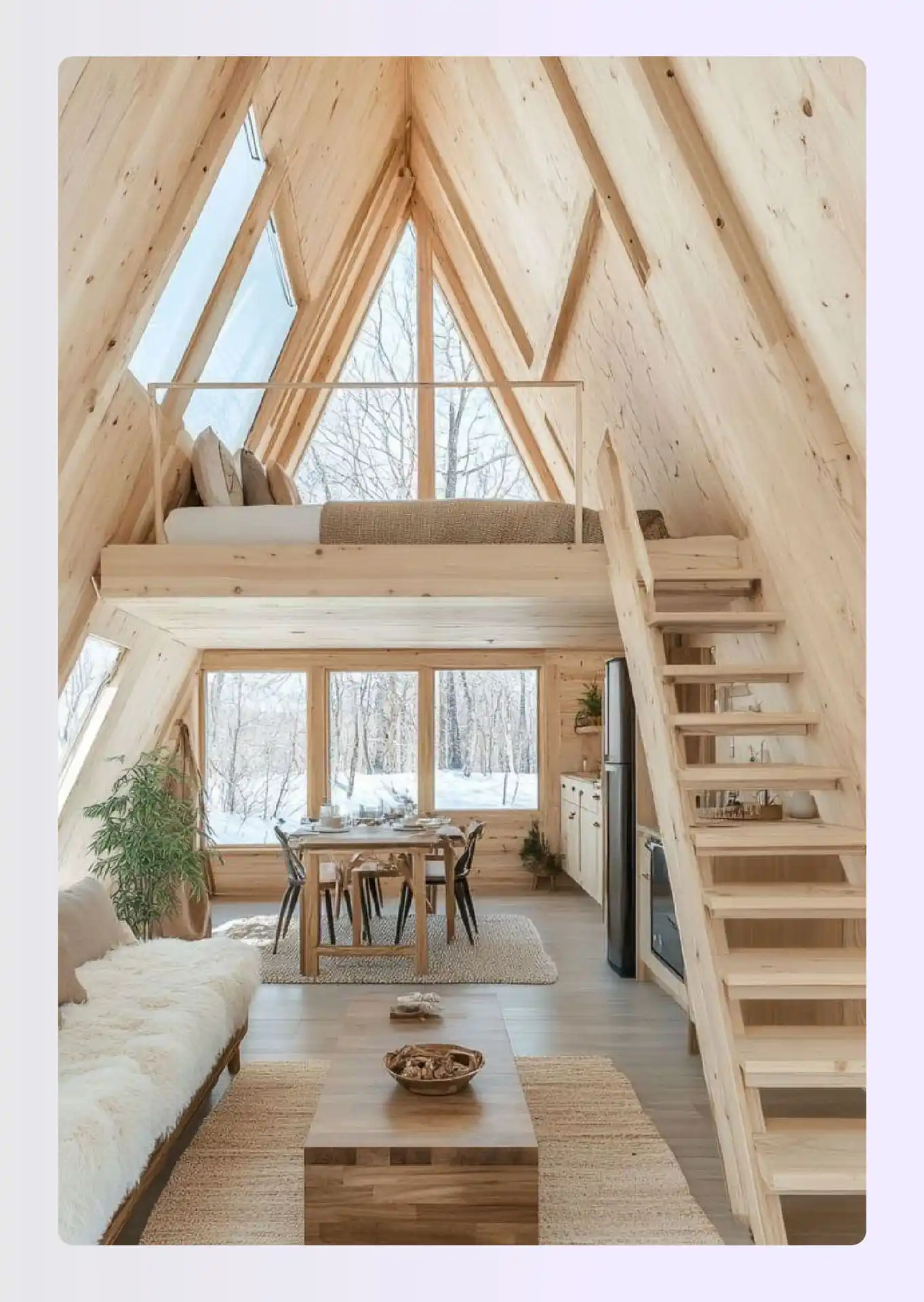
The A-frame micro-retreat uses the steeply pitched roof as both exterior enclosure and interior ceiling, eliminating a separate ceiling finish. This gives the compact home an architectural character that reads well above its modest size, making it one of the most innovative layouts in the small house design plans category for retreat use.
Ideal Size: 200 – 400 sq ft
Key Features:
- Sleeping loft at the apex accessed by a ship’s ladder
- Expansive windows at both gable ends for natural light and views
- Compact kitchen and bathroom on the ground floor at the rear
Foyr Design Tip: Check usable headroom at the loft edge and along the side walls in Foyr Neo’s 3D model before finalizing the plan, because the A-frame pitch reduces standing height faster than clients anticipate from a flat drawing.
| Pro Tip:
A fixed glazed panel at the upper gable end fills the loft with morning light, making the sleeping space feel far larger than the square footage suggests. |
16. The Greenhouse Integrated Plan
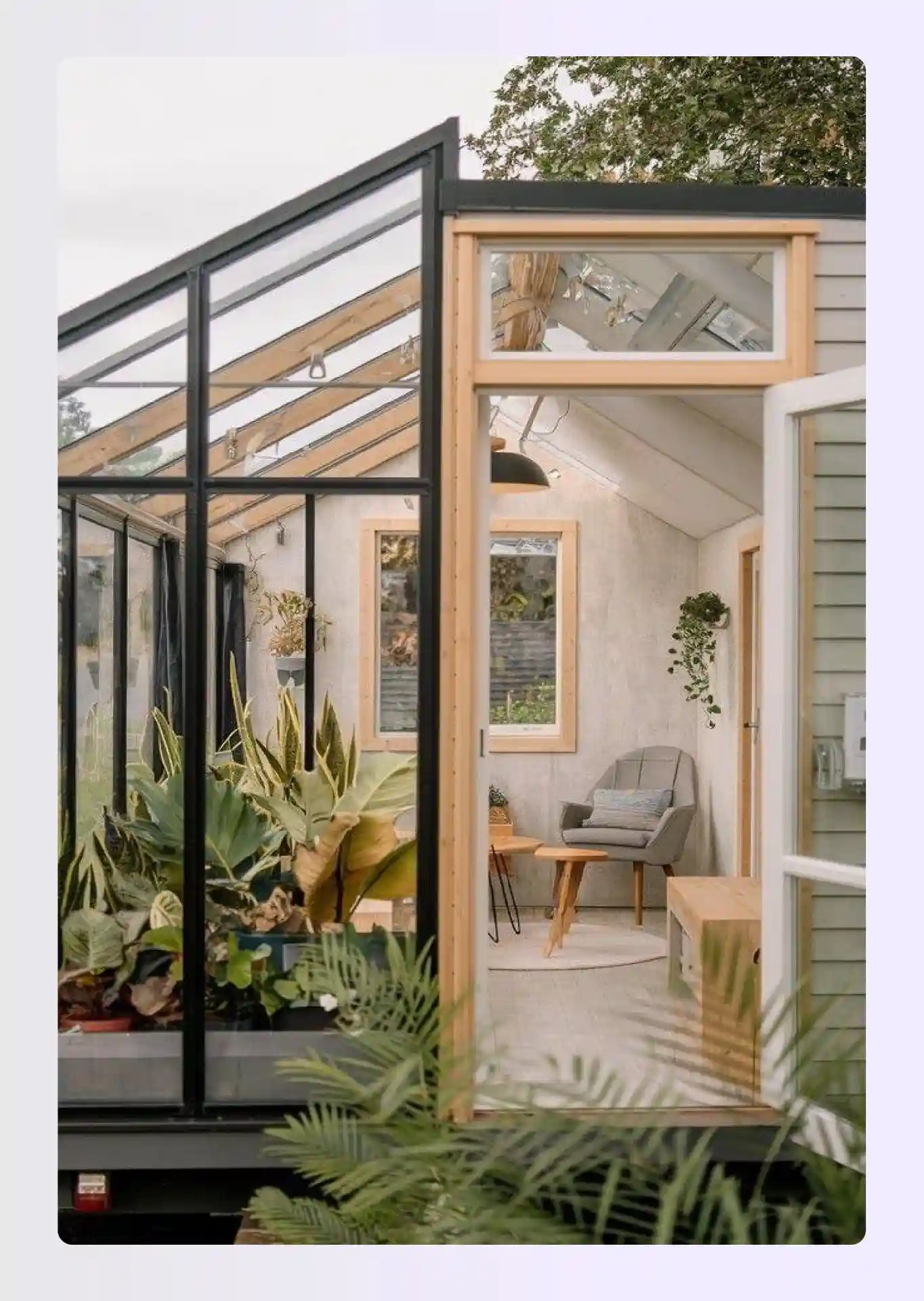
The greenhouse-integrated plan incorporates an indoor growing zone into the small house floor plan that functions as both a passive solar collector in winter and a living wall that improves air quality year-round. It requires structural glazing on the south-facing elevation and a drainage detail built into the growing zone floor specification.
Ideal Size: 400 – 650 sq ft
Key Features:
- South-facing glazed growing zone connected to the main living area
- Passive solar gain reduces winter heating costs measurably
- Waterproof membrane and drainage channel in the growing zone floor
Foyr Design Tip: Test glazing options for the greenhouse elevation in Foyr Neo’s material library to check light quality inside the main living area before finalizing the structural glazing specification.
17. The Rooftop Terrace Layout
Source: Pinterest, Go Downsize
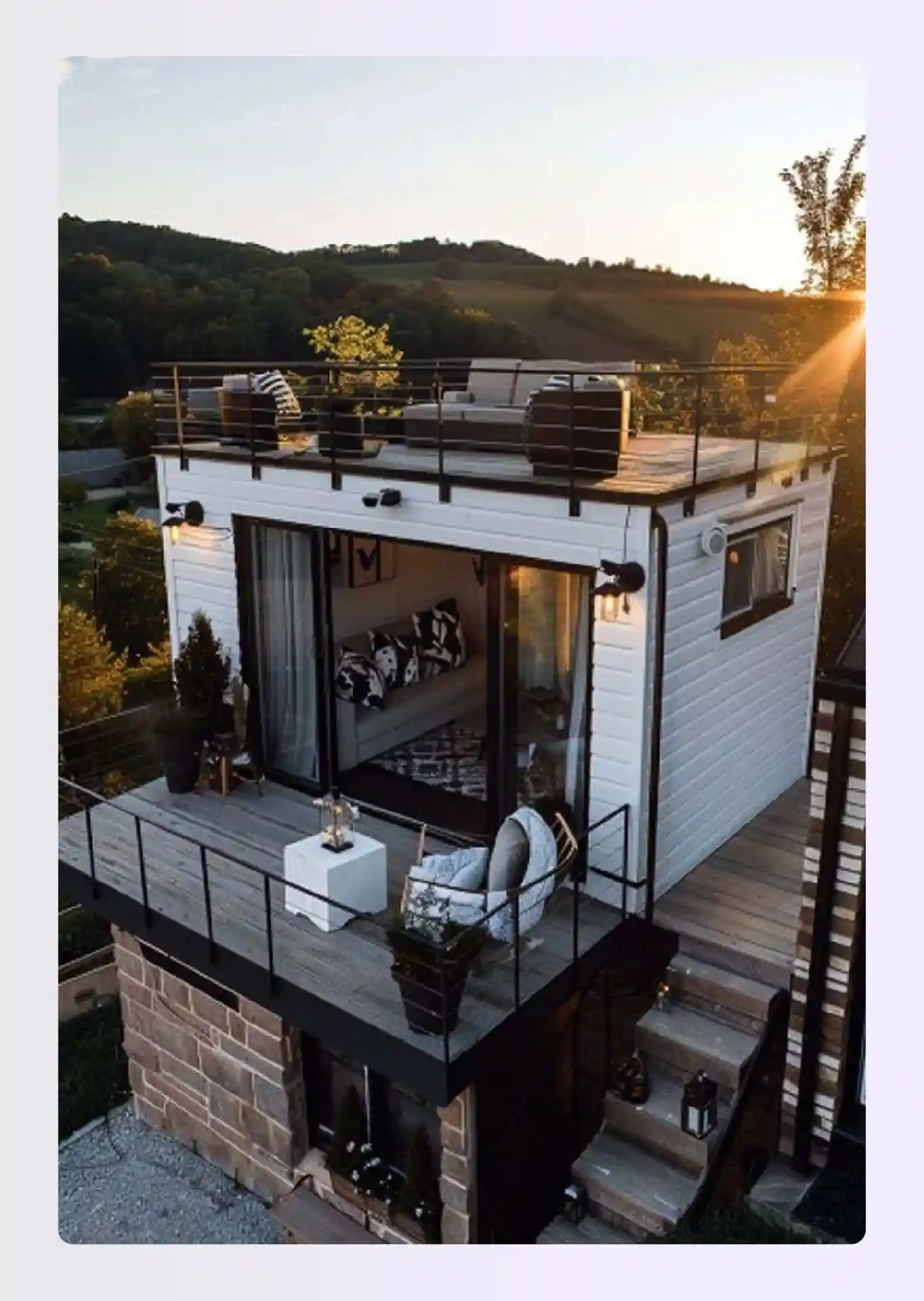
The rooftop terrace layout uses the flat roof as usable outdoor space, effectively doubling the livable area of a small house floor plan on a compact urban lot. The structural specification needs to be resolved by an expert team at the design stage, not added as a modification later.
Ideal Size: 400 – 700 sq ft interior plus roof terrace
Key Features:
- Flat roof with waterproof membrane and drainage specified as a usable terrace
- External staircase to the terrace, keeping the interior floor plan unobstructed
- Roof parapet at a minimum of 42 inches for accessible rooftop use
Foyr Design Tip: I like to model the interior floor plan and rooftop terrace together in Foyr Neo as a single connected design. This helps me present the full livable area in one presentation to the clients.
Check out this video to learn how to add 3D models to your small house floor plans quickly:
Interior Design Psychology for Small Spaces
These six principles apply directly to any brief for a small house floor plan. Understanding them will help you separate layouts that merely fit from those that genuinely perform.
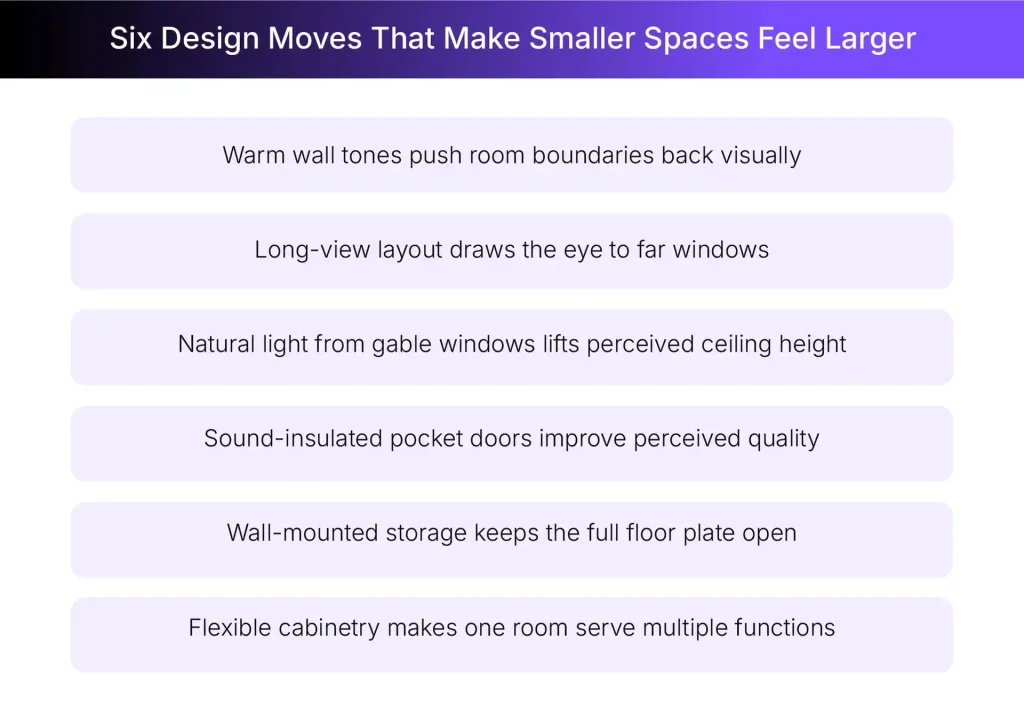
- Warm Minimalism Over Stark White: High-end compact home designs use muted terracottas, sage greens, and deep ochres as primary wall colors. These receding hues create an impression of walls gently pushing back. This is the opposite effect a cold white surface produces in smaller spaces under 300 sq ft.
- Add Space Through Light: Manipulating shadow in the corners of a small home floor plan blurs hard edges and makes a 10-foot ceiling read as higher than it measures. A window at the far end of the plan draws the eye across the full depth of the space and creates a sense of distance.
- Know the Zoning Laws Before You Design: Zoning regulations across the US vary significantly for tiny homes. You must confirm the applicable category before any design work begins to save time and budget.
- Some counties classify tiny homes as accessory dwelling units.
- Others treat them as recreational vehicles.
- Several counties have now created dedicated tiny home districts.
- States including Texas, California, and Oregon have made the most legislative progress. Most counties now allow tiny house dwellings of under 400 square feet, subject to certain conditions.
- Implement Strategic Spatial Organization: Long-view layouts are prioritized in well-resolved small-house design plans, where the eye travels directly from the entry point to a window at the far end. That uninterrupted sightline creates a perception of depth no mirror or pale paint color can replicate on its own.
- Integrated Acoustic Management: For multi-occupant compact homes, sound-insulated pocket doors between sleeping and living zones are worth specifying in the base plan. When a small space sounds solid and quiet, the brain registers it as a high-quality permanent residence rather than a provisional one.
- Embrace Flexible Spaces: Static room arrangements are a constraint in any small house floor plan where limited space demands more from the layout across the day. Track walls that conceal the kitchen at night and cabinetry that unfolds into a home office make every square foot earn its place.
“When you live intentionally, you realize you have choices — and that those choices empower you to be where you want to be, do what you want to do, and live the life you always wanted.”
— Ryan Mitchell, Founder, The Tiny Life (Source)
Imagine Big Living in a Small Footprint with Foyr
A small house floor plan that looks resolved on paper can still surprise you in 3D. Closing that gap before the client sees the result is where Foyr Neo pays for itself on every compact home brief.
Here is how our interior design software delivers on small house floor plan projects:
- The Power of 3D: Take any small home floor plan and turn it into a 360-degree walkthrough before a single wall is built, so every clearance and material decision is tested at eye level.
- Experiment with Layouts. Test loft versus ground-floor bedroom scenarios in real time with Foyr Neo. This will help clients understand the spatial trade-off before construction costs are committed to the structural decision.
- Material Selection: Use Foyr’s library of 60,000+ 3D models to see how warm minimalism reads in the actual space before specifying any finish. Affordable small house designs can carry the same material quality as larger homes when selected in context.
- 12K Renders in Under 10 Minutes: Present photorealistic output at the client meeting to show that tiny house plans can meet every design ambition in the brief, not a reduced version of it. I often use Foyr Neo to shorten approval timelines on compact home projects.
Try Foyr Neo free for 14 days and design your next compact home project at an accurate scale before presenting a single drawing to your client.
FAQs
What is the ideal layout for a small house?
For a single occupant, an open-concept layout between 150 and 250 sq ft works well because removing internal walls makes the space feel larger than it measures. For two adults, an L-shaped plan or double-loft configuration in the 400–650 sq ft range separates sleeping zones without a corridor, reducing the functional living space.
Can small homes feel spacious?
A well-designed small house floor plan can feel significantly larger than its square footage suggests when three core conditions are met. Natural light must reach the plan’s center through large windows, storage must sit at the walls, and one clear sightline must run from the entry to a far window. Open layouts consistently outperform compartmentalized plans of identical square footage in perceived spaciousness.
Are small house plans customizable?
Most small house plans available through plan providers include standard modifications to room sizes, window placement, and exterior cladding. For structural changes, such as relocating the wet wall or changing the roof profile, a licensed architect or structural engineer must review and sign off on the modified drawings.
Do small house plans work for narrow lots?
Narrow-lot small-house floor plans are a well-established category, and several layouts on this blog, including the linear single-wall plan, the urban studio ADU, and the rooftop terrace layout, are designed specifically for compact footprints. The main constraint on a narrow lot is the setback requirements set by local zoning regulations, which govern how close the structure can sit to the property boundary.