

A hotel room layout determines whether a guest feels the space was built for them or assembled around furniture that happened to fit. Entry sightlines and the ability to navigate the room at night both trace back to that single decision.
The average US hotel room runs 300 to 350 square feet, yet perceived spaciousness depends on zone logic and clear circulation paths. In my opinion, where the bed sits relative to the entry door shapes every other hotel room design decision in the layout.
This guide covers 10 hotel room layout configurations, including US sizing standards and ADA compliance requirements, for interior designers working on hospitality projects. By the end, you will have the layout logic and compliance data needed for your next hotel room floor plan brief.

US Sizing and ADA Standards Every Hotel Designer Should Know
Understanding regulatory baselines before drawing a hotel room layout prevents costly corrections during construction and FF&E procurement.
| Room Category | Typical Size (sq ft) | Typical Size (sq m) | Typical Bed Configuration |
| Budget / Economy | 150–250 sq ft | 14–23 sq m | Twin or Double |
| Mid-Range / 3-Star | 275–350 sq ft | 25.5–32.5 sq m | Queen |
| Upscale / 4-Star | 300–400 sq ft | 28–37 sq m | King or Queen |
| Luxury / 5-Star | 400 sq ft and above | 37 sq m and above | King |
| Junior Suite | 390–520 sq ft | 36–48 sq m | King |
| Full Suite | 500–1,000+ sq ft | 46–93+ sq m | King |
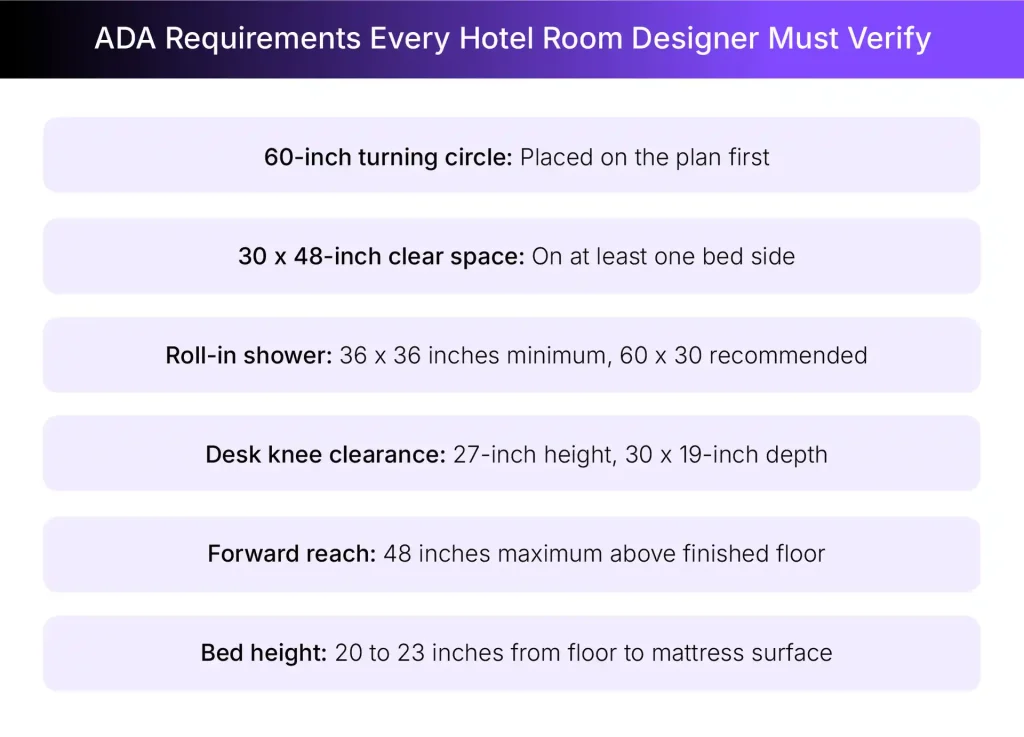
The following ADA requirements from the 2010 ADA Standards for Accessible Design govern every accessible hotel guest room layout you draw.
- Doorway clear width: The 2010 ADA Standards require a 32-inch minimum clear width at 90 degrees for all accessible hotel room entry doors. I recommend a 36-inch door slab on every accessible floor space to accommodate motorized wheelchairs and wider mobility equipment.
- Wheelchair turning radius: Every accessible hotel room requires a 60-inch-diameter clear turning space between the bed and the bathroom entry. I draw this turning circle first on the hotel room plan, since every other clearance resolves around it.
- Bed-side clearance: A 30 x 48-inch clear floor space on at least one side of the accessible bed is required in every qualifying room. This must appear as a verified dimension on the floor plan before any FF&E is specified for the guest room.
- Bed height: The ADA National Network recommends a mattress surface height of 20 to 23 inches for safe wheelchair transfer in hotel rooms. Both the bed frame and the mattress specification affect this combined height, which I confirm during FF&E review.
- Desk knee clearance: ADA-accessible desk surfaces require a 27-inch height minimum and a 30 x 19-inch clear knee space underneath for wheelchair users. I check every proposed desk model against this standard before it advances to the FF&E approval stage.
- Roll-in shower dimensions: Roll-in showers must measure 36 x 36 inches minimum under the 2010 ADA Standards, with 60 x 30 inches recommended for full-width access. This increases the accessible bathroom footprint by 20 to 30 percent and must be resolved on the floor plan before any other fixture is placed.
- Reach range: ADA reach range standards set a 48-inch maximum for forward reach and a 54-inch maximum for side reach in accessible hotel rooms. These govern where you position thermostats, switches, closet rods, and lighting controls throughout the accessible room layout.
10 Best Hotel Room Layout Ideas
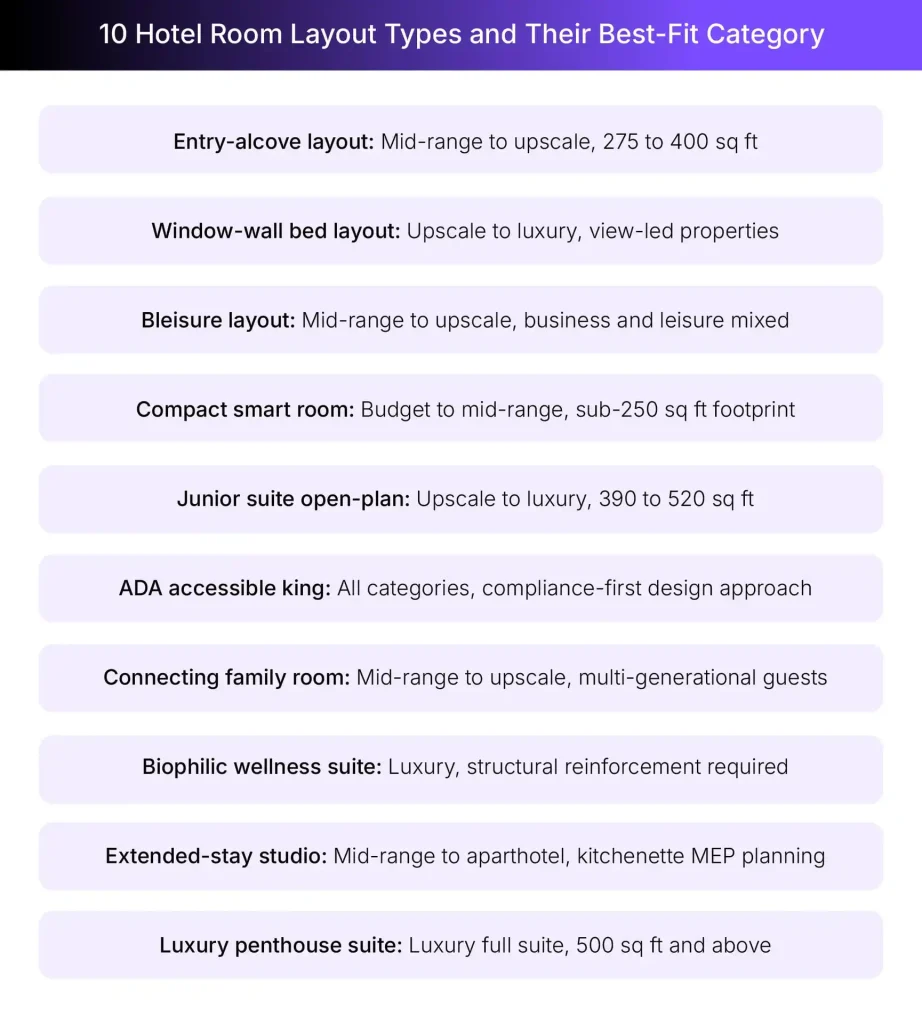
I find that the most persistent layout problems in hospitality projects come from decisions that look reasonable on a sketch but fail when drawn at real scale with clearances applied. Here are 10 best room layouts you should consider for your hotel interior design projects:
1. The Standard Entry-Alcove Layout
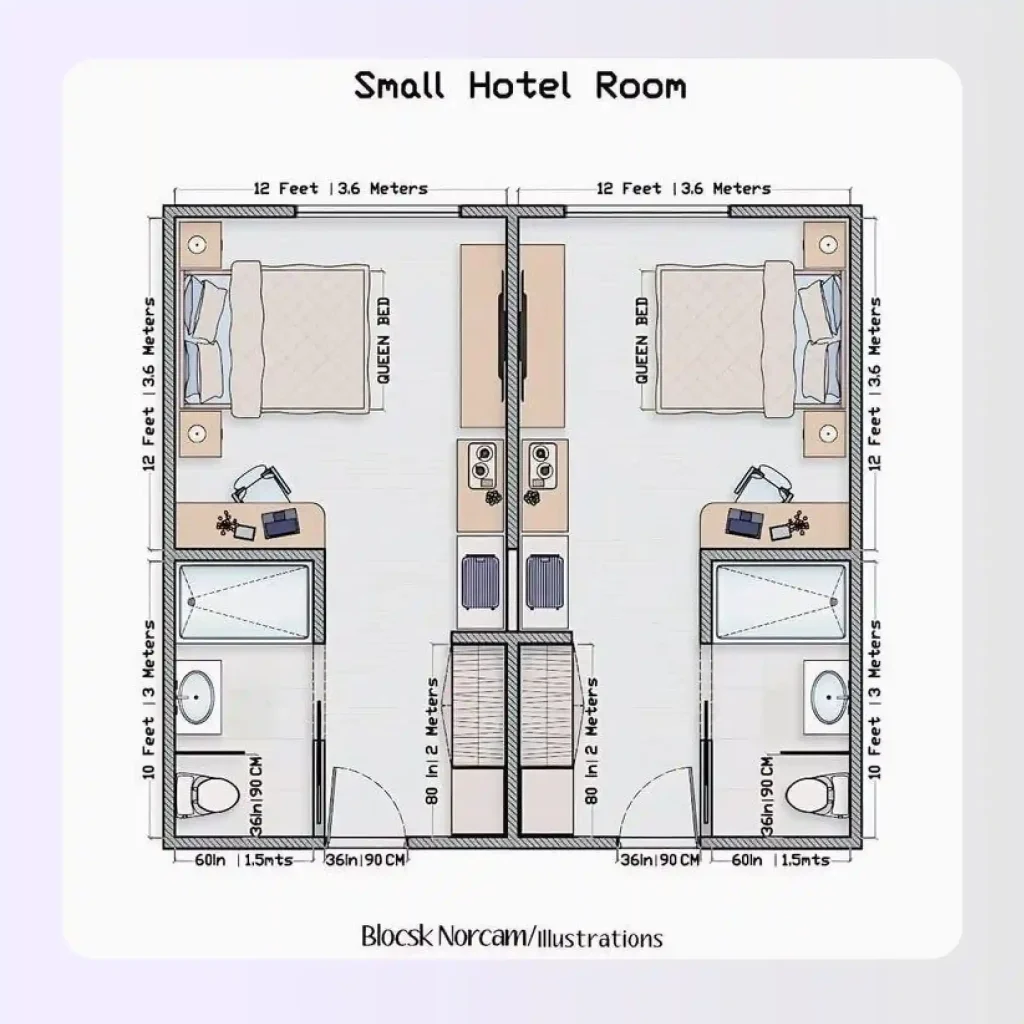
The entry-alcove hotel room layout positions a short corridor at the entry that keeps the bed out of direct hallway sightlines when the door opens. This hotel room design delivers immediate visual privacy on entry and is a staple of mid-range and upscale hotel room design across branded properties.
Room Category: Mid-Range to Upscale (3-Star to 4-Star)
Zone Breakdown:
- Entry alcove with wardrobe and full-length mirror on the wall
- Sleeping zone beyond the alcove, fully private from the entry
- Bathroom on the alcove wall for MEP efficiency and clean line routing
- Desk and seating area positioned toward the window-facing wall
Foyr Design Tip: Verify the alcove depth at 1.2 m minimum in the 2D plan, since corridor sightline privacy depends entirely on this exact dimension.
2. The Window-Wall Bed Layout
Source: Pinterest
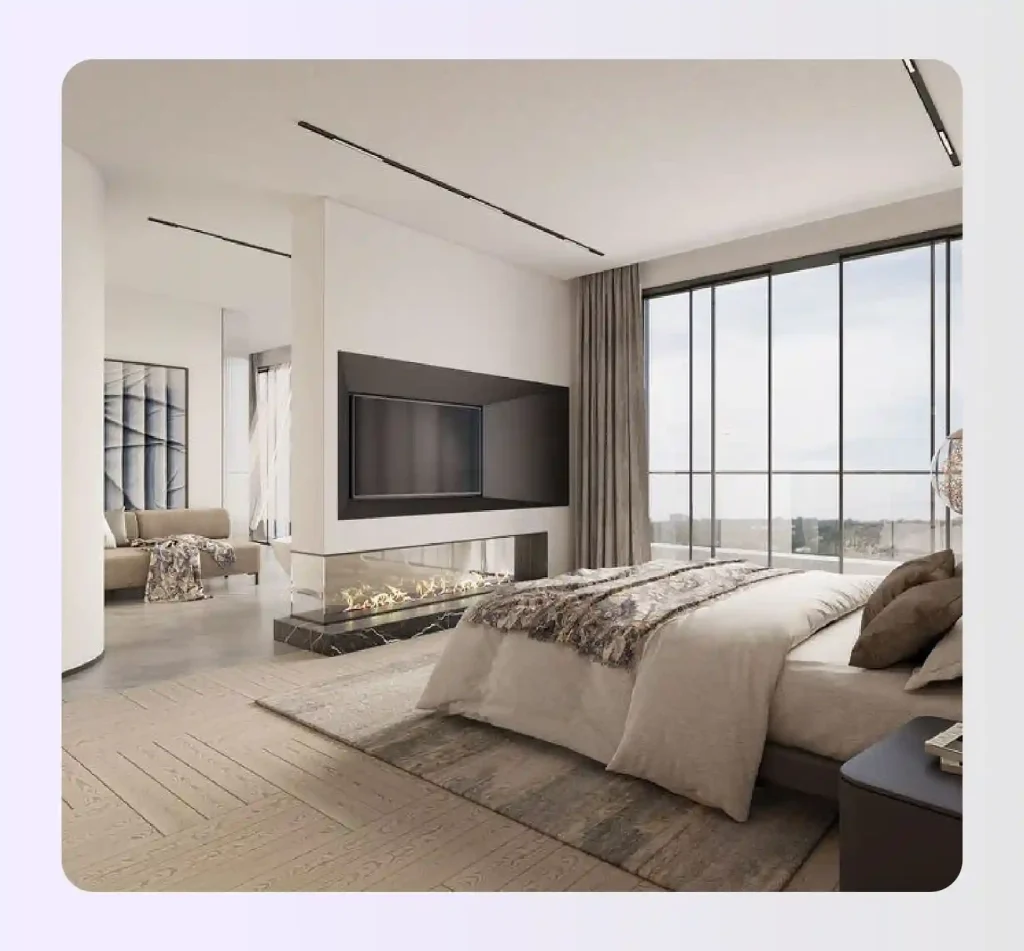
The window-wall hotel room layout places the headboard against the interior wall so the bed faces toward natural light from large windows, giving guests an immersive outdoor connection from the sleeping position. This hotel room interior suits upscale and luxury properties where guest experience is defined by view quality and light access throughout the day.
Room Category: Upscale to Luxury (4-Star to 5-Star)
Zone Breakdown:
- Bed facing large windows with an unobstructed exterior view
- Power and data outlets on the interior wall at bed-height level
- Desk and comfortable seating near the window perimeter
Foyr Design Tip: Place the TV on the interior wall and validate the viewing angle from the bed position in 3D before issuing the electrical specification.
3. The Dual-Purpose Bleisure Layout
Source: Pinterest
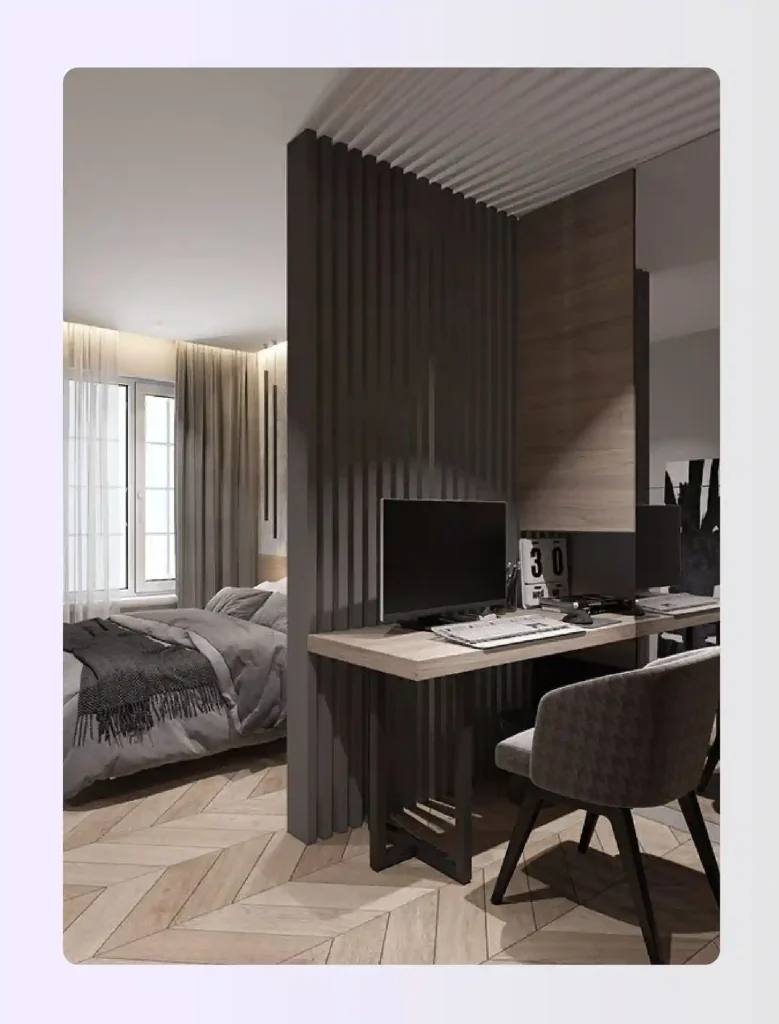
The bleisure hotel room layout separates the work zone from the sleeping area to serve business travelers who extend their stays into leisure days. This hotel room plan suits mid-range and upscale properties targeting modern travelers who require smart technology integration alongside genuine rest in the same room.
Room Category: Mid-Range to Upscale (3-Star to 4-Star)
Zone Breakdown:
- Dedicated desk zone with data ports and smart technology integration
- Sleeping zone separated by a low partition or furniture grouping
- Acoustic buffering detail between desk and sleeping zone in the plan
- Comfortable seating or small lounge area near the window wall
Foyr Design Tip: Map the partition boundary between desk and sleeping zones in the 2D plan to resolve acoustic buffering before the FF&E specification is issued.
4. The Compact Smart Room Layout
Source: Pinterest
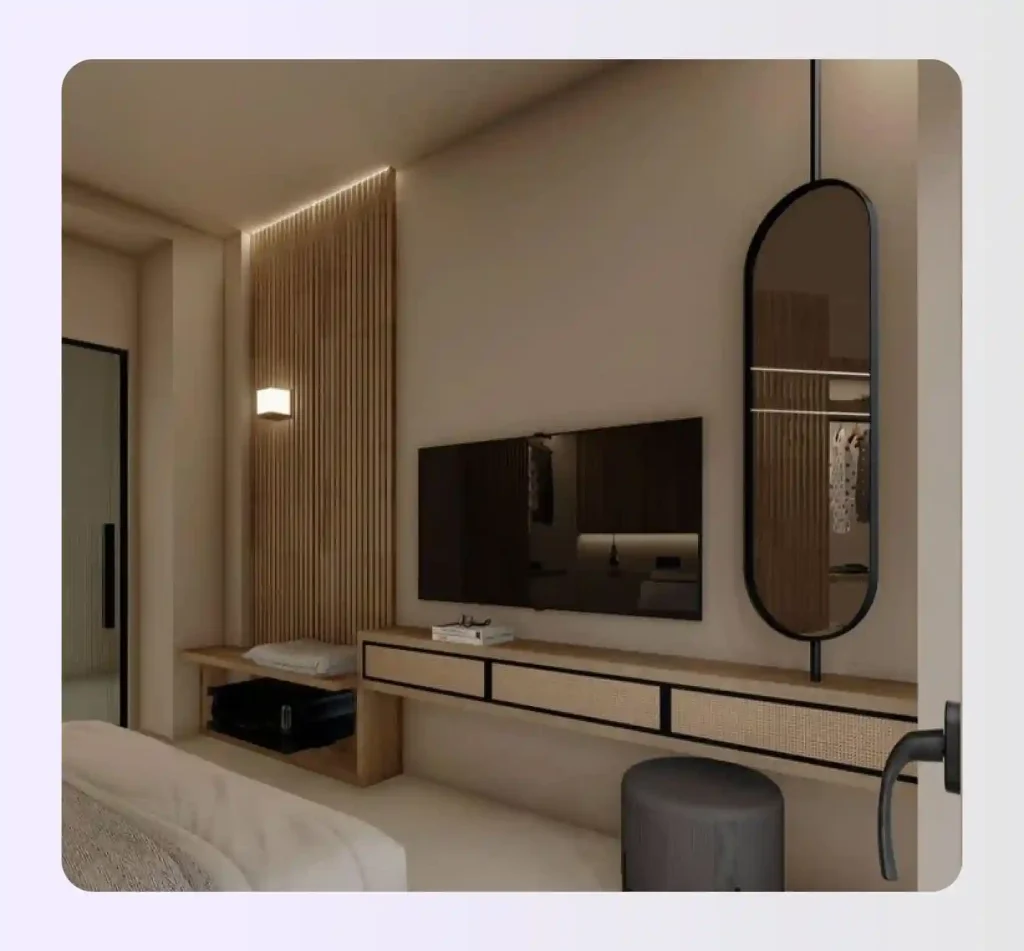
The compact small hotel room layout maximizes a sub-250 sq ft footprint using wall-mounted fixtures and multifunctional furniture to meet a full range of guest needs. Smart TVs, vertical storage and integrated controls reduce floor space consumption while maintaining clean lines and a modern hotel room aesthetic throughout.
Room Category: Budget to Mid-Range (Economy to 3-Star)
Zone Breakdown:
- Entry zone with integrated wardrobe and full-length mirror
- Sleeping zone with wall-mounted bedside fixtures and smart TV
- Compact bathroom with modular furniture and vertical storage
- Open floor space preserved for circulation and guest mobility
Foyr Design Tip: Run door swing validation in the 2D plan first, since overlapping entry, wardrobe, bathroom and closet swing arcs cause most compact room execution failures.
“We’re seeing a shift away from conventional, compartmentalized hotel layouts toward more fluid, purpose-driven spaces. Spaces that were once underutilized—oversized lobbies or redundant amenities—are being reimagined into dynamic, multifunctional areas. Lobbies are no longer just for check-ins; they’re places to eat, drink, work, meet, and socialize.”
—Glenn Pushelberg, founder, Yabu Pushelberg (Source)
5. The Junior Suite Open-Plan Layout

Source: Pinterest
The junior suite open-plan layout uses furniture positioning and flooring transitions to separate the sleeping zone from the lounge zone without partition walls. This hotel room layout suits upscale properties where guest preferences run toward a residential sense of place and open spaces feel more generous than enclosed rooms.
Room Category: Upscale to Luxury (4-Star to 5-Star)
Zone Breakdown:
- Sleeping zone anchored by bed with a distinct flooring material
- Seating area and lounge zone defined by a rug and furniture grouping
- Desk positioned at the window perimeter for natural light access
- Clear circulation paths maintained between sleeping and lounge zones
Foyr Design Tip: Use the 3D model to verify that the flooring transition between sleeping and lounge zones creates clear zone legibility before the client presentation.
6. The ADA Accessible King Layout

Source: Pinterest
The ADA accessible king hotel room layout is designed around the 60-inch wheelchair turning radius as the primary spatial constraint, with all fixtures resolving around that circle. Every other element in this room, from bed position to bathroom entry, follows that turning circle on the hotel room plan.
Room Category: Any category with ADA accessible inventory requirement
Zone Breakdown:
- 60-inch turning circle mapped between the bed and bathroom entry first
- King bed with 30 x 48-inch clear transfer space on accessible side
- Roll-in shower at 60 x 30 inches, accounting for 20 to 30 percent more floor space
- Accessible desk at 27-inch knee clearance with a clear approach path
Foyr Design Tip: Map the 60-inch turning circle first on the 2D floor plan, since all other fixture positions in the accessible hotel room are constrained by this single compliance requirement.
Along with the rooms, the reception area is another crucial part of a hotel. Check out this video to learn how you can easily design hotel receptions with Foyr Neo:
7. The Connecting Family Room Layout
Source: Pinterest
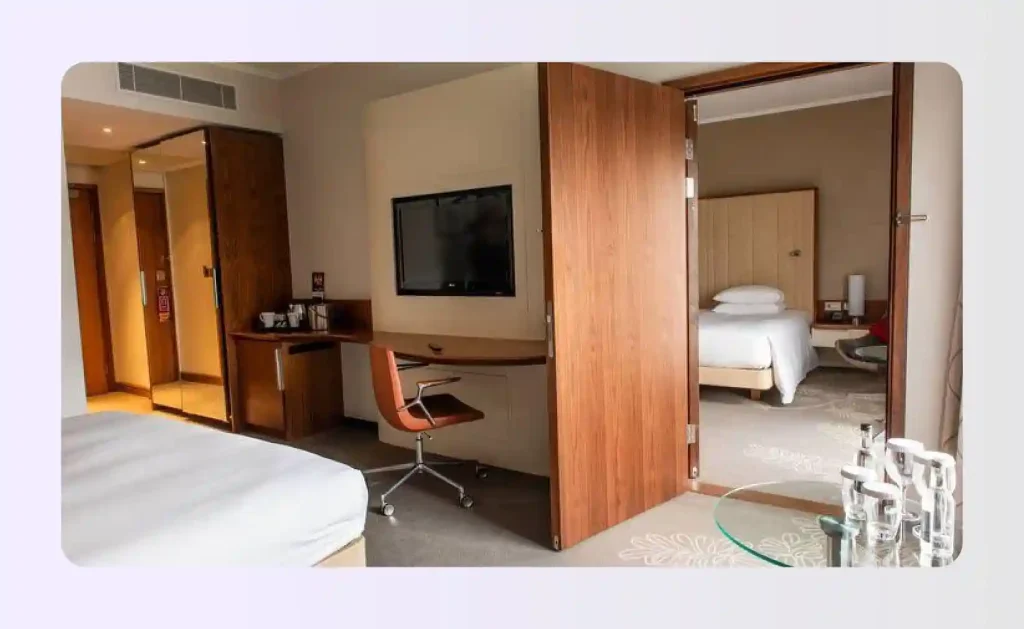
The connecting family hotel room links two standard rooms through a shared interior door with independent lock mechanisms on both sides. Acoustic performance at the connecting door is a layout decision that determines the guest comfort quality in both rooms simultaneously, not a specification decision made later.
Room Category: Mid-Range to Upscale (3-Star to 4-Star)
Zone Breakdown:
- Two standard king or twin rooms connected by a shared interior door
- Connecting door positioned away from bed headboards in both rooms
- Independent bathroom and wardrobe zones in each connected room
Foyr Design Tip: Position the connecting door away from both bed headboards in the 2D plan to reduce STC acoustic transfer between rooms during night-time occupancy.
8. The Biophilic Wellness Suite Layout
Source: Pinterest
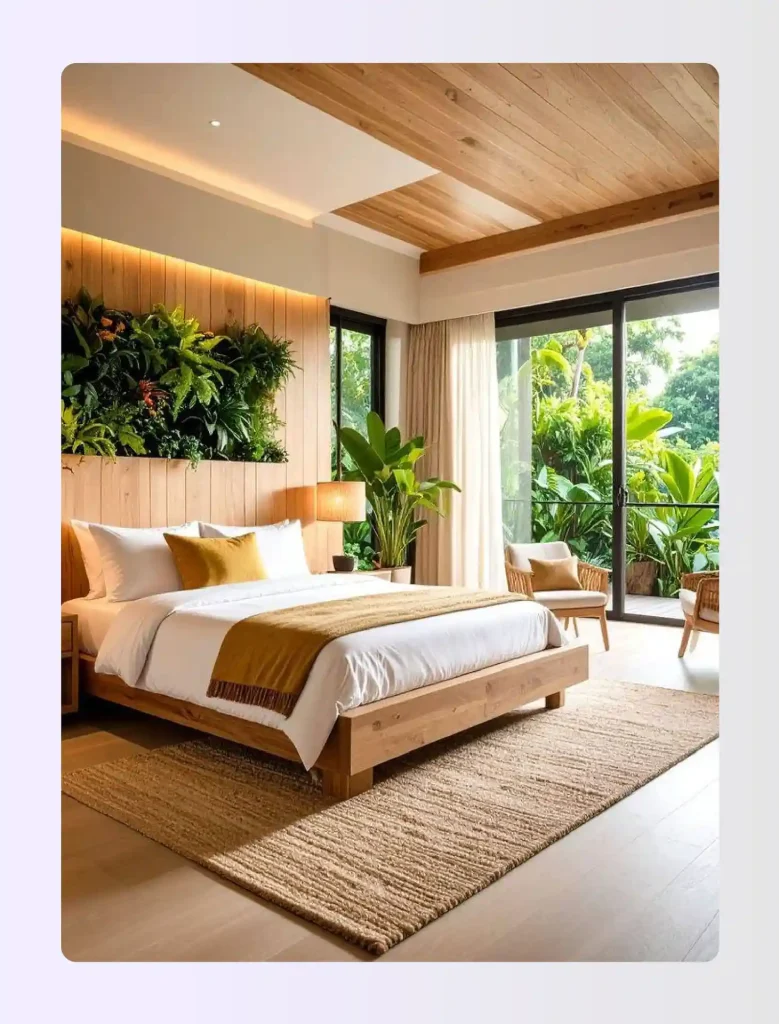
The biophilic design wellness suite layout introduces a living green wall and a dedicated yoga zone within the hotel room floor plan alongside natural materials and natural elements throughout the interior. Large windows, sustainable materials and local cultural elements reinforce a sense of place while reducing the room’s environmental impact compared to conventional hotel rooms.
Room Category: Luxury / 5-Star Wellness Properties
Zone Breakdown:
- Green wall on one structural wall with reinforced waterproof membrane behind
- Yoga and movement zone of 2 m x 2 m minimum on dedicated flooring
- Relaxation areas with comfortable seating and natural materials palette
- Large windows maximizing natural light and exterior connection
Foyr Design Tip: Flag the green wall position first in the 2D plan, since living walls carry 5.1 to 8.2 lbs (25 to 40 kg per sq m) per square foot. They require structural reinforcement and a waterproof membrane before any finish is specified.
9. The Extended-Stay Studio Layout
Source: Pinterest
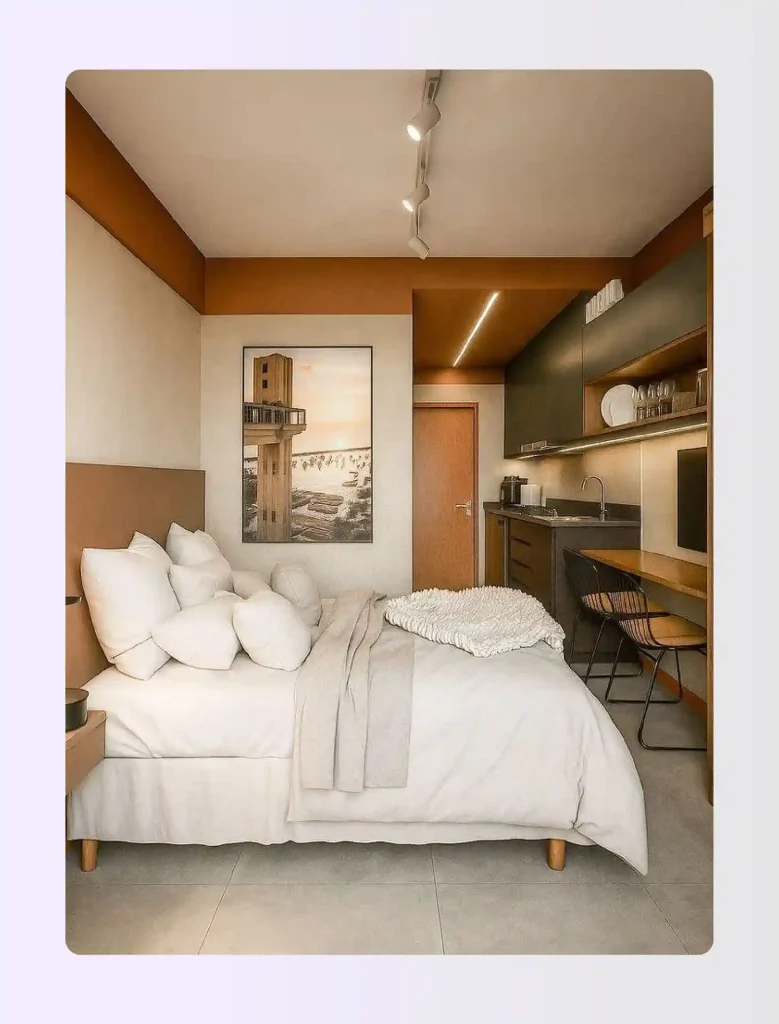
The extended-stay hotel room layout incorporates a kitchenette zone with a sink, countertop, microwave and refrigerator as a defined functional area within the floor plan. This room design suits leisure travelers and long-stay guests who require operational efficiency and a residential living experience across multiple booking nights.
Room Category: Mid-Range to Extended-Stay Properties (3-Star to Aparthotel)
Zone Breakdown:
- Kitchenette zone with sink, microwave, refrigerator and countertop storage
- Sleeping zone with full-height wardrobe and vertical storage capacity
- Dining or work table with multifunctional furniture serving both guest needs
Foyr Design Tip: Position the kitchenette first in the 2D plan, since exhaust vent placement, drainage lines, circuit count and plumbing access all constrain which wall it can occupy.
For designers presenting hotel room layouts to brand reviewers or investor stakeholders, this video covers the 3D walkthrough workflow using Foyr Neo:
10. The Luxury Penthouse Suite Layout
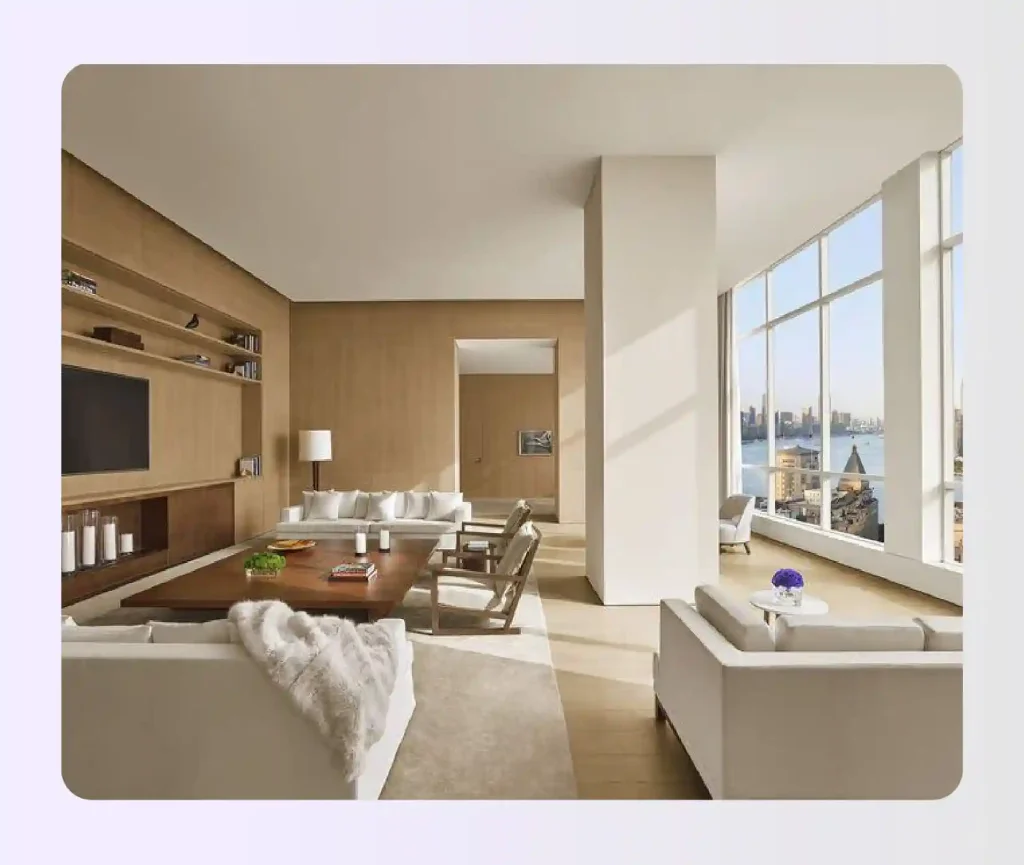
Source: Pinterest
The luxury hotel room penthouse suite floor plan treats each zone as a distinct space within a sequenced multi-room layout, with premium materials and bold colors defining each area. The progression from entry to foyer to living zone to bedroom is the primary design elements logic that determines whether the luxury hotel room reads as a curated sequence of discoveries or a single large room.
Room Category: Luxury / 5-Star; Full Suite (500 sq ft and above)
Zone Breakdown:
- Entry foyer as a dedicated arrival and decompression space before the main zones
- Living and seating area with local art and premium materials as the first reveal
- Primary bedroom as the final reveal at the end of the spatial sequence
- Luxury bathroom with a separate bathing and shower zone for guest privacy
- Dining or bar area positioned between living and bedroom for suite coherence
Foyr Design Tip: Map the entry-to-foyer-to-living-to-bedroom sequence in the 3D walkthrough to verify visual reveal timing at each threshold before any FF&E is approved.
“Post-pandemic, wellness is top of mind. Think wellness-oriented in-room amenities like app-based access to in-room and in-gym fitness options and custom curated city guides from the property’s point of view.”
— Dan Mazzarini, Principal and Creative Director, BHDM Design (Source)
Hotel Room Design Tips That Change How a Space Performs
These five decisions consistently distinguish hotel rooms that perform well from those that prompt repeat guest complaints and hesitation to rebook.
- Plan the entry sightline first. Position the bed so it falls outside the sightline of the open entry door, since privacy shapes the guest’s first impression. Guest satisfaction research in the hospitality industry links this first-impression privacy moment directly to repeat booking intent.
- Treat circulation paths as fixed before placing furniture. Set the circulation paths from door to bed and bathroom before placing any furniture in the hotel room layout. Furniture placed before paths is confirmed to create bottlenecks that fail ADA clearance checks and reduce operational efficiency across the property.
- Use the bathroom location to anchor all plumbing costs. The bathroom position in the hotel room floor plan determines where every plumbing line runs and, in turn, controls construction costs at scale. Aligning the bathroom with the building’s wet wall reduces MEP costs across every floor of the property.
- Design for darkness as deliberately as for light: Specify blackout tracks from the floor plan stage, since curtain gaps rank among the most frequent hotel room interior complaints from guests. Ambient lighting on a separate dimmer circuit lets guests set the room’s ambiance without disturbing a travel companion.
- Match storage volume to stay duration: Size wardrobe storage to the expected stay length rather than the room category in the project brief alone. Extended-stay rooms require full-height wardrobes with vertical storage, while transient rooms require only a compact hanging rail to meet typical guest needs.

Design Your Hotel Room Floor Plan with Foyr Neo
Once the hotel room layout is finalized and ADA compliance is confirmed, you need a complete deliverables package for client sign-off and submission to planning authority. Foyr Neo covers that full delivery workflow, from the initial floor plan through to the final render package, in one platform.
Here is how our interior design software streamlines your hotel room designing process:
- Map accurate clearances and ADA turning radii: Map the 60-inch ADA turning radius and all compliance clearances in Foyr Neo’s 2D floor plan before any fixture is sourced for the hotel room project. This positions compliance verification at the planning stage, where corrections cost a fraction of the on-site equivalent.
- Generate 12K photorealistic renders: Foyr Neo generates 12K renders of the hotel room layout in minutes, giving you board-quality visuals for brand identity approvals and investor presentations.
- Switch between 2D and 3D views One-click 2D-to-3D conversion lets you verify entry sightlines and spatial flow across all hotel room layout types in the 3D walkthrough. This view catches sightline problems and circulation conflicts that a 2D floor plan drawing cannot reveal.
- Access hospitality-grade FF&E models: Foyr Neo’s library includes accurate, dimensioned models of hotel furniture and FF&E for clearance validation before any procurement decision.
- Test lighting and blackout conditions: Test natural light and blackout conditions alongside ambient lighting layers in the same Foyr Neo 3D view before specifying any fixture for the hotel room interior. This confirms the lighting spec before any electrical circuit is roughed in on the hotel room plan.
- Export 2D floor plans and ADA compliance diagrams together: Export the 2D hotel room floor plan and ADA compliance diagrams together as one submission package for client and authority review, achieving energy efficiency in your own delivery workflow.
Try Foyr Neo free for 14 days and design your hotel room floor plan before construction begins.
FAQs
How many ADA accessible rooms is a hotel required to provide under US law?
The 2010 ADA Standards require 1 accessible room for hotels with 1 to 25 total rooms, with the count scaling upward by property size. A 100-room property requires at least 5 accessible rooms to meet mobility and communication accessibility requirements. You must verify the exact count with an ADA consultant, since state codes sometimes exceed the federal baseline requirement.
What is the minimum corridor width between hotel rooms under US building code?
The International Building Code sets a minimum 44-inch clear width for hotel public corridors throughout the property. Upscale brand standards typically specify a corridor width of 60 to 72 inches to accommodate housekeeping carts and FF&E delivery at scale.
How do hotel brands enforce room size standards across franchise properties?
Hotel brands issue a prototype hotel room floor plan to all franchise partners as the binding standard for room size and layout. This document specifies minimum room dimensions, ceiling heights and FF&E placement zones for every room category in the brand. Brand representatives review submitted floor plans against the prototype at each design phase gate before construction approval is granted.
What is the difference between a junior suite and a standard suite in terms of floor plan structure?
A junior suite runs 390 to 520 sq ft (36 to 48 sq m) and defines its lounge zone through furniture and flooring transitions rather than walls. A full suite above 500 sq ft uses physical walls to separate sleeping and living areas as dedicated rooms with their own entries. The open-plan junior suite places a higher design burden on FF&E selection and flooring specification to create zone legibility without structural division.
How does furniture specification affect ADA compliance in a hotel room layout?
FF&E choices affect ADA compliance at four touchpoints: desk knee clearance, bed height, closet rod position and reach range throughout the room. An accessible desk needs 27-inch minimum knee clearance, and the bed must reach 20 to 23 inches from floor to mattress surface.