


A poor bedroom floor plan doesn’t become less of a problem when you add better furniture or change the paint on the walls. I’ve worked with clients who spent real money on a bedroom only to find the layout itself was generating every frustration they were trying to solve.
Your bedroom floor plan determines how natural light moves through the space and how furniture placement shapes the room’s daily experience. Interior design decisions made without a well-considered bedroom floor layout often require costly corrections once construction has already started.
Whether you are designing for a compact bedroom in a tight urban footprint or a generous primary suite, the underlying logic of a strong bedroom plan remains fundamentally consistent. This guide covers the professional process from room audit to final bedroom floor layout, with five real layout examples you can apply directly to any project.

Start With a Professional Room Audit
Before you commit to any bedroom floor plan or start placing furniture on a sketch, you need a complete and honest picture of what the room is actually working with.
- Dual-Height Wall Survey: Measure every wall at baseboard height and again at 36 inches, since mid-height protrusions like radiator covers and dado rails create clearance restrictions that a flat floor plan sketch won’t catch. The nominal wall-to-wall dimension is almost always wider than the workable depth you will have after accounting for all fixed elements.
- Fixed Constraint Mapping: Mark door swings, window positions, HVAC registers, and radiator placements on your sketch before touching any furniture. They all require a non-negotiable clearance that shrinks your usable floor area from the start. These constraints determine where your bedroom floor layout has genuine design flexibility and where the layout is already decided before a single piece moves.
- Daylighting Arc Trace: Sketch the sun’s path through each window across the floor plan before assigning zones or furniture positions. A bed landing in a morning glare arc is a common but avoidable layout error I see at the revision stage. The daylighting trace also shows where reflective surfaces, such as lacquered furniture and glossy tiles, will either amplify or absorb the light.

Master the Golden Rules of Furniture Placement
The logic of a bedroom floor layout depends entirely on how your client moves through the space each morning, from entry to dressing area to bed.
- Diagonal Bed Sightline: Position the bed so the occupant has a clear diagonal sightline to the entry door, with the foot of the bed not pointing directly at it. A 15 to 30 degree offset from the door axis is enough to resolve this without compromising the layout’s circulation logic.
- Tiered Clearance Standards The 24-inch minimum clearance on each side of the bed is a code-minimum baseline. I’d push to 30 inches on the primary egress side wherever the bedroom floor plan allows, and drop below 18 inches on neither side.
- Mass Distribution by Visual Axis: Anchor the heaviest piece, typically the wardrobe or a full-height shelving unit, on the wall perpendicular to the entry axis rather than directly opposite it. This is vital as a large mass facing the entry flattens the room’s visual depth immediately on approach. Distribute remaining mass so no single wall carries more than 60% of the room’s total visual weight.
| Pro Tip: Check out some interesting small bedroom design ideas that address small spaces from a layout-first perspective. |
Adapt Your Bedroom Plan for Different Room Sizes
Most bedroom floor plans involve a constraint that the client forgot to mention in the brief. Getting the layout right requires working from the room’s actual geometry first, not the client’s preferred furniture list.
Compact Bedrooms Under 120 Square Feet
Start every small bedroom plan by fixing the bed placement before making any other decisions.
- Float the bed 2 to 3 inches from the wall to avoid feeling cramped.
- Mount bedside lighting on the wall to free the entire bedside table surface.
- Run shelving from 72 inches to ceiling height, the zone most designers leave unused.
- Use mirrored wardrobe fronts in lieu of solid closet doors to double apparent depth.
- A loft bed in rooms under 90 square feet reclaims the entire footprint beneath it.
Narrow Rooms Under 8 Feet Wide
Place the bed on the short wall and treat the resulting floor run as a functional corridor with deliberate purpose.
- A 30-to-36-inch clearance run between the bed and the opposite wall is the bare minimum.
- Avoid bedside tables with protruding legs; use wall-mounted shelves or sconces.
- Use vertical stripes or floor-to-ceiling drapes to counter the corridor proportions.
Large Bedrooms Over 180 Square Feet
Unplanned large bedrooms read as storage rooms with a bed in them. Zone the space using furniture edges and rugs before committing to any single layout.
- Define the sleeping zone with a rug that extends 24 inches beyond the bed on three sides.
- Position a daybed or lounge chair at least 8 feet from the bed to create a second destination.
- Use a home office corner anchored by a pendant or wall sconce, since overhead ambient lighting alone won’t read as a distinct zone.
“A stunning visual aesthetic means absolutely nothing if you’re constantly bumping your knees against an oversized wooden dresser every morning. I’ve learned that finalising your precise floor plan digitally protects your entire renovation budget from highly expensive physical purchasing mistakes.”
|
Design Functional Zones Beyond the Bed
A bedroom floor plan that accounts only for the sleeping area overlooks how people live in and use their bedrooms throughout the day.
- Workspace Position: Face the desk toward a wall or window, never toward the bed. This is crucial since even peripheral sight of the pillow disrupts the cognitive shift between working and resting. Separate the work zone visually using a dedicated pendant or wall sconce at 2700K, distinct from the bedroom’s ambient lighting circuit. This ensures that the zone reads as functionally independent.
- Dressing Zone: Position the dressing table within 36 inches of the primary natural light source and centre the mirror at eye level, between 60 and 65 inches from the finished floor. Place the wardrobe or closet doors on a wall that sits outside the main entry-to-bed circulation path. This ensures that the dressing zone can function while someone is sleeping without creating cross-traffic.
- Rest and Transition Corner: A lounge chair beside a window at the foot of the bed needs a minimum 30-by-30-inch footprint. Pair it with a side table at 24 to 26 inches height and a floor or wall light on its own switch, so the corner works as a genuine third zone rather than a decorative infill.
| “Clearance numbers aren’t arbitrary. They’re the difference between a bedroom that functions well and one that frustrates every single morning, and getting circulation right on the floor plan makes every subsequent design decision easier to resolve.”
— Foyr Team |
Apply Pro-Level Interior Design Finishing Touches
The difference between a bedroom that looks designed and one that merely looks furnished comes down to finishing decisions most clients won’t articulate in a brief but will feel the moment they step inside.
- Sight Lines: The entry sight line should resolve on a single intentional focal point within the first 3 to 5 feet of the room’s depth. If the first thing visible is a wardrobe side panel or an open bathroom door, the entire layout reads as unresolved.
| Pro Tip: Stand at the door threshold and photograph straight ahead at eye level before finalising any layout. What the camera captures at that angle is exactly what your client’s brain will register on every entry for the life of the project. |
- Rug Placement Rules: Determine the size and position of the rug before specifying any other soft furnishing. This decision is crucial as the rug anchors the entire bed zone and determines whether the room reads as grounded or assembled.
- A queen bed needs a minimum 8 x 10 foot rug; a king needs 9 x 12.
- The rug’s front edge should sit 12 to 18 inches from the foot of the bed, not flush with it.
- Layered Lighting: A bedroom lighting plan should include three separate layers: warm ambient lighting (2700–3000K), focused bedside lighting for reading, and accent lighting to highlight design or décor elements.
- Bedside task lighting centres at 48 to 52 inches above the finished floor.
- Pendant drops above bedside tables need a minimum 15-inch clearance from the tabletop surface.
- Dimmers on all circuits are non-negotiable for a bedroom that operates throughout the day.
- Color and Surface: A layered colour palette in a bedroom works on a 60-30-10 ratio: 60% dominant (walls and large upholstery), 30% secondary (bedding and drapes), 10% accent (cushions, hardware, artwork).
- Soft whites and warm off-whites on the ceiling read 2 to 3 shades lighter than they appear on a paint chip.
- Linen bedding in a tone within two shades of the wall colour creates cohesion without visual flatness.
- Visual Texture: Use at least three different textures around the bed, such as fabric (linen or woven), a matte or brushed surface, and a soft, plush element. For windows, opt for sheer curtains to soften daylight and pair them with blackout curtains instead of choosing just one.
For designers who want to see how room auditing and furniture placement decisions translate directly into a working bedroom floor plan inside Foyr Neo, this walkthrough covers the key steps:
Common Bedroom Floor Layouts for Every Space
Every bedroom floor plan resolves into one of a handful of base configurations, with variation determined by how well the layout addresses the room’s specific constraints and the client’s daily habits.
The Symmetrical Bedroom Floor Layout
Source: Pixabay — https://pixabay.com/images/download/x-5664221_1920.jpg
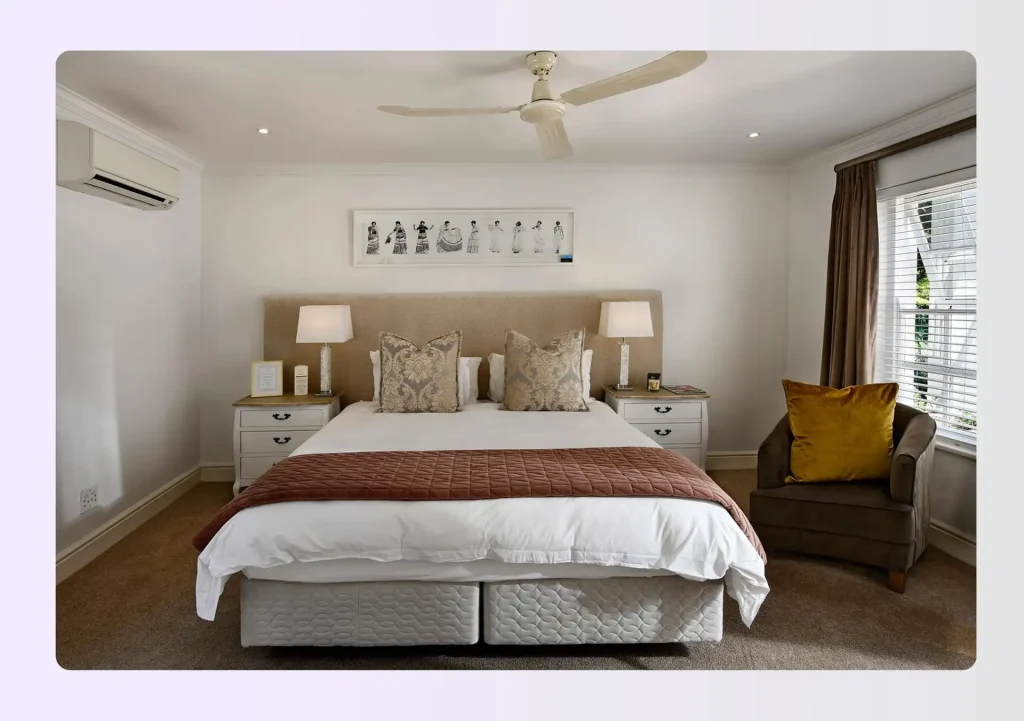
The symmetrical layout places the bed on the central wall flanked by two matching bedside positions with identical lighting on either side, creating a floor plan that reads as resolved from the entry point. It’s the most consistently recommended starting point for primary bedroom design because it communicates calm order and gives equal access to both sides of the bed.
Minimum Size: The symmetrical layout needs a minimum of 120 square feet to work comfortably, with at least 7 feet between the foot of the bed and the facing wall to allow adequate circulation.
Design Suggestions:
- Center the headboard on the longest wall for maximum visual balance and symmetry
- Hang wall sconces above each bedside table to free up the full surface area for personal items
- Use a rug extending 24 inches beyond each side of the bed frame to fully ground the layout
| Foyr Tip: Use Foyr Neo’s guideline tool to verify symmetry across the bed axis before finalising your floor plan for client presentation. |
The Corner-Anchor Layout
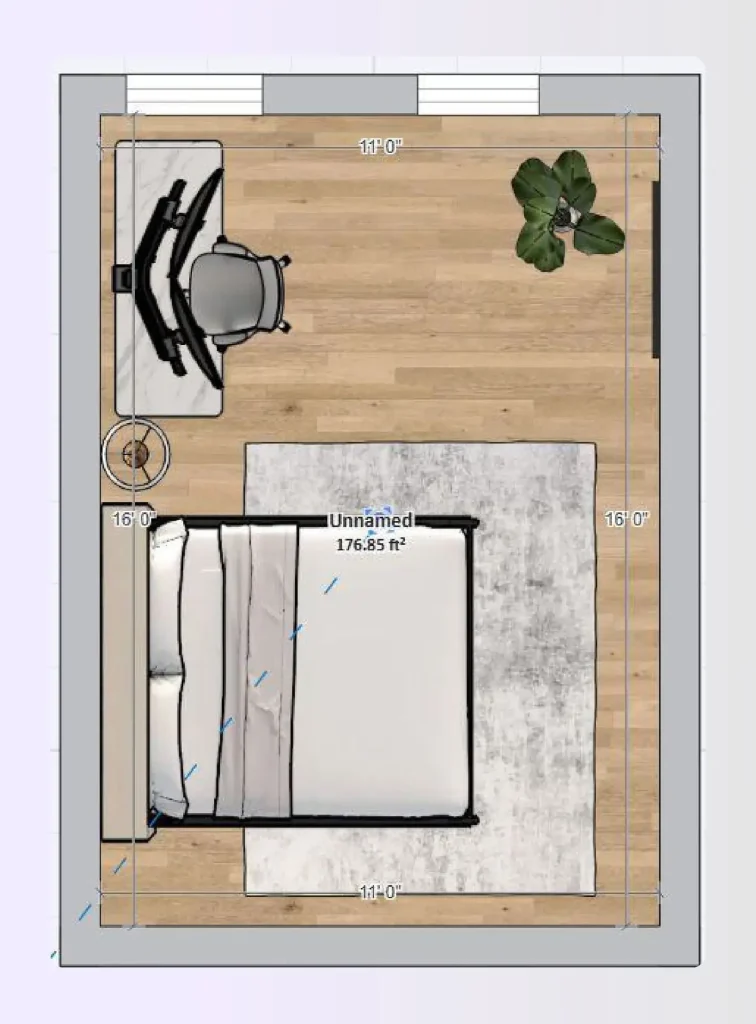
Placing the bed in a corner opens the remaining floor space for a desk, lounge chair, or dressing table, which wouldn’t be viable if the bed were in a central or long-wall position. This is one of the bedroom layout ideas I return to most for clients who need to create extra space in the middle of the room from a floor plan that initially looked too small to offer any flexibility.
Minimum Size: A corner-anchor configuration works in bedrooms as compact as 90 square feet, which makes it one of the most practical layouts for a guest room, a child’s room, or a secondary bedroom in a property with limited square footage.
Design Suggestions:
- Leave at least 18 inches on both accessible sides of the bed for circulation and making the bed
- A loft bed variation of this layout works in rooms with ceiling height above 8.5 feet
The Floating Island Layout
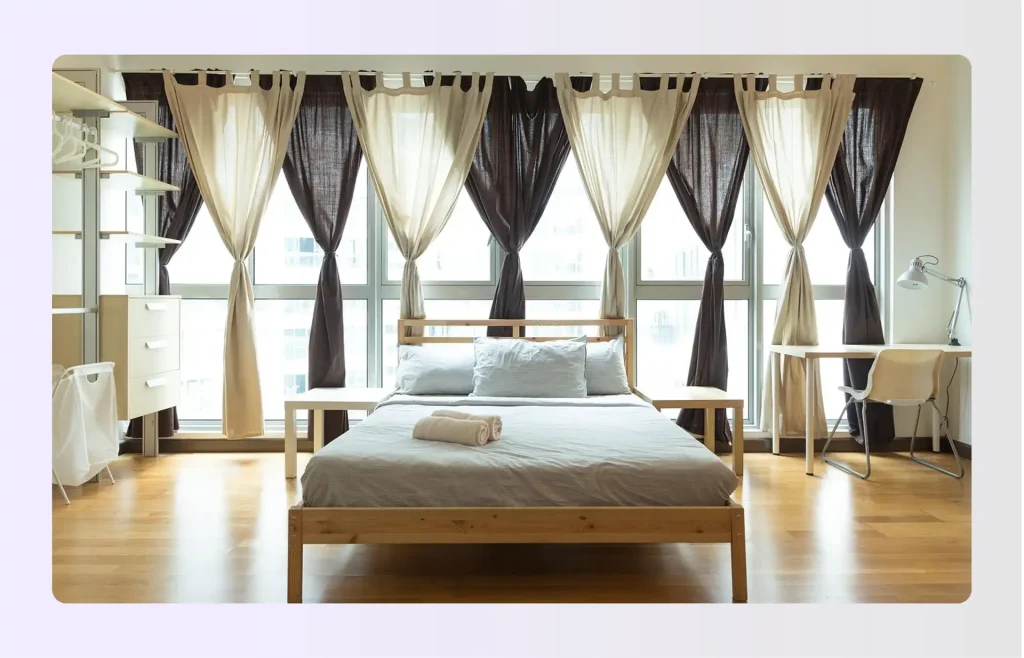
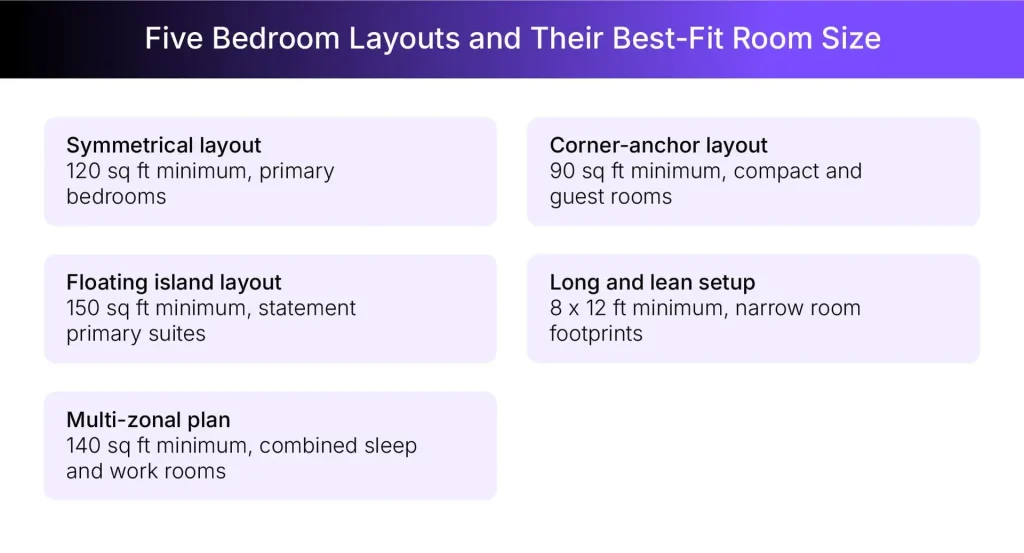
Placing the bed in the center of the room with a low-profile headboard creates a considered, hotel-like spatial quality that signals deliberate design rather than default furniture placement. It works well in rooms over 150 square feet, where there’s enough space on all sides of the bed to make 360-degree movement feel generous rather than cramped.
Minimum Size: The floating island layout requires at least 150 square feet and ideally a ceiling height of 9 feet or higher, as the room’s proportions need to support the openness the layout promises.
Design Suggestions:
- Keep both bedside tables low and minimal to maintain the floating quality around the bed
- Use a large area rug to ground the bed and define its zone clearly within the open floor plan

The Long and Lean Setup
Source: Pixabay — https://pixabay.com/images/download/x-2336469_1920.jpg
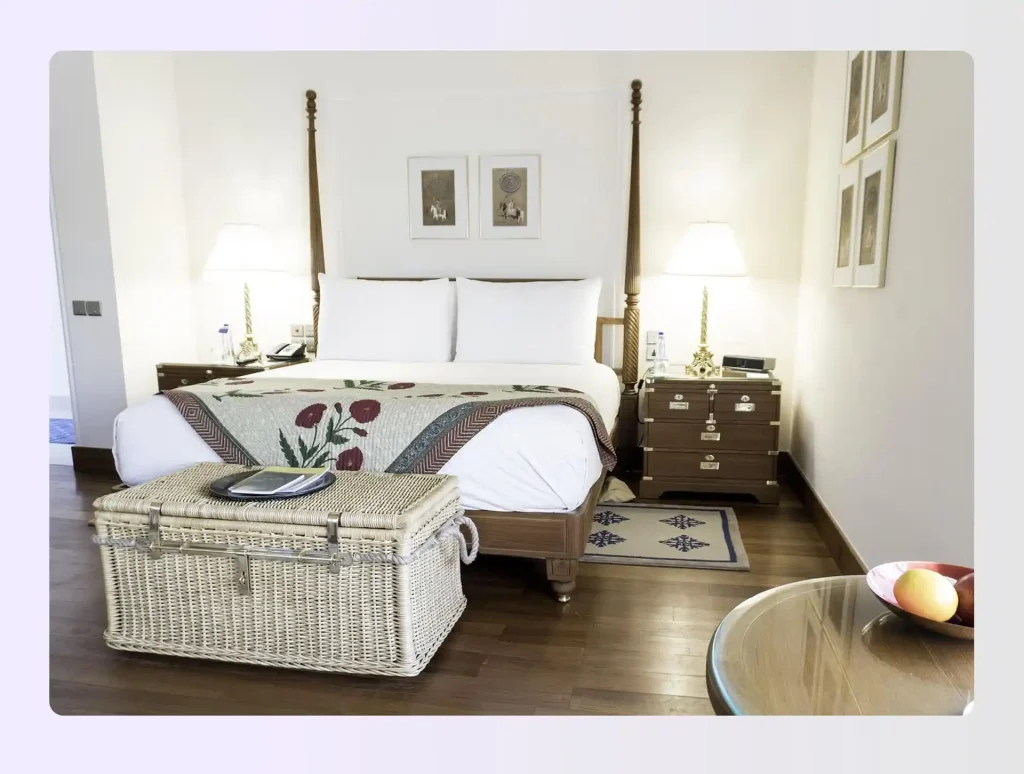
In a narrow room, placing the bed on the shorter wall avoids the bowling alley effect that makes a long, lean floor plan feel more like a corridor than a bedroom worth spending time in. The floor space between the end of the bed and the far wall becomes the perfect spot for a storage bench, a compact wardrobe, or a small dressing area that the layout wouldn’t otherwise accommodate.
Minimum Size: This configuration works in rooms as narrow as 8 feet wide and 12 feet long, though I’d not recommend it below that threshold without modifying the closet doors and entry configuration to compensate for the reduced floor area.
Design Suggestions:
- Place a storage bench at the foot of the bed to anchor the end of the room with purposeful furniture
- Use the far wall for built-in storage rather than a freestanding wardrobe that eats into the circulation path
| Foyr Insight: In Foyr Neo, switch to the 3D walkthrough view to immediately identify where the long-wall corridor effect is still reading as a problem after you have repositioned the bed. This is impossible to detect accurately on a 2D plan alone. |
The Multi-Zonal Plan
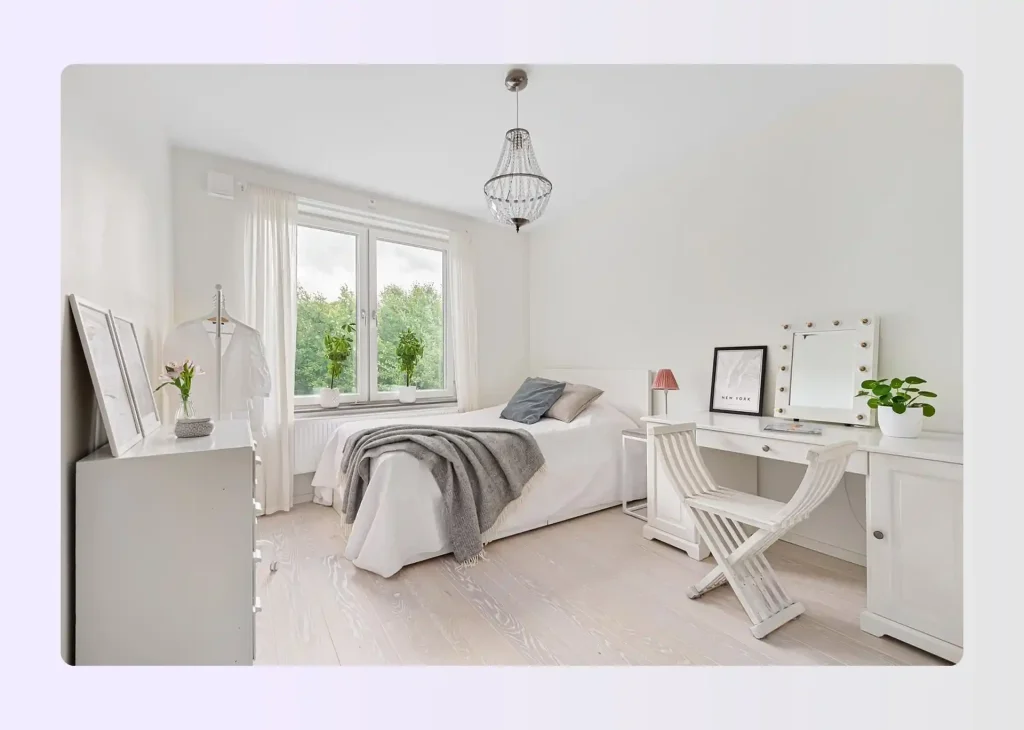
The multi-zonal layout uses a low bookshelf, a rug, or a half-height divider to separate the sleeping area from a workspace or reading nook within the same room, preventing either zone from visually dominating the other. It’s the bedroom floor layout I recommend most often for clients who need to incorporate a home office corner or dressing area without allowing work to intrude on the sleeping environment’s sense of rest.
Minimum Size: The multi-zonal plan needs a minimum of 140 square feet to create zones that feel distinct rather than just crowded, with each defined area needing enough space to function on its own terms without the occupant feeling permanently in the sleeping zone.
Design Suggestions:
- Position a rug in the sleeping zone large enough to extend under the back two legs of the bed
- Keep the storage area and closet doors in the non-sleeping zone so the bed side of the room stays clear of utility items
If you want to see how Foyr Neo handles the process of designing an open-concept bedroom, check out this video
Elevate Your Bedroom Design with Foyr Neo
Designing a bedroom floor plan on paper is a necessary starting point, and the real test of any layout comes when you see it accurately rendered in three dimensions with furniture at correct scale. Foyr Neo gives you that test before a single wall is moved or a piece of furniture is purchased.
Here are the steps you must follow to design a custom bedroom floor plan accurately with our interior design software:
- Set Up Your Room Dimensions: Open a new project in Foyr Neo and input your room dimensions using the precision measurement tools. This will let you define walls to the exact measurements you took during the room audit.
- Place Your Fixed Obstacles: Mark your door swings, window openings, and any structural columns directly in the floor plan so the platform accounts for them as you begin positioning furniture.
- Build Your Furniture Plan from the Bed Outward: Select your bed frame from Foyr Neo’s library of 60,000+ furniture models. Position it according to the command position principle before adding any secondary piece.
- Convert to 3D and Check the Light: Use Foyr Neo’s one-click 2D to 3D conversion to move from the floor plan view into a fully navigable 3D room. Assess how natural light enters at the window position you have chosen.
- Render and Present: Foyr Neo’s AI-driven rendering produces 12K-quality output in minutes, which means you can present your client with a finished bedroom before any purchasing decision is made.
I advise mapping your next interior project digitally to save your valuable time and money. Seeing the completed spatial layout in accurate 3D removes all stressful guesswork from home renovations
Try Foyr Neo free for 14 days and design your first bedroom floor plan before the end of your trial.
| “A bedroom that only accounts for sleep is a bedroom that fails half the day. The layouts that hold up over years are the ones planned around how people actually move, dress, and decompress, not just where they put the bed.”
— Foyr Team |
FAQs
What is the trend for flooring in bedrooms?
The current residential interior design direction favours wide-plank engineered timber with warm, natural tones, such as beautiful brushed oak. Matte engineered oak handles internal environmental humidity fluctuations very effectively while beautifully complementing soft, layered modern bedroom textiles. Herringbone patterns are gaining substantial traction in primary suites, where the finished floor serves as an impactful design statement.
What are common bedroom layout mistakes?
The most frequent spatial error involves placing heavy beds against window walls, which blocks all incoming natural daylight. Many homeowners also fail to account for inward door swing radius before purchasing their heavy wooden furniture items. Selecting large furnishings before finalising the fundamental architectural layout often leads to severe clearance problems when it’s finally installed.
What colour floors are in for 2026?
The aesthetic direction for this year favours warm organic neutrals like light honey oak and soft bleached ash. These lighter wooden shades hold up far better in professional photography than darker finishes do under varying lighting conditions. Matte surface finishes continue to dominate modern residential projects because they hide daily foot-traffic marks extremely well today.
Which way should you lay flooring in a bedroom?
The standard industry recommendation is to run new flooring planks strictly parallel to the longest wall in the room. This architectural technique visually elongates the space and prevents the floor from dividing the rest area. Designers must also evaluate where primary natural light enters so it doesn’t cross the organic wood grain texture incorrectly.
What’s the best flooring to put in a bedroom?
Engineered hardwood remains the premium residential choice because it manages internal humidity fluctuations far better than solid timber. Modern luxury vinyl plank provides a highly reliable flooring alternative for rental properties requiring substantial daily moisture tolerance. Traditional plush carpeting continues to offer maximum underfoot comfort while providing excellent acoustic separation from noisy lower levels.