

Apartment floor plan design is uniquely challenging: the walls are usually fixed, every square foot costs money, and the difference between a livable and a frustrating space comes down entirely to decisions made on paper before anything is touched. Unlike a house, an apartment plan offers limited room for error. The arrangement of rooms either works with the space or fights it.
This guide covers the complete design process, from reading a blank set of dimensions to a finished apartment floor plan, with practical steps that apply whether the brief is a new build, a rental unit, or a client renovation project.

What is an Apartment Floor Plan, and Why Does It Matter?
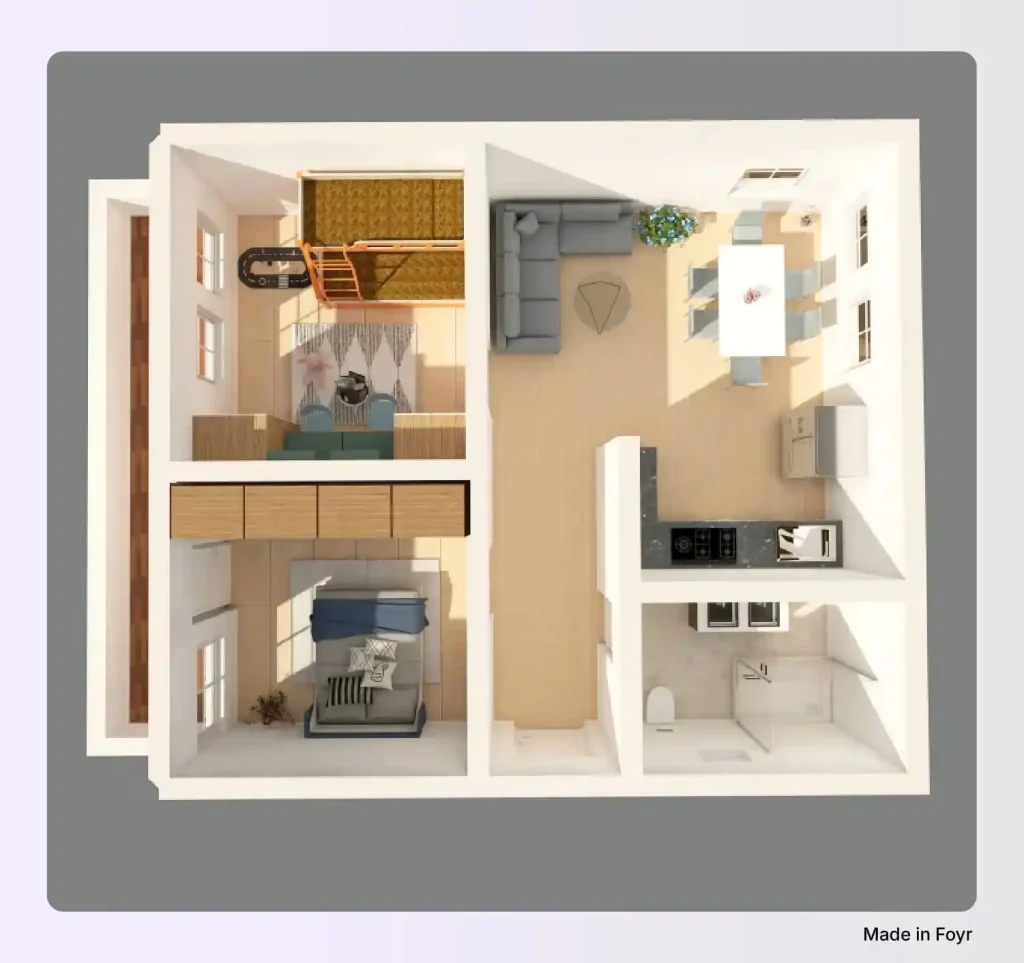
An apartment floor plan is a scaled, bird’s-eye view of a living space that shows the arrangement of rooms, walls, doors, windows, and fixed elements such as plumbing fixtures and appliances.
It communicates five things at once: room placement and how rooms connect, traffic flow through the space, natural light paths from windows and openings, storage potential within the existing footprint, and furniture possibilities based on available square footage and room dimensions.
Getting the floor plan right before touching a single piece of furniture or committing to a renovation saves significant time and money and avoids mid-project changes that erode client budgets.
The difference between a 2D floor plan and a 3D floor plan is not just visual. A 2D floor plan (the traditional bird’s eye view with solid lines for walls, thin lines for fixtures, and arcs for door swings) gives you accurate dimensions and spatial relationships. A 3D floor plan gives you scale, height, light, and the lived experience of the space.
💡Foyr Tip: Both are necessary at different stages: use 2D to make layout decisions and verify clearances, use 3D to validate how those decisions feel before committing to them.

How to Read an Apartment Floor Plan: Arcs, Rectangles, and Common Symbols?
Most apartment floor plans use a consistent visual language comprising of floor plan symbols that is worth understanding before designing. Here’s a quick breakdown:
- Solid lines represent exterior walls and load-bearing interior walls.
- Thin lines or parallel lines indicate interior wall thickness, partitions, or surface materials.
- An arc attached to a rectangle indicates a door and its swing radius, which directly affects how much floor space the door consumes when open.
- Unfilled lines or dashed lines typically represent overhead elements like cabinets, lofts, or beams.
- Fixtures like the bathtub, toilet, sink, and dishwasher are shown as scaled rectangles or simplified outlines in their actual footprint.
- Appliances, including the fridge, washer, and dryer, appear in the same way.
- Staircases are shown as parallel lines with a directional arrow.
Understanding these small details before starting any design work means fewer surprises when the layout meets reality.
Also read – How To Read Floor Plans: A 9-Step Guide – Foyr Neo
| Pro Tip: Save your floor plan as a reference file
Before making any design decisions, photograph or scan the existing apartment floor plan provided by the landlord, developer, or client and upload it to Foyr Neo as a reference layer. This gives an accurate baseline to design from rather than relying on memory or rough measurements. |
Step 1. Define your dimensions and structural constraints
Every apartment floor plan design starts with fixed elements, not preferences. Load-bearing walls, plumbing stacks, electrical panels, window positions, and door openings define what is structurally possible before any design decision is made.
Working against these constraints rather than with them is the most expensive mistake made at this stage. The recommended approach is to document all fixed elements completely before generating any layout options.
Key actions for Step 1
- Measure every wall, window, and door opening accurately, noting the width of each opening and the direction of each door swing
- Mark which walls are structural and cannot be moved, typically exterior walls and walls running perpendicular to floor joists
- Identify plumbing stack locations, which are critical for kitchen and bathroom placement in any new apartment or renovation
- Note natural light sources and the sun path by time of day, since the room function should follow the light where possible
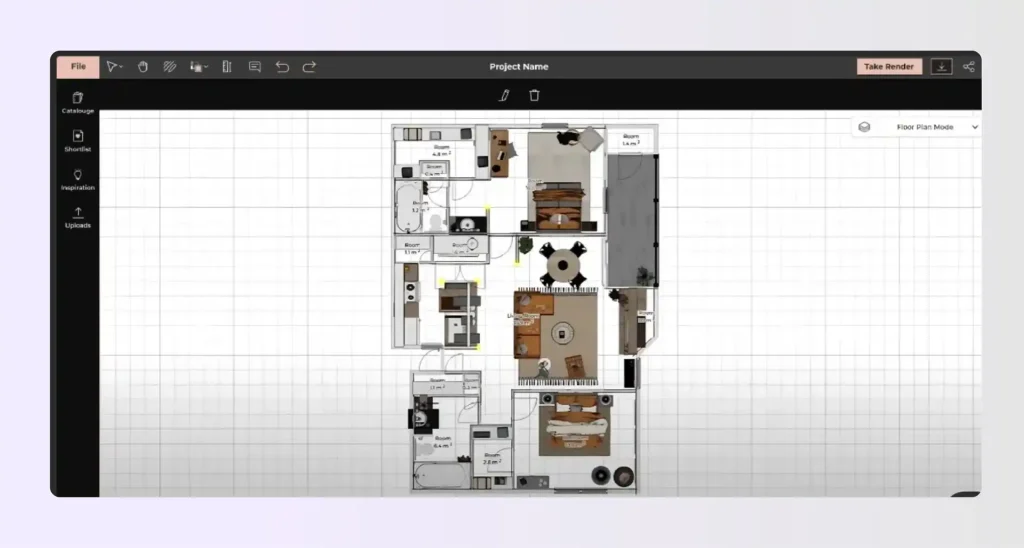
Upload the existing apartment plan to Foyr Neo (JPG or DWG format) and trace directly on screen using the blueprint maker with auto-snap walls for accuracy
Designing Within Rental Constraints: A Note for Renters
For renters, the design constraint is the existing structural shell, and every layout decision must work within it. This means the focus shifts entirely to furniture placement, zone creation through non-structural elements (rugs, lighting, shelving), and reversible modifications.
I recommend painter’s tape on the floor to test furniture footprints before any purchasing decision, and using a floor plan app to visualize arrangements at an accurate scale. These are two of the most practical tools to offer renter clients redesigning their apartment layout without renovation.
Renter vs. owner: what changes in the design process
| Applies to | Area | Guidance |
| Renters | Scope of recommendations |
|
| Owners and developers | Scope of recommendations |
|
| Both | Floor plan |
|
| Both | Plumbing stack |
|
| Renters (ADA units only) | Accessibility upgrades |
|
Step 2. Plan your traffic flow before placing a single piece of furniture
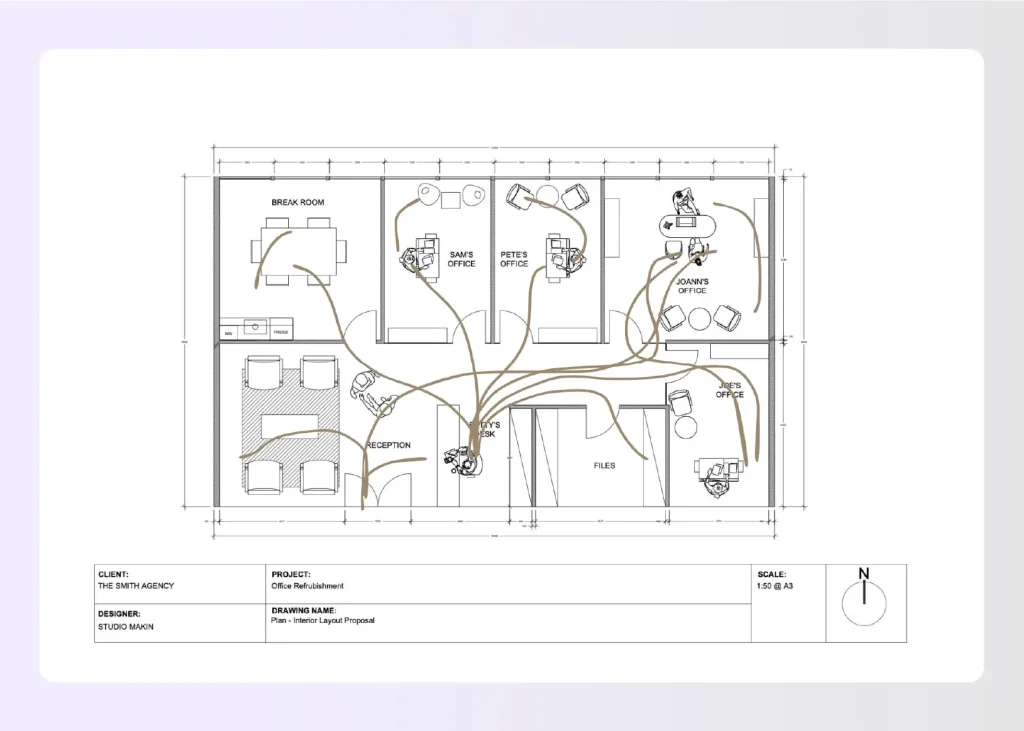
Traffic flow is the most overlooked decision in apartment layout design, and the consequences show up every day. A beautiful apartment that forces residents to walk through the bedroom to reach the bathroom, or through the kitchen to reach every other room, fails regardless of how well it is decorated. The arrangement of rooms and the clearances between furniture are not aesthetic decisions. They are functional ones that determine how comfortable the space is to live in.
Traffic flow principles for any apartment layout
- The front door entry should flow naturally into the main living area, not directly into a bedroom or bathroom
- Maintain at least 36 inches of clearance on all primary circulation paths between furniture and walls
- Wet areas (kitchen, bathroom) should be grouped near existing plumbing to minimize relocation costs and construction disruption
- Bedrooms should sit at the furthest point from the front door for acoustic privacy and visual separation from the social zone
- In open-plan apartments, the path from the front door to the living room should not cross the dining area or kitchen work zone
| In residential kitchen design, a minimum of 42 inches of clear walkway should be maintained in a single-cook kitchen and 48 inches in a kitchen designed for two cooks. These clearances apply equally in apartment kitchens and directly affect traffic flow through adjacent living and dining areas.
Sam, Interior Designer |
Step 3. Zone your spaces by function
Zoning is the art of creating distinct functional areas within an apartment without necessarily building walls between them.
Every apartment plan, regardless of its size or layout, divides naturally into four zones: private (bedroom, bathroom), social (living room, dining room, dining area), work (home office, study, flex room), and utility (kitchen, laundry room, storage areas).
How these zones relate to each other determines how well the apartment functions day to day.
- Open concept layouts need invisible zoning through rugs, lighting levels, and furniture placement to define the living room from the dining table from the kitchen. For a full guide to open plan zoning, see Foyr’s open floor plan blog.
- Smaller apartments should prioritize multi-functional zones: a dining table that doubles as a workspace, a sofa nook that doubles as a reading corner, and a dresser that serves as both storage and a room divider.
- The kitchen and laundry room should always be grouped near the plumbing stack, which in most apartment buildings is a fixed vertical run. Designing these zones away from existing plumbing adds high cost.
- The work zone, particularly in a new home with a dedicated home office, benefits from positioning near natural light but away from the main social circulation path to reduce interruption.
Use Foyr Neo’s drag-and-drop model library of 60,000-plus fixtures and furniture to test zone arrangements at an accurate scale before purchasing anything or committing to a layout.
| Pro Tip: Zone before you furnish
Before specifying any furniture for an apartment project, sketch the four zones on the floor plan first. Furniture selection should follow zoning decisions, not drive them. A sofa chosen before the living room zone is defined almost always ends up in the wrong position. |
Step 4. Design room by room
Once the zones are established, the room-by-room design decisions follow a consistent logic: anchor the room around its primary function, verify clearances for all furniture and circulation paths, and confirm that fixtures and appliances fit within the footprint before specifying them. The sub-sections below cover each primary room type.
Living Room
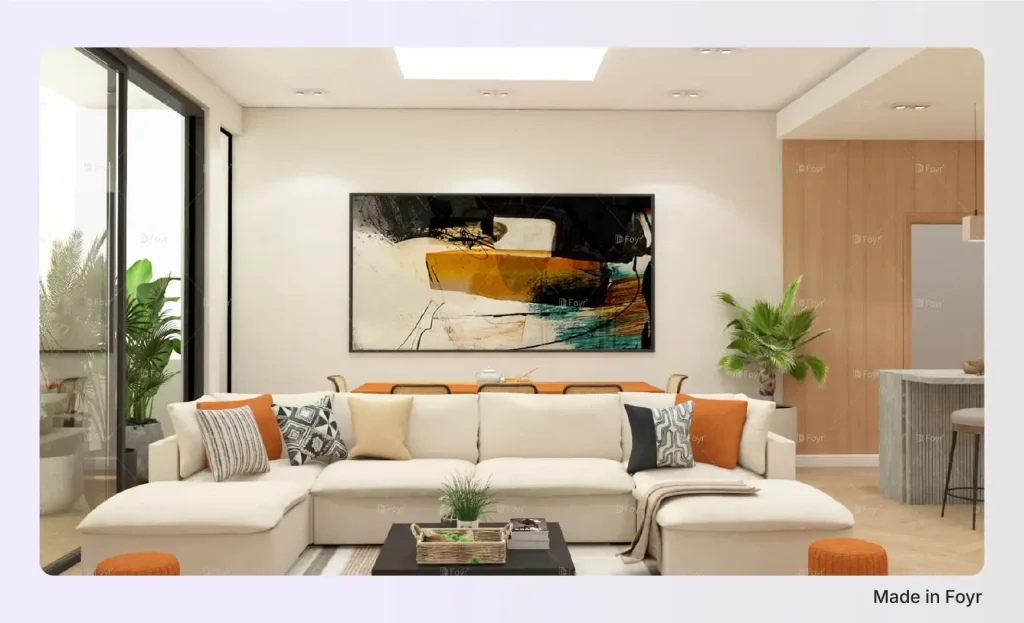
The living room is the primary social zone in any apartment and the room where furniture placement decisions have the most visible impact on the overall apartment feel. Anchor all furniture around a single focal point (the TV wall, a window with a view, or a fireplace if present) and design the seating arrangement around that anchor.
Maintain 18 inches between the sofa and the coffee table for comfortable use, and ensure at least one clear path of 36 inches through the room for circulation. In a formal living room or a larger social space, a second seating group can be created, but the primary path through the room should never be blocked by furniture.
Kitchen
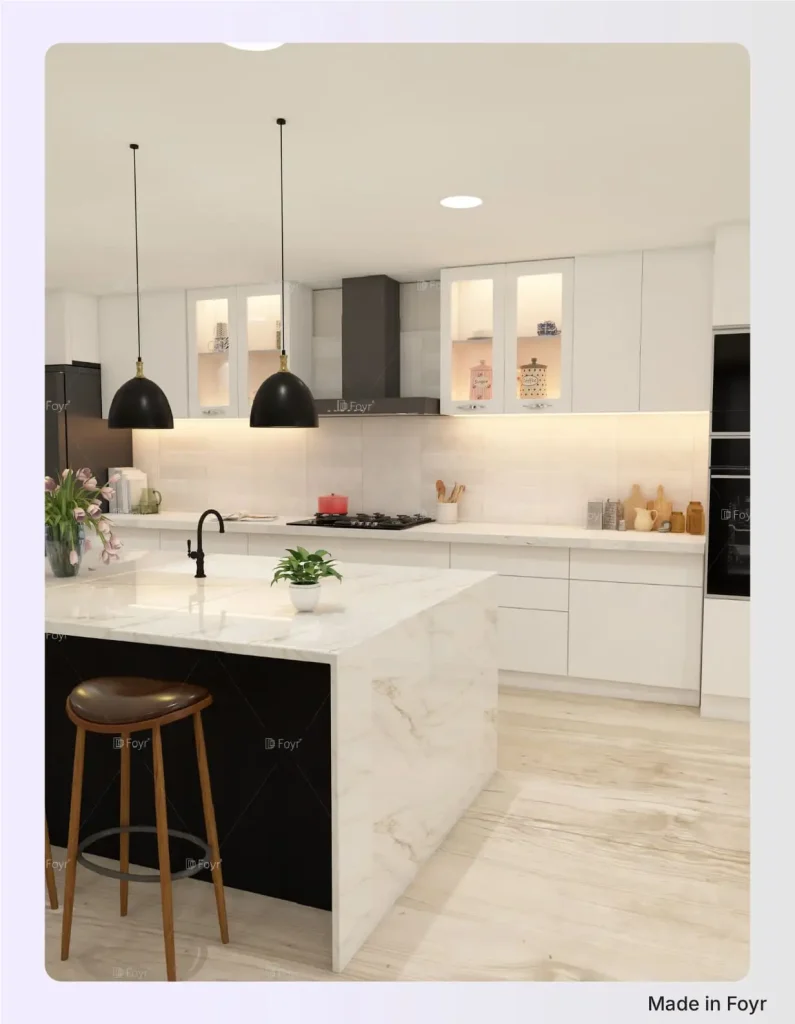
The kitchen work triangle (the relationship between the sink, stove, and refrigerator) is a useful starting point for apartment kitchen layout. The three legs of the triangle should total between 12 and 26 linear feet for efficient movement during cooking.
However, the work triangle has been critiqued in professional kitchen design circles as insufficient for modern open-plan kitchens with multiple cooks or island configurations. Many kitchen designers now use a work zone model instead, treating the sink zone, cooking zone, prep zone, and refrigerator zone as independent areas rather than three fixed points.
For apartment kitchens, the work triangle remains a valid baseline, but in any open plan apartment where the kitchen connects directly to the living room or dining area, the zone model gives a more complete picture of how the space functions.
Galley kitchen layouts work best in narrow apartments where the kitchen runs along one or two parallel walls. A kitchen island is only appropriate when there is at least 42 inches of clearance on all sides. In smaller apartments, a rolling kitchen cart gives the benefits of additional counter space and appliance storage without permanently reducing the clearance width of the kitchen zone.
Bedroom
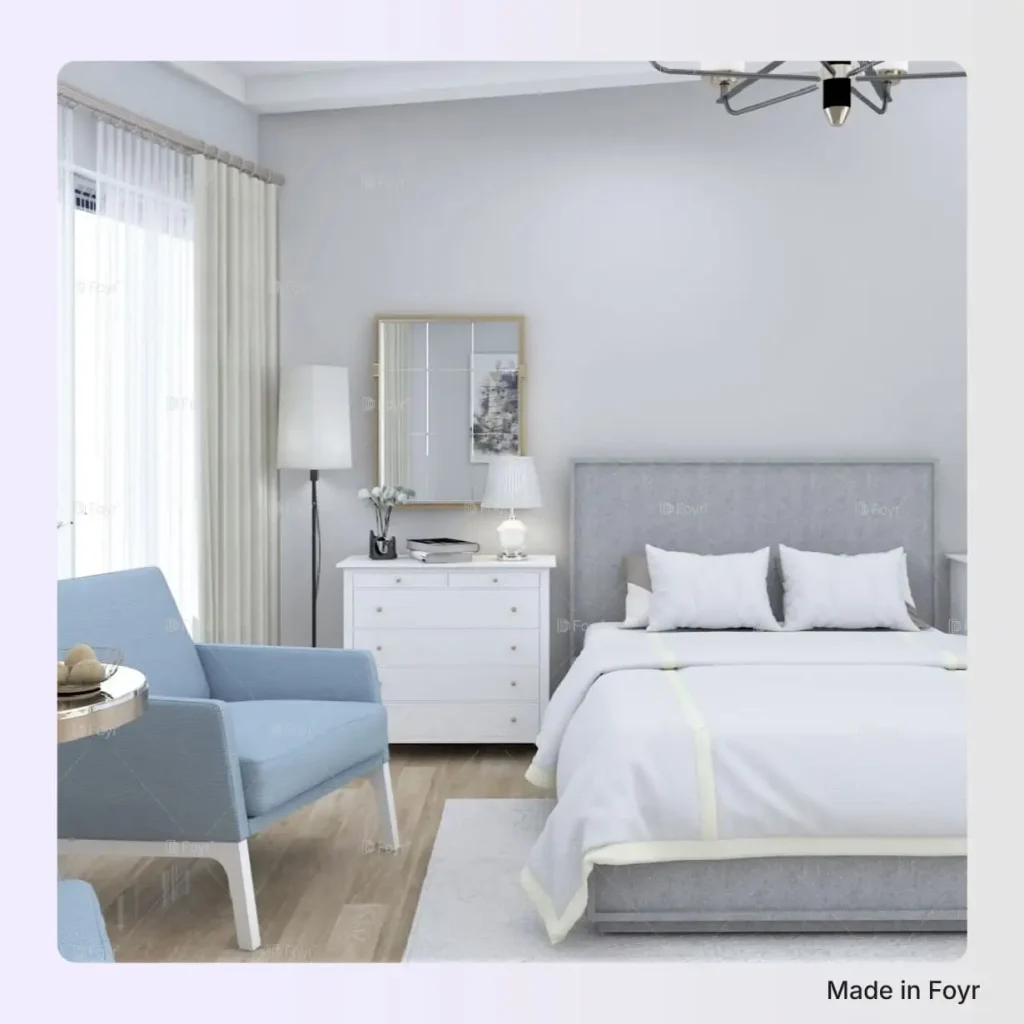
The bed is the anchor of any bedroom layout, and it should be placed before any other decision is made. The recommended minimum clearance is 24 inches on both sides of the bed and at the foot of the bed, with 36 inches preferred on the primary entry side. The closet should be accessible without requiring the occupant to cross the bed path.
In a master bedroom, the dressing area and the closet should form a natural morning routine path from the bed to the bathroom. The width of the bedroom is the most constraining dimension: a room under 10 feet wide will accommodate a queen bed but will require careful planning to maintain clearance on both sides while also fitting a dresser or wardrobe.
Bathroom
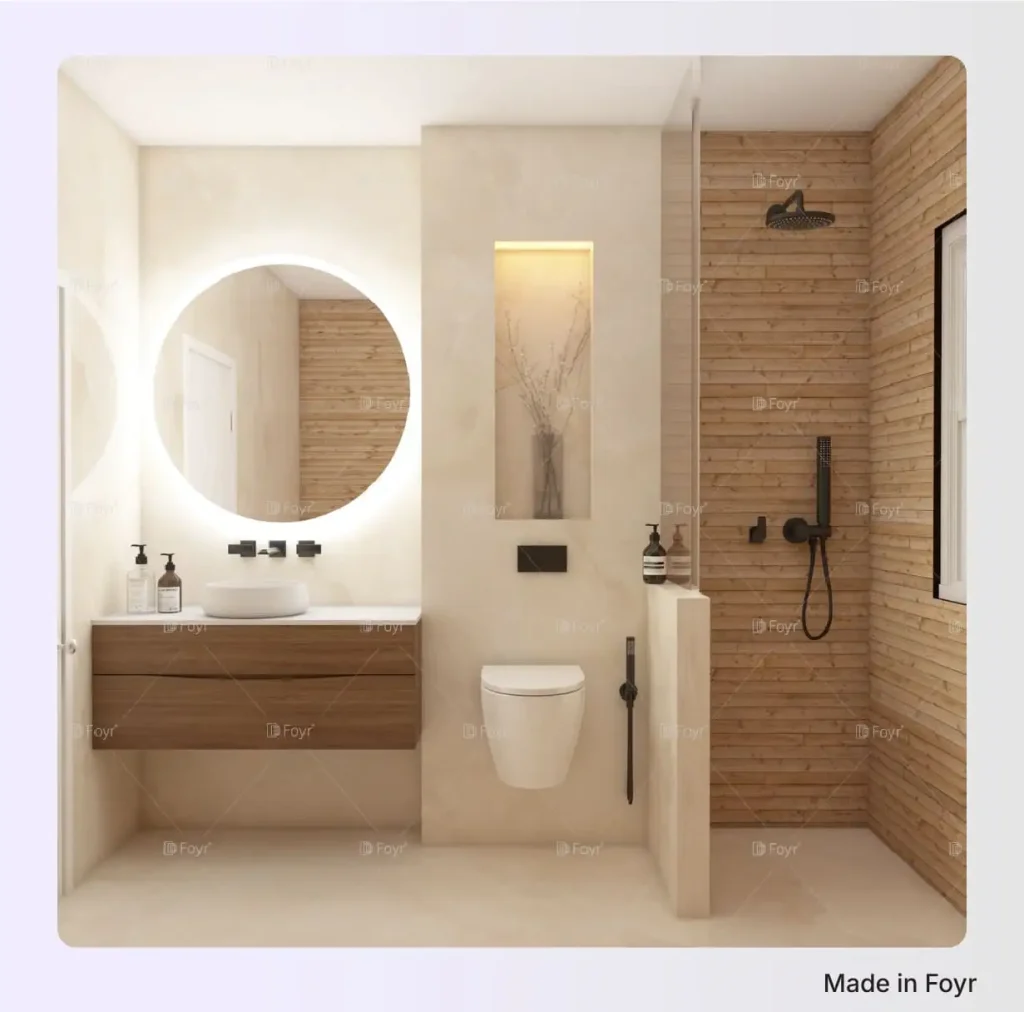
Even in the most compact bathroom, certain clearance standards should be treated as non-negotiable. Maintain 15 inches of clearance from the toilet centerline to any adjacent wall (18 inches is preferred), 21 inches of clear floor space in front of the toilet, and 24 inches in front of the vanity.
The arc of the bathroom door is among the most commonly underestimated elements in a small apartment floor plan: a standard 24-inch door swinging inward consumes a significant portion of the usable floor space in a compact bathroom. A pocket door or a barn door eliminates that arc entirely and is among the highest-impact modifications available in a rental bathroom where wall removal is not possible.
For ADA-compliant bathrooms, a 60-inch turning radius must be maintained clear of all fixtures, which typically requires a minimum bathroom footprint of 60 by 56 inches.
Home Office or Flex Room
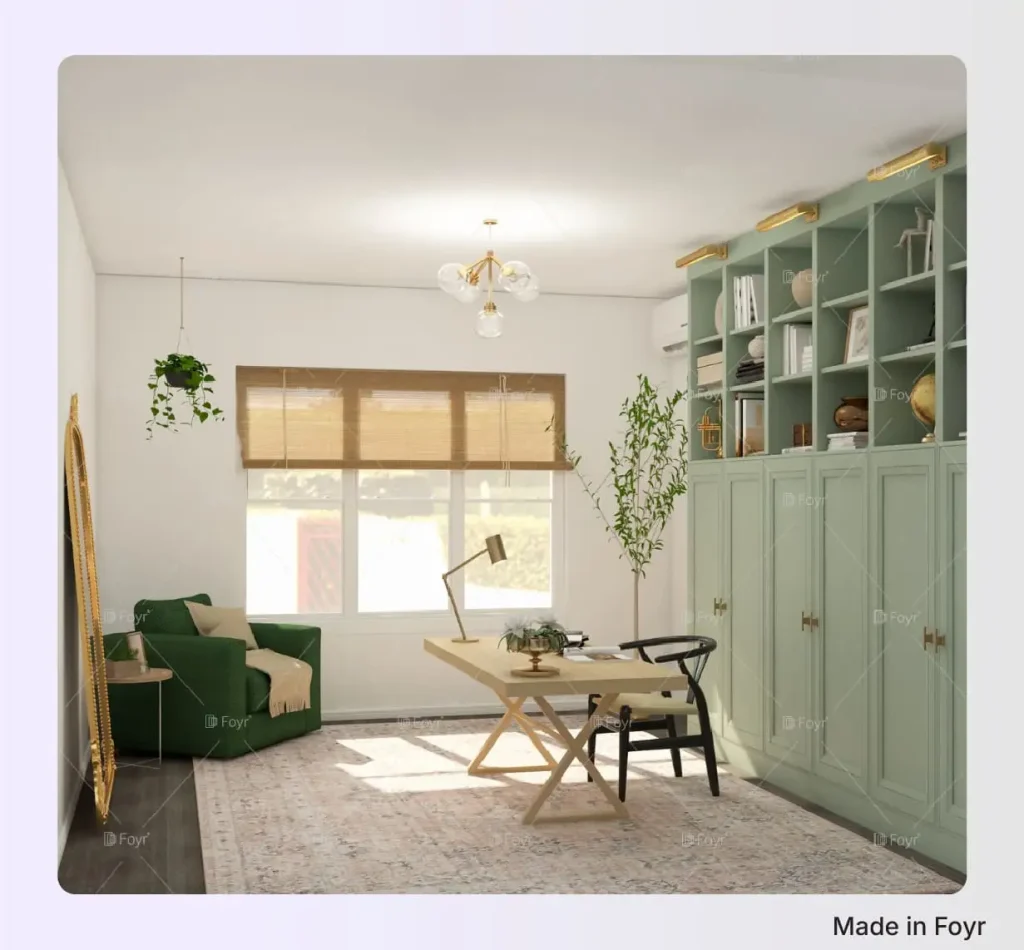
A functional single-person home office requires a minimum of 50 sq ft of dedicated floor space. Natural light should come from the side of the desk, not directly behind or in front of the screen, to avoid glare and eye strain.
The width of the desk zone should accommodate at least a 48-inch work surface with clearance behind the chair for a person to stand and move without obstruction. In apartments without a dedicated flex room, the work zone can be carved from a corner of the living room or dining area using shelving, a rug, or lighting to define the boundary.
The key design principle is that the work zone should have a clear visual and acoustic separation from the main social zone, even if it shares the same room.
Have a Look: Home Office Designs Created in Foyr
Step 5. Maximise Storage Without Sacrificing Floor Space
Storage is the most underestimated dimension of apartment floor plan design. In any apartment where square footage is limited, the instinct to add furniture for storage (a chest of drawers here, a bookcase there) progressively reduces the clearances that make a space livable.
The more effective approach is to build storage vertically and into the architecture of the space rather than horizontally across the floor.
Storage strategies for any apartment layout
- Vertical storage over horizontal: floor-to-ceiling shelving, wall-mounted cabinets above doorways, and lofted storage in rooms with ceiling height above 9 feet
- Built-in storage designed as architectural features: window seats with drawers below, banquette dining with storage underneath, and bed frames with integrated drawers
- Kitchen storage along the full height of the wall above upper cabinets, using the space between the top of the cabinet and the ceiling that is commonly wasted in standard apartment kitchens
- Entryways are a consistently overlooked storage opportunity: a shallow built-in or wall-mounted unit at the front door handles outerwear, shoes, and everyday personal items without consuming living room floor space
💡Foyr Pro Tip: Use Foyr Neo’s cabinet layout and built-in storage tools to design custom storage solutions directly into the floor plan before specifying any freestanding furniture
Step 6. Visualise in 3D Before You Commit
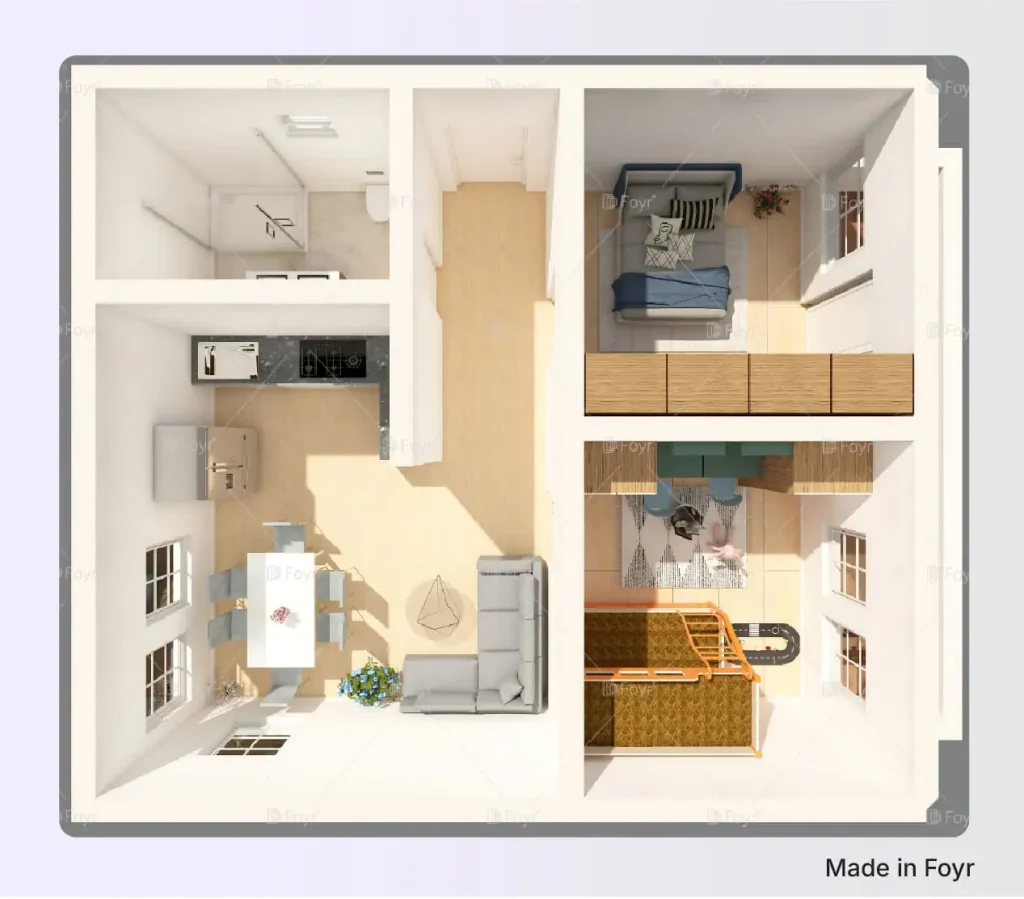
Two-dimensional floor plans are necessary but not sufficient. Dimensions on paper cannot tell you how a 12-foot ceiling will feel, whether a sofa is too large for a room’s actual proportions, or how natural light moves through a south-facing window at 4 pm in January.
The 3D visualization stage is where the apartment plan becomes a real space rather than a set of numbers, and it is the single step most likely to catch problems before they become expensive mistakes.
What to verify in 3D before committing to any apartment layout
- Use Foyr Neo’s one-click 2D to 3D conversion to instantly walk through the apartment floor plan at human scale
- Complete a 360-degree walkthrough to check sightlines, furniture clearances, and light quality from every position in the room
- Test materials, paint colors, and the type of flooring on Foyr Neo’s AI Magik Bar before purchasing any samples or committing to a specification
- Generate photorealistic renders in minutes to share with clients, landlords, or co-occupants for approval before any work begins
- Test multiple furniture arrangements and storage configurations in the same 3D model rather than committing to one layout early
The 6 Types of Apartment Floor Plans You Need to Know
Apartment plans vary significantly by size, structure, and the design challenges they present. The table below covers the six primary types, from the compact studio to the duplex townhome-style layout.
| Apartment Type | Typical Size Range | Ideal For | Key Layout Challenge |
|---|---|---|---|
| Studio apartment | 300 to 600 sq ft | Solo renters, first-time city dwellers | Separating sleeping, living, and dining without walls |
| One-bedroom apartment | 500 to 900 sq ft | Couples, remote workers | Fitting a home office without sacrificing the living room |
| Two-bedroom apartment | 800 to 1,200 sq ft | Families, roommates | Traffic flow between shared and private zones |
| Three-bedroom apartment | 1,000 to 1,800 sq ft | Larger families, multi-use households | Storage and circulation across multiple bedrooms |
| Loft apartment | Varies, open vertical space | Design-forward urban renters | Zoning an open plan with no interior walls |
| Duplex apartment | Varies, two-level layout | Those wanting townhome-style privacy in a building | Stair placement and vertical circulation between floors |
ADA and townhome apartment layouts: two types worth planning for specifically
- ADA-compliant apartment layouts require a 60-inch turning radius in bathrooms, 36-inch doorway widths, zero-threshold entries, lever hardware, and countertops at 34 inches. These requirements shape the entire floor plan from the first dimension.
- Townhome-style duplex apartments span two levels connected by a private interior staircase. The primary design challenge is stair placement and ensuring that both levels have a logical, efficient room arrangement independent of each other.
- Both types require early structural and code review before any layout options are presented to a client or developed into a full apartment plan.
5 Common Apartment Floor Plan Design Mistakes (and How to Fix Them)
The most costly apartment layout mistakes are not made during construction. They are made during the floor plan stage, and they are almost always preventable with accurate measurements and a systematic design process.
- Ignoring traffic flow entirely. The most common mistake in apartment plan design is placing furniture for aesthetics and discovering afterward that the living room has no clear path through it. Fix: draw all circulation paths on the floor plan before placing a single piece of furniture, and verify 36-inch minimum clearances on every primary route.
- Placing the bed on the wrong wall. The bed wall is the most consequential decision in any bedroom layout because it determines where everything else goes. Placing the bed against the window wall blocks natural light and ventilation. Placing it against the door wall creates an immediate sightline issue. Fix: test at least three bed positions in the floor plan before selecting one.
- Underestimating storage needs. Clients often discover their storage is inadequate three months after handover, when floor space starts filling with items that have nowhere to go. Fix: calculate storage requirements before finalizing the layout and design vertical storage into the floor plan from the start, rather than adding furniture later.
- Blocking natural light with furniture. Large pieces placed in front of windows reduce natural light in the entire room, not just the area immediately behind the furniture. Fix: keep all window walls and the 36 inches in front of each window clear of tall or bulky furniture. Test light quality in the 3D model at multiple times of day before finalizing furniture placement.
- Designing for today, not for how the space will evolve. A home office that doubles as a guest room, a dining area that expands for entertaining, a living room that can be reconfigured as a household grows. Clients often change how they use their space within two years of moving in. Fix: identify which zones need to be multi-functional from the start and design the floor plan to accommodate those transitions rather than committing rigidly to one configuration.
Design Your Apartment Floor Plan with the Foyr Neo App
Foyr Neo brings the full apartment floor plan design process into a single browser-based app, from blank dimensions to a photorealistic render, without requiring CAD expertise or switching between multiple tools.
Key Foyr Neo features for apartment floor plan design
- Blueprint maker with auto-snap walls: upload an existing floor plan (JPG or DWG) and trace walls directly on screen, or start from scratch with precision measurement tools and a customizable grid
- Ruler tool: verify all clearance widths, room dimensions, and ADA turning radii directly on the 2D floor plan before moving to 3D
- 60,000-plus model library: drag and drop furniture, fixtures, and appliances at an accurate scale to test furniture placement before purchasing anything
- One-click 2D to 3D conversion: transform the apartment plan into a fully navigable 3D model and complete a 360-degree walkthrough to verify sightlines and light quality from every angle
- AI Magik Bar: test materials, type of flooring, paint colors, and surface finishes virtually before ordering any samples
- Photorealistic renders in minutes: generate client-ready or landlord-ready visuals to share via email or presentation without waiting days for render output
With Foyr Neo, you can bring any apartment floor plan to life. Whether you need help with a full project or just some design inspiration, Foyr’s interior design services can also provide expert assistance starting from $99.
Ready to see the difference for yourself? Start your 14-day free trial of Foyr Neo today.
FAQs
How can I get a floor plan of my apartment?
The first place to check is the landlord, property manager, or developer. Most apartment buildings have floor plans on file for every unit and are required to provide them on request. If the building does not have one, measure the apartment yourself using a laser measure (more accurate than a tape measure for longer walls), sketch the layout on graph paper, and then upload it to a floor plan app like Foyr Neo to create a to-scale digital version. For a new home or new apartment purchase, the floor plan is typically included in the sale documents or the building’s disclosure package.
What is a good apartment layout?
A good apartment layout separates private zones (bedroom, bathroom) from social zones (living room, dining area, kitchen) with a clear and logical traffic flow between them. It provides at least 36 inches of clearance on all primary circulation paths, positions wet areas near existing plumbing, and places the bedroom at the furthest point from the front door for privacy. In practical terms, a good apartment layout is one where daily routines (waking up, cooking, working, entertaining) do not conflict with each other in the same space at the same time.
What are the common features of an apartment layout?
Most apartment floor plans share a standard set of features: an entry from the front door into a living or combined living and dining area, a kitchen accessible from the main social zone, one or more bedrooms positioned away from the entry, a bathroom (and in larger units, a master bathroom adjacent to the master bedroom), and a laundry room or designated washer and dryer alcove. Storage areas, balconies, patios, and entryways vary by building type and unit size. Townhomes and duplex apartments add a staircase and a second level, which introduces additional design considerations around vertical circulation.
What are the different types of apartment layouts?
The six primary apartment layout types are the studio (open plan, no dedicated bedroom), the one-bedroom, the two-bedroom, the three-bedroom, the loft (open vertical space, often industrial in character), and the duplex (two levels with a private interior staircase). Within each type, the specific apartment plan varies by the position of the kitchen (open to the living room or enclosed), the number of bathrooms, the presence of a dining room or dining area separate from the living room, and whether outdoor spaces like balconies or patios are included. ADA-compliant and accessible apartment layouts follow specific dimensional requirements that affect every room in the plan.