

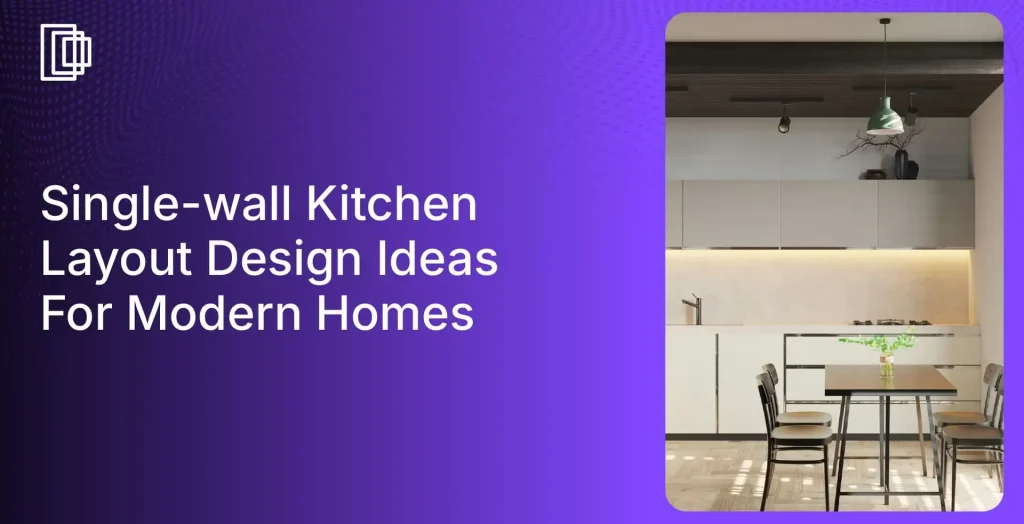
Whether you are designing a sleek city studio or trying to open up a cramped suburban floor plan, a one wall kitchen layout is your secret weapon for creating a space that feels intentional, open, and efficient.
It is exactly what it sounds like: a single-wall kitchen layout where all your cabinets, appliances, and counter space consolidate into one high-functioning line. Every kitchen component stays within arm’s reach, and the rest of your floor space remains completely free.
In modern kitchen designs, you embrace the “work line” philosophy. It is efficient, stylish, and leaves the rest of your living area feeling like an open-concept sanctuary rather than a maze of wall cabinets.

What Is a Single-wall Kitchen Floor Plan?
A single-wall kitchen floor plan is a layout where all kitchen cabinets, countertops, and appliances are positioned along one single-wall. Commonly referred to as an I-shaped kitchen, it consolidates all working zones into a single, clean, linear run that is straightforward to plan and build.
In this setup, your refrigerator, kitchen sink, and stove arrange in a straight sequence. This makes the single-wall kitchen layout the most space-efficient option for small homes, studios, or open-concept living areas where preserving floor space is an absolute priority for the overall kitchen design.
The kitchen layout, with a single-wall configuration, also centralizes all plumbing, gas, and electrical work on a single-wall. This significantly reduces construction costs and allows the space to integrate naturally with a dining or living area, without any physical barriers separating the kitchen from the rest of the home.
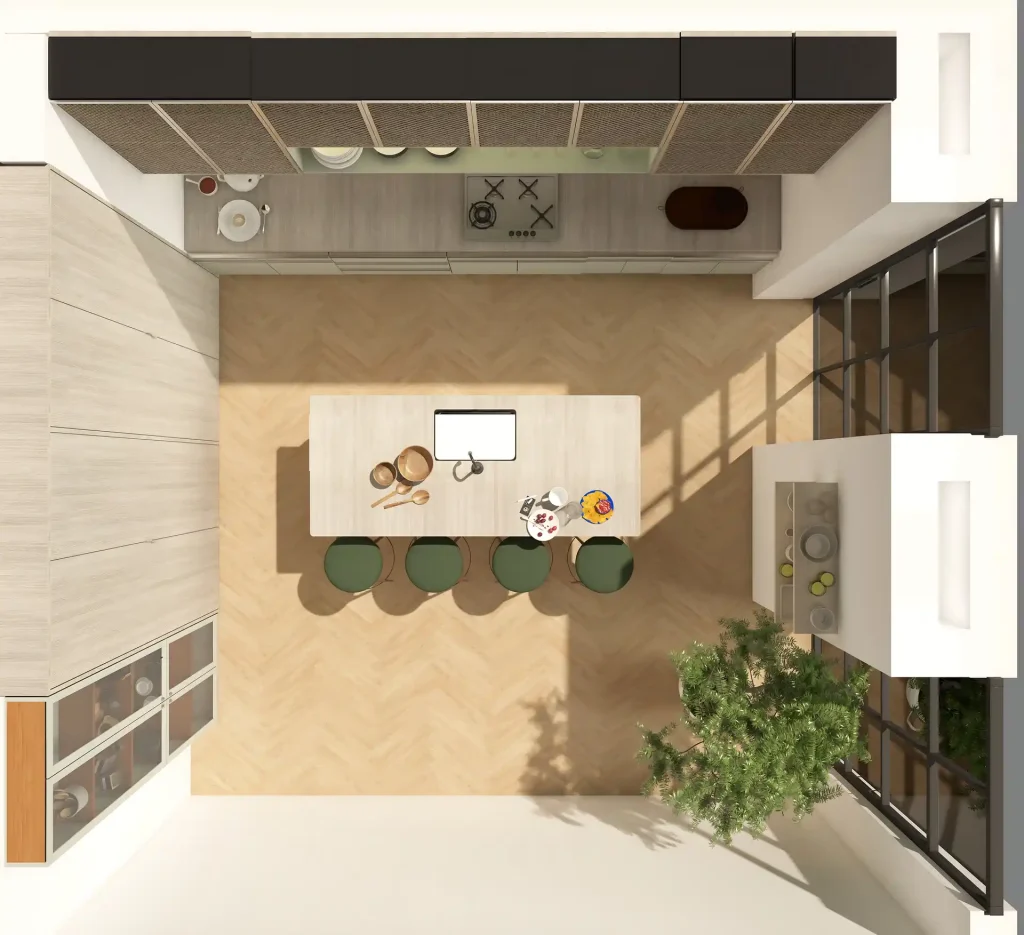

How to Plan Your Single-wall Kitchen Floor Plan
Planning a single-wall kitchen layout requires thoughtful zone sequencing, careful measurement, and a clear understanding of how people move through a kitchen during daily food prep and cooking.
The Golden 8-Foot Rule
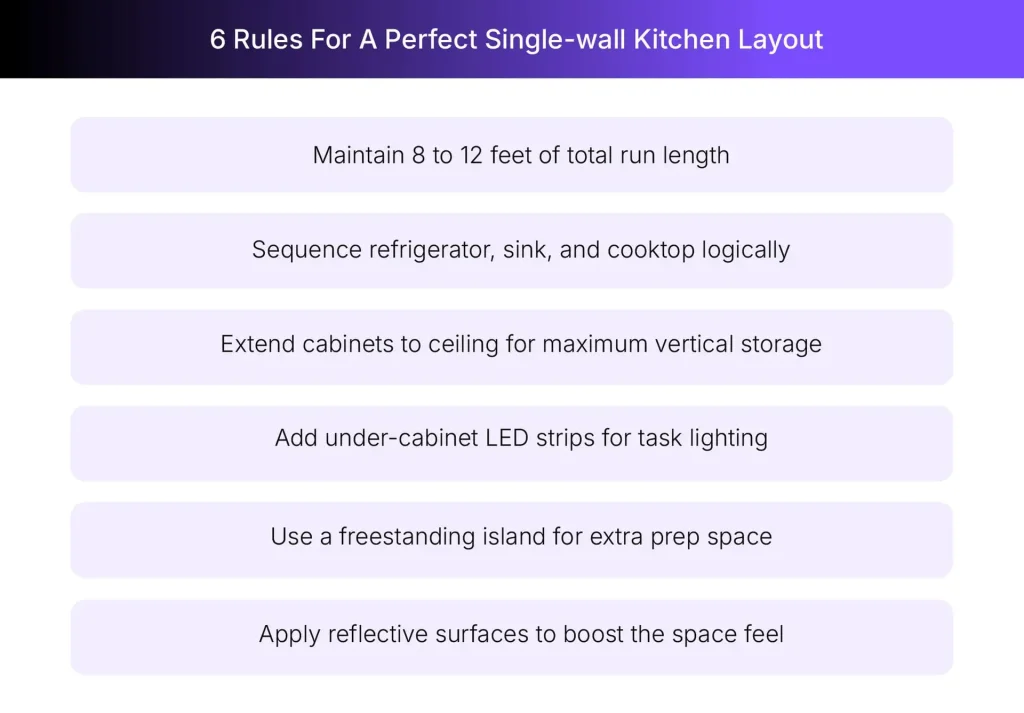
The most important dimension in a single-wall kitchen layout is the total run length. Industry guidelines recommend a minimum of 8 feet and a maximum of 12 feet for a fully functional single-wall run.
Shorter than 8 feet and you sacrifice meaningful prep space; longer than 12 feet and you create unnecessary distance between cooking zones. A well-executed one wall small kitchen layout at 9 feet comfortably houses a range, dishwasher, refrigerator, and 36 inches of continuous countertop surface for practical, everyday use.
The Logic of Flow
Efficient workflow in a single-wall kitchen layout follows the preparation-cooking-cleaning sequence from left to right. Place the refrigerator at one end, the kitchen sink in the center, and the cooktop at the far end.
You should also consider where the dining table sits relative to the kitchen wall. Positioning the prep space closest to the dining area allows you to transfer food directly to a breakfast bar or kitchen island without crossing the hot cooking zone. This improves both safety and hospitality during meal preparation.
8 Single-wall Kitchen Layout Examples
The single-wall kitchen layout delivers outstanding results across every design style and budget. These eight examples show you exactly how to make this kitchen design work beautifully in any space.
1. The All-White Minimalist Wall
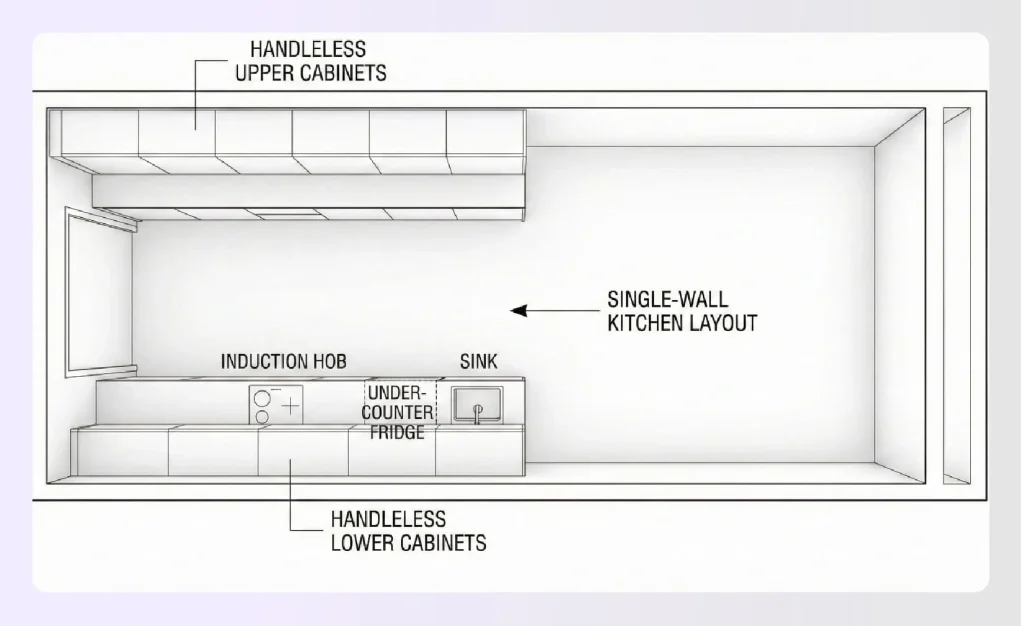
This single-wall kitchen layout uses handle-less white cabinets, white countertops, and a matching backsplash to create one uninterrupted visual plane. The kitchen area dissolves into the wall, making the overall space feel significantly larger than its actual square footage.
Key Features:
- Handle-less upper cabinets and base cabinets create a seamless, shadow-free surface across the full run.
- A large-format white porcelain backsplash eliminates grout lines and reinforces the clean minimalist design style.
- Under-cabinet LED lighting provides warm task illumination without interrupting the uniform white color palette.
Layout: The single-wall kitchen layout runs 10 feet with all appliances flush-integrated. The kitchen sink sits centered under a window for natural light on the primary work surface.
Foyr Neo Tip: Use Foyr Neo to compare matte versus gloss white finishes in your 3D render before committing to your final specification.
2. The Natural Wood & Black Accent Kitchen
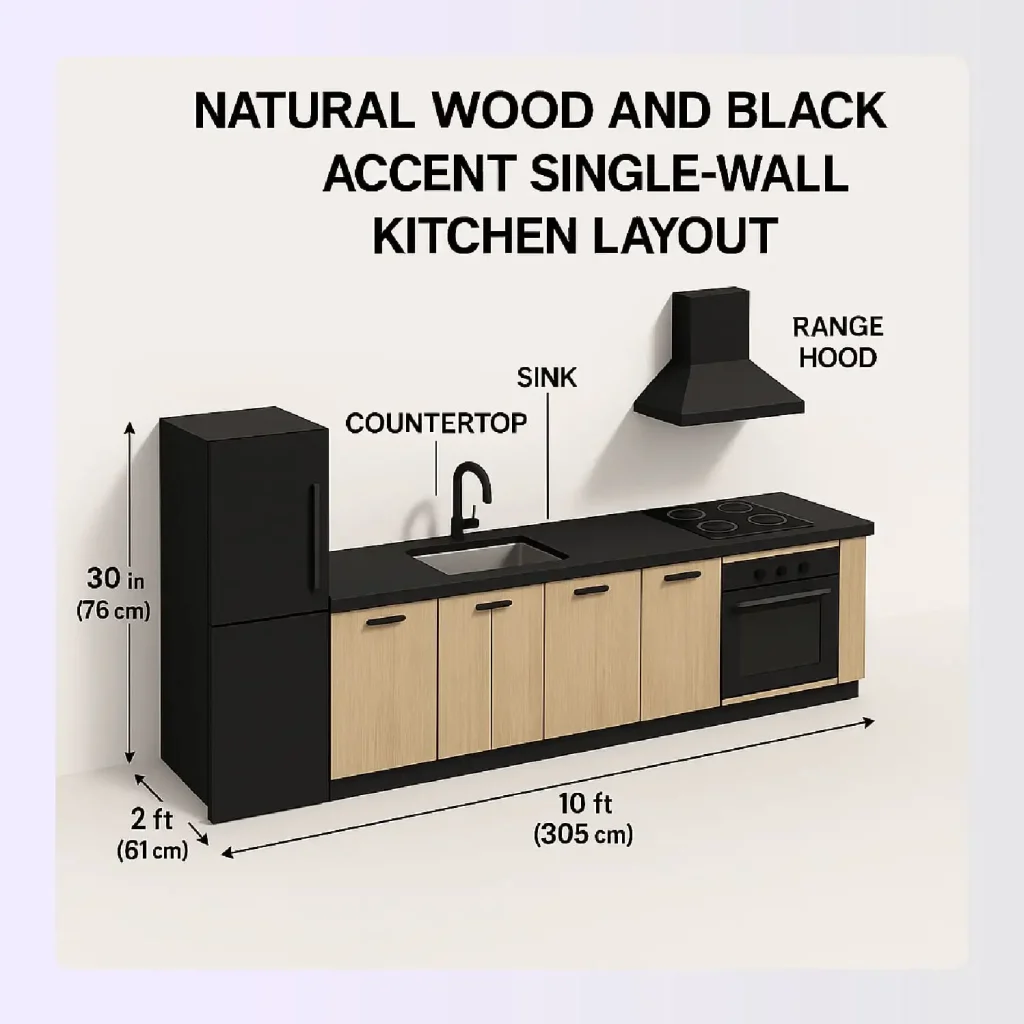
This single-wall kitchen layout pairs warm wood grain cabinets with matte black hardware and fixtures. The combination works particularly well in open-plan apartments where the kitchen design needs to hold its own as a furniture-quality element within the wider room.
Key Features:
- Warm oak veneer base cabinets contrast with matte black pendant lights above the counter zone.
- Black stainless steel major appliances carry the accent color across the full run without feeling heavy.
- Open shelving in warm wood above the lower cabinets adds vertical space interest and easy-reach storage.
Layout: A one wall kitchen with island layout pairs naturally here. The freestanding island sits parallel to the single-wall kitchen layout, adding a breakfast bar and extra prep space.
Foyr Neo Tip: Browse Foyr Neo’s material library to test grain directions of wood veneer or stain tones of tiles before specifying your cabinet supplier and locking in your material orders.
3. The Floor-to-Ceiling Storage Wall
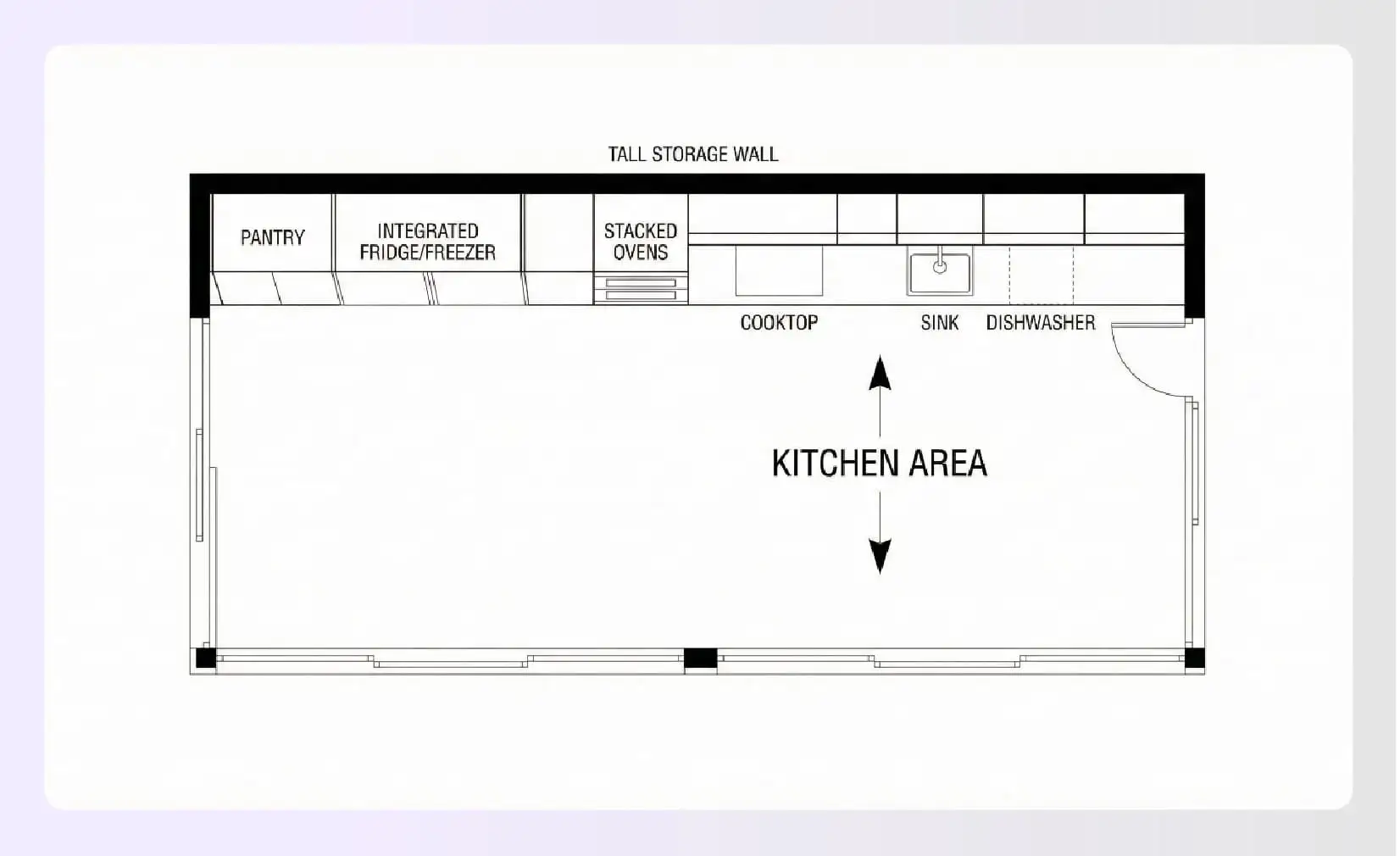
This single-wall kitchen layout treats the entire wall as a design canvas from floor to ceiling. Tall cabinet towers anchor each end of the run, with wall cabinets bridging the gap above countertop level, creating extraordinary storage space within a cohesive, architectural wall surface.
Key Features:
- Tall pantry towers at both ends of the run house small appliances, dry goods, and tall bottles efficiently.
- Wall cabinets extend fully to the ceiling, claiming the dead space above that most kitchens waste completely.
- Integrated appliance panels ensure the oven, refrigerator, and dishwasher blend seamlessly into the cabinetry.
Layout: The single-wall kitchen floor plan here requires a minimum 11-foot run and at least 9-foot ceiling height to feel proportional rather than overwhelming in the kitchen area.
Foyr Neo Tip: Use Foyr Neo’s elevation view to verify that your ceiling-height cabinets read as intentional architecture before presenting options to your client.
Designing a full kitchen from scratch in Foyr Neo is far easier than most designers expect. This step-by-step tutorial walks you through setting up a complete kitchen floor plan, placing appliances, and generating a photorealistic render for your client presentation.
4. The Small Apartment Compact Kitchen
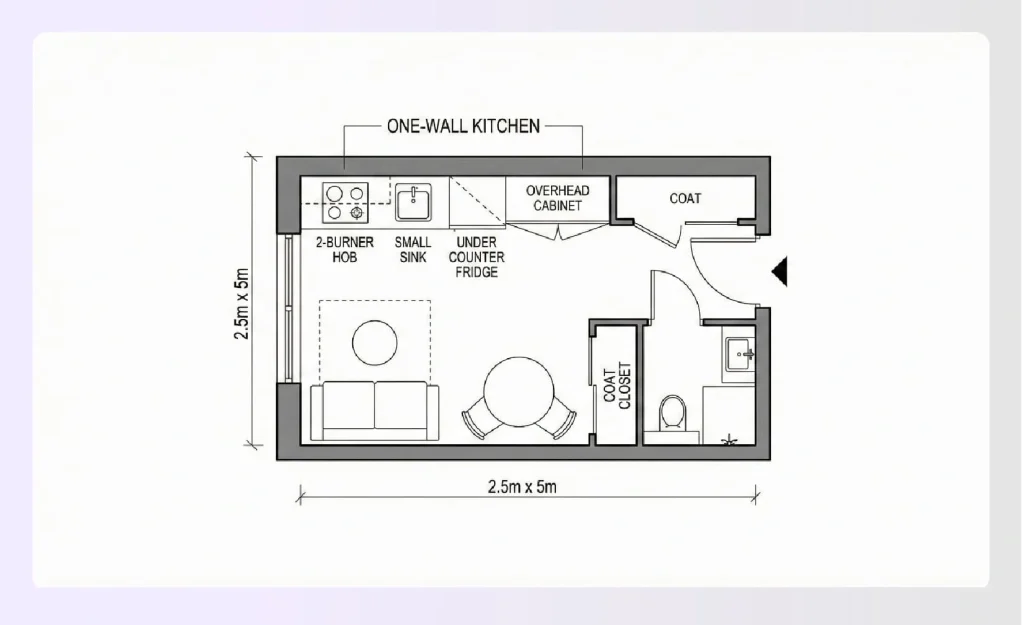
This single-wall kitchen layout proves that 6 feet of wall space is enough for a genuinely functional kitchen when every component earns its place. It is the gold standard for the one wall small kitchen layout in studio apartments and smaller homes with serious square footage constraints.
Key Features:
- A compact 24-inch range, single-basin sink, and undercounter refrigerator fit comfortably within a 6-foot run.
- Magnetic knife strips and wall-mounted spice racks free up limited counter space for active food prep.
- Tall, slim upper cabinets extend to the ceiling to compensate for the restricted horizontal kitchen area.
Layout: The single-wall kitchen layout here prioritizes a vertical storage strategy over horizontal expansion. Every inch of wall space above the countertop surface works hard with wall cabinets, open shelving, or mounted rails.
Foyr Neo Tip: Use Foyr Neo’s Ruler Tool to confirm exact clearance between compact appliances and adjacent walls before your client approves the final kitchen layout.
Read Also – kitchen layout tool
5. The Open-Shelf Industrial Kitchen
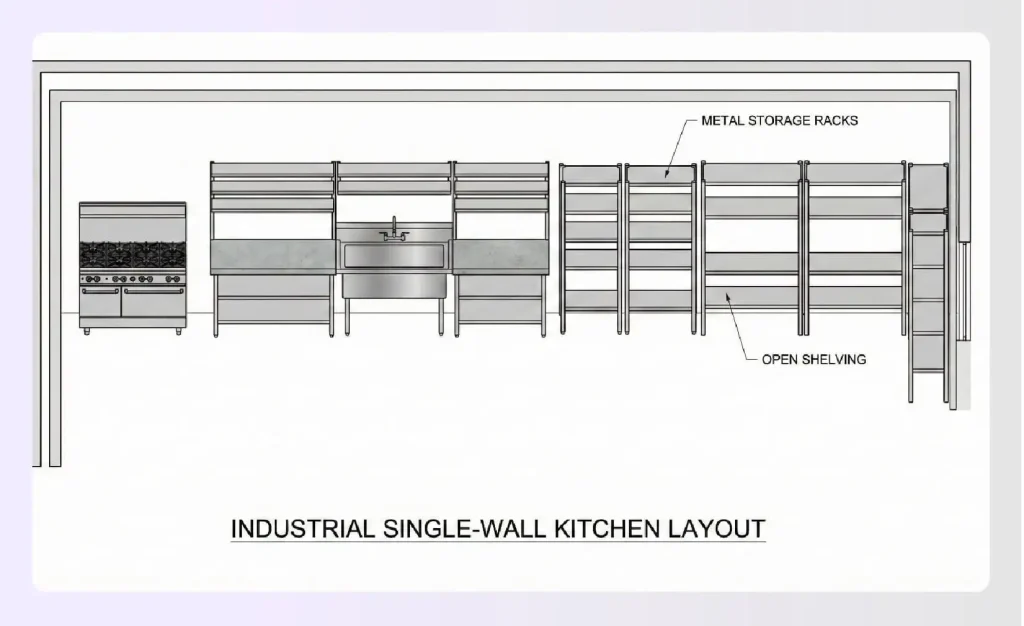
This single-wall kitchen layout replaces upper cabinets entirely with open shelving on steel brackets. The industrial design style suits loft apartments and creative spaces where the kitchen is meant to feel raw, honest, and unpretentious as part of the wider interior design.
Key Features:
- Steel pipe brackets support open wood shelves, adding industrial character and a sense of openness to the wall.
- A concrete or honed granite countertop surface complements the raw material palette with minimal maintenance required.
- Hanging pot rails and magnetic panels serve as creative storage solutions that keep work surfaces clear during use.
Layout: The single-wall kitchen layout here works best in rooms with high ceilings. Open shelving on a single-wall requires at least 8 feet of vertical space to feel balanced rather than visually cluttered.
Foyr Neo Tip: Test different shelf bracket styles and spacing in Foyr Neo’s 3D view to ensure your open shelving reads as curated rather than chaotic in your final client presentation.

6. The Bold Navy Feature Wall
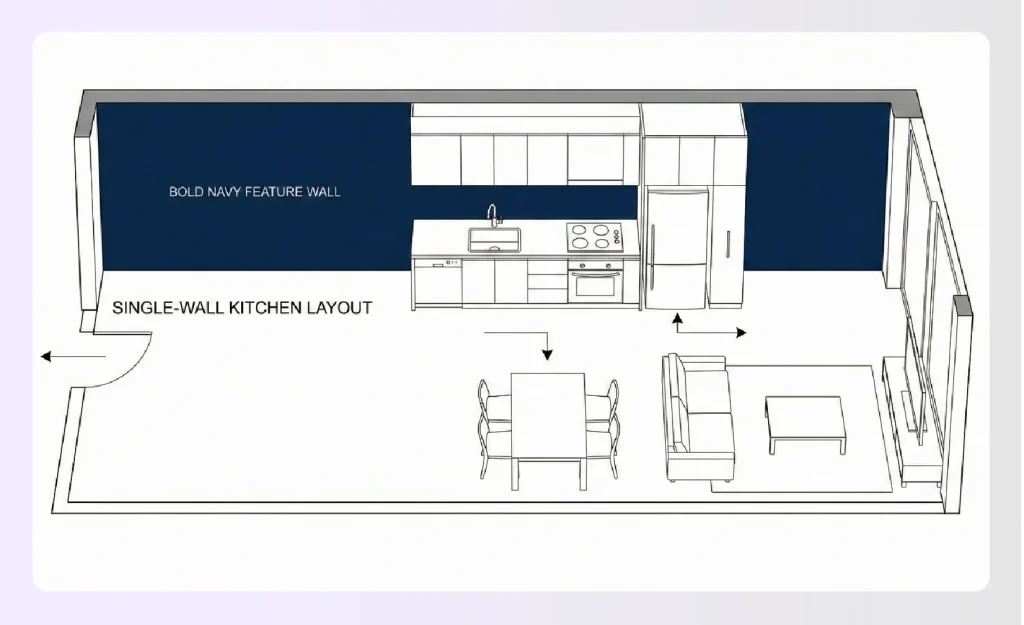
This single-wall kitchen layout embraces the idea that the kitchen wall should be the most powerful design moment in the room. Deep navy cabinets, brass hardware, and warm pendant lights transform a practical work zone into a statement that commands attention from the living area.
Key Features:
- Deep navy kitchen cabinets in a satin finish absorb light beautifully and add instant sophistication to the wall.
- Brushed brass hardware and faucet fixtures create a warm contrast that prevents bold colors from feeling cold.
- A light marble backsplash lightens the upper zone and creates visual balance against the dark lower cabinetry.
Layout: The single-wall kitchen layout in bold colors works best at 9 to 10 feet. A longer run risks making the dominant color feel oppressive in a small kitchen layout or open-plan living space.
Foyr Neo Tip: Render this design at both daytime and evening lighting settings in Foyr Neo to show clients how the navy palette shifts dramatically between natural and artificial light conditions.
7. The Marble Backsplash Luxury Kitchen
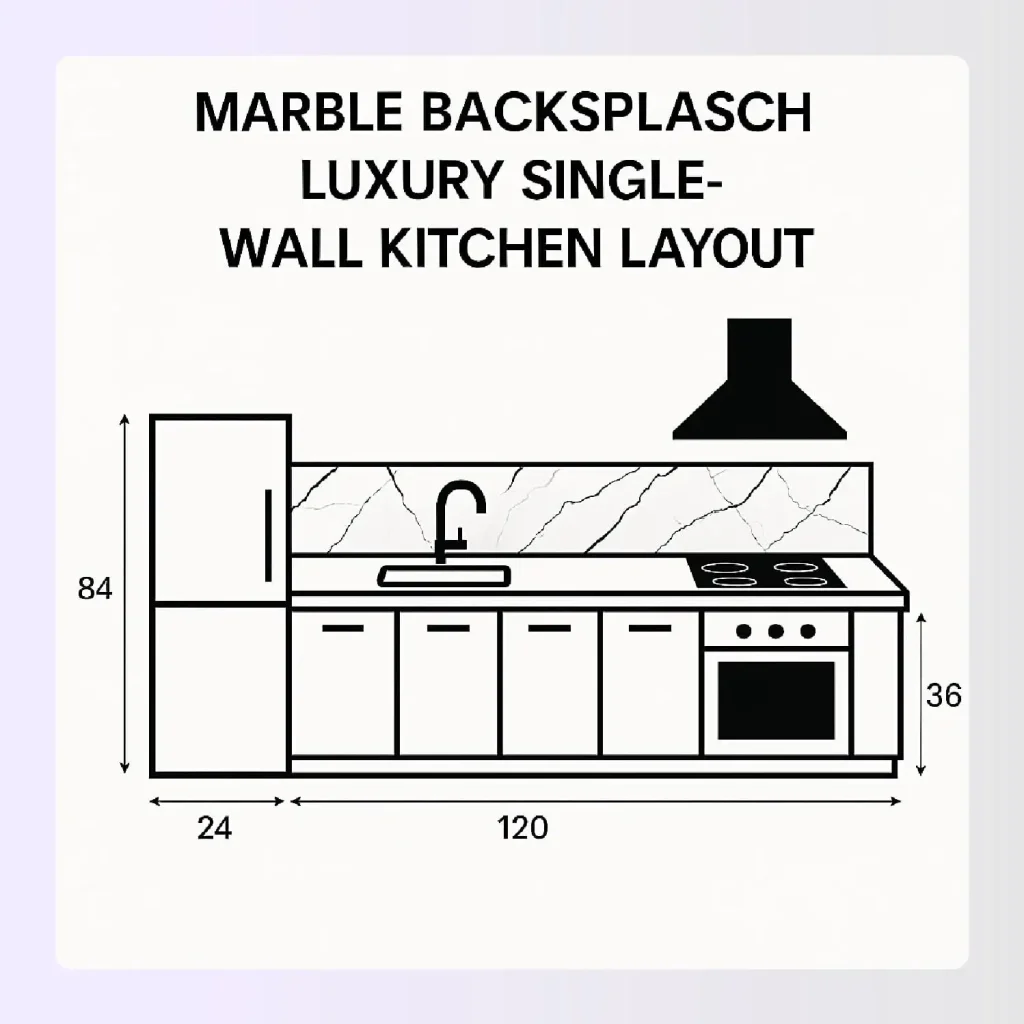
This single-wall kitchen layout elevates the linear format into high-end territory using a full-height marble slab as its centerpiece. The continuous stone panel running from countertop to ceiling transforms a simple kitchen layout into a gallery-quality design element that needs no additional ornamentation.
Key Features:
- A full-height continuous marble slab backsplash eliminates tile grout and creates a seamless luxury stone feature.
- Handle-less grey or white kitchen cabinets let the stone take center stage without any visual competition.
- Waterfall countertop edges extend the stone veining down to the floor for maximum luxury visual impact.
Layout: The single-wall kitchen layout here requires the stone slab to be specified before any cabinet or countertop ordering begins. The stone dictates every other material decision in this design style.
Foyr Neo Tip: Import custom textures using Foyr Neo’s ‘Create New Material’ tool to give clients an accurate preview of how their specific marble slab will read in the rendered space.
8. The Hidden Pocket-Door Kitchen
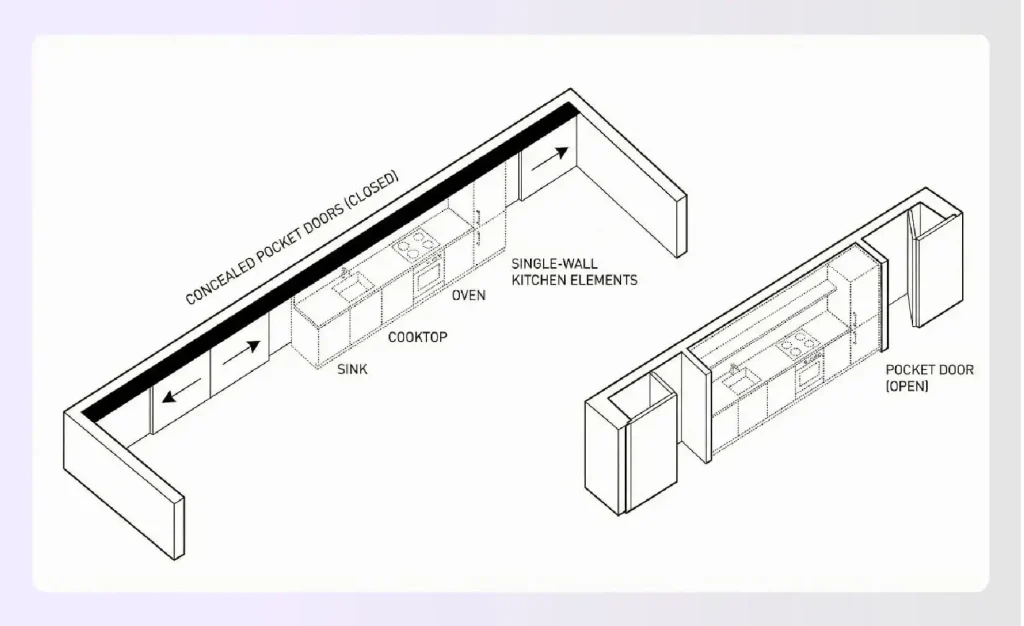
This single-wall kitchen layout uses full-height sliding or pocket doors to conceal the entire kitchen run when not in use. The space transforms into a seamless entertainment or home office area, with no visual distraction from kitchen clutter, appliances, or open shelving remaining visible to guests.
Key Features:
- Full-height sliding panel doors in wood veneer or lacquer conceal the complete kitchen run when fully closed.
- The kitchen layout single-wall format is ideal here because only one wall requires concealment at any time.
- Smart storage solutions inside the concealed run keep all kitchen components organized for rapid access when doors open.
Layout: The single-wall kitchen layout for this concept requires a pocket door track system of at least 8 feet wide. The ceiling track must be engineered before walls are finished for a clean reveal.
Foyr Neo Tip: Use Foyr Neo’s door animation feature to simulate the pocket door movement and confirm no furniture placement interferes with the full swing radius of the panels.
If you are working on a compact apartment kitchen and want to see exactly how Foyr Neo handles small kitchen layouts from concept to render
Smart Strategies for a One Wall Small Kitchen Layout
Designing a one wall small kitchen layout requires you to think creatively about every cubic inch of available space.
- Pull-Out Magic: Install slim pull-out cabinets between larger appliances to store items like spices, oils, and baking sheets efficiently. These narrow fillers turn what would be dead space into highly organized storage that keeps countertops clear and essentials handy.
- The Illusion of Space: Using glass-front cabinets or mirrored backsplashes reflects light and visually expands the depth of your narrow kitchen area. This trick makes the single-wall feel less like a solid block and more like an open window into a larger room.
- Double-Stacked Cabinets: You can maximize vertical space by installing a second row of cabinets directly above your standard upper cabinets. This area is perfect for storing seasonal items or occasional platters that you do not need on a daily basis for cooking.
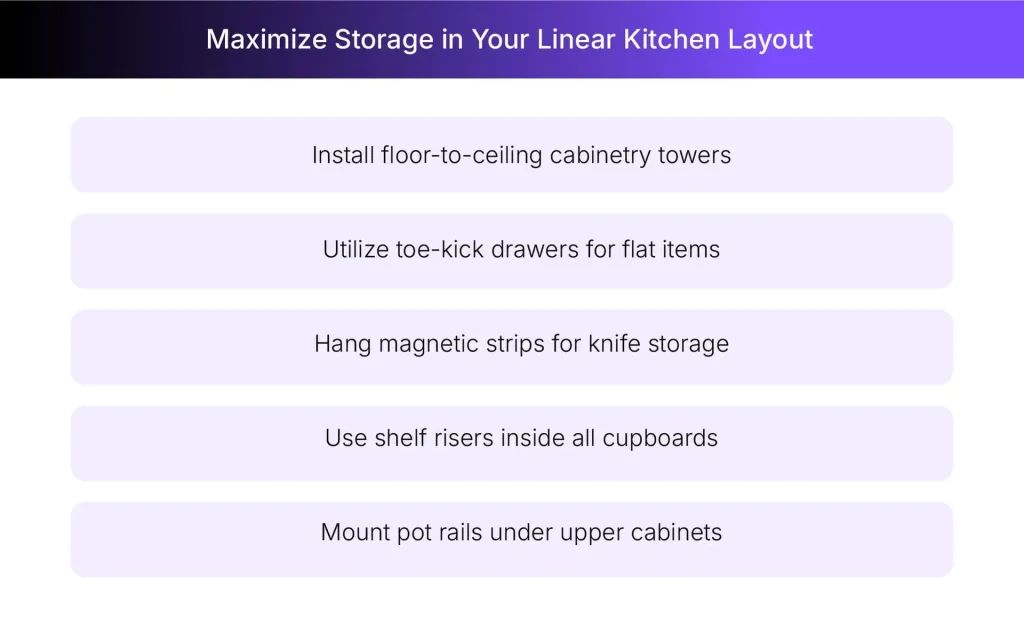
- Wall-Mounted Rails: Adding a rail system under your upper cabinets allows you to hang utensils, mugs, and pans within easy reach. This strategy frees up precious drawer space and keeps your most-used tools visible and accessible for quick and easy cooking.
Lighting Strategies to Brighten Your Linear Kitchen
Well-planned interior lighting transforms a single-wall kitchen layout from a purely functional work zone into a space that feels warm, considered, and professionally executed.
Ambient vs. Task
Ambient lighting in a single-wall kitchen layout typically comes from recessed ceiling fixtures spaced evenly above the length of the run, providing general illumination across the kitchen area and adjacent living space. Under-cabinet LED strips then target the countertop surface directly, eliminating the shadows that overhead lighting alone creates.
Pendant Power
In open floor plans, pendant lights serve a dual purpose above a kitchen island or extended counter in a single-wall kitchen layout. They provide targeted illumination and visually anchor the kitchen as a distinct zone within the larger open space. Choose pendant styles that complement your overall design: large sculptural brass pendants for bold color schemes, slim glass pendants for white or natural wood kitchens.
Visualize Your One Wall Kitchen With Foyr
Planning a single-wall kitchen layout is one thing. Presenting it to a client in a way that builds genuine excitement and eliminates doubt is an entirely different challenge. At Foyr, our kitchen design software lets you build, render, and walk through any kitchen design in photorealistic 3D without needing a background in CAD or complex modeling software.
- Generate stunning 12K photorealistic renders of your kitchen design in minutes, giving clients a true-to-life preview.
- Access a library of 60,000+ product models covering every cabinet style, countertop finish, and appliance brand.
- Share a live 3D walkthrough link with clients and contractors, replacing lengthy email chains with a single immersive review experience.
- Import your own DWG floor plans or draw from scratch using the intuitive 2D tools, then convert to fully rendered 3D with a single click.
Whether you are working with years of experience or delivering your first major kitchen project, Foyr Neo’s latest design tools streamline every step from initial concept to final client sign-off.
Start your 14-day free trial of Foyr Neo and design your single-wall kitchen layout in 3D today.
FAQs
What is the ideal length for a one-wall kitchen?
The ideal length for a functional single-wall kitchen layout is typically between 8 feet and 12 feet long. This length allows enough room for standard appliances while maintaining a comfortable workflow between the sink and stove without requiring excessive walking during meal preparation.
What appliances work best in one-wall kitchens?
Compact or apartment-sized appliances are often the best choice to save valuable cabinet and counter space in this layout. Look for 24-inch refrigerators, 18-inch dishwashers, and combination microwave-convection ovens to maximize functionality in a limited footprint without sacrificing essential modern conveniences.
What flooring works best in a one wall kitchen?
Since the kitchen is part of a larger room, run the same flooring throughout to create a seamless look. Waterproof luxury vinyl planks or durable engineered hardwood are excellent choices that withstand kitchen spills while looking elegant and connecting the zones visually.
What are the pros and cons of a one-wall kitchen?
The main pro is its efficiency, low cost, and ability to save floor space for open-concept living arrangements. The main con is limited counter space and the potential for a cluttered look if storage isn’t managed well with smart organizational solutions.