


Designing a condo floor plan requires balancing limited square footage with a client’s full daily life, from morning routines to weekend entertaining, in a building shared with other condominium units. The condominium floor plan sets the spatial logic for every design decision that follows in the project.
I’ve designed a wide range of condo layouts, from 550 sq ft studios to 2,400 sq ft penthouses in larger cities with high ceilings and lots of windows. The condo layout either supports the lifestyle brief from day one or quietly works against it across every room.
This guide covers ten condo design floor plans with real dimensions and designer notes for each one. You will also find a real-life condominium floor plan breakdown, a Foyr Neo workflow section, and layout tips for every footprint you’ll encounter on live projects.

Understanding the Intent Behind a Great Condo Layout
The best condo floor plan determines how people move through their daily lives before it determines where any wall should go.
- Space and Light Come Before Style: User intent in any condo floor plan centers on space optimization and access to natural light above every other priority. Those two considerations should drive every fixture and partition decision before a single piece of furniture is specified for the condominium floor plan.
- The Entry-to-Living Relationship: When reviewing condo house plans, I map the entry-to-living connection first, since a weak relationship between those two zones creates daily friction that no styling decision will fix. The kitchen must then read as a natural extension of the living area, not a separate interruption of the floor plan’s spatial logic.
- Zonal Privacy Is Underrated: Zonal privacy matters more than raw square footage in most condo home plans I have reviewed across residential projects. Without clear visual or physical separation between sleeping and living areas, even a well-lit premium space fails the daily living test for occupants working from home.
- The Resale Logic: The plan’s overall structure should support adaptability for real estate resale as much as it serves current use. I’d always recommend keeping the condominium floor plan flexible enough to serve the next owner’s lifestyle as well as the current client’s.
“A condo floor plan that looks right on paper and a condo floor plan that feels right in 3D are often two completely different projects. See yours in Foyr Neo before your client does.”
— Foyr Team
Real-Life Condo Floor Plan Breakdown: A 950 Sq Ft One-Bedroom
Here is a breakdown of a real 950 sq ft one-bedroom unit from a mid-rise project that I redesigned from scratch. The details here will tell you more about layout logic than any abstract description:
- The Problem With the Original Plan: The original condominium floor plan placed the kitchen on the interior wall, blocking all natural light from reaching the living area in the morning. The bedroom entry opened directly into the dining area, meaning the first thing visible from the sleeping zone was the kitchen. This also meant cooking smells traveled directly toward the bed.
- What the Redesigned Condo Floor Plan Changed: The kitchen moved to the entry wall, freeing the entire window wall for the living room and making the living area the primary recipient of eastern morning light. The bedroom was repositioned to open off a short entry corridor, creating a visual and acoustic buffer. It resolved the cooking smell and sightline problem without adding a single square foot to the unit.
- The Measurements That Made It Work: The corridor measured 38 inches wide, which cleared the minimum comfortable passage without compressing the bedroom or the dining area on either side. The kitchen relocation moved the primary plumbing wall 6 feet and transformed the condo’s daily livability in a way no finish material could have matched.
- The Outcome: The client’s words after the first week of occupancy: the apartment felt twice as large as the previous version, without a single additional square foot. That is what a correct condominium floor plan does that square footage alone never can.

These ten condo floor plan types cover every common residential footprint, arranged from the most compact open configurations through to larger multi-bedroom plans. This will help you identify the right starting point for each brief.
1. The Open-Concept Condo Floor Plan
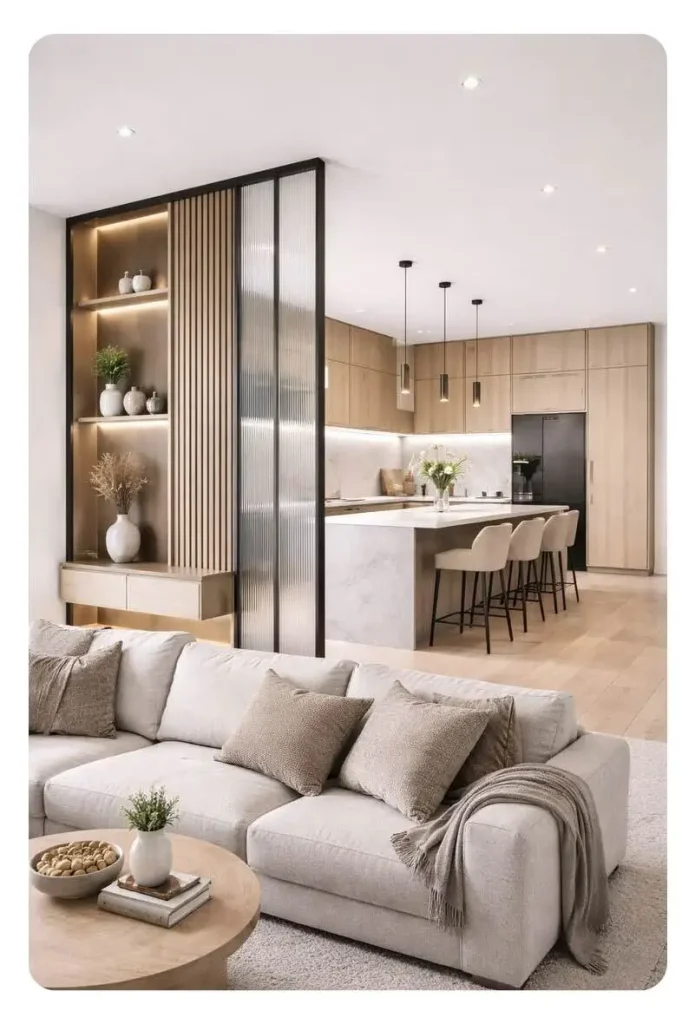
This condo floor plan removes interior walls, allowing natural light to travel unobstructed from the window wall to the front entry. It’s the most requested layout for singles and couples who prioritize a spacious living area and flexible daily use over zonal separation.
Dimension: 550 to 800 sq ft
Layout Highlights:
- No corridor waste; full floor plate stays usable
- Natural light penetrates from window wall to entry
- Furniture zoning replaces walls to define sleeping areas
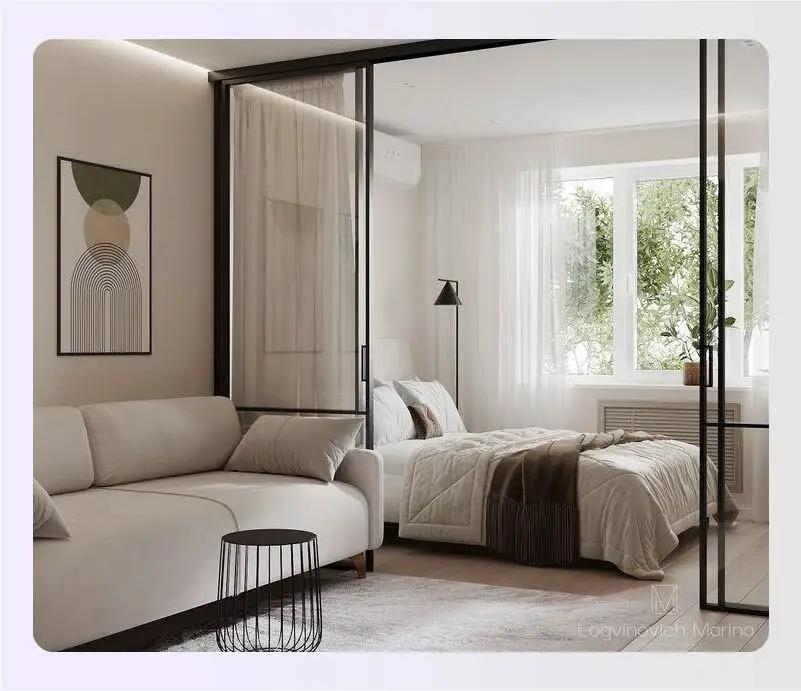
Foyr Designer Suggestion: I’d use area rugs and low-profile furniture to define separate zones, reserving glass partitions for clients who need a sleeping enclosure.
| Pro Tip: Keep the dining area within 8 feet of the kitchen island so both zones read as a connected living area rather than two unrelated spaces floating in the condo floor plan. |
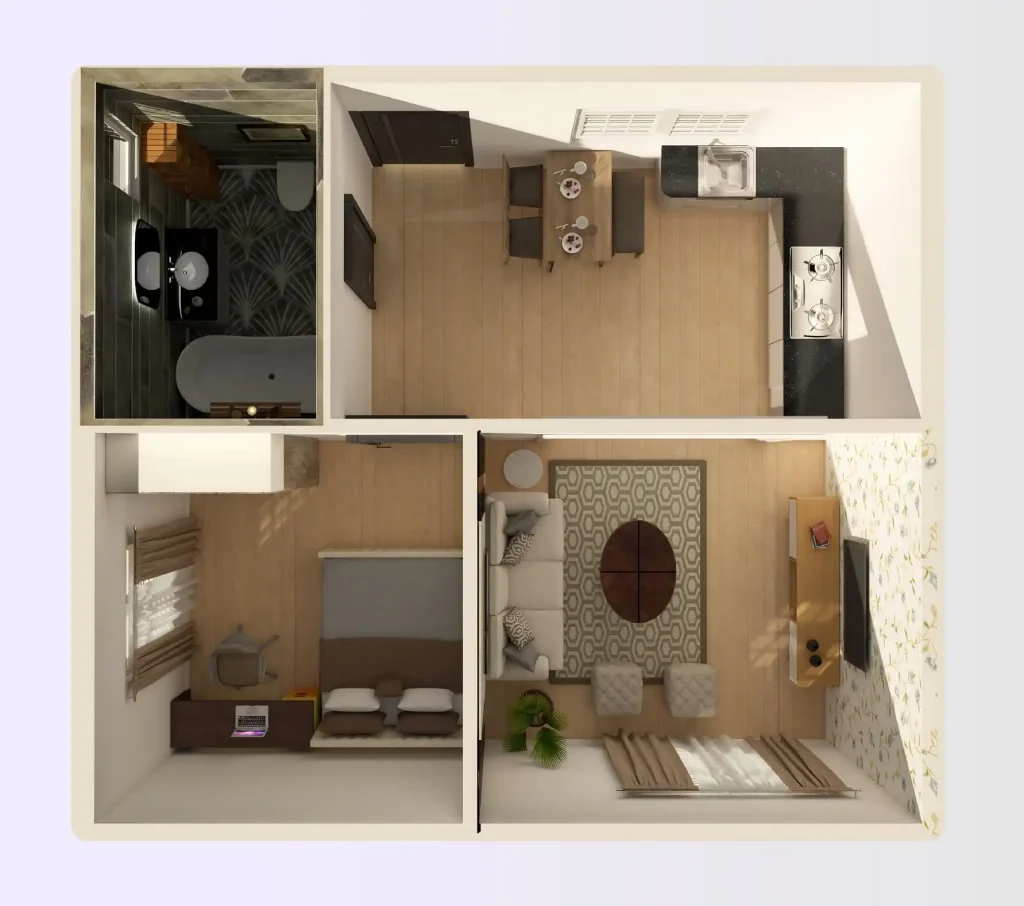
2. The Classic One-Bedroom Linear Condo Floor Plan
This layout places the kitchen at the entry end and the bedroom at the far wall of a single-axis condominium floor plan. It’s the most common configuration in mid-rise apartment complexes across larger cities and works reliably for a wide range of layouts from 650 to 900 sq ft.
Dimension: 650 to 900 sq ft
Layout Highlights:
- Clear dry-to-wet zone progression along one axis
- Separate living room keeps the sleeping zone private
- Entry acts as a natural decompression point on arrival
Foyr Designer Suggestion: Specify a built-in storage wall along the corridor between the kitchen and bedroom to recover dead space and eliminate the corridor feel.
3. The Two-Bedroom Split Condo Layout
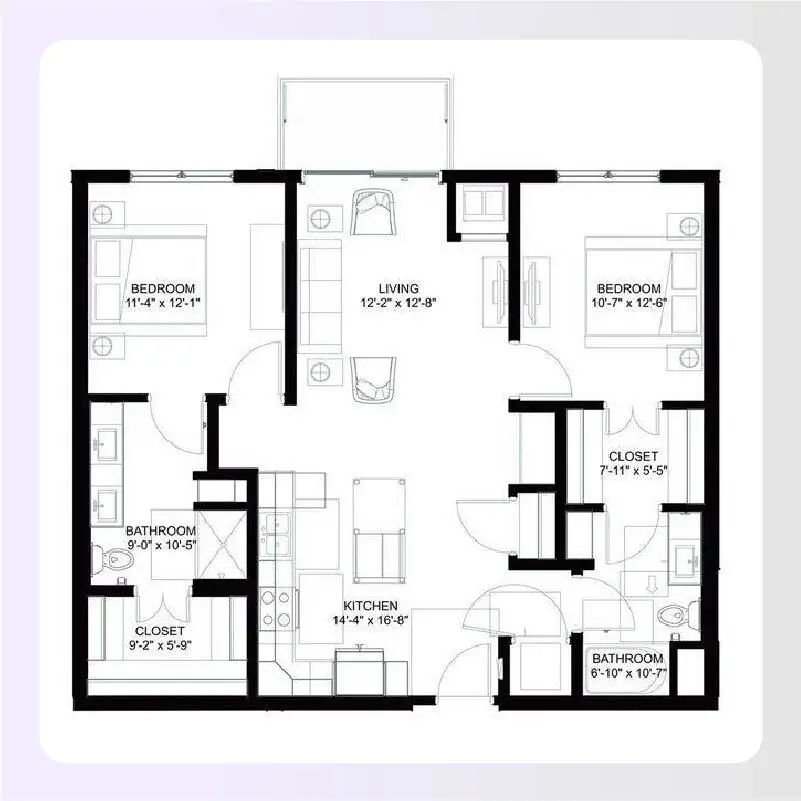
The split two-bedroom condominium floor plan places the primary bedroom on one side and the guest room on the other, with the living area as a buffer between them. It is a common choice for small families, roommate situations, and homeowners who need a separate home office with acoustic separation from the sleeping zone.
Dimension: 900 to 1,200 sq ft
Layout Highlights:
- Acoustic buffer between both bedrooms is built into the plan
- Guest room doubles as home office without disrupting the primary suite
- Living area stays neutral and accessible from both bedroom wings
Foyr Designer Suggestion: I’d design the guest room door to face the living area rather than the corridor, keeping the bedroom zone from reading as a hotel hallway in the condo layout.
“A split two-bedroom condominium floor plan is the most honest layout for real cohabitation. Privacy between occupants shouldn’t be a finish-material decision — it should be resolved in the plan itself.”
— Foyr Team
4. The L-Shaped Corner Condo Unit
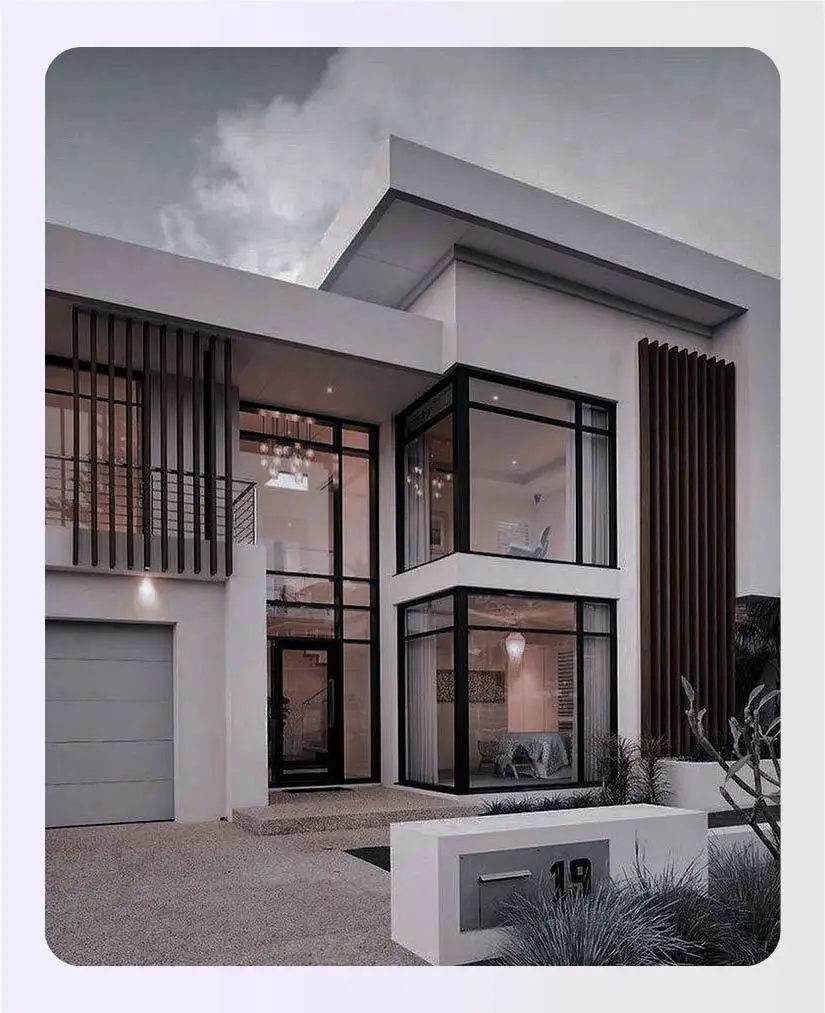
The L-shaped corner unit wraps two exterior walls, giving the condo floor plan access to natural light on perpendicular sides that a linear unit can never achieve. That dual light exposure changes how the dining area, living room, and kitchen perform across different times of day, making the layout feel larger than its measured square footage.
Dimension: 1,000 to 1,400 sq ft
Layout Highlights:
- Dual window exposures eliminate the typical dark corner problem
- Corner position allows a larger balcony or outdoor living extension
- Open layouts on two walls give flexible furniture placement options
Foyr Designer Suggestion: Position the primary seating group at the corner window junction to anchor the living area at the plan’s strongest natural light point.
| Pro Tip: Specify floor-to-ceiling glazing on both corner walls in the earliest design stage. Retrofitting structural window changes after the concrete frame is poured is cost-prohibitive in most condominium units. |
5. The Loft-Style Mezzanine Condo Layout
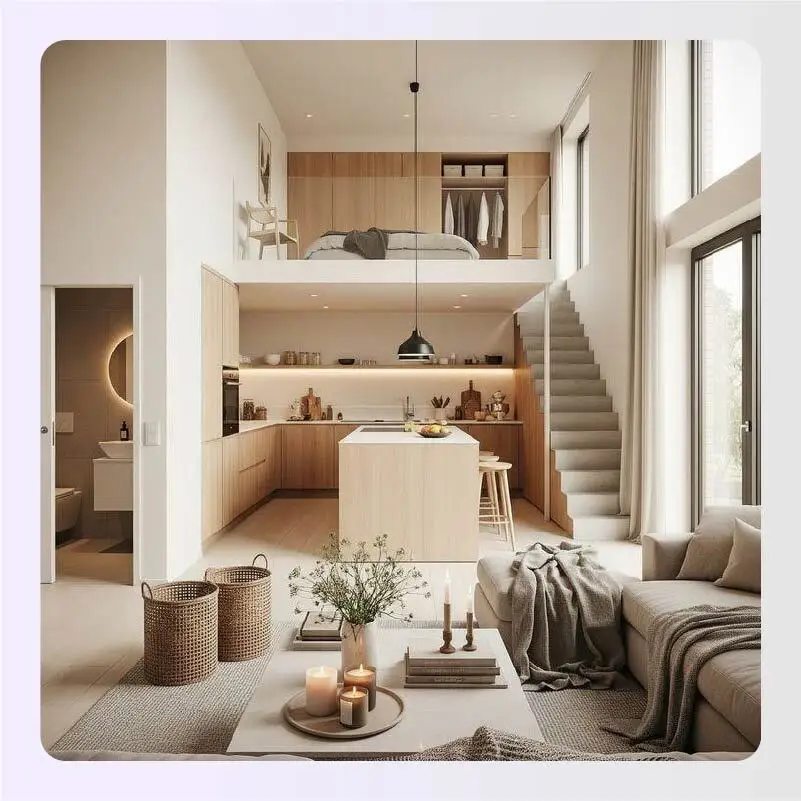
A mezzanine condo floor plan uses vertical space to create a sleeping platform above the living zone, recovering floor area that a standard bedroom would consume at ground level. It works best in units with ceiling heights above 11 feet and appeals to clients who want urban living thanks to its visual drama and efficient use of the vertical dimension.
Dimension: 700 to 1,100 sq ft
Layout Highlights:
- Sleeping zone separated vertically without losing open layouts below
- High ceilings become a design feature rather than incidental space
- Ground floor reads as premium space with full ceiling height throughout
Foyr Designer Suggestion: I’d keep the mezzanine railing at 42 inches as a glass balustrade so sightlines from the sleeping area to the window wall remain unobstructed.
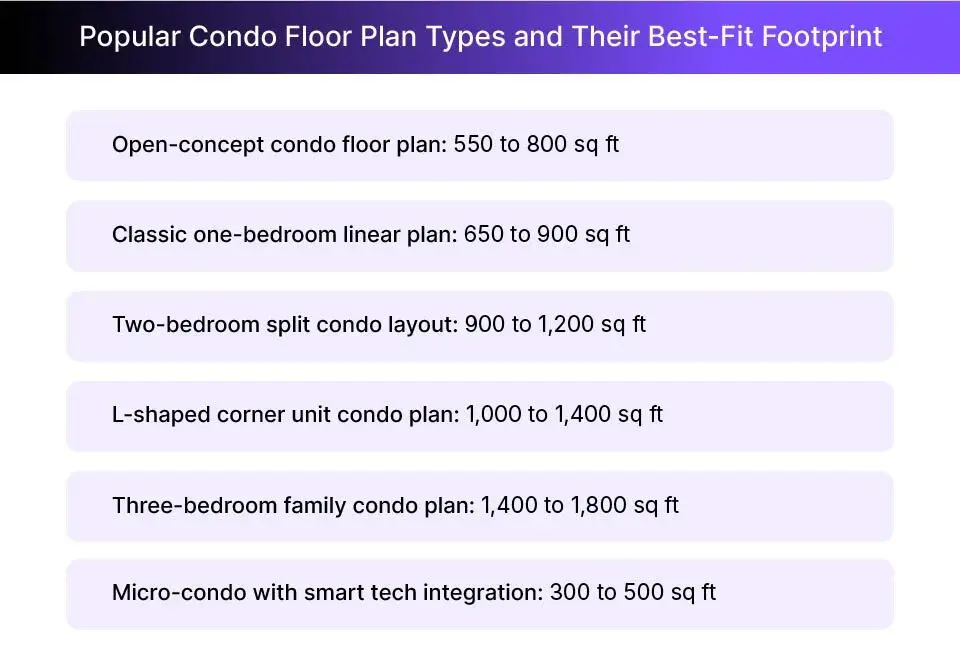
Most popular condo floor plans
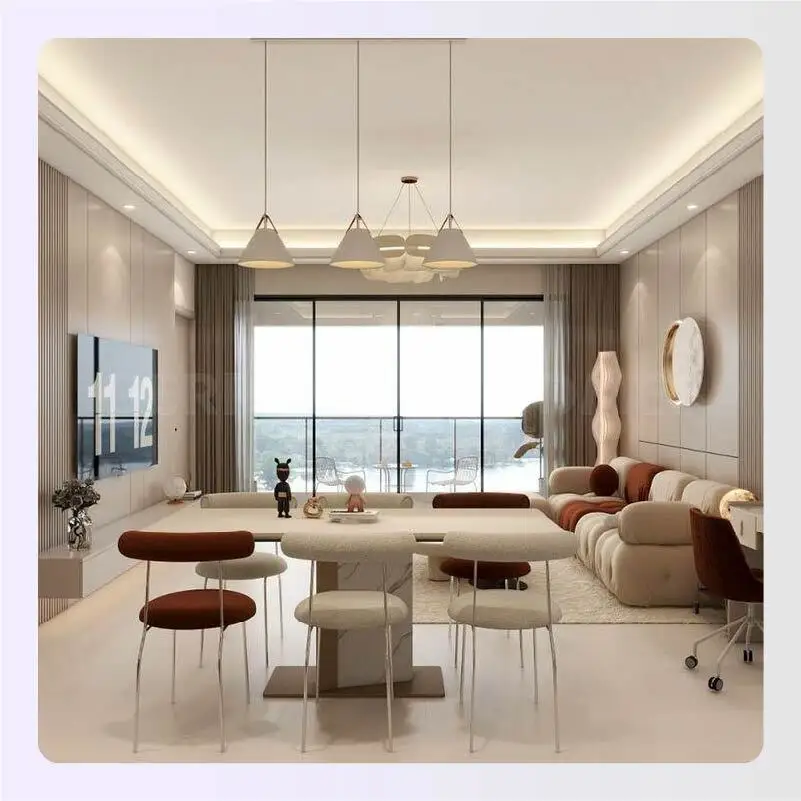
A square condominium floor plan distributes usable floor space evenly across all four walls, eliminating the directional bias that linear layouts create. It is a common choice in boutique buildings on smaller plots of land where the structural grid produces equal-sided units rather than long, narrow footprints.
Dimension: 900 to 1,200 sq ft
Layout Highlights:
- Flexible furniture placement across all four walls simultaneously
- No dominant axis means zoning feels balanced from every position
- Central living area creates natural circulation to all rooms
Foyr Designer Suggestion: Anchor the living area with a large area rug at the geometric centre of the unit to give the square condo floor plan a clear visual hierarchy.
“A square condo floor plan is the layout that most designers underestimate. Its symmetry is a gift that most buyers never fully use because they default to pushing all furniture against the walls.”
— Foyr Team
7. The Three-Bedroom Family Condo Layout
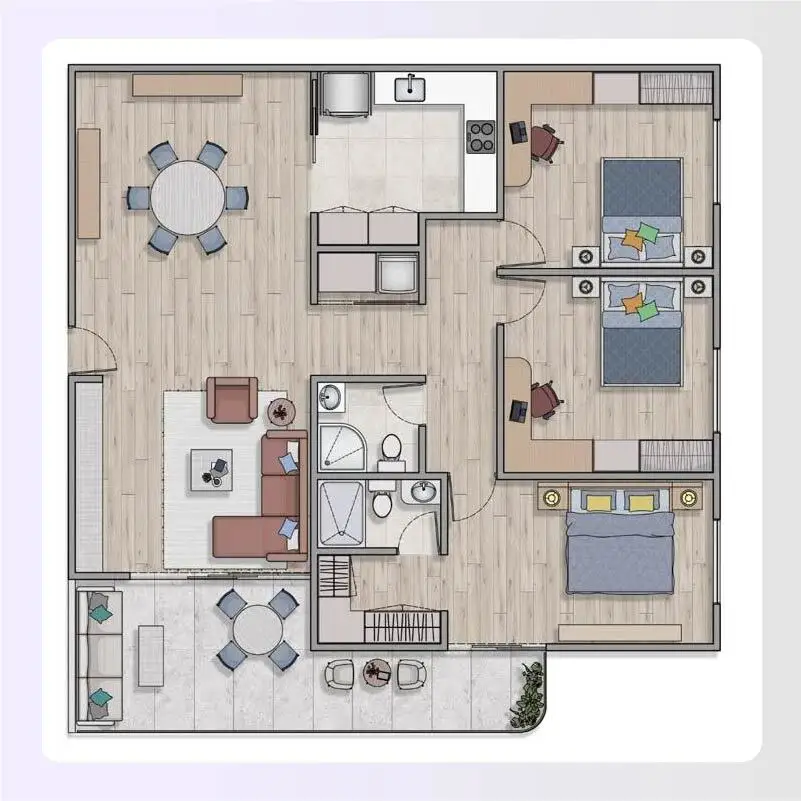
The three-bedroom condominium floor plan places the living and dining area at the core and runs the bedroom corridor off one side, keeping the family’s shared zones acoustically separate from the sleeping wing. It’s a good solution for small families in larger cities where a separate home with a lovely front porch and a large lot isn’t a realistic housing option at the same price point.
Dimension: 1,400 to 1,800 sq ft
Layout Highlights:
- Dedicated bedroom corridor keeps sleeping zones acoustically private
- Bigger living and dining area supports family gatherings and daily routines
- Laundry rooms and dryer hookups positioned near the bedroom wing
Foyr Designer Suggestion: Specify a pocket door at the corridor entry so the family can close off the sleeping wing during the living area’s active hours without adding a fixed wall.
| Pro Tip: In a three-bedroom condo floor plan, I always push the kitchen toward the entry wall so the huge kitchen footprint doesn’t consume the central living area that families use for daily life. |

8. The Penthouse Terrace Condo

Source: Pinterest, Chris Johnson | Modern Living & Style
A penthouse condominium floor plan treats the terrace as a primary design zone rather than an add-on, connecting the interior living room and dining area to an outdoor space that functions across all seasons. It is the layout that commands a premium space classification in real estate because the outdoor square footage adds livable area that the interior floor plan calculation never fully captures.
Dimension: 2,000 to 3,000 sq ft
Layout Highlights:
- Terrace functions as an additional living zone in all seasons
- Floor-to-ceiling glazing connects interior living area to outdoor views
- Upper floor plans remove common wall noise from below
Foyr Designer Suggestion: Design the terrace access as a full-width sliding panel rather than a standard door so the indoor-outdoor connection reads as one continuous zone in the condo floor plan.
Here is a walkthrough of how Foyr Neo effortlessly handles furniture placement in a real project:
9. The Dual-Key Condo Plan
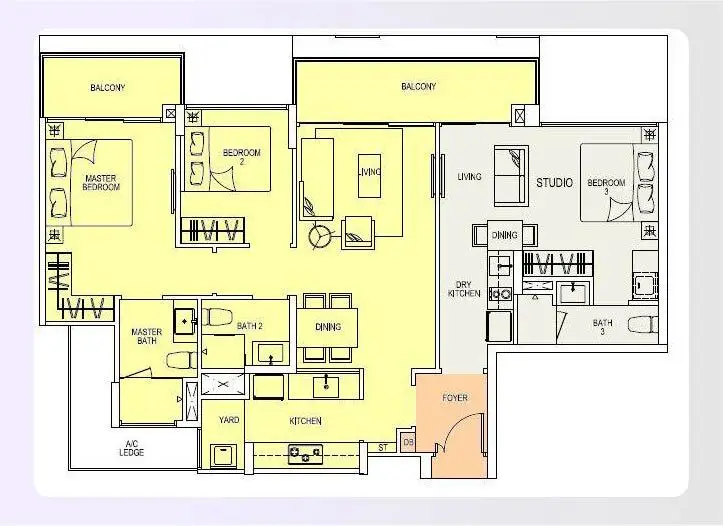
Source: Pinterest, Jeffery Lam
A dual-key condominium floor plan creates two separate units behind a single entry door, with each side carrying its own kitchen, bathroom, and living area for fully independent occupancy. It’s a common choice in active community buildings where investors want the flexibility of an own home for personal use alongside a separate rental income unit within the same property purchase.
Dimension: 1,200 to 1,800 sq ft
Layout Highlights:
- Both units function as fully independent living spaces
- Shared entry lobby keeps monthly dues on one set of common costs
- One of the separate units can serve as a guest room or home office
Foyr Designer Suggestion: Keep the sound-separation wall between the two units at a minimum STC rating of 55 to meet the acoustic separation standard for residential separate units in a shared building.
10. The Micro-Condo with Smart Tech Integration
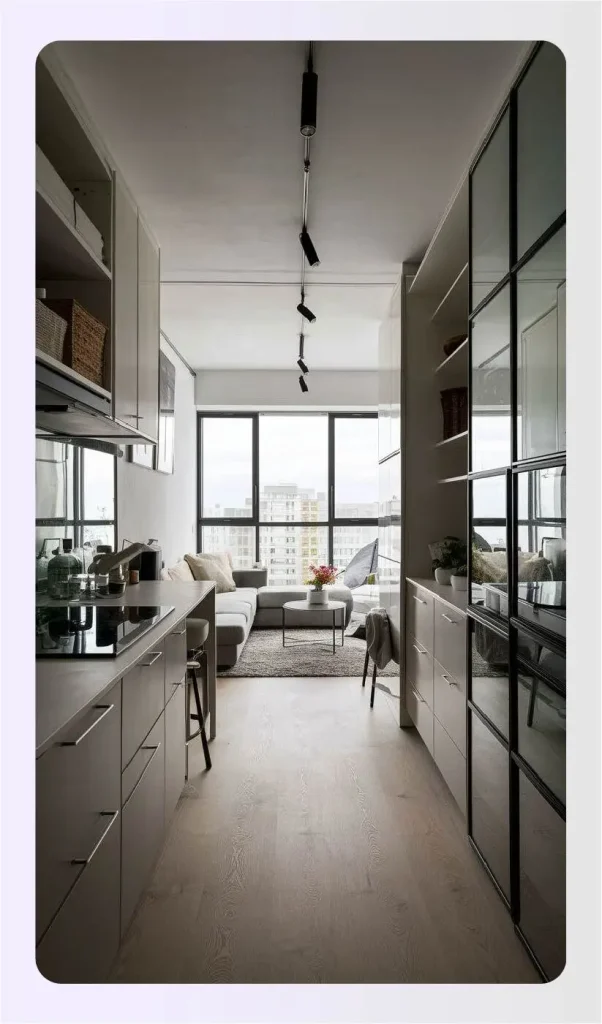
The micro-condo condo floor plan is the most demanding design brief in residential work, requiring every square foot to perform multiple functions across the day as the occupant’s needs shift from sleeping to working to entertaining. It is an economical design approach that has become a common choice in larger cities where owning your own home on a limited budget is the only option.
Dimension: 300 to 500 sq ft
Layout Highlights:
- Fold-down furniture recovers full floor area when not in active use
- Smart tech integration controls lighting, climate, and appliances in one panel
- Vertical storage runs from floor to ceiling on every available wall
Foyr Designer Suggestion: I’d specify a Murphy bed with an integrated sofa system at the long wall so the sleeping zone converts to a proper living room in under 30 seconds during a client walkthrough.
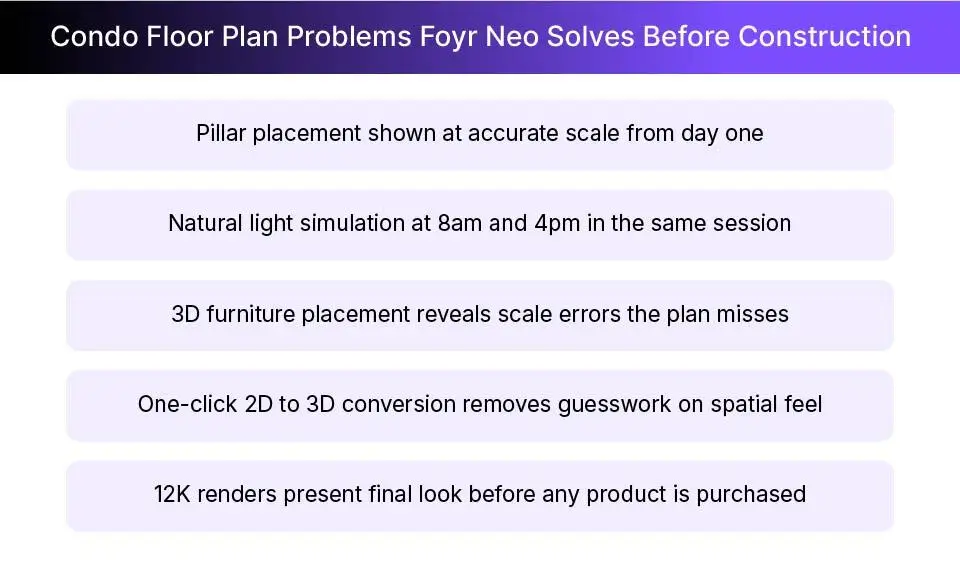
How Foyr Neo Simplifies Your Condo Design Workflow
Designing a condo comes with constraints that standard residential briefs don’t carry, including fixed structural pillars, shared common walls, and limited natural light sources on the interior sides of the floor plan. Foyr Neo addresses each of those constraints directly rather than working around them.
- Trace and Transform: You can upload a 2D condominium floor plan directly into Foyr Neo and trace the walls using the auto-snapping tool in minutes. Switching to 3D with one click then shows you whether the condo layout reads as spacious or boxy at real human scale.
- The Small Space Catalog Foyr Neo’s library of 60,000+ 3D models includes apartment-scale furniture that reads correctly in a compact condo floor plan without overwhelming the space. You can design custom floor-to-ceiling cabinetry that wraps around structural pillars to turn an awkward constraint into a storage asset.
- AI Lighting Simulation: Natural light is the most valuable design element in a condo floor plan. Foyr Ideate lets you simulate sun movement at different times of the day before any window treatment or mirror placement is decided. That simulation is what tells you whether your layout decision will actually feel right at 8am on a winter morning.
- Instant 12K Walkthroughs: Rather than waiting hours for a render, Foyr Neo generates photorealistic 12K images and 360-degree walkthroughs in minutes. This preview closes client approval conversations in one meeting rather than across three rounds of revisions.
Try Foyr Neo free for 14 days and design your first condominium floor plan in 3D before committing to a single layout decision on your next project.
We need to design these testimonials:
| Switching to Neo has been one of the best business decisions I have made! I am able to manage my solely owned interior design business so efficiently.
Francisco Andrade, Foyr User |
The learning platform is fantastic and the staff pay particular attention to any of your questions quite efficiently.
Gerri, Foyr User |
FAQs
What is the downside of owning a condo?
Condo ownership comes with monthly dues to the homeowners association that cover shared services across the building’s common areas, including recreation centers and shared lobbies. Owners have less control over the building’s exterior and shared structure compared to their own home on a private lot. Resale timelines can also be longer in markets with a high ratio of condo units to buyers.
What is a good condo layout?
A good condo layout places the primary natural light source in service of the living area rather than a corridor or storage zone. It resolves the entry-to-living connection cleanly, keeps the bedroom zone acoustically separate from the kitchen, and maintains enough flexibility in the general layout to serve a variety of occupant needs over time.
Why do people buy condos instead of houses?
Condo living offers access to modern luxuries such as building amenities, security, and low-maintenance ownership in locations where a detached home would cost significantly more or sit on a much larger plot than the buyer needs. Monthly dues and the homeowners association structure are accepted trade-offs for the convenience of location and lifestyle.
What is the best floor to live on in a condo?
In terms of total residents’ preferences, upper floor plans consistently score higher for natural light, reduced street noise, and views that smaller plots and lower floors can’t provide. In practice, the best floor depends on the specific building orientation and the direction each unit faces rather than floor height alone.
What are common floor plan mistakes to avoid?
The most common condo floor plan mistake is placing the kitchen on the window wall, which wastes the building’s most valuable light asset on a zone where natural light serves a secondary function compared to the living room. Oversizing the bedroom at the expense of the living area is a close second, particularly in one-bedroom units where the living area is where the occupant spends most of their active hours.