

Aligning a residential project with ADA guidelines is one of the most demanding briefs an interior designer takes on, because the requirements are precise and codified, enforced at every point from design through construction.
I’ve seen designers assume that following these rules means trading away the quality of the result, but I don’t think so. ADA-compliant home plans, designed with intention from the first line, deliver spaces that are smarter and livable for every occupant.
Accessible house plans deliver greater long-term value to homeowners because they accommodate people of all ages and mobility levels. ADA house plans can be elegant and commercially competitive in any residential market.
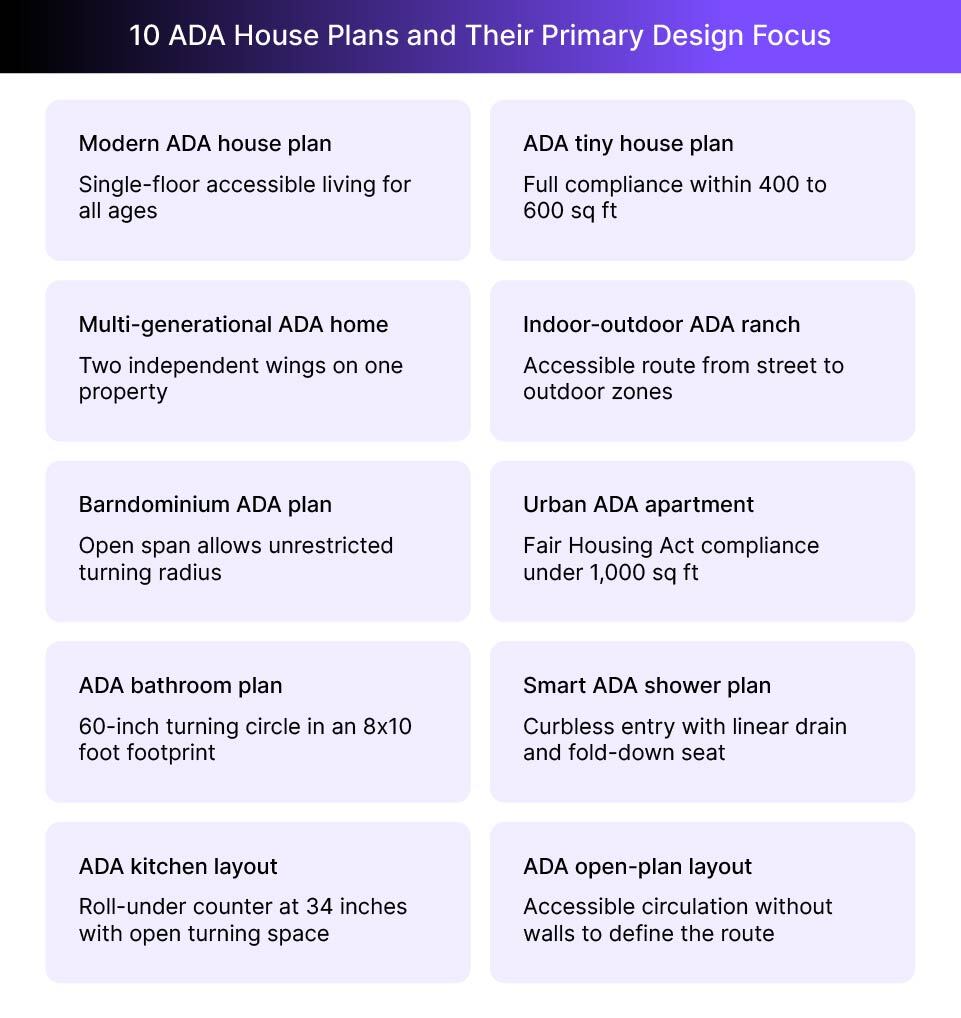
This blog covers the core ADA rules designers must apply, practical planning tips for live projects, ten ADA house plans for layout inspiration, and the Foyr Neo workflow that makes compliance verification faster.

The Core ADA Rules That Govern Every Compliant Floor Plan
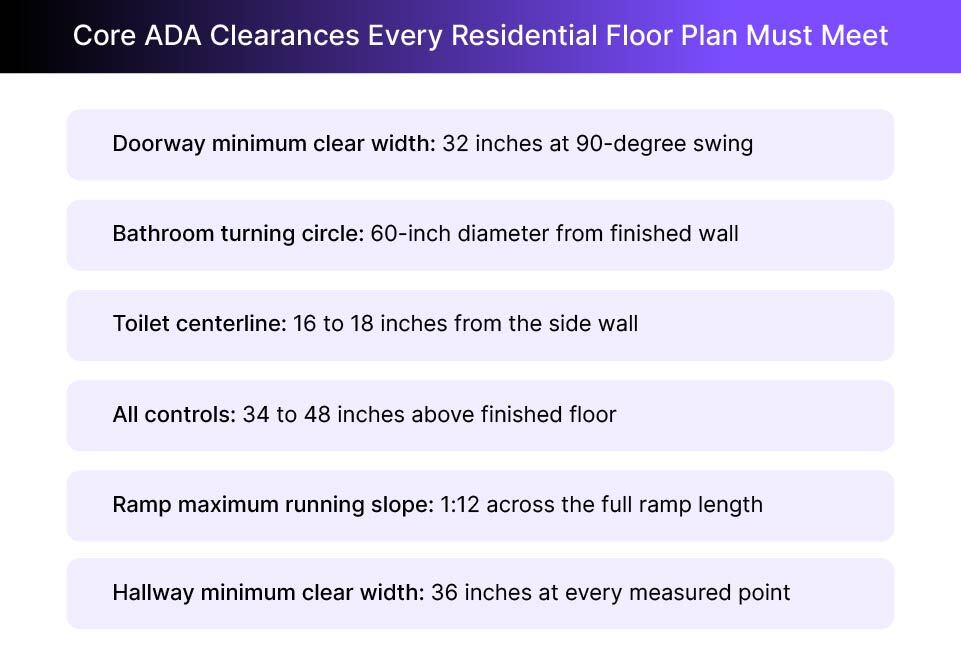
Every ADA house plan adheres to the five-dimensional standards in the 2010 ADA Standards for Accessible Design.
Doorways and Thresholds
- Frame 36-inch doorways as the practical standard for ADA compliant floor plans
- Door thresholds cannot exceed half an inch in total height
- Lever handles are required on all doors and replace the round knob mechanisms
- Maximum opening force on any interior door must not exceed 5 pounds
Turning Radius and Circulation Routes
- A minimum 60-inch diameter turning circle is required in kitchens and bathrooms
- T-shaped turning space uses a 60-inch square base and 36-inch arms
- Hallways require 36 inches of clear width at every measured point
- Wall projections between 27 and 80 inches above the floor are limited to 4 inches
- Corridors over 200 feet in length require 60×60-inch passing alcoves
Reach Ranges and Controls
- All operable controls must fall between 34 and 48 inches above finished floor
- This range applies to light switches and all wall-mounted thermostats
- Wheelchair-accessible countertops must not exceed 34 inches in height
Bathroom Clearances
- 60-inch clear turning radius required from finished wall to finished wall
- Toilet seat height must fall between 17 and 19 inches above finished floor
- Toilet centerline must sit 16 to 18 inches from the nearest side wall
- Install grab bars at 42 inches on the toilet side wall
- Rear wall grab bar position is 36 inches from finished floor
- Roll-in shower minimum interior is 36×36 inches with a curbless entry required
Ramp and Level Change Standards
- Ramp running slope must not exceed 1:12 at any point along its length
- Landings at ramp top and bottom require 60×60 inches minimum
- Cross slopes on any accessible route cannot exceed a 1:48 gradient
“The most common mistake on ADA house plans is treating compliance as a retrofit step. Every clearance decision made after the layout is locked becomes expensive to correct on site.”
— Foyr Team

How Interior Designers Should Approach ADA Compliant House Plans
Successful ADA house plans depend on pre-design decisions made before any layout is locked or committed to the build schedule.
- Identify the wet wall position and soil stack location before placing any fixture in the ADA house plan.
- My recommendation is to frame 36-inch headers on all interior openings from the start, then install narrower doors inside them if the budget calls for it.
- I usually draw every 60-inch turning circle onto the floor plan before a single piece of furniture is placed or specified for the space.
- Any transition exceeding half an inch requires a beveled strip at a maximum 1:2 slope between flooring types in any accessible design project.
Before you start designing your next ADA compliant home plans for upcoming projects, check out this video on how Foyr Neo helps you create impressive floor plans in minutes:
The Modern ADA House Plan
Source: Pinterest, Jane Shine
This layout bridges classic residential proportions with accessibility built in from the design stage. A wide central gallery connects the living area to the main-level primary suite, with all daily-use rooms on one continuous floor. Zero-threshold transitions between every room complete the accessible circulation logic for the entire ADA house plan.
Dimension: 1,800 to 2,200 sq ft
Design Highlight: Sand-beige walls paired with 36-inch oak-finish doorways create a grounded aesthetic that reads as an intentional design decision, not a code accommodation.
ADA Win: Zero-threshold room transitions eliminate trip hazards and deliver a fully accessible route throughout the ADA home floor plan.
| Foyr Tip: Use Foyr Neo’s ruler tool to verify every 60-inch turning circle in this ADA home floor plan before finalizing the layout for client sign-off. |
2. The ADA Tiny House Plan

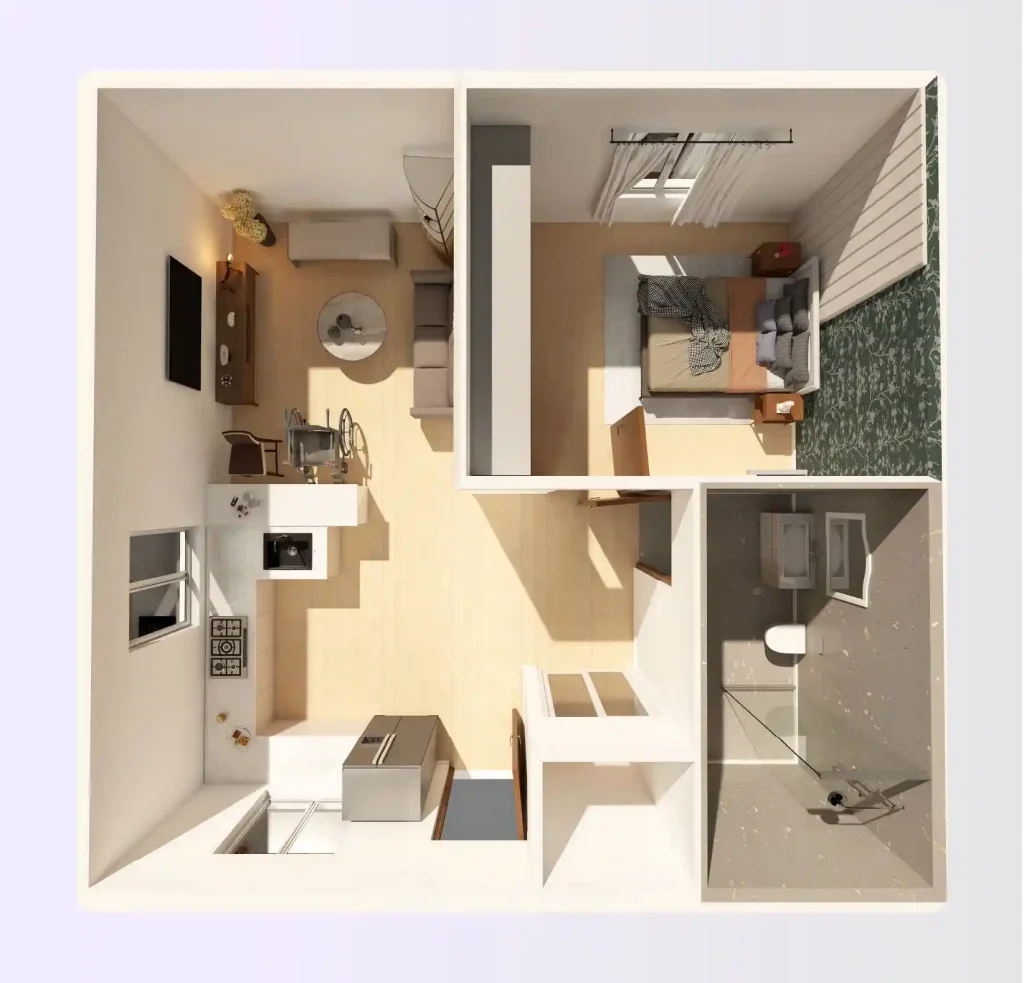
An ADA tiny house plan must carry full compliance within a fraction of the floor space a standard build allows for the same fixture count. This layout concentrates all wet zones at one end and the sleeping and living areas at the other, maintaining the 60-inch turning radius in the accessible bathroom and the kitchen zone.
Dimension: 400 to 600 sq ft
Design Highlight: Continuous timber flooring with no-threshold transitions and wall-mounted storage help the plan read as a spacious space.
ADA Win: A wall-hung toilet and 36×36-inch curbless roll-in shower meet ADA shower floor plan requirements within a sub-80 sq ft bathroom zone.
3. The Multi-Generational ADA Home
Source: Pinterest, Wiggihaze
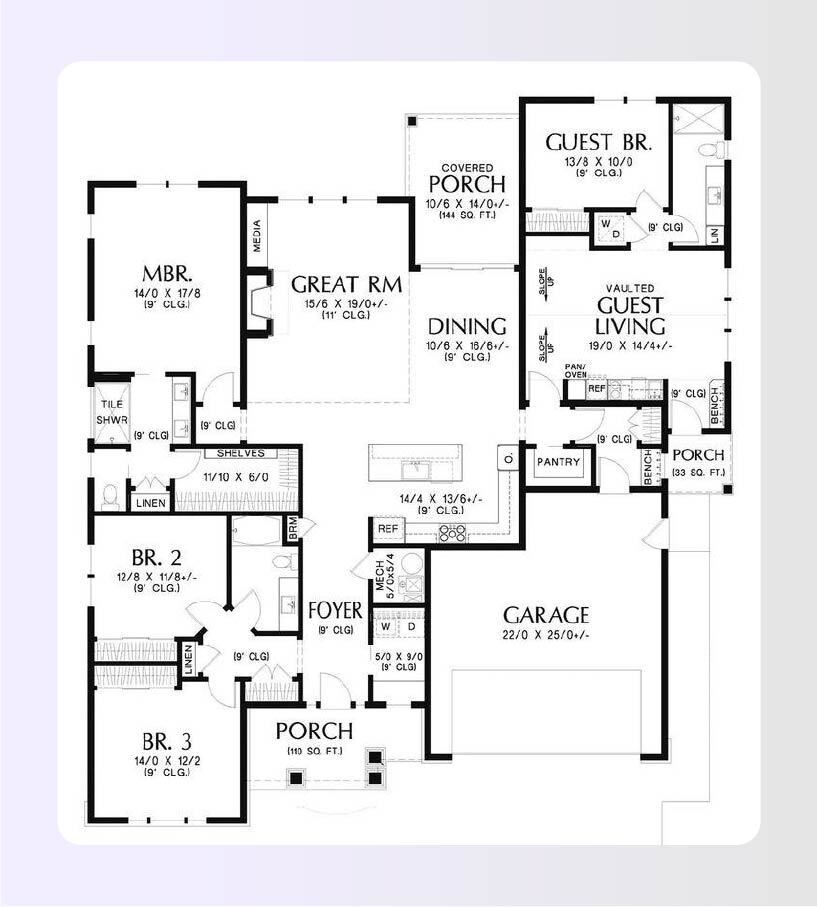
The multi-generational ADA house plan creates two semi-independent living zones connected by a shared common area with full ADA clearances maintained throughout both wings. All corridors in this plan run at 42 inches minimum to accommodate two-direction simultaneous use without creating a conflict point.
Dimension: 2,800 to 3,400 sq ft
Design Highlight: A visual material break at the wing junction using contrasting floor tiles defines each zone without introducing a threshold or level change between them.
ADA Win: The accessible wing entry provides a 36-inch clear opening with a zero-threshold exterior ramp at 1:12 slope for independent outdoor access.
| Pro Tip: Specify swing-clear offset hinges on every door in the accessible wing to recover 2 inches of clear width without resizing any door frame or header. |
4. The Indoor-Outdoor ADA Ranch
Source: Pinterest
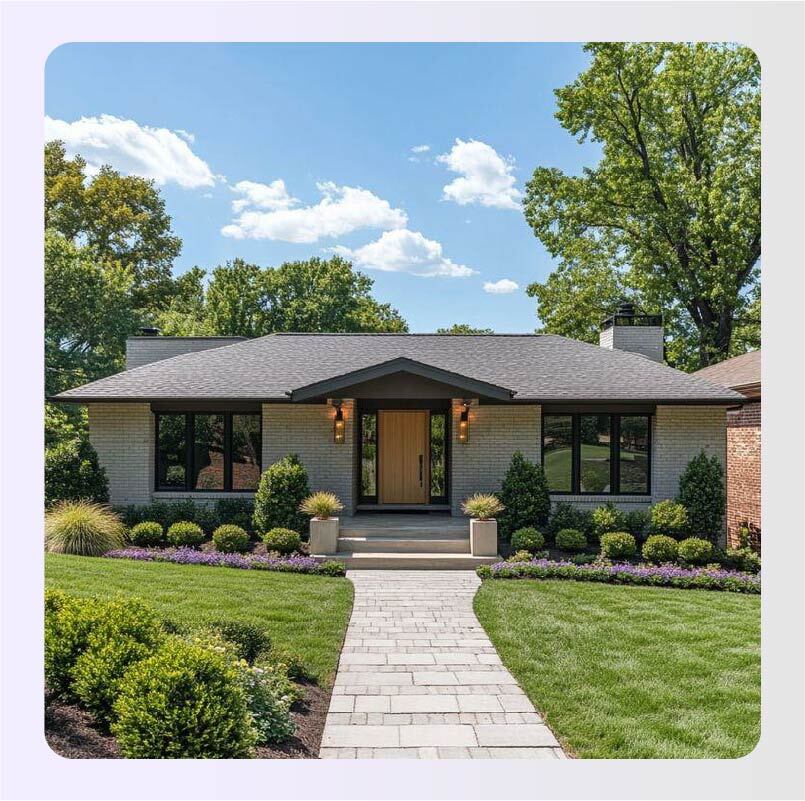
In my opinion, the ranch layout is the most naturally ADA-compatible residential typology, as all living functions are on a single horizontal floor plane. This version extends the accessible logic outdoors, connecting a covered patio to the living area via a flush sliding door and a continuous paved path from entry through parking to outdoor zones, providing easy access throughout the full property.
Dimension: 1,600 to 2,000 sq ft
Design Highlight: Terracotta pavers running from the driveway through to the interior floor tile unify the accessible route as a deliberate design feature.
ADA Win: The continuous zero-threshold path from the accessible parking bay to every primary room meets ADA-compliant home plan standards for the full accessible route.
“The 60-inch turning circle is the first dimension you should draw on any accessible floor plan. If that circle disappears once furniture is placed, the layout has already failed the accessible design brief.”
— Foyr Team
5. The Modern Barndominium ADA Plan
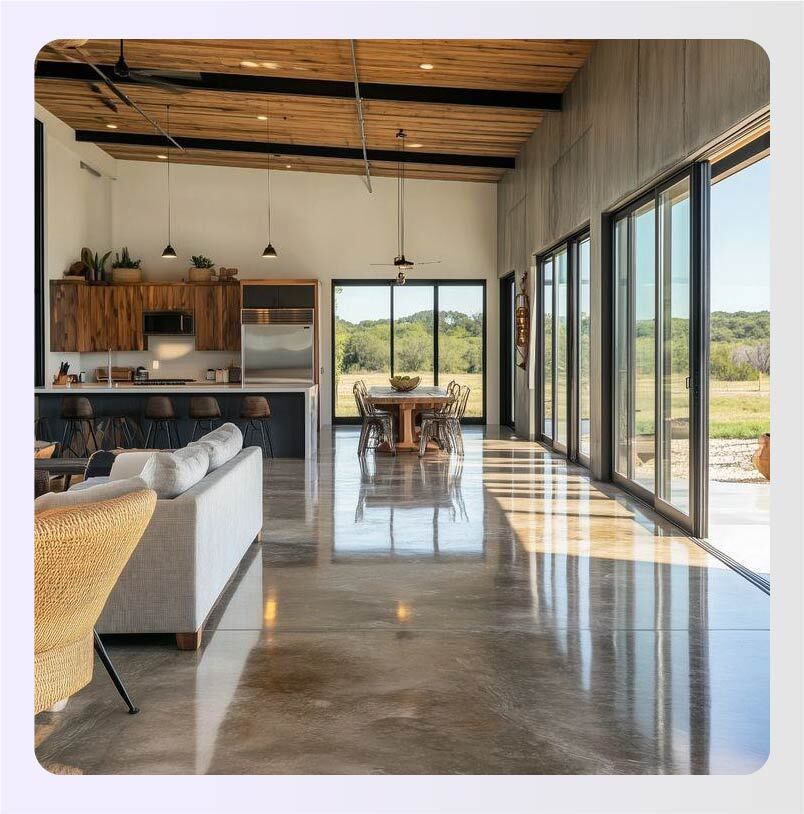
As per my experience, the barndominium open structural span is one of the easiest residential types to design for accessibility. There are no load-bearing interior walls dictating room size or corridor width. This plan uses the span to create wide circulation corridors at 48 inches throughout and positions the primary suite, kitchen, and living area on one accessible route with no level changes.
Dimension: 2,000 to 3,000 sq ft
Design Highlight: Polished concrete flooring with a high-contrast matte band at corridor edges provides a wayfinding cue for visually impaired occupants.
ADA Win: The open-span structure meets all turning-radius requirements without structural modifications to the original building frame.
| Foyr Tip: Use Foyr Neo’s drag-and-drop 3D model library to test ADA-compliant floating vanities and lever faucet hardware at accurate scale within this barndominium layout before specifying products. |
6. The Urban ADA Apartment Floor Plan
Source: Pinterest, Leisure Care
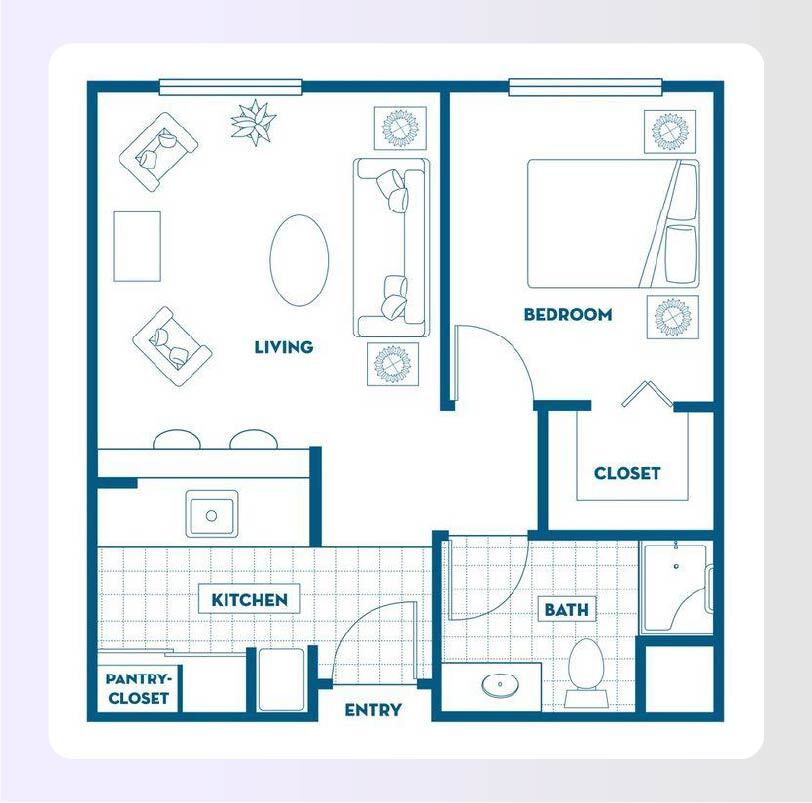
In my opinion, urban ADA apartment floor plans face the most compressed clearance challenge in residential accessible design. This happens because the required turning radii often approach total available floor space. This plan concentrates the kitchen and accessible bathroom on one plumbing wall and keeps the living and sleeping zones as open layouts with unobstructed floor plates.
Dimension: 700 to 1,000 square feet
Design Highlight: Base-heavy storage below 48 inches replaces full-height upper cabinets throughout the kitchen, meeting ADA reach range requirements without reducing overall storage capacity.
ADA Win: The accessible bathroom meets the 60-inch turning radius standard while maintaining a curbless roll-in shower with a linear drain, satisfying ADA apartment floor plans clearance requirements.
Before making any commitment to the client, make sure you create the room designs in Foyr Neo to avoid any surprises later:
7. The ADA Compliant Bathroom Floor Plan
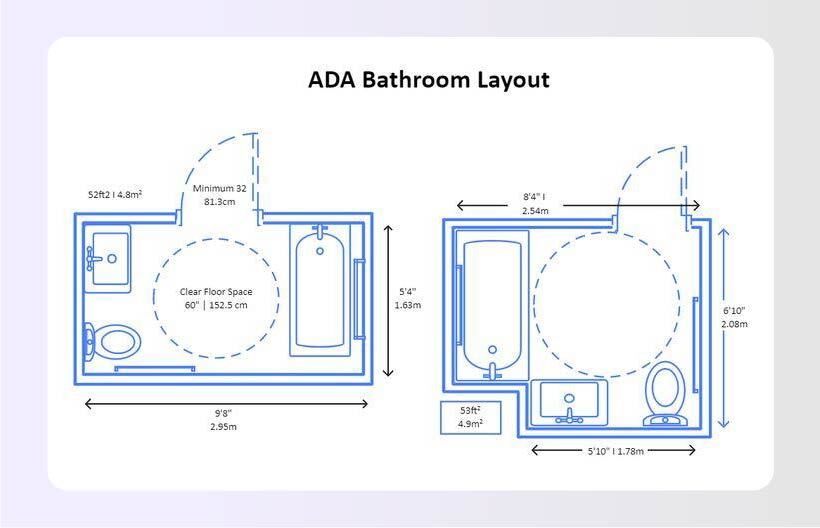
Source: Pinterest, Wondershare Edraw
An ADA-compliant bathroom carries more dimensional requirements per square foot than any other room in residential design. Every clearance must be resolved before any material is specified. In my opinion, this plan achieves a 60-inch turning circle, a 36-inch clear approach to the toilet, and a curbless shower with a fold-down shower seat within a standard 8×10 foot footprint.
Dimension: 80 to 120 square feet
Design Highlight: Large-format matte porcelain tile across the full floor and shower surround keeps the small bathroom floor plan reading as a considered interior decision.
ADA Win: Reinforced blocking installed behind the finished wall at toilet and shower positions allows grab bars to be added at any future point without structural work.
| Pro Tip: Specify the fold-down shower seat at 17 to 19 inches from the finished floor to meet ADA seating height as part of the original fit-out rather than as a later modification. |
8. The Smart ADA Shower Floor Plan
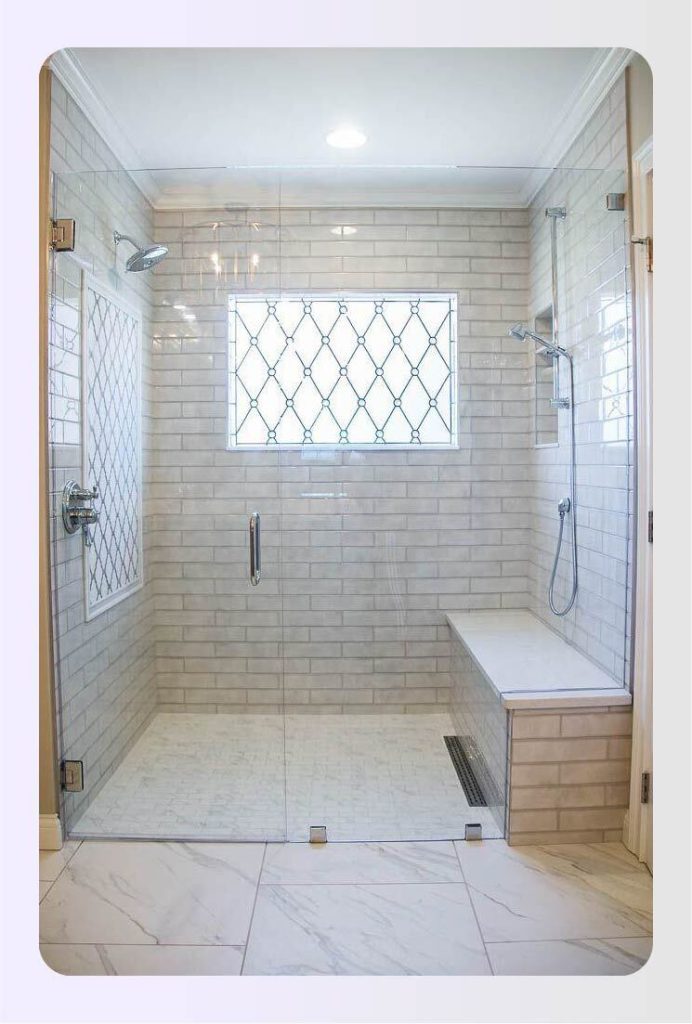
The ADA shower floor plan removes the curb entirely and replaces it with a continuous 1/4-inch-per-foot slope toward a linear drain. This creates a curbless entry accessible to wheelchair users and anyone with limited step height. In my designs, I ensure that shower controls are positioned at 38 to 48 inches from the finished floor on the approach wall, keeping them reachable from outside the water stream.
Dimension: 36 to 60 sq ft shower zone within the bathroom
Design Highlight: A fold-down teak bench at 17 to 19 inches from the floor meets ADA seating standards while reading as a considered spa feature in the space.
ADA Win: The linear drain at the far shower wall allows floor tile to run continuously from bathroom entry through the shower zone, meeting ADA shower floor plan requirements without any visual threshold break.
| Foyr Tip: The AI Magik Bar in Foyr Neo lets you test curbless shower configurations and tile continuity in real time before any ada shower floor plan detail is sent to the contractor. |
9. The ADA Kitchen Layout
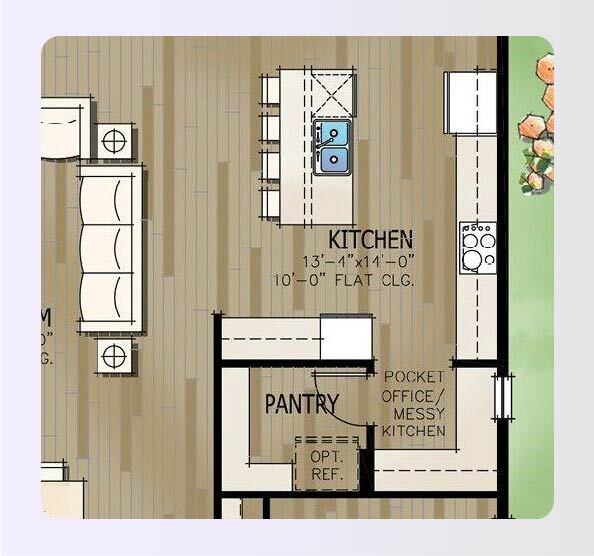
Source: Pinterest, Kseniya Kakshynskaya
The ADA kitchen layout puts the 60-inch turning radius at the centre of the room and maintains a 36-inch clear approach to every primary work zone before any cabinetry or appliance is positioned. A section of countertop in the primary prep zone runs at 28 to 34 inches rather than the standard 36 inches, providing roll-under knee clearance for wheelchair users at the most-used work position.
Dimension: 180 to 240 sq ft
Design Highlight: Handleless base cabinetry with push-to-open mechanisms meets ADA hardware requirements without visible lever hardware on any cabinet face.
ADA Win: A continuous lowered counter run at 34 inches covers both the kitchen design prep zone and the faucet position, supporting a single seated approach to both primary work tasks.
| Pro Tip:
More than 50% of all storage is specified as lower cabinets within the ADA reach range. This keeps appliances such as microwaves at an accessible height rather than in upper cabinets. |

10. The ADA Open-Plan Living and Dining Layout
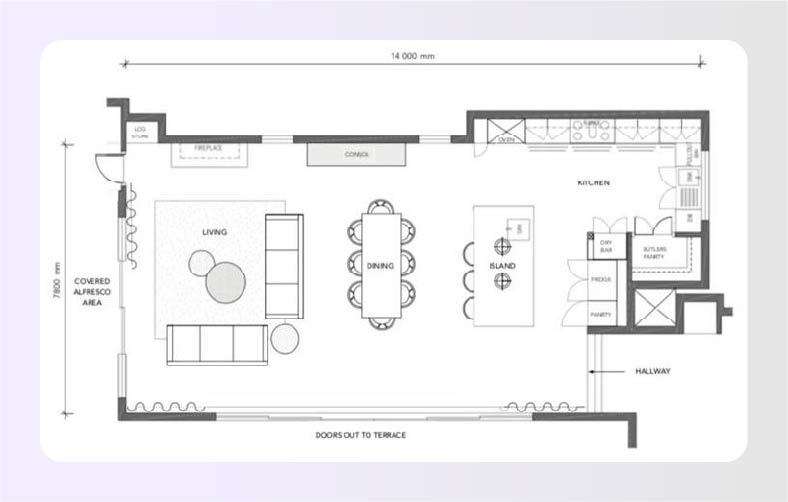
Source: Pinterest, nswim
An open floor plan is not automatically ADA-compliant because the furniture layout, rug placement, and routes between entry, dining, and living zones all require deliberate planning against the turning radius and reach range standards. This plan maps a 36-inch clear path from the entry to every primary seating and dining position and keeps the 60-inch turning circle at the room centre free of furniture at all points throughout daily use.
Dimension: 400 to 600 square feet combined living and dining zone
Design Highlight: Continuous stone tile across the living and dining floor removes every transition strip and reinforces the accessible route as a material design feature.
ADA Win: The open plan makes all reach range and turning radius requirements visible on the Foyr Neo canvas, making compliance verification faster than any compartmentalised layout approach.
The Interior Designer’s Checklist for ADA Compliant Floor Plans
Every ADA house plan should clear these checks before the layout leaves your desk for client review to align with the 2010 ADA Standards for Accessible Design.
- Specify slip-resistant flooring throughout all wet zones in the accessible home floor plan.
- Transition strips between flooring types must not exceed a half-inch rise at any point.
- Lever handles are required on every door and faucet; round knobs fail the standard.
- Fit swing-clear offset hinges on all interior doors to recover 2 inches of clear width.
- Position all light switches at 44 to 48 inches from the finished floor throughout the layout.
- Use high-contrast switch plates against wall surfaces as a wayfinding aid for low-vision occupants.
- Provide 27 inches of knee height and 19 inches of knee depth under sinks and prep counters.
- Specify 9-inch-high, 6-inch-deep toe clearance below all base cabinets and vanity units.
- Mark every 60-inch turning circle on the plan and re-verify it after furniture is placed at real scale.
“Accessible design benefits every occupant, beyond the person the plan was originally designed for. Lever handles and curbless showers improve daily use for every age and ability level throughout the accessible home.”
— Foyr Team
Design for Dignity with Foyr Neo
Designing for accessibility should deliver the same creative ambition as any other residential brief. The compliance requirements should not slow down the design process when the right planning tools are available.
With Foyr Neo, you can test every requirement of your ADA house plans at accurate scale and present photorealistic results to your client before a single wall is built.
- Precision in Every Pivot: Map 60-inch turning radii and 36-inch clear door openings on the Foyr Neo floor planner at an accurate scale. This would ensure that your ADA apartment floor plans are code-verified before the first contractor is briefed
- Drag-and-Drop Accessibility: Access 60,000+ 3D models, including ADA-compliant floating vanities, lever-style hardware, and zero-threshold shower systems to build the layout at real fixture dimensions
- Lighting That Guides: Test wayfinding LED layers and natural light paths in real time to see how your ADA-compliant floor plans read at any time of day before the electrical brief goes to the contractor
- 12K Renders in Under 10 Minutes: Present photorealistic visuals that show ADA-compliant small house plans can meet every design ambition in the brief, not a reduced version of it
If you would prefer to have your ADA floor plan produced by an expert, Foyr’s professional design service delivers ready-to-use ADA home floor plans starting at $20, prepared by experienced designers who build accessibility compliance into every layout from the first line.
Try Foyr Neo free for 14 days to start your next ADA house plans project today.
FAQs
What are accessible house plans?
Accessible house plans are residential floor plans designed to remove physical barriers for wheelchair users and people with mobility impairments, ensuring every occupant has independent access regardless of ability. They include wider doorways, turning radius clearances, lever handles, grab bars, and curbless entries that support independent movement to every room in the accessible home.
What is the difference between ADA compliant and accessible?
ADA compliance refers to the dimensional and technical standards set by the Americans with Disabilities Act, a federal civil rights law covering public accommodations and multi-family housing. Accessible design is a broader concept that includes ADA standards alongside universal design principles, covering a wider range of physical challenges and user needs beyond what the ADA mandates on its own.
What are some common features of accessible house plans?
Common features of accessible housing include curbless showers, grab bars at every toilet and shower position, lever handles on all doors and faucets, and lowered countertops at 28 to 34 inches for seated access. These features also improve daily use for every household occupant, not only those with a stated accessibility requirement at the time the house plans are drawn.
What is Universal Design and how is it different from ADA compliance?
Universal design is a planning philosophy that aims to make spaces usable by everyone, regardless of age or ability level, without requiring separate adaptations or specialised design solutions. ADA compliance sets specific legal standards for users with disabilities in covered buildings and ADA floor plans. Universal design addresses a broader range of human mobility and physical challenges beyond what the ADA mandates as a minimum.
Does the ADA apply to private residential homes?
The ADA primarily applies to public accommodations and commercial facilities rather than private single-family homes. The Fair Housing Act requires accessible housing features in multi-family buildings with four or more units built after March 1991. Many designers voluntarily apply ADA standards and accessibility modifications to private homes during the design phase, avoiding costly changes later that can take time and budget to correct.