


Most bathroom remodels stall at the same stage: fixtures get chosen before anyone commits to a layout. I have seen it happen countless times in my design practice. Homeowners fall in love with a freestanding soaking tub or a rainfall showerhead, only to discover mid-renovation that the plumbing stack sits on the wrong wall.
A full bathroom, one that includes all four essential fixtures (tub, shower, toilet, and sink), needs thoughtful full bathroom floor plans before anything else. Get the full bath layouts right first, and you can save thousands in plumbing relocation costs. The 15 full bathroom floor plan examples below are the configurations I return to most across residential and primary bathroom projects.

Why Does Your Full Bathroom Layout Matter More Than You Think?
In over a decade of bathroom design work, the single biggest source of bathroom remodel budget overruns I have witnessed has nothing to do with tile selection or fixture brands. It is the layout decisions made too late when planning full bathroom floor plans.
Moving plumbing, even a few feet, can cost between $500 and $1,500 per fixture for basic repositioning. If walls or subfloors need to be opened for a full plumbing rough-in, costs climb well past $15,000. That is why the order of fixture planning should always follow this sequence: traffic flow first, plumbing second, fixtures third.
A functional bathroom needs a minimum of 36 to 40 sq ft of floor space. The standard 5×8 full bath (40 sq ft) remains the most common configuration in American homes, but square footage alone does not tell the full story. The three decisions most homeowners get wrong are door swing, toilet sightline, and wet or dry zone separation. Get those right and the rest of the bathroom floor plan follows naturally.
| “The biggest mistake we see on full bathroom floor plans is treating the toilet as an afterthought. The toilet sightline shapes the entire experience of the space. Plan that first, then build the rest of the layout around it.”
– Sam, Interior Designer |
What Does Plumbing Relocation Actually Cost?
Plumbing relocation costs depend on how far you are moving fixtures from their existing rough-ins, whether the drain stack needs to be relocated, and how accessible the subfloor is.
Here is a practical breakdown for a typical bathroom renovation in an American home:
- Toilet relocation (same wall, within 3 feet): $500 to $1,200
- Toilet relocation (opposite wall or new drain run): $2,500 to $5,000
- Shower or tub repositioning: $1,500 to $4,500
- Sink relocation: $500 to $2,000
- Full plumbing rough-in for a new bathroom: $7,000 to $15,000
The decision logic is straightforward: when a bathroom layout keeps all fixtures on or near their original plumbing rough-ins, complexity stays low and budget stays predictable. When your ideal full bathroom floor plan requires moving a drain or a vent stack, budget accordingly and get at least three contractor quotes before committing to that layout direction.
Quick Reference: All 15 Full Bathroom Floor Plans
| Layout Name | Ideal For | Min Size | Key Feature | Complexity |
| Classic 5×8 Three-in-a-Row | Rentals, guest baths | 40 sq ft | All fixtures one wall | Low |
| 5×8 Door on Short Wall | Compact homes | 40 sq ft | Perpendicular entry | Low |
| L-Shape Full Bath | Family bathrooms | 45 sq ft | Two fixture walls | Low-Med |
| Galley (Two-Wall) | Narrow floor plans | 50 sq ft | Opposing fixture runs | Medium |
| Corner Tub Layout | Natural light priority | 55 sq ft | Tub in corner | Medium |
| Wet Zone / Dry Zone Split | Shared family baths | 55 sq ft | Zone separation | Medium |
| Separate Tub + Walk-in Shower | Primary suites | 80 sq ft | Dual wet fixtures | High |
| Walk-Through Shower | Modern wet room | 60 sq ft | Open shower zone | High |
| Square Bath + Double Vanity | En suite, primary bath | 64 sq ft | Double sink vanity | Medium |
| Spa-Style Master Full Bath | Luxury primary | 100 sq ft | Soaking tub + shower | High |
| Jack and Jill Full Bath | Multi-bedroom homes | 50 sq ft | Two entry doors | Medium |
| Narrow Full Bath (6×10+) | Tight spaces | 60 sq ft | Staggered fixtures | Medium |
| ADA-Accessible Full Bath | Accessibility needs | 80 sq ft | 60″ turning radius | Med-High |
| Luxury Primary + Toilet Room | High-end primary bath | 120 sq ft | Private toilet room | High |
| Open Concept Full Bath | Modern minimalist | 100 sq ft | Glass partitions | High |
1. The Classic 5×8 Three-in-a-Row
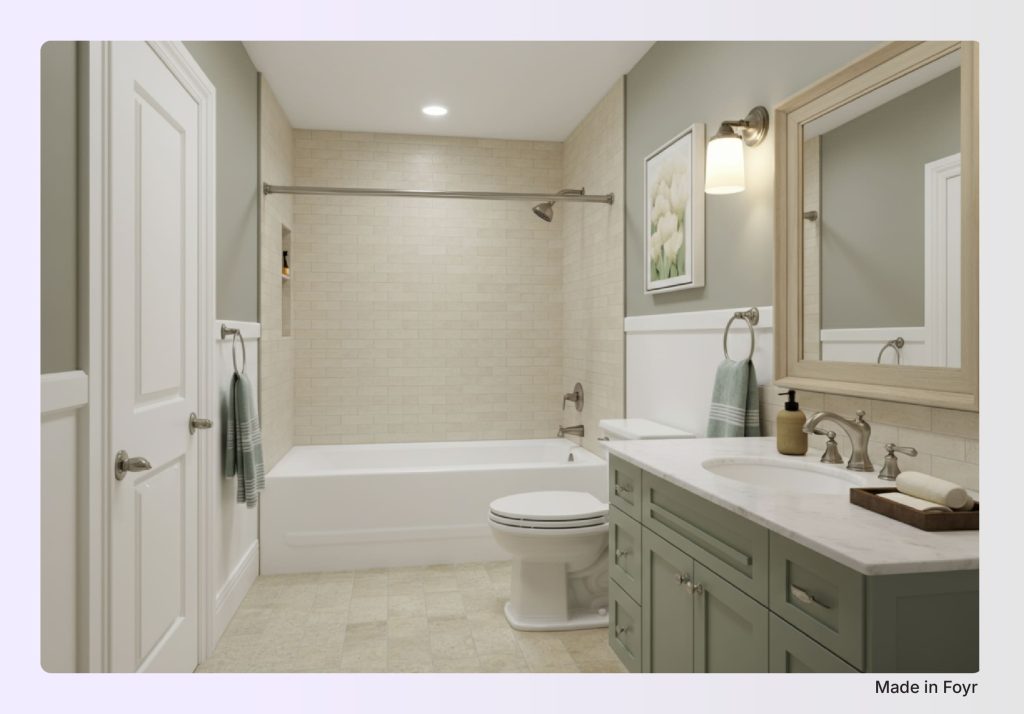
The three-in-a-row is the most recognizable full bathroom floor plan in American homes, particularly those built before 1980. It places all four essential fixtures along a single wall (toilet, tub, and sink in a straight line) with the bathroom door positioned on the long wall. The simplicity of these full bath layouts is their greatest strength: all plumbing runs along one wall, supply lines stay short, and bathroom renovation costs remain predictable. T
his is the layout I recommend to clients working with rental properties, guest bathroom remodels, and any new bathroom where budget efficiency is the priority.
Every time a client insists on moving the toilet to the opposite wall before we have discussed costs, I pull up a rough-in relocation estimate. That single conversation, early and direct, has saved more than a few projects from budget disaster. The three-in-a-row prevents it by keeping every fixture exactly where the building already expects it.
| Dimensions
5 x 8 feet (40 sq ft minimum) |
Typical Remodel Cost
$8,000 to $15,000 for a cosmetic refresh. Layout change pushes to $25,000+ |
Key Features
- All fixtures along one wall, minimizing plumbing runs and keeping renovation costs low
- Bathroom door on the long wall for direct, efficient entry
- Works in tight spaces as narrow as 5 feet wide with 40 sq ft of available space
- Tub typically set in the far corner for privacy and moisture control
- Wet and dry fixtures are naturally grouped at opposite ends
| Pros | Cons |
| Lowest plumbing complexity of all full bath layouts | Limited counter space, especially if using a pedestal sink instead of a vanity. |
| Budget-friendly renovation at $8k to $15k | Toilet visible from the door without a partition |
| Familiar to contractors, meaning faster labor | No privacy separation between simultaneous users |
| All fixtures accessible from a single entry point | Can feel cramped in daily use for a shared family bathroom |
2. The 5×8 with Door on the Short Wall
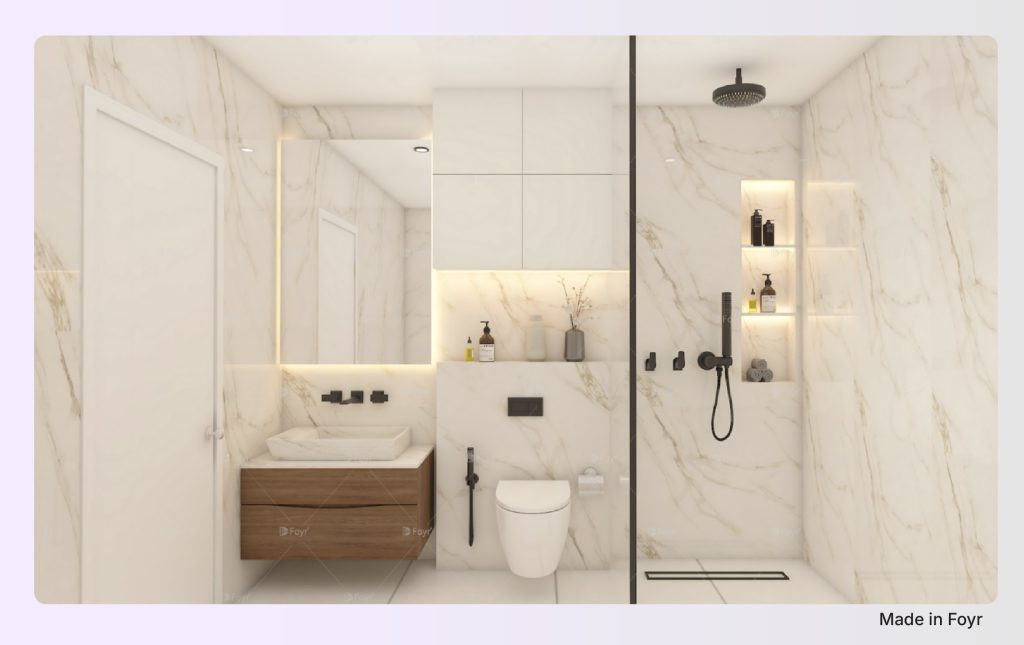
This variation shifts the bathroom door to the short wall, changing the circulation pattern entirely. Instead of entering parallel to the fixtures, you enter perpendicular to them. This creates a longer visual axis down the bathroom, which makes even a small bathroom feel more spacious.
The toilet becomes the first fixture in the sightline from the entry, so a privacy partition or angled vanity helps considerably. I recommend this layout regularly in row houses and older homes where the doorway on the short wall is a structural given rather than a design choice. It is one of the simplest full bathroom floor plans to execute in a small bathroom and consistently delivers a better daily use experience.
| A Pro Tip: A pocket door on the short wall entry eliminates the door swing problem entirely and frees up usable floor space near the sink. It is one of the easiest upgrades available in a small bathroom and consistently delivers a better bathroom feel for daily use. |
| Dimensions
5 x 8 feet (40 sq ft minimum) |
Typical Remodel Cost
$8,000 to $16,000 for a cosmetic remodel. Pocket door upgrade adds $800 to $1,500. |
When to use this layout vs. the Classic Three-in-a-Row
| Choose Short Wall Entry when… | Switch to Classic Three-in-a-Row when… |
| The structural door opening is already on the short wall | The door opening is on the long wall and moving it adds cost |
| You want a longer visual axis to make the bathroom feel larger | Budget is the primary constraint and layout change is unnecessary |
| You are installing a pocket door and eliminating swing conflicts | The bathroom serves a rental property where simplicity matters most |
| Two or more users need more perceived separation between fixtures | Contractor familiarity and speed are priorities for the project timeline |
3. The L-Shape Full Bath
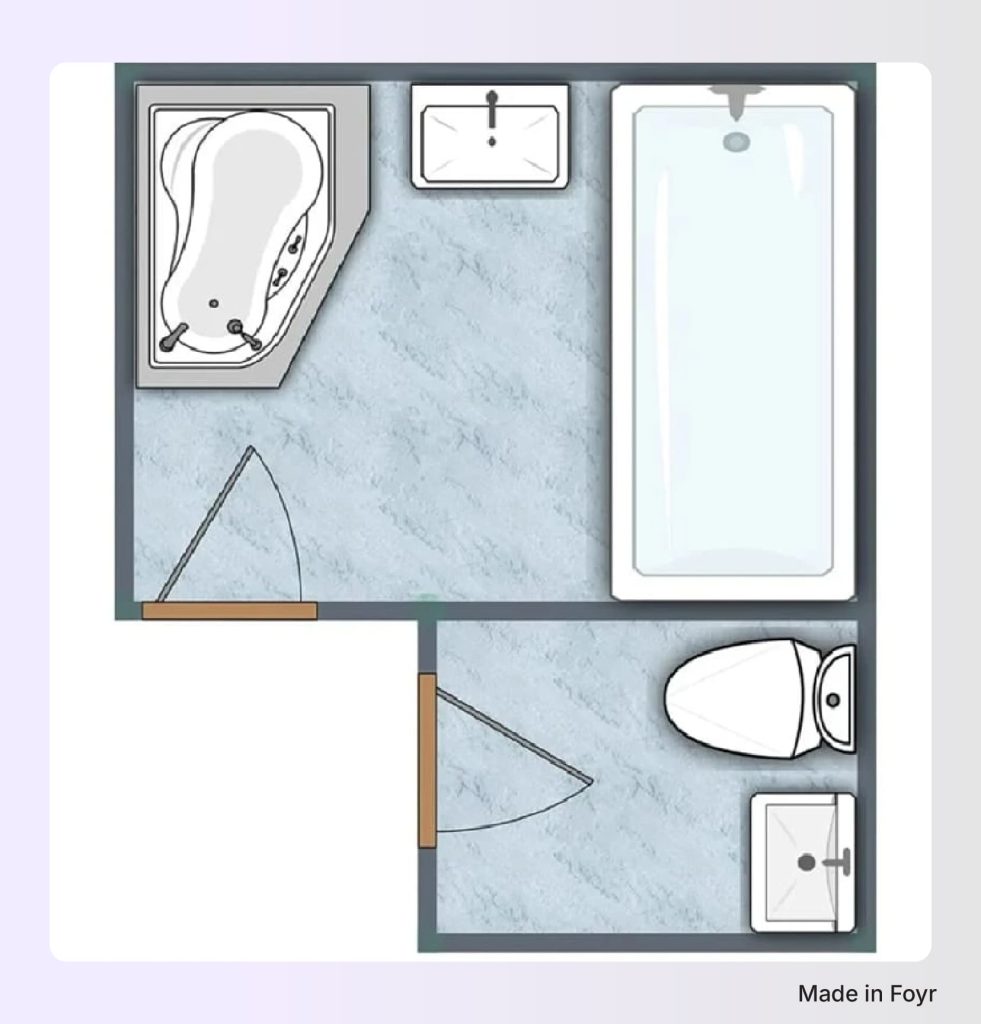
The L-shape bathroom floor plan separates the wet zone (tub or shower stall) from the dry zone (toilet and vanity) by placing fixtures on two perpendicular walls. This is one of my personal favorite layouts for bathrooms that serve multiple users, because it creates a natural functional division without requiring a full partition wall.
In a family bathroom, that separation alone can eliminate most morning congestion. The L-shape also gives more flexibility with window placement for natural light, since two walls offer multiple exposure options.
| Dimensions
5 x 9 feet minimum (45 sq ft) |
Typical Remodel Cost
$10,000 to $20,000 for a full renovation depending on fixture quality |
Why designers favor the L-shape for family bathrooms
- Natural wet and dry zone separation without building a partition wall
- Better morning circulation: one person at the vanity, another in the shower, minimal conflict
- Window placement flexibility: either fixture wall can take a window for natural light
- The corner junction between walls is an excellent location for a linen niche or built-in shelf
- Works in rooms that are 5×9, 6×8, or any near-rectangle with 45 sq ft or more
4. The Galley (Two-Wall) Full Bath
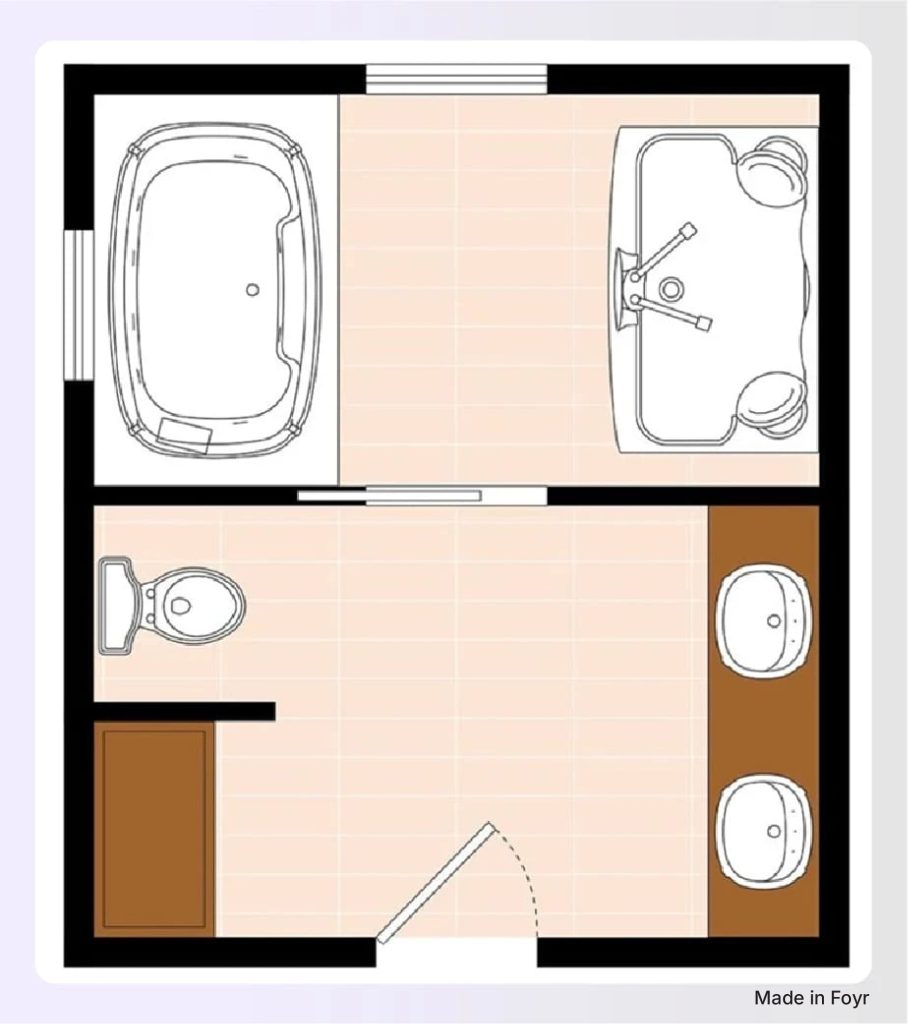
In a galley bathroom layout, fixtures line both long walls of a narrow bathroom. Typically, the tub and shower area runs along one wall while the toilet and vanity face them on the opposite wall. This layout maximizes every inch of limited space and works especially well in bathrooms measuring 5 to 6 feet wide and 10 to 12 feet long. Among the full bathroom floor plans I return to most in urban apartments, older bungalows, and secondary bedrooms, the galley is the clear choice when the space is long and narrow by structure rather than by choice.
The galley rewards a good lighting strategy. Without it, the tunnel effect is real. I always recommend a combination of overhead lighting centered on the ceiling, a backlit vanity mirror, and a skylight or frosted window at the far end if the structure allows. That combination transforms the space from a corridor into a bathroom.
You can also explore more small bathroom floor plans that can maximize your space.
| Dimensions
5 x 10 feet minimum (50 sq ft) |
Typical Remodel Cost$12,000 to $22,000 depending on fixture selection and plumbing scope |
When does the galley layout make sense vs. the L-shape?
| Choose Galley (Two-Wall) when… | Switch to L-Shape when… |
| The room is long and narrow (under 6 feet wide, 10 feet or more long) | The room is closer to square or has a flexible 6×9 footprint |
| You want a double vanity with extended counter space on one full wall | The bathroom serves a family and simultaneous use is a daily requirement |
| Both long walls already have plumbing infrastructure nearby | Natural light from a window on one fixture wall is possible |
| The bathroom is a secondary or guest bath where simultaneous two-person use is rare | Budget allows for slightly more complex plumbing on two perpendicular walls |
5. The Corner Tub Layout
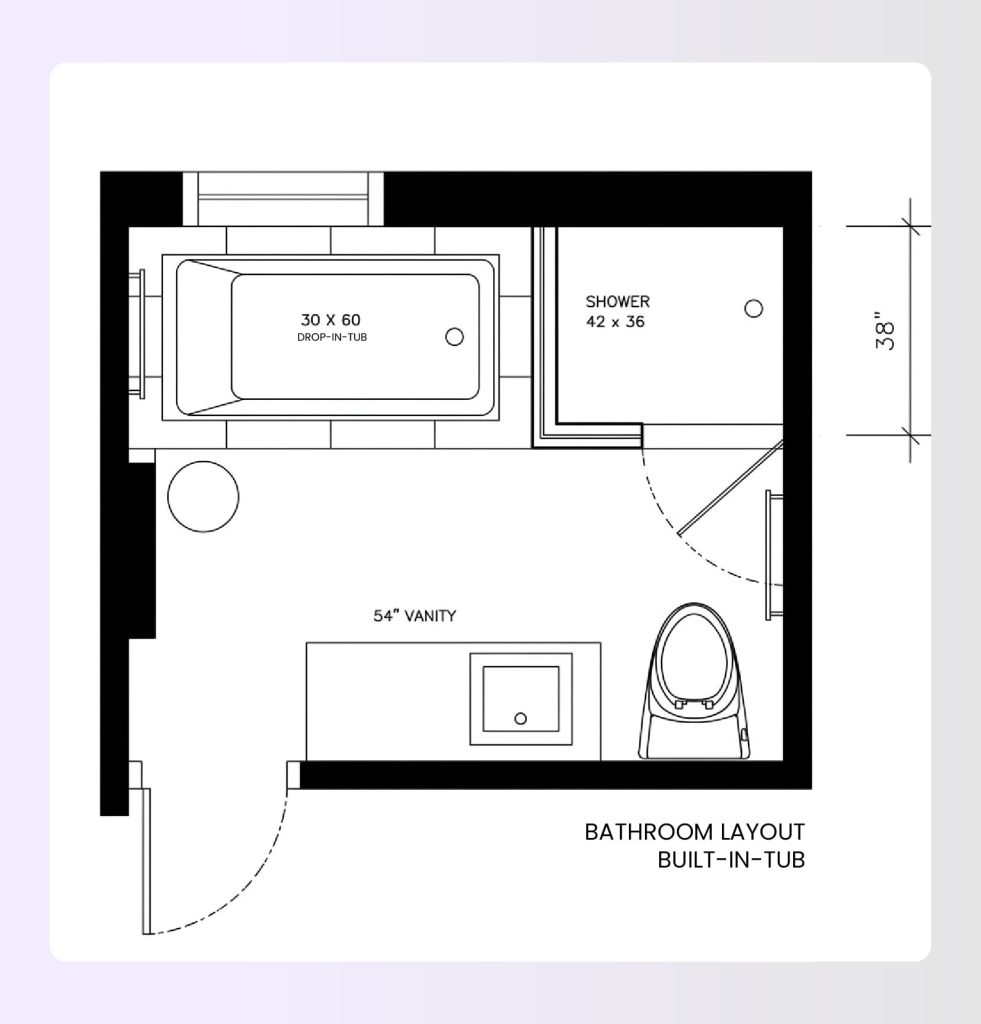
Placing the tub in a corner is a space-saving technique that doubles as a focal point strategy. The corner tub bathroom layout opens up the central floor space, creates an opportunity for a window on the adjacent wall for natural light, and gives the bathroom a considered, design-led feel even in a moderately sized full bath.
I have used this layout in primary bedrooms where the client wanted a spa-like atmosphere without committing to a full master bathroom footprint. The corner placement works with both drop-in and freestanding tub styles, and it pairs especially well with a walk-in shower on the adjacent wall.
| Dimensions
55 sq ft minimum (e.g., 7 x 8 feet) |
Typical Remodel Cost
$15,000 to $28,000 for a full bathroom renovation |
Designer’s corner tub checklist
- Confirm the corner junction is properly waterproofed at both walls before tiling
- Position the tub filler on the shorter approach side for ergonomic reach
- If using a freestanding tub, allow at least 18 inches on two sides for entry and cleaning access
- A window centered above the tub (frosted or high-placed) is the single best natural light addition in this layout
- A walk-in shower on the adjacent wall creates a cohesive wet zone without a partition
6. The Wet Zone / Dry Zone Split
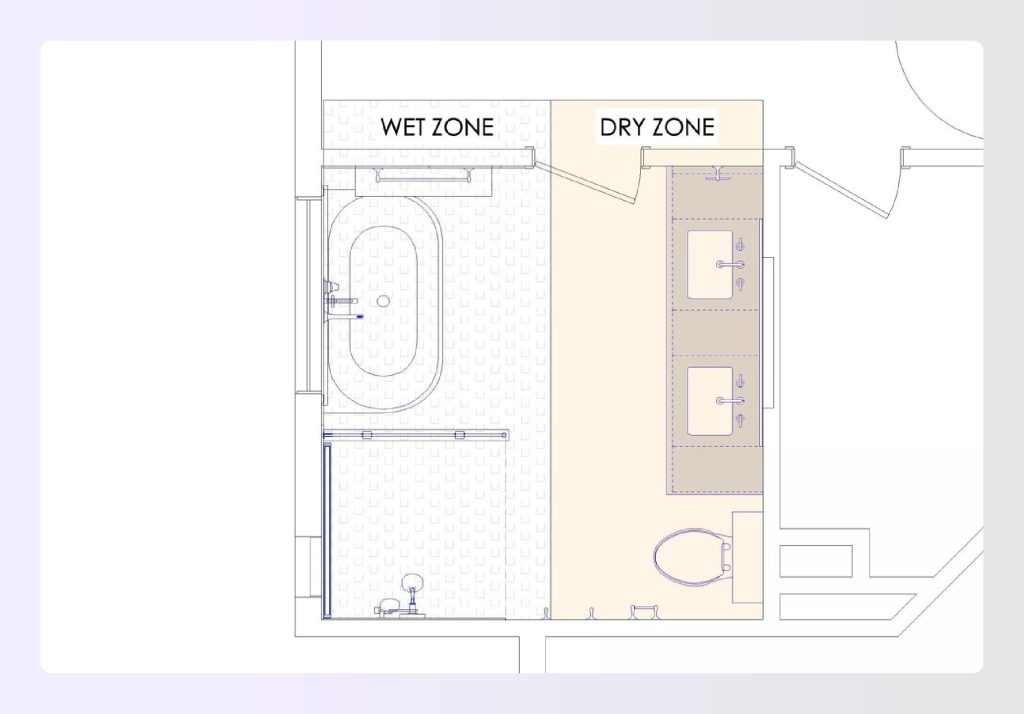
This is one of the full bathroom floor plans I recommend most often to families with a shared bathroom space. The wet zone (shower and tub) is physically separated from the dry zone (toilet and vanity) by a wall, partition, or at least a significant spatial gap. It reduces morning congestion, limits moisture damage to the vanity and toilet area, and makes the full bathroom feel larger than its square footage suggests.
| “For a secondary bathroom serving two children, or a main bathroom serving the whole household, this layout changes the daily experience more than any fixture upgrade could.”
-Sam, Interior Designer |
| Dimensions
55 sq ft minimum |
Typical Remodel Cost
$15,000 to $25,000 for a full bathroom renovation with zone separation |
Key Features
- Clear physical or visual separation between wet and dry zones
- Reduces moisture transfer to the vanity and toilet area
- Allows simultaneous use by more than one person
- Works well as a primary bathroom, family bathroom, or secondary bathroom
- Typically requires 55 or more sq ft to achieve meaningful zone separation
| Pros | Cons |
| Reduces morning congestion in shared bathrooms | Requires more floor space than single-wall layouts |
| Limits moisture damage to dry zone fixtures | A partition or wall adds construction complexity |
| The bathroom feels larger than its actual square footage | Higher renovation cost than basic full bath layouts |
| Better daily use experience than single-zone layouts | Not feasible in bathrooms under 50 sq ft |
7. The Separate Tub and Walk-in Shower Layout
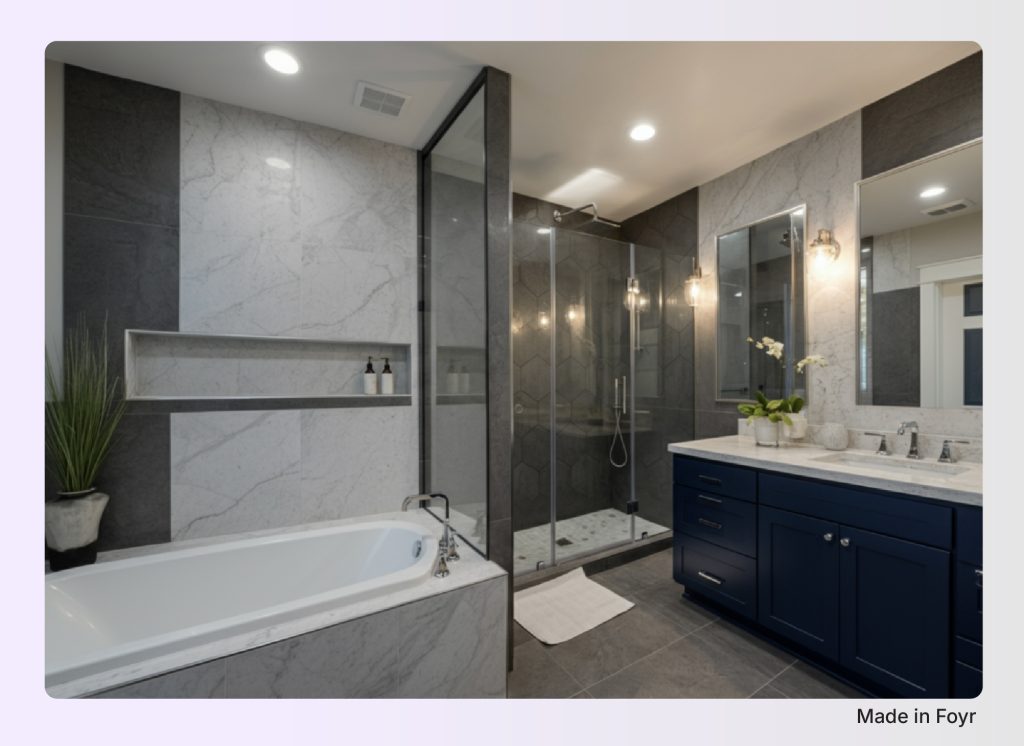
As bathrooms expand into primary bedroom suites, the separate tub and walk-in shower layout becomes the design standard. Having both a soaking tub and a large shower area signals that the bathroom is built for daily indulgence rather than basic function. This layout works best in bathrooms of 80 sq ft or more, where there is enough room for both fixtures to breathe without competing for floor space. I always recommend positioning the tub near a window for natural light and placing the walk-in shower where ventilation is strongest.
From a real estate perspective, this layout consistently delivers one of the strongest returns on investment among all full bathroom floor plan options. Buyers in the primary bedroom market have come to expect both a soaking tub and a walk-in shower as non-negotiable features. Including them in one cohesive bathroom plan rather than retrofitting later is almost always the right financial call.
| Dimensions
80 sq ft minimum (e.g., 8 x 10 feet) |
Typical Remodel Cost
$25,000 to $45,000 for a full primary bathroom renovation |
| Choose Separate Tub + Walk-in Shower when… | Switch to Corner Tub Layout when… |
| The bathroom is 80 sq ft or more with room for two distinct wet fixtures | The bathroom is 55 to 75 sq ft and fitting both fixtures would feel cramped |
| Two people with different morning routines share the primary bathroom | Only one person regularly uses the bathroom and a tub is the priority |
| Budget supports the higher plumbing complexity of two separate wet fixtures | Budget is moderate and a combined or alcove tub-shower is a workable compromise |
| Long-term home resale value in the primary bedroom suite is a priority | Natural light from a corner window is more important than two separate wet zones |
8. The Walk-Through Shower Full Bath
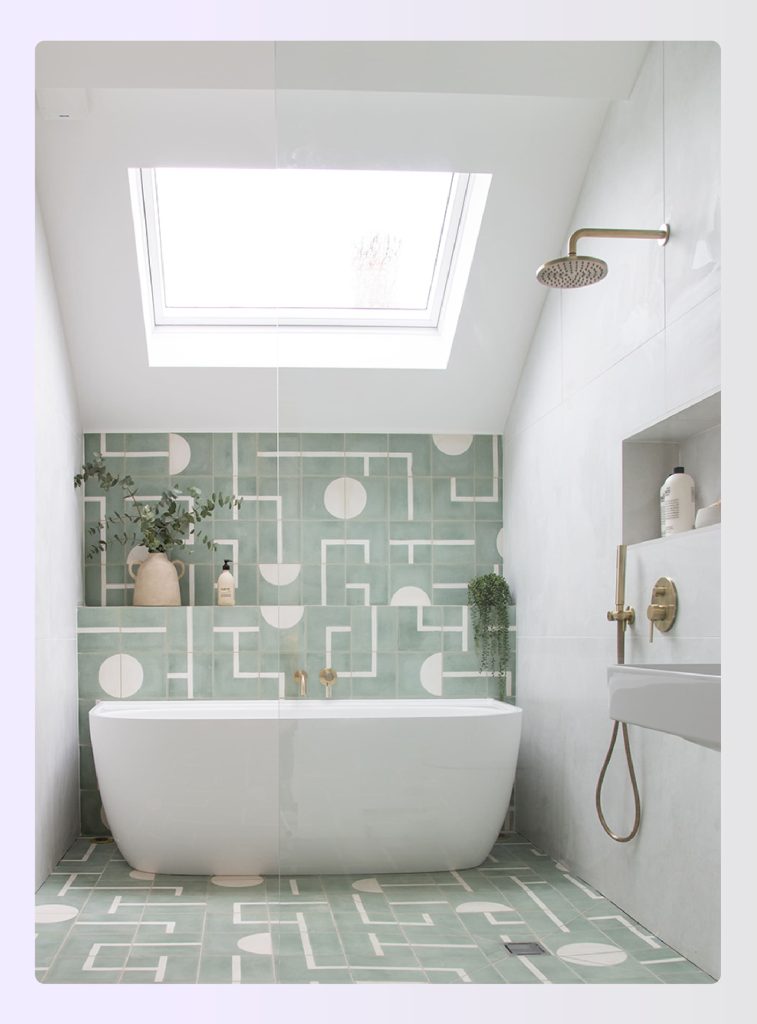
The walk-through shower eliminates the traditional enclosure and creates an open shower area as part of the circulation path through the full bathroom. This works best in a wet room design where the entire floor is waterproofed and slopes toward a central drain. It is a bold layout choice that rewards meticulous waterproofing and strong ventilation planning. I have used it in modern and Scandinavian-influenced residential projects where the client prioritized a seamless, open bathroom feel. The visual result is striking, but the construction standards must be higher than any other layout on this list.
| Dimensions
60 sq ft minimum |
Typical Remodel Cost
$18,000 to $30,000, as waterproofing and drain work add significantly to cost |
Key Features
- Open shower with no glass enclosure or door, creating a seamless floor
- Full wet room waterproofing required throughout the entire floor
- Maximizes the perception of open space in the full bath
- Best suited for bathrooms with strong ventilation and natural light access
- Requires a curbless, slope-to-drain floor across the entire shower area
| Construction note for the walk-through shower
The entire floor must slope toward the drain at a minimum of 1/4 inch per foot. Any wall penetration, fixture base, or threshold that is not fully waterproofed is a moisture intrusion risk. Budget for a waterproofing membrane across the entire bathroom floor, not just the shower area. This is not the layout to cut corners on. |
| Pros | Cons |
| Creates a seamless, high-design look | Full-floor waterproofing adds substantial cost |
| No shower door to clean or replace | Moisture management more demanding than enclosed showers |
| Curbless entry supports accessibility needs | Requires excellent ventilation to prevent mold growth |
| Ideal for aging-in-place design | Not suitable for small bathrooms under 55 sq ft |
9. The Square Full Bath with Double Vanity
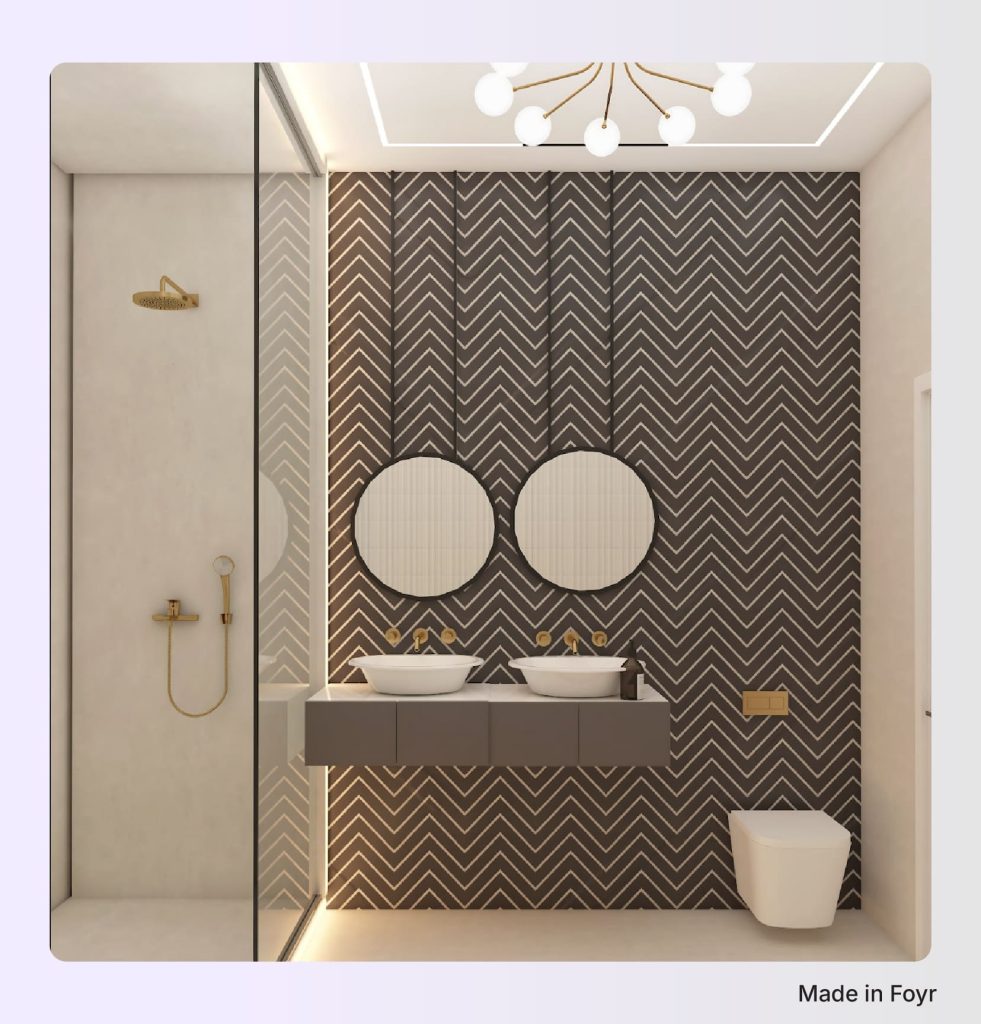
Square bathrooms offer a layout flexibility that rectangular rooms cannot match. In a square full bath, a double vanity can occupy one full wall without feeling cramped, the tub or shower area can anchor a corner, and the toilet can be positioned with a natural privacy buffer from the entry. The result is a cohesive space that feels balanced and functional. This full bathroom plan works especially well as an en suite configuration off the primary bedroom, and it handles double sink use comfortably for two people sharing personal care routines.
| Dimensions
64 sq ft minimum (8 x 8 feet) |
Typical Remodel Cost
$18,000 to $32,000 for a full renovation with double vanity |
Why the square layout suits the en suite double vanity
- One full wall for the double vanity gives each user a dedicated sink and mirror zone
- The opposite wall accommodates a tub or walk-in shower without squeezing counter space
- Toilet with privacy buffer fits naturally in the corner diagonal from the entry
- Square rooms distribute natural light evenly across all fixture areas
- No long corridor effect means the bathroom feels roomier than its square footage suggests.
| Pros | Cons |
| Double vanity ideal for en suite primary bathrooms | Square rooms are less common in standard residential builds |
| Balanced feel across all four walls | Double vanity adds plumbing cost over a single sink layout |
| Counter space and storage above average for a full bathroom | Requires careful planning to avoid door swing conflicts |
| Flexible fixture placement options on all walls | Not suited for narrow floor plans under 6 feet wide |
10. The Spa-Style Master Full Bath
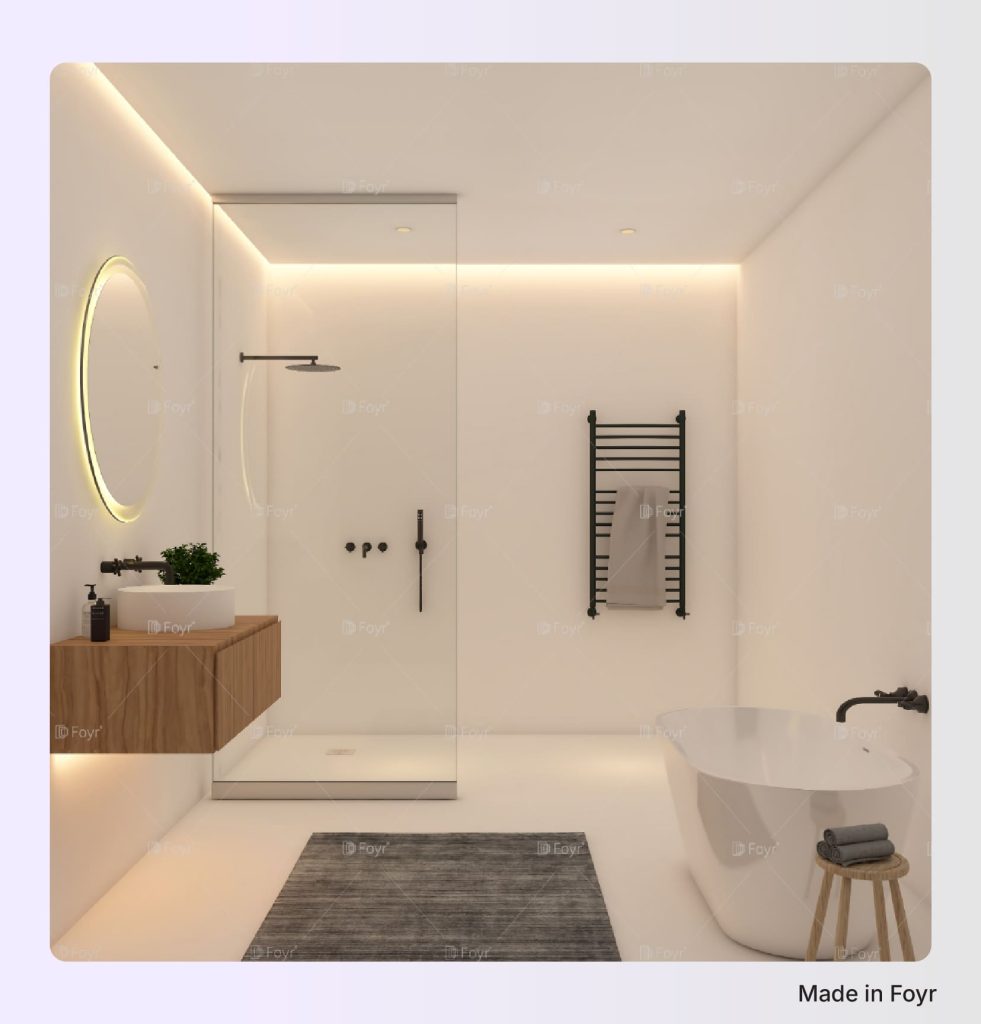
When the primary bathroom becomes a daily retreat rather than a room for personal care, the spa-style layout earns its place among the most rewarding full bathroom floor plans available in the primary bedroom category. This design typically combines a freestanding soaking tub, a large walk-in shower with multiple heads, and a double vanity with substantial counter space.
Heated floors, natural light through skylights or oversized windows, and high-end materials complete the atmosphere. In my experience, this layout has the highest return on both client satisfaction and home resale value of any full bathroom floor plan in the primary bedroom category.
| “We thought we were spending too much. Then we did the math after listing the house. The spa bathroom alone was cited by three separate buyers as the reason they scheduled a second showing. It paid for itself twice.”
Client feedback, spa-style master bathroom project |
| Dimensions
100 sq ft minimum |
Typical Remodel Cost
$35,000 to $60,000+ for a full luxury primary bathroom renovation |
Choose Spa-Style Master Bath when
- Budget supports $35k or more and the primary bathroom is the home’s signature space
- Both occupants prioritize the bathroom as a daily decompression ritual
- The room is 100 sq ft or more with ceiling height to match the scale
- Long-term resale value in a competitive real estate market is a factor
Switch to Separate Tub + Shower Layout when
- Budget is $25k to $45k and both a tub and shower are required but luxury finishes are secondary
- The primary bathroom is 80 sq ft, enough for two fixtures but not a full spa footprint
- Practical daily use matters more than atmosphere and aesthetics
- The project timeline is tight and the simpler layout reduces contractor coordination
11. The Jack and Jill Full Bath
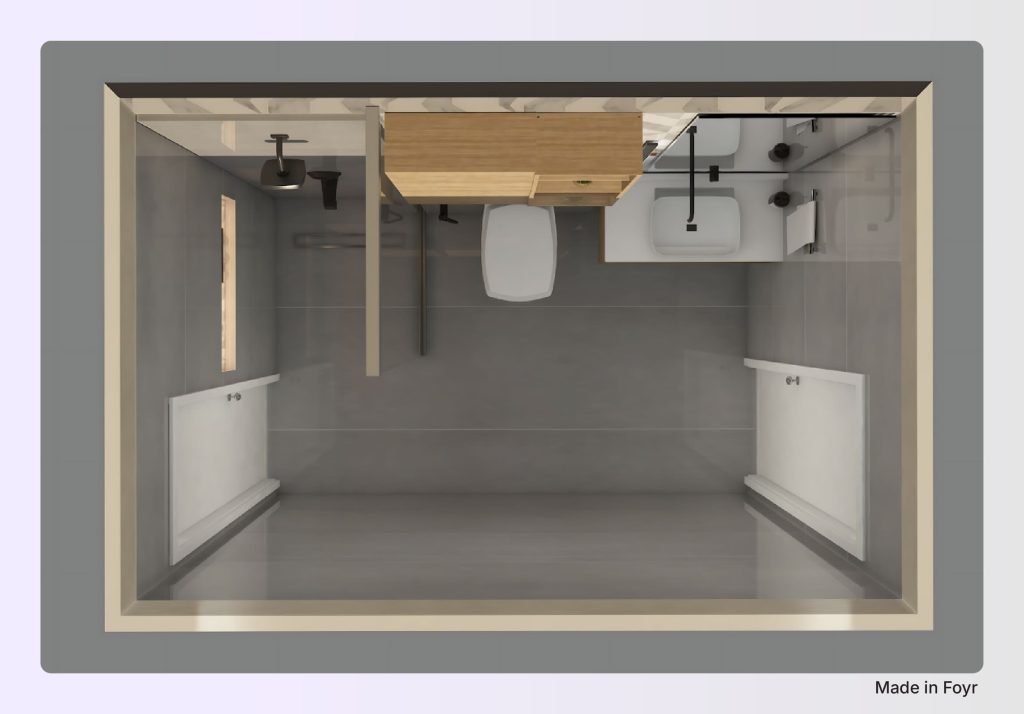

The Jack and Jill bathroom is a full bath shared between two bedrooms, each with its own entry door. It is the most efficient use of a single bathroom space for a multi-bedroom home, and it works especially well for children’s rooms or guest bedroom pairs. The key design principle is that the toilet and shower occupy a central lockable zone, while the vanity area (sometimes split into two individual stations) provides personal care space accessible from both bedrooms. For editable Jack and Jill floor plan templates, see the Foyr gallery:
The key design principle is that the toilet and shower occupy a central lockable zone, while the vanity area provides personal care space accessible from both bedrooms. For editable Jack and Jill floor plan templates, check out the Foyr floor plan gallery.
| Dimensions
50 sq ft minimum |
Typical Remodel Cost
$14,000 to $25,000. Two door installations add $1,500 to $3,000 over a standard full bath. |
Key Features
- Two entry doors, one from each connected bedroom
- Pocket doors recommended on both entry points to save floor space
- Vanity area split or shared between two users for personal care
- Central lockable zone for the toilet and shower area ensures privacy
- Ideal for family bathrooms serving multiple children or guest baths in multi-bedroom homes
| Pros | Cons |
| Most efficient bathroom use for multi-bedroom homes | More complex access planning than a single-door bathroom |
| Eliminates hallway bathroom traffic from the shared corridor | Requires a privacy coordination habit between users |
| Works for children’s rooms, guest suites, and paired bedrooms | Two doors reduce available wall space for storage and towel hooks |
| Split vanity can be designed with individual storage for each user | Locking mechanism on both doors is critical and must be reliable |
12. The Narrow Full Bath (6×10 or Longer)
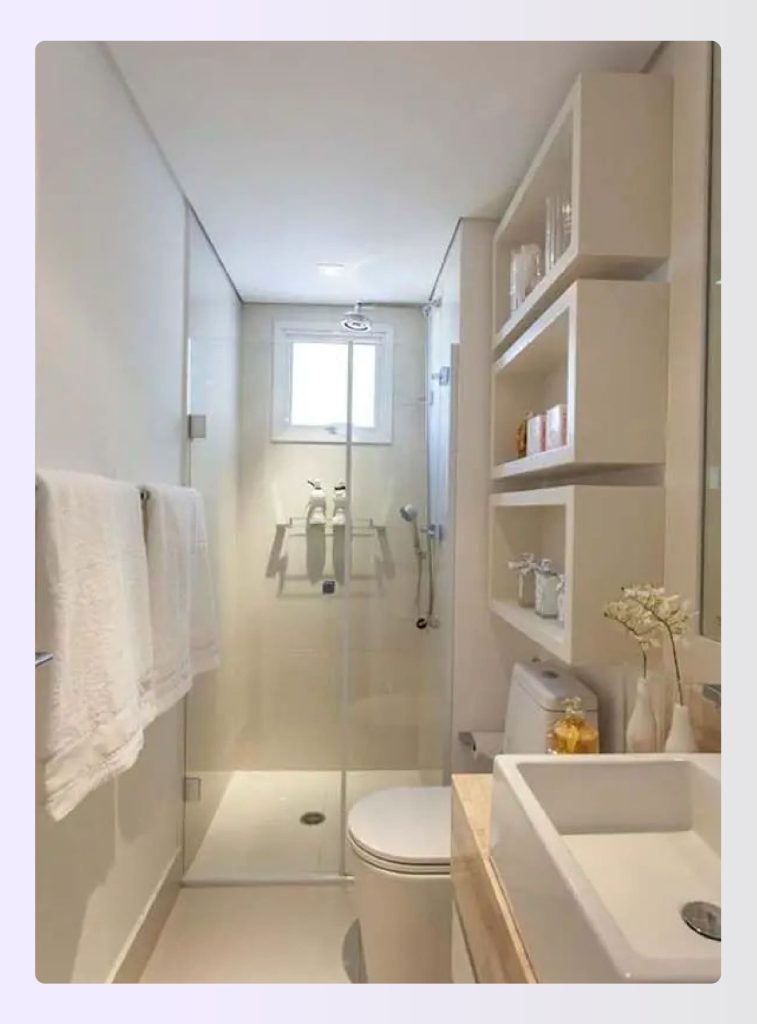
Long, narrow bathrooms (those measuring 6 feet wide by 10 feet or more in length) require a layout strategy quite different from standard rectangular rooms. A single fixture wall is rarely sufficient. The galley approach or a staggered layout that places some fixtures on each long wall generally works better. The primary challenge is maintaining enough turning radius (at least 30 inches between fixtures) to make the bathroom space comfortable for daily use. In my experience, a pocket door or barn door at the entry end is nearly always the right choice for a narrow full bath, as a standard swing door consumes too much of the limited space near the entry.
| Dimensions
60 sq ft minimum (6 x 10 feet) |
Typical Remodel Cost
$12,000 to $22,000, depending on fixture arrangement and door type |
| Choose Narrow Full Bath (6×10+) when… | Switch to Galley Layout when… |
| The room is 10 feet or longer with enough length to stagger fixtures on both walls | The room is 10 feet or shorter and a full staggered layout is too tight |
| You want to fit both a full tub and a separate shower area in a compact footprint | Only two walls (both long sides) have plumbing access, making the galley the natural fit |
| A pocket or barn door is feasible at the short-wall entry | The priority is maximizing counter space on one wall rather than fitting both a tub and a shower |
| The extra length allows a linen closet or storage niche at the far end | Contractor familiarity with the galley layout will reduce labor cost and project duration |
13. The ADA-Accessible Full Bath
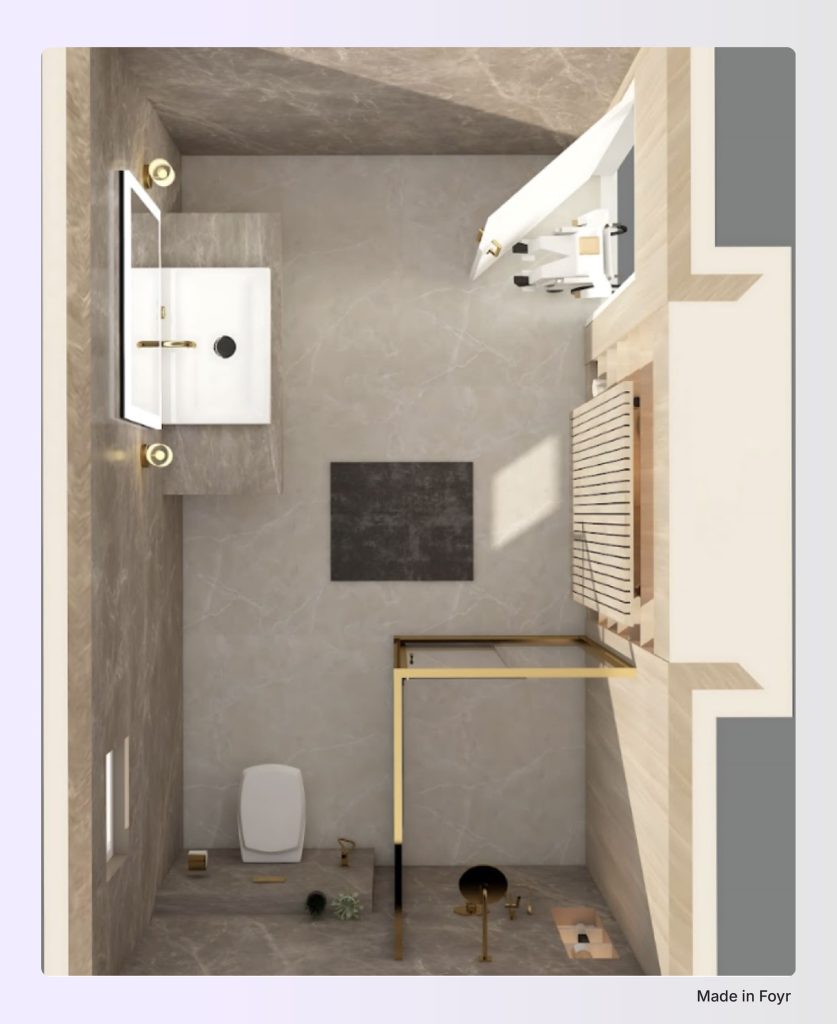
An ADA-accessible full bathroom prioritizes turning radius, grab bars, and fixture heights that accommodate users with mobility challenges. The minimum ADA turning radius requires 60 inches of clear floor space, which shapes every fixture placement decision in this bathroom floor plan.
This layout is increasingly relevant not just for formal accessibility needs but for aging-in-place design, a category growing significantly as the population ages. I include ADA clearance planning in virtually every primary bathroom remodel I take on, regardless of the client’s current needs, because retrofitting for accessibility later is far more expensive than building it in from the start.
For more ADA bathroom floor plan guidance and editable templates, see our floor plan gallery.
| Dimensions
80 sq ft minimum |
Typical Remodel Cost
$20,000 to $35,000 for a full ADA-compliant bathroom renovation |
ADA bathroom floor plan checklist
- 60-inch clear turning radius throughout the bathroom space (verify before finalizing any layout)
- Grab bars at the toilet, tub, and shower. Walls must be reinforced during rough-in, not after tiling
- Curbless shower entry with slope-to-drain floor across the entire shower area
- Roll-under vanity or clear knee space below the sink for wheelchair access
- Lever handle fixtures throughout (faucets, door hardware, shower controls)
- Toilet height between 17 and 19 inches from finished floor to seat
- Confirm compliance with local building codes before finalizing the bathroom plan
14. The Luxury Primary Bath with Toilet Room
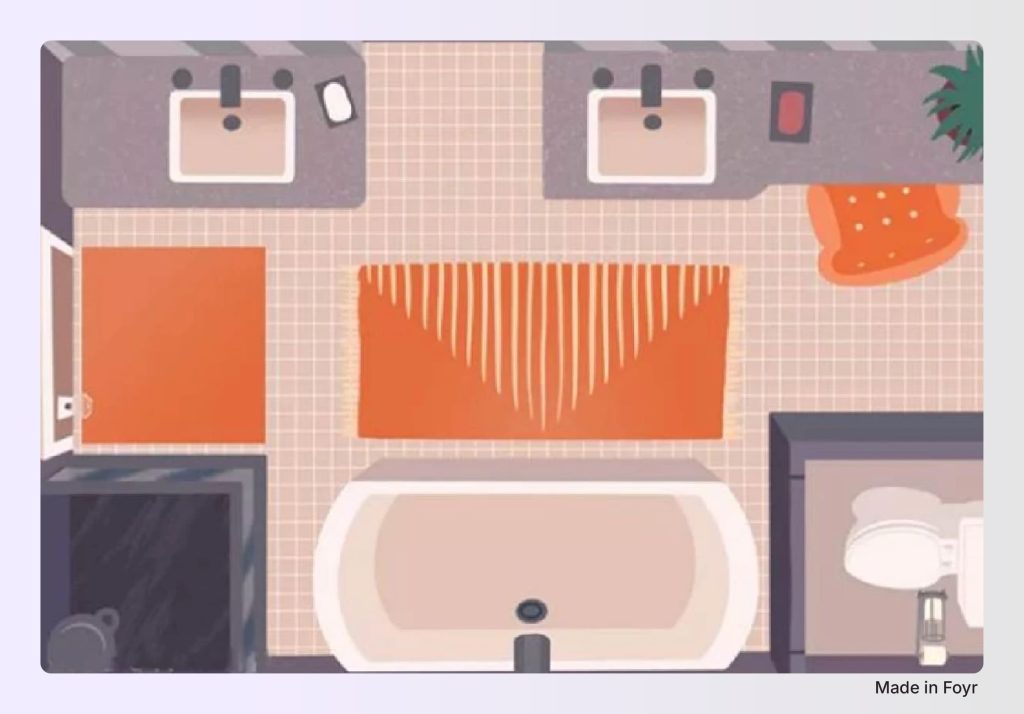
Separating the toilet into its own enclosed room (sometimes called a water closet or WC) within a larger primary bathroom is the defining feature of high-end bathroom design in residential new construction. The toilet room provides complete privacy, contains odor within a ventilated enclosure, and allows two people to use the bathroom space simultaneously without any interruption. This is my go-to recommendation for couples sharing a master bathroom and for clients who prioritize morning routine efficiency above all else. The rest of the full bathroom plan, typically a double vanity, a freestanding tub, and a walk-in shower, benefits from the spatial clarity that comes with the toilet removed from the central zone.
I have found that clients initially resist this layout when they see the footprint requirement on paper. Then they stay in a hotel with a water closet and come back ready to commit. The experience of a properly separated toilet room is difficult to communicate in a floor plan. It has to be lived.
| Dimensions
120 sq ft minimum |
Typical Remodel Cost
$40,000 to $75,000+ for a full luxury primary bathroom renovation |
Key Features
- Enclosed toilet room with its own door for complete privacy within the full bathroom
- Main bathroom space freed for the double vanity, tub, and walk-in shower
- Allows simultaneous use by two people with no shared fixtures at all
- Often includes a linen closet or built-in storage niche adjacent to the toilet room
- Common in luxury primary bathroom configurations and high-end new construction
| Pros | Cons |
| Ultimate privacy and simultaneous use for couples | Requires 120 sq ft or more, the largest footprint on this list |
| Odor containment with dedicated ventilation in the toilet room | Highest renovation budget of all 15 layouts |
| Highest daily use functionality of all full bath layouts | Structural wall for the toilet room adds construction cost and complexity |
| Strong home resale value in primary bedroom suites | Not feasible in most existing homes without major structural work |
15. The Open Concept Full Bath
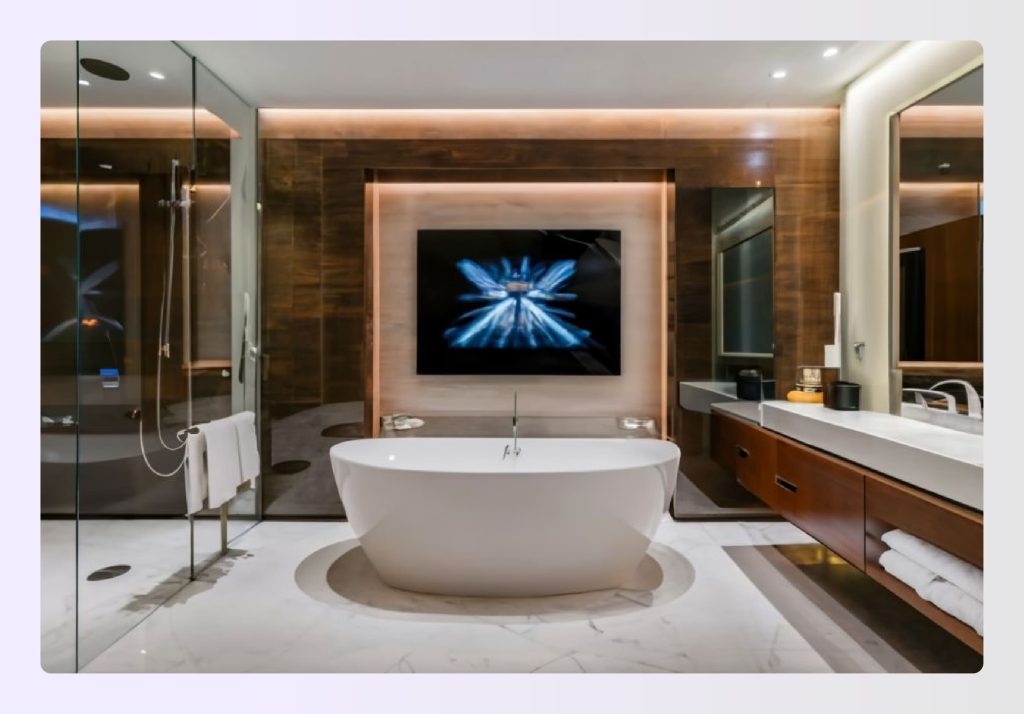
The open concept bathroom removes the visual barriers between zones, connecting the bathroom space to the primary bedroom through glass partitions, open doorways, or a combined suite design. This is a design-forward choice that works beautifully in modern, minimalist, and contemporary interiors but requires careful privacy planning and a clear understanding of structural elements like load-bearing walls and plumbing walls.
The open concept full bathroom is most successful as a single-occupancy primary bathroom suite where the occupant values visual continuity between bedroom and bath over separation. When executed well, it is one of the most striking bathroom design outcomes I know.
| Dimensions
100 sq ft minimum |
Typical Remodel Cost
$35,000 to $65,000+ depending on glass partitioning and structural scope |
| Choose Open Concept Full Bath when… | Switch to Luxury Primary + Toilet Room when… |
| Single occupancy or a couple where both partners are comfortable with visual openness | Two people share the primary bathroom and privacy is a non-negotiable daily requirement |
| The primary bedroom has strong design continuity worth extending into the bath | The room is already 120 sq ft or more and the extra enclosure cost is justified |
| The project is a new build where structural walls can be placed intentionally | Odor containment and complete toilet privacy are priorities over visual openness |
| Modern or minimalist aesthetic is the governing style for the entire primary suite | The home is traditional or transitional in style and an open concept bath would feel out of place |
How Do You Choose the Right Full Bathroom Floor Plan for Your Remodel?
Choosing the right full bathroom floor plans is a decision with long-term consequences. Here is the 10-point checklist I work through with every client before we commit to any bathroom layout:
- Measure your actual room dimensions, including where the bathroom door sits and the direction it swings
- Locate existing plumbing rough-ins before considering any layout changes
- Identify your primary users. A secondary bathroom for children needs different decisions than a primary bedroom en suite.
- Decide on wet and dry zone needs based on how many people share the bathroom simultaneously
- Assess natural light and ventilation. Both directly affect fixture placement and moisture management.
- Establish your bathroom renovation budget before committing to a layout direction
- Check local building codes for toilet clearance, grab bars, and ventilation requirements
- Consider accessibility needs now and in the future. Plan for grab bars and turning radius, even if not immediately needed.
- Plan storage. Where towels, toiletries, and supplies go affects every bathroom space decision.
- Visualize in 3D before finalizing anything. This single step prevents the most expensive bathroom remodel mistakes.
Design Your Full Bathroom Floor Plan with Foyr Neo
Once you have the direction for your full bathroom floor plans in mind, the next step is testing them before committing to any physical work. Foyr Neo interior design software makes this stage faster and more accurate than sketching on graph paper or toggling between browser tabs of fixture pages.
The AI Magik Bar lets you test tile and fixture combinations in real time. Upload a photo of your existing bathroom floor or start from a template and see how different surfaces interact before ordering a single sample.
The drag-and-drop 3D model library includes over 60,000 models covering every fixture category, so you can populate your full bathroom floor plan with accurate-scale representations of the actual products you are considering.
One-click 2D to 3D conversion transforms your bathroom plan into a fully navigable 3D model instantly, and photorealistic renders are available in minutes rather than days. The AI restyle feature also lets you test multiple bathroom design variations without starting the floor plan over from scratch.
For a full bathroom remodel, this capability alone can save weeks of back-and-forth with contractors and clients, and it prevents the costly mid-renovation changes that come from committing to a layout before seeing it in three dimensions.
Ready to see the difference for yourself? Start your 14-day free trial of Foyr Neo today.
FAQs
What is a good size for a full bathroom?
A full bathroom needs a minimum of 36 to 40 sq ft to fit all four essential fixtures with basic clearance. The standard 5×8 (40 sq ft) is the most common full bath size in American homes. A primary bathroom benefits from 80 sq ft or more, and luxury master bathrooms typically run 100 to 150 sq ft for a layout with a separate tub and dedicated walk-in shower.
What are the rules of bathroom layout?
The core rules are clearance, circulation, and code. These rules of thumb help ensure that every bathroom layout remains comfortable and compliant. The toilet requires a minimum of 15 inches from center to any side wall (18 inches preferred) and 24 inches of clear floor space in front. The shower area needs at least 36 by 36 inches of interior space to meet code. The bathroom door should never swing into a fixture, and local building codes govern ventilation requirements. Beyond the rules, the guiding principle for any bathroom floor plan is traffic flow: plan how people move through the bathroom space before placing any fixture.
What is the most common bathroom layout?
The Classic 5×8 Three-in-a-Row is the most common full bathroom floor plan in American homes, particularly in housing built before 1980. It places all four essential fixtures along one wall, positions the bathroom door on the long wall, and keeps all plumbing in a single run. This classic configuration became the default for residential builders because it minimizes bathroom renovation costs, and it remains the baseline for most bathroom remodel projects today.
How do you make a bathroom layout?
Start by measuring the room accurately, including door swing and window placement. Mark the existing plumbing rough-ins. Then plan the wet zone and dry zone separately before combining them into a full bathroom floor plan. Use a tool like Foyr Neo to test multiple configurations in 2D before committing to a 3D view. Always check fixture clearances against local building codes and verify square footage requirements before finalizing any bathroom layout.
What are the three types of bathroom layouts?
The three foundational types are the single-wall (or three-in-a-row), the two-wall (galley), and the L-shape. Every other full bathroom floor plan on this list (wet room, spa bath, Jack and Jill, luxury primary) is a variation or expansion of these three basic bathroom configurations. The right type depends on the size of the space, the number of users, and the budget available for bathroom renovation.