


Every interior designer knows the design project starts to change once real people, real budgets, and real contractors enter the room. Interior design project management is where a strong concept survives approvals, procurement delays, scope shifts, client feedback, and site decisions.
I’ve seen good concepts fail because nobody owned the next action after a meeting ended. The best studios don’t manage chaos through memory, charm, or late-night messages. They build a logical sequence that protects the client’s vision while keeping the design team accountable through the entire project.
This structure becomes critical once a studio starts handling multiple active projects. Missed decisions, unclear ownership, poor documentation, and late change control can quietly turn a promising design into a stressful delivery problem.
This blog covers the full interior design project management lifecycle for interior designers, from lead qualification through design delivery and final invoicing. My take is simple: project management for interior designers should make creative work easier to deliver, rather than making studios behave like construction companies.

The Interior Design Project Management Lifecycle
Every interior design project follows a logical sequence of phases, even when scope and budget differ significantly between assignments. Defining these phases is the first step toward making interior design project management mean something operational in your studio.
Without named stages, decisions pile up without ownership and accountability disappears into group chat threads.
Phase 1: Lead Qualification and Onboarding
Lead qualification captures prospect details, budget range, project type, desired timeline, and scope of work before the initial consultation. This stage determines whether the client is a good fit, what interior design services they need, and what should be included in the project record.
I’d recommend documenting the project type, decision-makers, budget comfort level, functional needs, and any hard deadlines here. If the lead becomes active, this record becomes the foundation for the interior design project timeline.
Phase 2: Client Brief and Preference Capture
This phase captures design preferences, mood boards, material samples, color schemes, window treatments, lifestyle habits, and functionality of the space. The goal is to translate taste into a usable brief before concept development begins. A signed brief prevents clients from rewriting the story after sourcing begins. In my experience, weak briefs create more change orders than weak taste ever does.
Phase 3: Design Development and Proposal
Design development translates the approved brief into space planning, floor plans, design elements, detailed drawings, and preliminary cost estimates. The design development phase should connect visual ideas with budget management before the client sees the final design direction.
This is where teams present design concepts, gather client feedback, and refine design plans. Every approval should be documented, because the finer details become expensive once procurement begins.
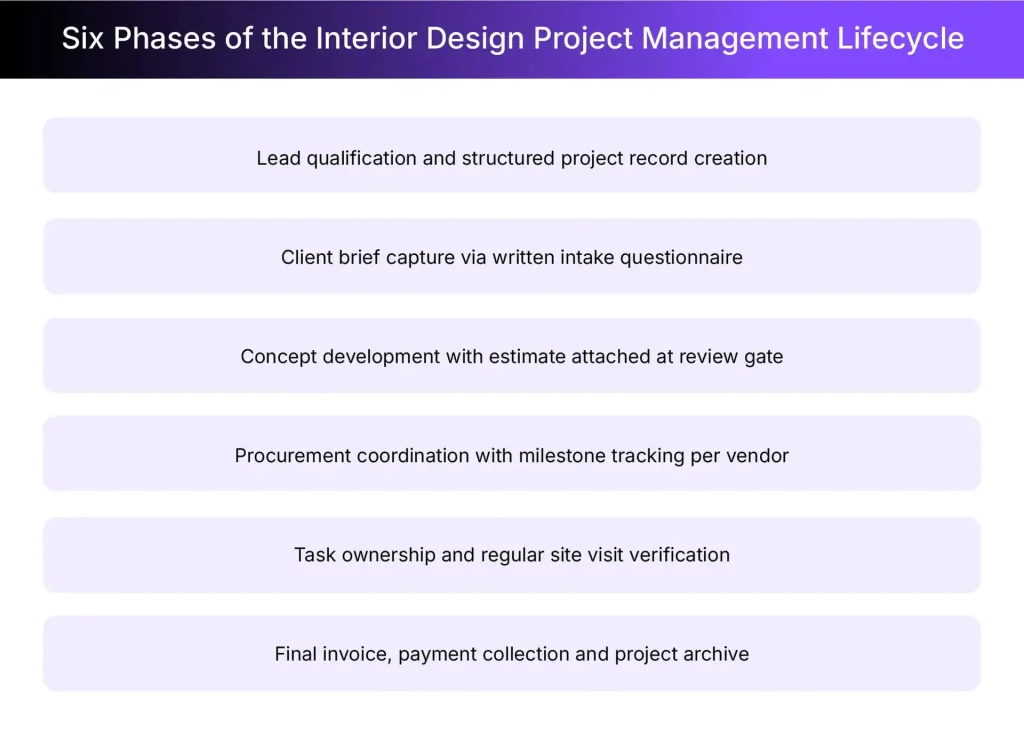
Phase 4: Procurement and Site Coordination
Procurement turns approved selections into purchase orders, delivery dates, vendor coordination, and site readiness checks. The project manager must track supply chains, substitutions, deposits, shipping risks, and contractor access during this stage of a project. A site visit should produce notes, open issues, responsible owners, and final adjustments required before implementation.
Phase 5: Project Execution and Task Management
The implementation phase is where project management software becomes visible across daily work. Team members need task owners, timelines, dependencies, site notes, and communication records that match the real sequence of work.
Project management for interior design becomes difficult when updates live across chats, spreadsheets, emails, and calls. A clean system gives everyone peace of mind because every task connects to a single project record.
Phase 6: Invoicing, Payment, and Project Closeout
Closeout should include final invoice review, payment milestone tracking, care instructions, punch-list completion, warranty notes, and project documentation archive. The completion of the project should leave the designer with useful records for future projects. The outcome depends on more than how the room photographs. It also depends on how well the designer handled procurement, client communication, and financial closeout.
US Standards Interior Designers Should Know for Project Management
US-based designers should understand contracts, fee disclosures, contractor responsibilities, and sales tax before work begins or invoices are issued. Interior design project management in the US covers contracts, compensation, vendor relationships, contractor roles, and taxes in ways designers should respect.
- Written Contracts: As per American Society of Interior Designers, interior designers should enter into written agreements with clients. A written contract should document scope, deliverables, fees, revision limits, procurement responsibilities, timelines, and termination rules. I’d never begin a paid design process without a written agreement. Verbal goodwill rarely survives a disputed invoice or late installation.
- Fee Structure Disclosure: The FTC Endorsement Guides require disclosure when material connections may affect recommendations. For interior designers, that can matter when vendor commissions, trade discounts, referral fees, or sponsored products influence product recommendations. The honest answer is that disclosure protects both trust and reputation. Clients don’t object to professional pricing as much as they object to surprises.
- Contractor Coordination Liability: Designers who coordinate licensed contractors should define whether they act as design consultant, procurement lead, project manager, or general contractor. That distinction affects responsibility for sequencing, permits, site safety, subcontractor performance, and construction project outcomes. If your contract language is vague, clients may assume you control everything that happens on-site.
- Sales Tax on Design Services: Sales tax on interior design services varies by state, and rules can differ between design fees, tangible products, installation, and decorating services. For example, in the state of New York, the New York Department of Taxation and Finance explains state-specific rules for interior decorating and design services. Designers should verify their state’s rules before issuing invoices or collecting tax.
| Pro Tip: Always consult a qualified attorney or tax professional for state-specific interpretation. |
“Every interior designer must enter into a written agreement with a client; it shouldn’t be an optional activity. NOT having a written agreement is an invitation for a dispute.”
– Alan M. Siegel, Hon. FASID (Source)
How to Build a Repeatable Project Management Workflow
Repeatability helps studios handle variation with more control, without forcing every home, client, or brief into the same template. Repeatability does not mean making every project identical. It means creating a predictable operating system for unpredictable clients, delayed vendors, site surprises, and evolving design decisions.
In practice, interior design project management means giving every project a structure that makes change easier to manage.
- Step 1 – Create Standard Project Stages: Define five to seven stages matching your interior design process, from initial consultation through completion of the project and closeout. Each stage of a project should carry entry and exit criteria. This creates a logical sequence that prevents advancing before approvals, design plans, or scope details are ready.
- Step 2 – Build a Master Task Template: Create a reusable template for every design project type your studio handles repeatedly. A single-room redesign may carry 25 tasks, while full residential projects may need 80 or more. Foyr Manage can help teams reuse templates across future projects without having to rebuild task structures each time.
- Step 3 – Set Up a Client Intake Questionnaire: Replace unstructured discovery calls with a written questionnaire covering design preferences, functional needs, budget parameters, and timeline expectations. This first step creates a documented brief before concept development begins.
- Step 4 – Establish an Estimate-to-Invoice Workflow: Connect estimate approvals with invoice creation, so approved proposals convert to billing without rebuilding line items. This supports budget management and reduces gaps between what the client approved and what finance later sends. Foyr Manage supports estimate-to-invoice workflows with payment milestones tied to the project record.
- Step 5 – Define Task Ownership Rules: Assign one owner, one due date, and one deliverable to every active task before team members begin work. Shared ownership often creates missed handoffs during the design development phase.
- Step 6 – Set Project Health Checkpoints: Create a checkpoint at each phase gate to review the interior design project timeline, budget, open decisions, and pending approvals. I use this to catch small risks before installation makes them expensive. Foyr Manage supports these reviews through dashboards, health summaries, tasks, and finance visibility.
Common Project Management Mistakes Interior Designers Must Avoid
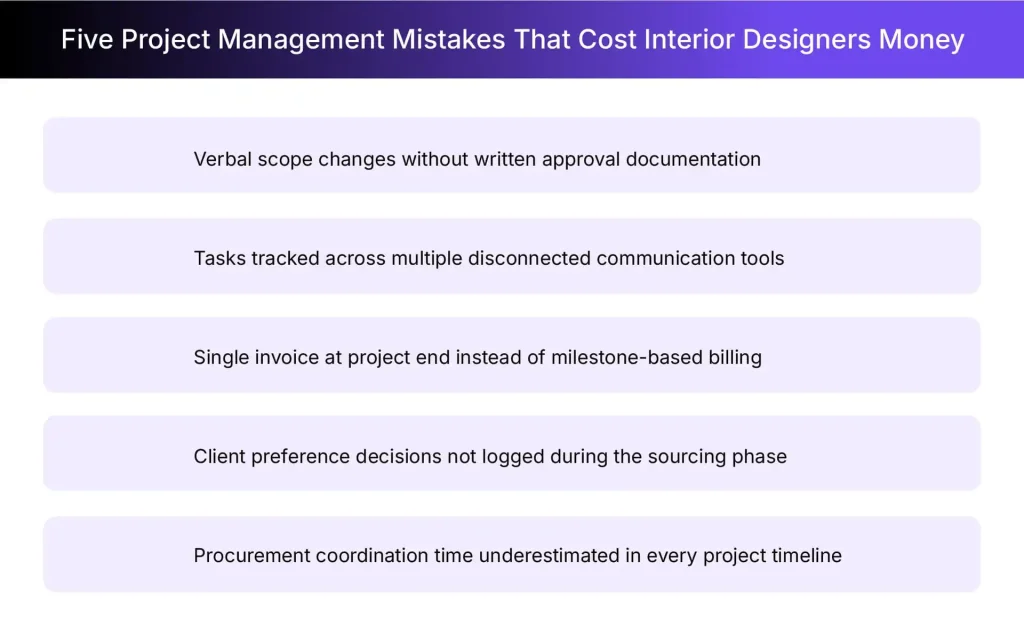
Most interior design project management mistakes look harmless when they happen, then become expensive near installation or closeout.
- Accepting verbal scope changes creates unpaid work, so document every added revision, room, vendor request, or procurement change.
- Tracking updates across WhatsApp, spreadsheets, and email creates accountability gaps, so keep project decisions inside one record.
- Sending invoices only at closeout hurts cash flow, so connect payment milestones to approved project progress.
- Skipping client preference logs creates sourcing disputes, so record approvals for finishes, products, substitutions, and design elements.
- Underestimating procurement coordination delays the entire project, so add buffers for supply chains and vendor follow-ups.
- Treating site visits as casual check-ins weakens accountability, so document issues, decisions, photos, owners, and next steps.
- Ignoring change orders damages profit margins, so define pricing and approval rules before work expands.
My take is that the interior design project management software should reduce these mistakes without creating another admin burden. If the tool requires more discipline than your team can sustain, the workflow will collapse under real project pressure.
Run Your Interior Design Projects with Foyr Manage
Once design development and delivery are underway, administrative overload replaces creative work as the primary time drain on any interior design studio. Tracking material samples, client communication, approvals and vendor status across five or more active projects demands a system purpose-built for the complexities of design business operations.
Foyr Manage is built as an AI-powered interior design project management software workspace that connects every stage of a project, from lead capture through to final payment, inside one platform. This platform from Foyr combines a conventional project interface with an AI command center where designers manage work through natural language on their own business data.
- AI Project Command Center: Ask Foyr Manage to summarize project health, assign tasks, generate estimates, or create a project plan from an uploaded brief. The chat interface works on your own business data, while important actions stay designer-reviewed. This helps managers track risk across multiple active projects.
- Client Dashboard: Give clients project-specific visibility into progress, estimates, invoices, files, photos, and messages without opening your internal workspace. The dashboard keeps client communication attached to the right interior design project. Clients see approved updates, while task structures, team workload, and private notes stay protected.
- Finance Workflows: Create estimates, convert approved proposals into invoices, set payment milestones, and sync completed transactions to QuickBooks from the project record. This keeps budget management connected to the design process and procurement trail. Approved selections no longer need to be rebuilt manually during billing.
- AI Questionnaires: Generate structured client preference questionnaires from one prompt, then review, edit, and share them through a link. This helps replace manual intake calls, Typeform setups, and scattered email threads. Responses flow back into the project, connecting preferences with sourcing, space planning, and future decisions.
- Design And Business Continuity: Neo handles design and visualization, while Manage runs the project workflow. Foyr Neo helps designers create 2D plans, 3D models, and render-ready concepts before approval. Foyr Manage then turns those approved design decisions into tasks, dashboards, estimates, invoices, and client updates.
Learn more about Foyr Manage and start your free trial to bring every project workflow into one workspace.

FAQs
What software is best for interior design project management?
The best software for interior design project management keeps tasks, clients, budgets, files, approvals, and invoices connected inside one workflow. Foyr Manage is a strong fit for studios that need AI support, client dashboards, questionnaires, finance workflows, and project visibility without relying on disconnected tools.
How do you coordinate contractors and vendors across a design project?
Start with written scope, approved drawings, confirmed product selections, and documented responsibilities before site work begins. Then use regular site visits, vendor trackers, procurement logs, and task updates to keep contractors aligned. Every change should be written down before it affects schedule or cost.
How can designers prevent scope creep and budget overruns?
Designers prevent scope creep by defining scope of work, revision limits, procurement rules, and change orders before execution begins. Budget overruns reduce when estimates, approvals, substitutions, invoices, and payment milestones stay connected. I’d also record every client decision during sourcing.
What is a standard project management workflow for interior design studios?
A standard interior design project management workflow starts with lead qualification, client brief, concept development, design development, procurement, implementation, invoicing, and closeout. The workflow should match your studio’s delivery style while giving every phase clear owners, documents, approvals, and deadlines.
How long does an interior design project typically take from brief to delivery?
Smaller projects may take a few weeks, while renovations and larger residential projects can run for several months. The timeline depends on scope, contractor availability, custom items, supply chains, and client approvals. Careful planning gives the project a realistic baseline before work begins.