


Most project delays start long before a floor plan is drawn. They begin when a potential client offers vague preferences, shares scattered social media references or avoids discussing budget honestly. A structured interior design client questionnaire helps designers capture necessary information before interpretation begins.
I’ve watched beautiful spaces become difficult projects because one decision-maker never joined the initial call. The designer assumed the brief was stable, while the overall needs of your client were still moving. That’s why I’d recommend written intake before every new client meeting.
This blog provides a practical set of questions for residential work, commercial projects, and early-stage design consultations. You will also get a free interior design client questionnaire template that you can copy into Google Forms, Microsoft Word, or a branded PDF for your studio.

Why Should Interior Designers Use A Client Questionnaire Before the Discovery Call?
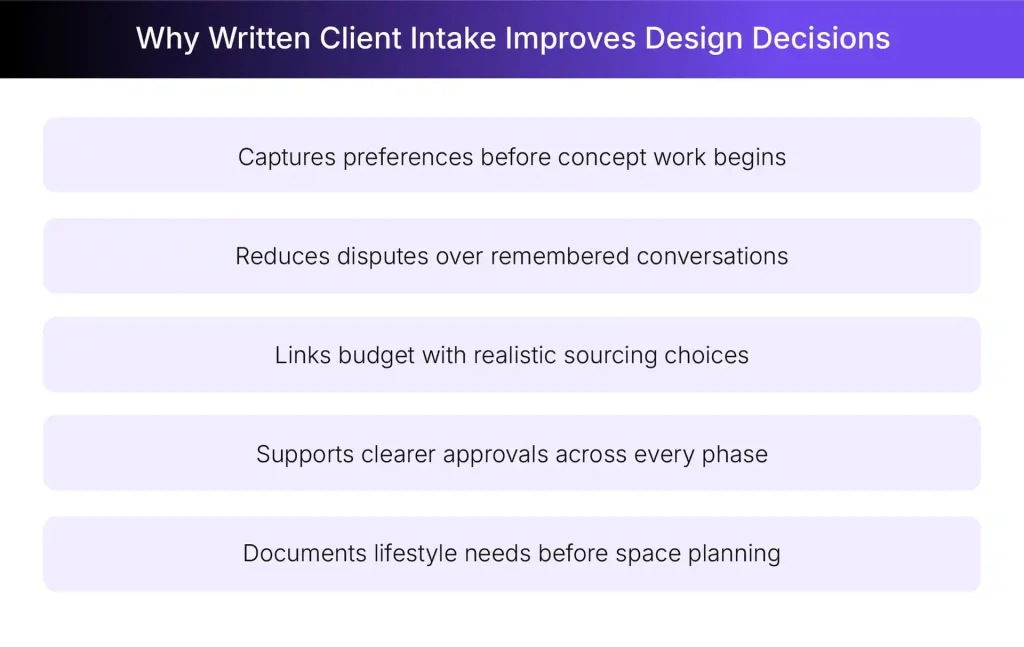
A detailed interior design client questionnaire provides structure to the discovery call before emotions, assumptions, and scattered reference images start driving the conversation.
- Documented Preferences Prevent Mid-Project Disputes: Verbal preferences discussed during a discovery call or intro call are forgotten or disputed within two weeks unless captured in a written document. A completed interior design questionnaire becomes the reference point when a particular client reverses a stated preference mid-project, since the original answers are documented and signed off.
- Structured Questions Produce Clearer Answers: A structured questionnaire template forces the design client to articulate preferences in their own words before the designer begins interpreting them into spatial design decisions and product choices. This is how a great interior design client questionnaire fits into the design process without extending the length of time frame to the initial call or the first meeting.
- Written Brief Protects the Designer Commercially: Questionnaire responses become the written brief that protects the interior designer when scope changes or preference reversals occur mid-project, since the necessary information is documented. In my experience, a completed interior design questionnaire for clients prevents more scope disputes than any contract clause alone.
- Professional First Impression Sets Good Expectations: Sending a design questionnaire template before the first meeting elevates the perceived professionalism of the design business and sets clear expectations that the project follows a defined process. A potential client who receives a structured intake form before the initial interior design consultation enters the meeting with good expectations about how the studio operates.
Albert Hadley famously quoted, “Interior design will always be about people and how they live.” That’s exactly why questionnaires matter, because design starts with lived habits before products enter the room. (Source)
40 Interior Design Client Questionnaire Questions by Category
This interior design client questionnaire provides a practical structure for capturing lifestyle, budget, style, timeline, and approval details early on.
1. Lifestyle and Daily Routine
Start here to understand how the client lives, hosts, works, rests, and moves through each space every day.
- How many people use this space daily, and what are their routines?
- Do young children, pets, guests, or elders need comfort considerations here?
- Which morning and evening activities shape how this room functions daily?
- Do you need this room to support focused work or study?
- How does this room’s use change between weekdays and weekends?
2. Design Style and Aesthetic Preferences
These questions separate lasting personal taste from trends, saved images, and unclear references collected during casual browsing.
- Which interior design styles feel closest to your taste and lifestyle?
- Are there any styles or visual details you want avoided?
- Which colours, patterns, materials, or textures feel most comfortable?
- Do you have Pinterest boards or reference images to review?
- Are there hotels, homes, or restaurants you admire visually?
3. Functional Requirements and Pain Points
Use this category to uncover daily frustrations before the design process moves into finishes, sourcing, and initial concepts.
- What is the biggest functional issue this design project must solve?
- Where do you currently face the worst storage areas or clutter?
- Are there lighting problems during mornings, evenings, or work hours?
- Does the current design restrict movement, access, or furniture placement?
- Are there special needs we should consider before space planning begins?
4. Budget and Financial Expectations
Budget questions help designers recommend realistic materials, furniture, timelines, and procurement options before the first interior design proposal is prepared.
- What total budget range feels comfortable for this particular client project?
- Is your budget fixed, flexible, or suitable for phased execution?
- How much should we allocate for furniture and decor purchases?
- Which areas should receive priority if budget trade-offs become necessary?
- Are there purchases you would prefer to delay for later?
5. Existing Furniture and Items to Keep
This section identifies pieces that affect measurements, sentiment, layout logic, sourcing choices, and future design decisions.
- Which existing furniture pieces must remain in the final design plan?
- Are there sentimental pieces needing careful placement or restoration?
- Which current items do you want removed, replaced, or upgraded?
- Do existing furniture dimensions restrict the new layout in any way?
- Are there artworks or collectibles that should guide the design direction?
6. Room-Specific Preferences
Room-level questions help designers avoid applying one broad aesthetic to spaces with different functional and commercial requirements.
- What is your top priority for each room in this project?
- Do you prefer specific flooring materials for bedrooms or living areas?
- Are there wall finishes you prefer for private or shared rooms?
- Do kitchens or bathrooms need extra durability against moisture?
- Which room needs the most storage, lighting, or layout improvement?
For an interior design questionnaire for commercial clients, I’d add questions on foot traffic, employee workflows, customer privacy, brand standards, accessibility, and maintenance.

7. Timeline and Decision-Making Process
These questions prevent approval delays, rushed purchases, missed deadlines, and confusion around who signs off on decisions.
- What completion date would make this project successful for you?
- Are there move-in dates or family events we must consider?
- Who will approve concepts, budgets, and final product selections?
- How fast can you review and approve procurement recommendations?
- Do you prefer one presentation or phased design approvals?
8. Communication Preferences and Expectations
Communication questions reveal how clients want updates, presentations, feedback rounds, decisions, and changes handled across the project.
- Which communication channel do you prefer for project updates?
- How often would you like to receive progress updates from us?
- Do you prefer presentations through calls, PDFs, or walkthroughs?
- Have you worked with an interior designer before this project?
- What communication issues would you like us to avoid during collaboration?
How to Use the Interior Design Client Questionnaire at Each Project Stage
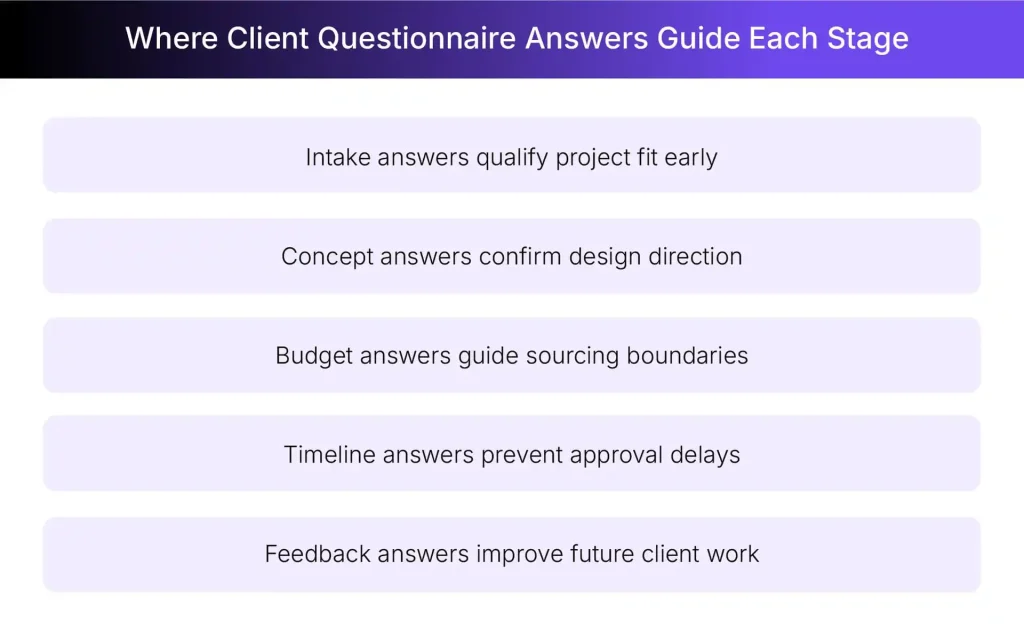
An interior design client questionnaire continues to add value after the first meeting, as designers revisit the right questions at the right project moments.
- Pre-Meeting Intake: Send the questionnaire before the initial consultation so the meeting starts from confirmed information. This helps you qualify the potential client, understand the goal of the consultation, and decide whether a paid consultation makes sense.
- Mid-Project Checkpoint: Revisit selected answers after initial design plans are presented and before procurement begins. This helps confirm that the client’s vision, design style, and budget expectations haven’t shifted after the client reviews options.
- Post-Project Feedback: Repurpose five to eight questions after installation to review client experience, communication quality, and process gaps. This feedback will improve future projects and help you refine your own questions for the next interior design assignment.
| Designer Tip:
Not every answer needs to become a design decision, because clients often share more detail than the project requires. Every major decision, however, should trace back to a client response. |
If you are still shaping your consultation workflow, these interior design client questionnaire examples can guide your discovery calls.
Free Interior Design Client Intake Kit Template
A good client intake kit makes the first conversation easier before the meeting even begins. Our free interior design questionnaire template helps designers collect lifestyle details, room needs, budget comfort, style preferences, approval roles, and communication expectations.
This is a great interior design client questionnaire example that should be used as a working brief, not a one-time form. It can guide the consultation, support early design decisions, shape the proposal, and help your team avoid confusion later.
Download the free interior design client intake kit template to collect clearer client inputs before your next consultation.
Generate and Send Client Questionnaires with Foyr Manage
We built Foyr Manage to help design studios turn client intake into a structured workflow from day one. Instead of creating separate forms, copying answers into notes, and chasing missing details over email, our platform keeps questionnaires connected to the right client, room, and project record.
This helps designers capture essential information before concept work begins. Teams can collect richer client input, so the initial interior design consultation starts with written context rather than a blank slate conversation with a potential client they have never met.
- AI Questionnaire Builder: Ask Foyr Manage to create a design questionnaire template from one prompt, then review, edit, and share it. The tool helps you ask the right questions while keeping the final version designer approved.
- Conversational Voice Mode: Clients can answer using conversational voice mode instead of typing every response manually. This helps when a new client finds a lot of questions tiring or prefers speaking through design preferences.
- Automatic Response Logging: Answers flow back into the project record, so key information stays connected to the client’s project. This prevents the usual copy-paste routine across forms, notes, email threads, and intro call summaries.
- Client Dashboard Access: Clients can complete questionnaires through their dashboard, keeping intake, files, approvals, and messages in one workspace. This reduces scattered responses across Google Forms, Typeform, email, and mobile text messages.
Foyr Manage also fits naturally into Foyr’s wider ecosystem for design teams that move from intake to visual planning. Once questionnaire responses start shaping the brief, Foyr Neo can help designers turn those inputs into floor plans, 3D models, and photorealistic renders. The Foyr floor plan creator is especially useful when client answers need to be translated into room layouts, while the 2D floor plan-to-3D model workflow helps validate ideas faster before design development begins.
Try Foyr Manage to create, send, track, and store client questionnaires in the same workspace where you manage project briefs, approvals, files, estimates, and next steps.
FAQs
When should the interior design client questionnaire be sent relative to the first meeting?
The interior design client questionnaire should be sent after the intro call and before the first paid consultation. This gives the designer enough context to prepare sharper questions, review priorities, and spot missing details early. It also helps the client think through preferences before speaking, which usually leads to stronger answers.
How many questions is too many for an interior design intake questionnaire?
Forty questions can work well if they are grouped into clear sections and written in simple language. Designers should avoid asking every possible detail during the first intake, since long forms can tire clients quickly. For smaller projects, fewer questions work better, with detailed follow-ups saved for consultation.
Should the questionnaire replace the initial discovery call or supplement it?
A questionnaire should support the discovery call because written answers and live conversations reveal different things. The form captures facts, while the call reveals hesitation, tone, emotional priorities, and decision-making style. The strongest process uses both before creating initial design plans or sending a formal design work proposal.
How should designers handle clients who skip questions or give vague answers?
Designers should flag vague answers during the new client meeting and ask for examples, images, or specific dislikes. A vague answer can still reveal hesitation, confusion, or an area where the client needs guidance. The goal is to collect enough detail to understand the client’s needs and overall vision.
Can the same questionnaire template work for residential and commercial interior design projects?
The same base questionnaire template can work when designers add project-specific questions for residential or commercial work. Residential clients need questions about lifestyle, comfort, storage, and family use, while commercial clients need questions about workflow, brand, privacy, traffic, and maintenance. One flexible template works better in the long run.