


Let’s start with a foundational truth about assisted living floor plans: you are not designing a hotel. You are developing a home at a unique intersection of independence and support. These spaces require a delicate balance that prioritizes the resident’s dignity above all else.
Older residents need autonomy and dignity, but they also need immediate access to care. Staff need efficiency; however, the environment can’t feel sterile or clinical. How do you, the designer, balance this? It requires a deep understanding of daily operations and resident needs.
The answer is in creating a detailed floor plan. A great assisted living layout is the invisible framework that makes a resident feel safe, empowered, and at home. When done correctly, assisted living floor plan options transform a simple facility into a thriving, supportive community.

What Makes an Assisted Living Layout Different from Other Residential Plans?
Designing for seniors requires a shift in perspective to accommodate physical limitations while maximizing emotional well-being. Here are the key aspects that distinguish assisted living floor plans from other options:
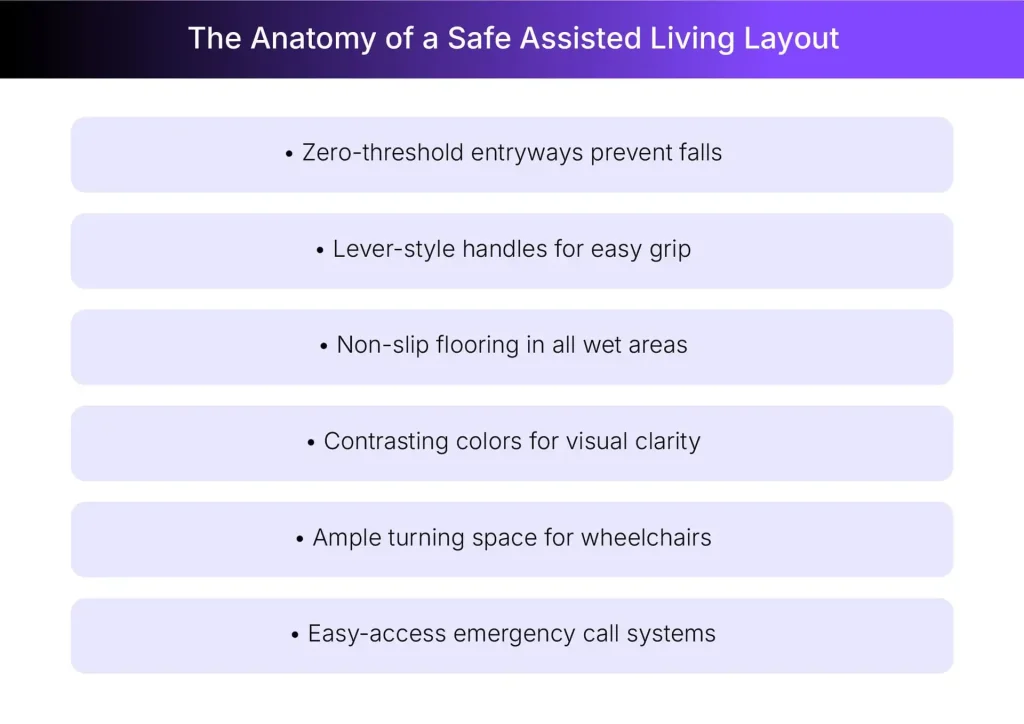
- Accessibility is Non-Negotiable: It goes beyond ADA compliance. In assisted living floor plans, doorways must be wider than standard residential builds, turning radii for wheelchairs must be generous, and thresholds should be non-existent to prevent trip hazards for residents.
- Safety is Proactive, Not Reactive: A smart assisted living layout integrates safety features invisibly. This means sightlines are clear for staff monitoring without invading privacy, and finishes are non-slip. The architecture itself prevents accidents before they happen in the facility.
- Flow for Both Residents and Staff: Efficiency saves lives here. Your plans must ensure staff can reach any unit within seconds during an emergency, while residents can navigate their assisted living floor plans to dining and social areas without confusion or fatigue.
6 Common Assisted Living Apartment Floor Plans (With Examples)
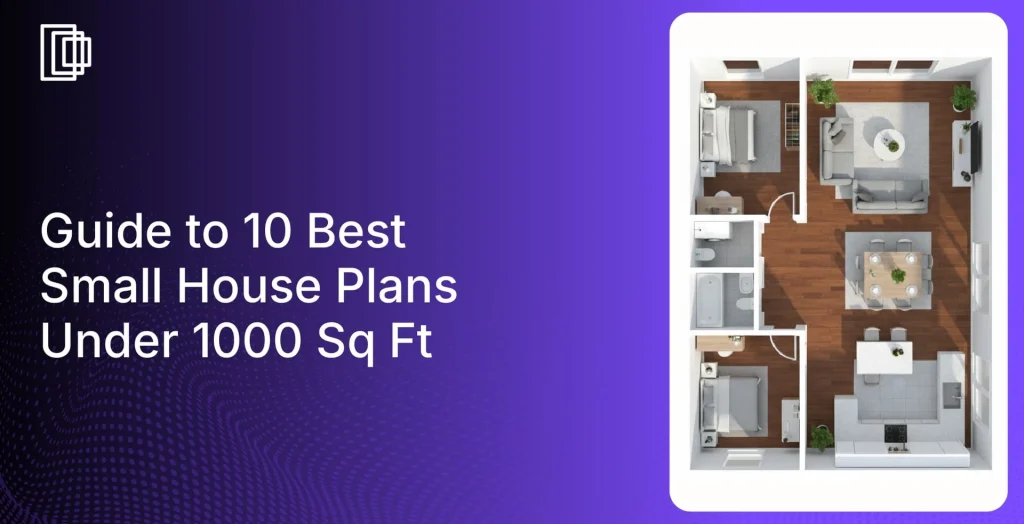
This is the heart of the resident’s personal world. The unit needs to feel like theirs. While square footage varies, the assisted living floor plans generally fall into these key categories.
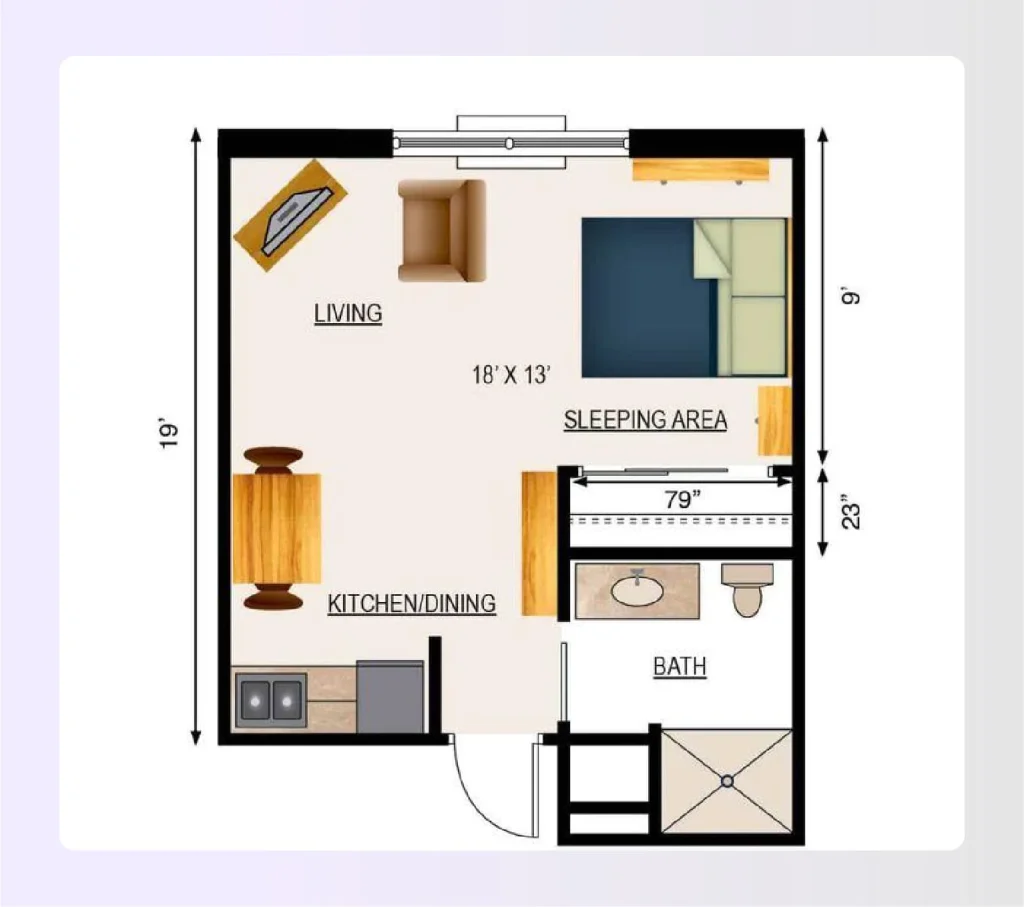
The Efficient Studio (or Alcove) Layout
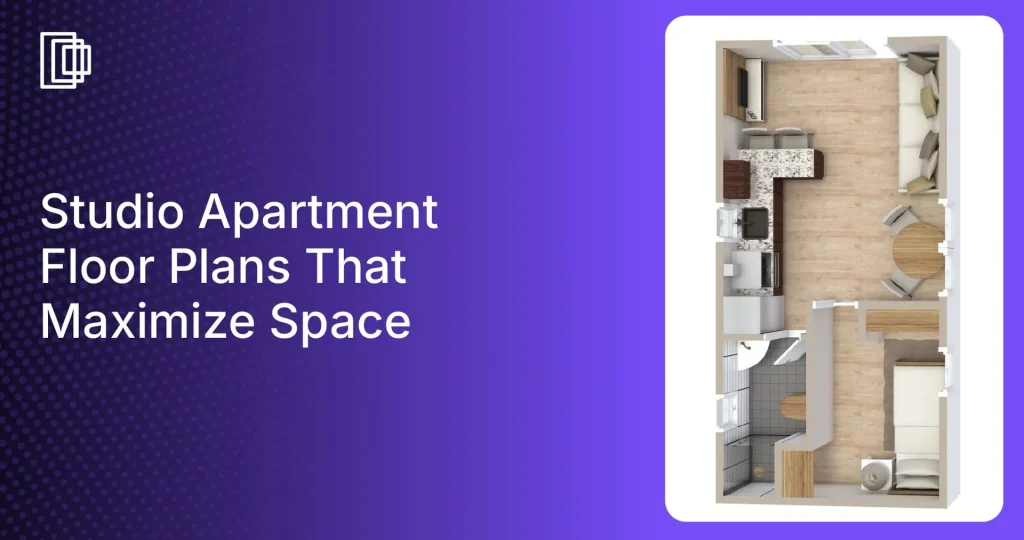
This layout is a staple in the industry. It maximizes density without sacrificing basic comforts. With Foyr Neo, you can use the ‘Ruler Tool’ to measure precise clearances, ensuring your assisted living floor plans meet code requirements while fitting essential furniture pieces comfortably.
Who It’s For: The budget-conscious resident or the social butterfly who plans to spend most of their time in common areas. It is the easiest to maintain layout for those with limited mobility who prefer compact living.
Key Features: This is an open-plan living/sleeping space, typically 300-450 sq. ft. It includes a single, open room, a large accessible bathroom, and a kitchenette. Smart storage solutions are vital here to keep these assisted living floor plans feeling spacious despite the smaller footprint.
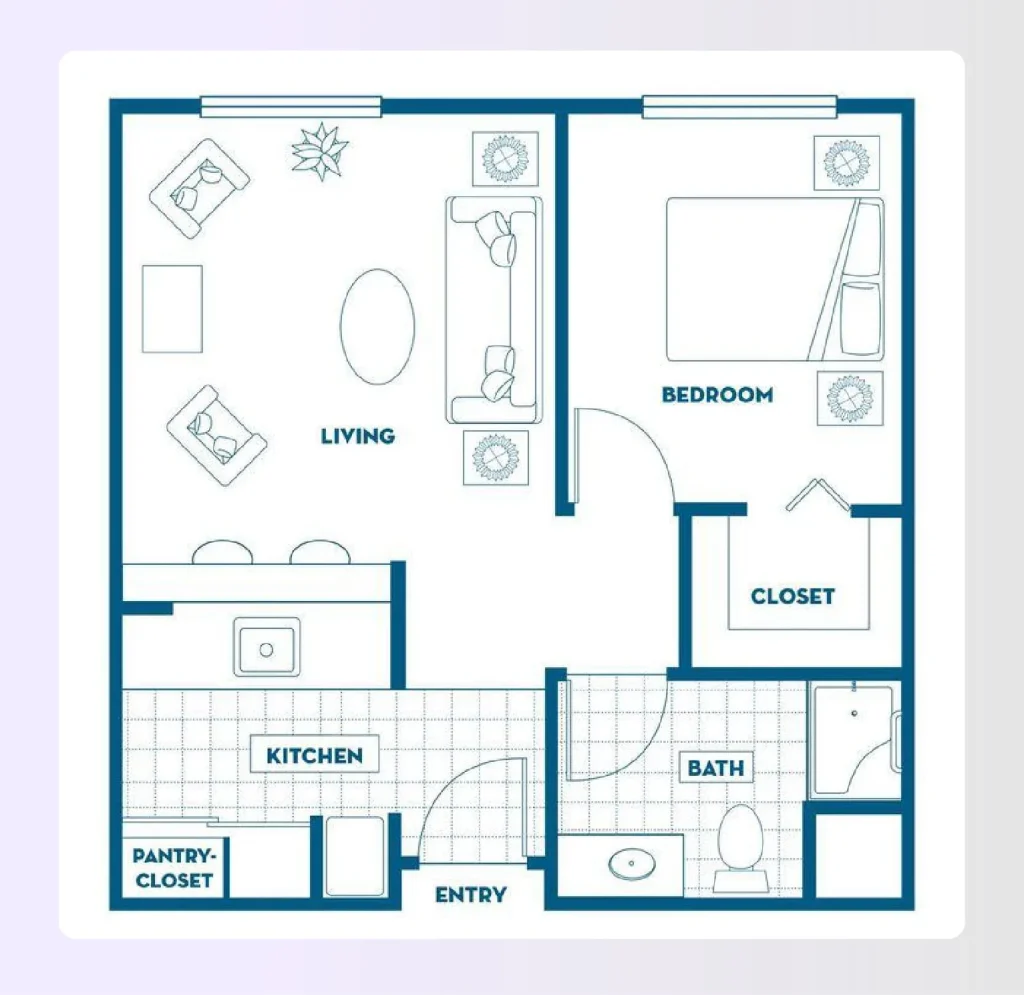
The Classic One-Bedroom Apartment
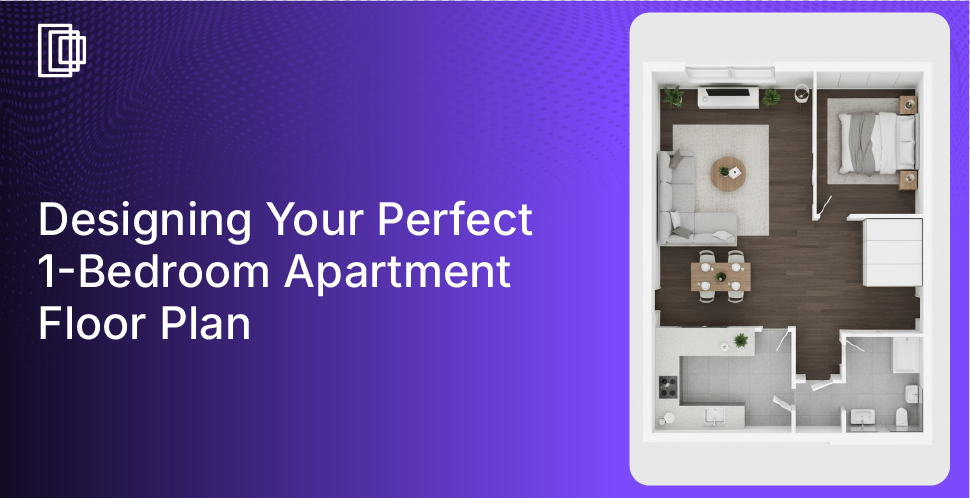
This offers distinct separation between sleeping and living areas. Using Foyr Neo’s ‘2D to 3D’ conversion, you can instantly visualize how light flows between rooms, ensuring the living area in your assisted living floor plans feels bright and welcoming for residents.
Who It’s For: Residents who want to entertain guests, maintain a clear routine of ‘going to bed’ versus ‘living,’ or couples who want to stay together in a modest footprint within the community environment.
Key Features: Typically 500-650 sq. ft., these assisted living apartment floor plans feature a separate bedroom, a full living area, and often a larger kitchenette. This separation supports dignity and allows for a more normalized lifestyle compared to studio arrangements.
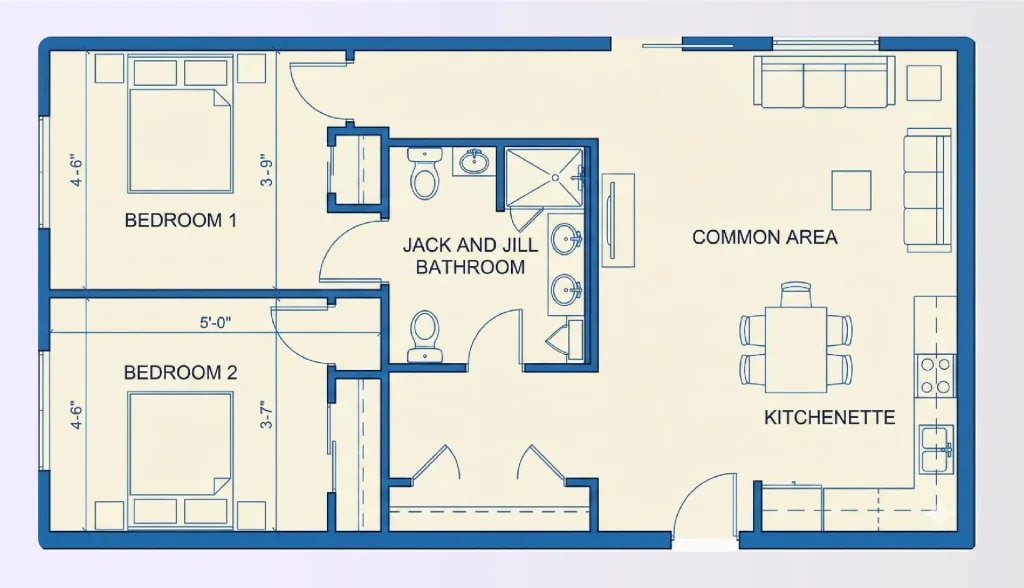
The Two-Bedroom or Companion Suite
Sometimes called a ‘Jack and Jill’ setup, this layout provides balance. You can use Foyr Neo’s ‘Duplicate’ or ‘Clone’ features to ensure symmetry in the bedrooms, making these assisted living floor plans fair and equitable for unrelated roommates sharing the suite.
Who It’s For: Couples who need separate sleeping arrangements due to health issues, siblings living together, or budget-conscious residents willing to share a bathroom and kitchenette with a roommate to lower their monthly costs.
Key Features: These residential assisted living floor plans feature two private bedrooms sharing a central living space and bathroom. The shared common area encourages social interaction between roommates while the private bedrooms ensure necessary personal space and quiet time.
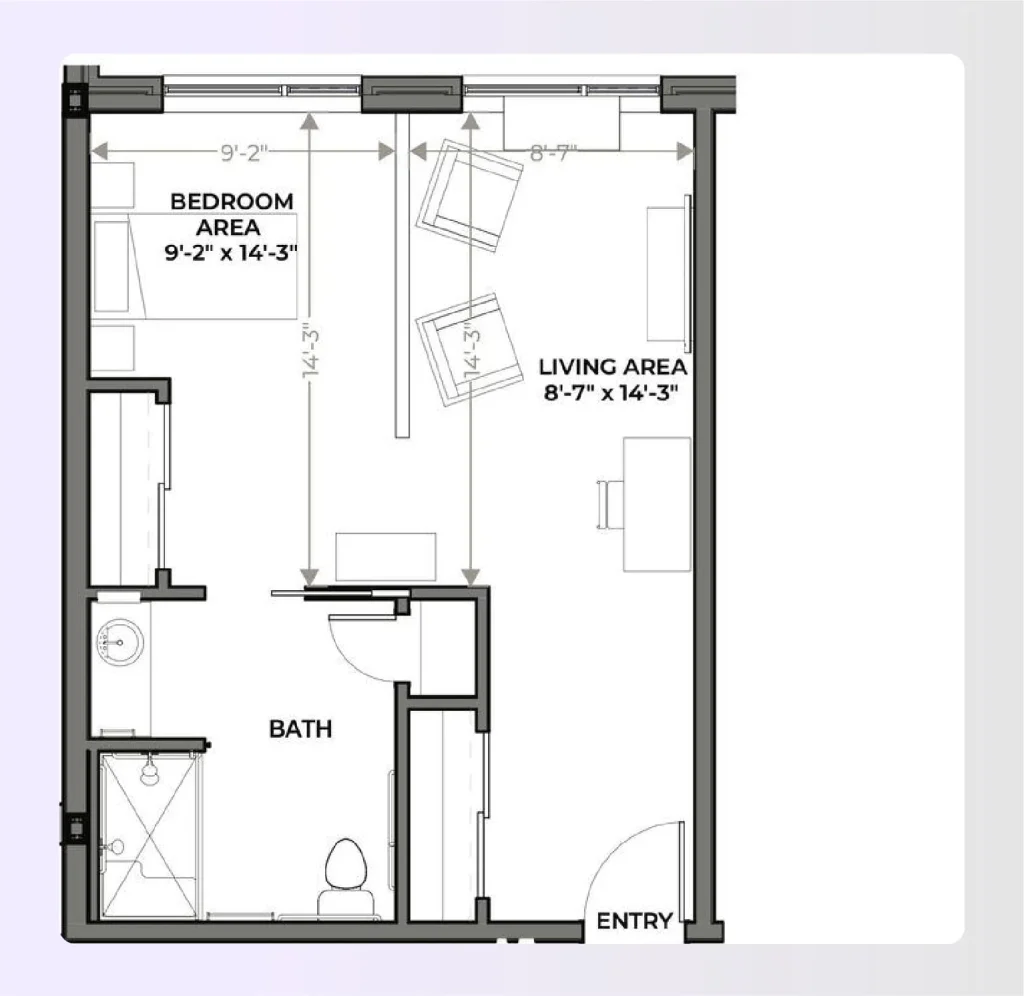
The Specialty Studio
Designing for memory care requires a specific approach to reduce cognitive load. The goal is to prevent frustration or fear caused by complex environments. These assisted living floor plans must remain simple, ensuring the resident can always see their destination.
Who It’s For: This is a specific type of plan for residents with Alzheimer’s or dementia, often located in a secure wing. It is designed for those who need constant supervision and a low-stress environment.
Key Features: Safety and simplicity are the only priorities. These assisted living room layouts are often small studios with open floor plan. They remove potential hazards. Sightlines are kept completely open so staff can monitor residents easily without intrusion, and shadows are minimized to prevent confusion.
The ‘Luxury’ Suite
As the ‘Silver Tsunami’ approaches, demand is rising for high-end accommodations. With Foyr Neo’s library of 50,000+ render-ready models, you can stage these assisted living floor plans with premium furniture to show investors the potential for high-end living.
Who It’s For: Affluent residents who are downsizing from large family estates and refuse to compromise on space, hosting capabilities, or luxury amenities. They expect the same quality of life they enjoyed in their previous homes.
Key Features: These assisted living home plans often exceed 800 sq. ft. They include walk-in closets, dual vanities, and balconies. The focus is on residential style comfort, providing ample space for personal belongings and entertaining family in a private setting.
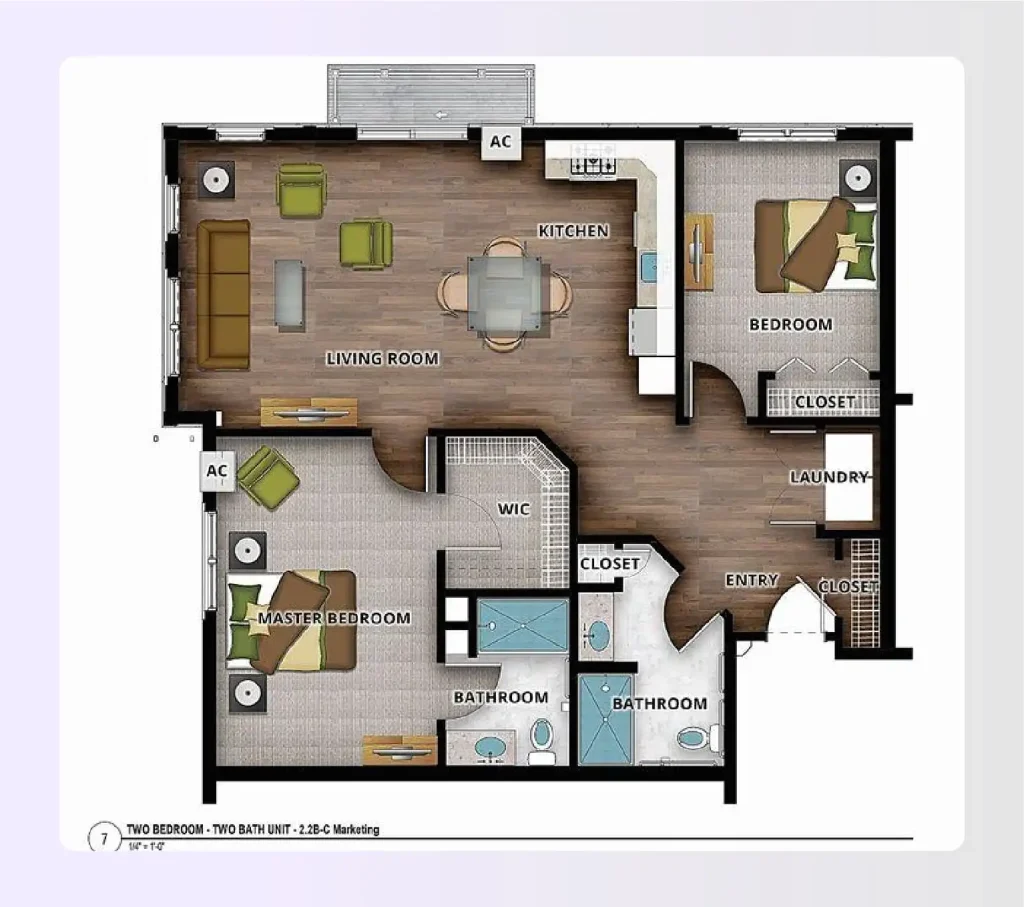
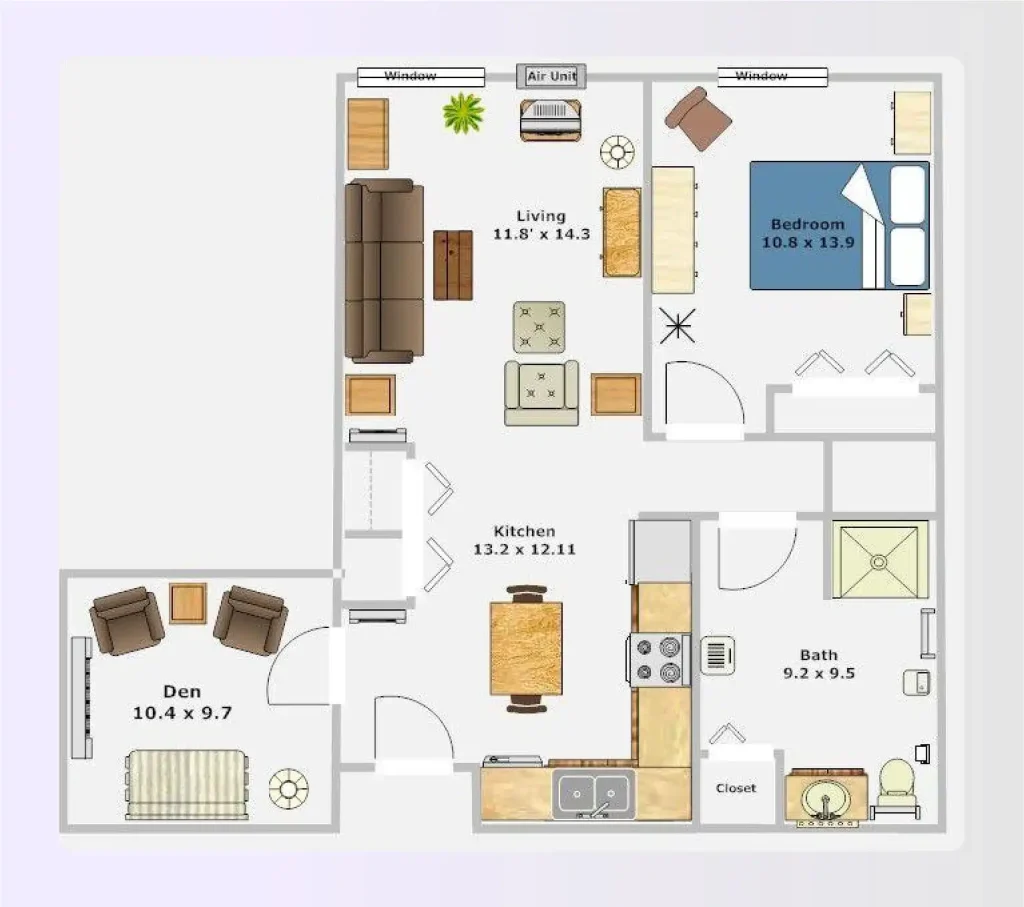
The One-Bedroom + Den
The ‘extra’ space provides psychological comfort. Foyr Neo’s ‘AI Magik Bar’ lets you type a command to instantly transform this den into a hobby room or office, helping clients visualize the versatility of these assisted living floor plans.
Who It’s For: Residents who have a specific hobby (like painting or crafting), need a dedicated home office, or require an occasional guest room for visiting family members who might stay overnight.
Key Features: These assisted living home floor plans include a flex room. It allows residents to keep cherished furniture pieces they might otherwise have to sell. This flexibility makes the transition to assisted living much easier emotionally for the resident.
Key Elements of Residential Assisted Living Floor Plans
Zooming out from the individual apartments, the overall residential assisted living floor plans determine the community’s entire feel. The macro-layout dictates the culture and daily flow of the facility.
The ‘Neighborhood’ or ‘Pod’ Concept
The most successful modern assisted living home plans use a ‘neighborhood’ or ‘pod’ concept. This means grouping 10-15 resident rooms around a dedicated, smaller common area. This ‘neighborhood’ might have its own small, quiet lounge and a private dining space for those who feel overwhelmed by the main dining room.
This design fosters a tight-knit community, reduces confusion, and feels far more like a home. For designers, this breaks up the ‘institution’ feel. Instead of long, endless corridors, you create clusters in your assisted living floor plans, which significantly improves resident happiness and social engagement.
Central Common Areas: The Heart of the Home
These are the big, vibrant spaces where community life happens. Your floor plans’ assisted living facilities must include a logical flow between distinct zones that encourage socialization and activity.
- A Main Dining Room: Designed with flexible seating for wheelchairs and walkers. It should accommodate various group sizes to encourage socialization during meals within the assisted living floor plans.
- An Activity Room: A multi-purpose space for crafts, games, and events. This area needs adaptable furniture and ample storage to support diverse programs in your assisted living layout.
- A Library/Lounge: A quiet, cozy space for reading and small conversations. It provides a necessary retreat from the more active areas in assisted living floor plans.
- A Salon/Barber Shop: A huge quality-of-life feature. Including this in your assisted living floor plans allows residents to maintain their grooming routines and dignity on-site.
- A Fitness/Therapy Room: For on-site physical therapy and resident wellness. This space requires specialized flooring and ample clearance for equipment within the assisted living floor plans.
See how easy it is to switch between 2D and 3D views to check your common area flow in this video:
Wayfinding and Circulation
You must design for intuitive navigation. A confused resident is an anxious resident. Use the assisted living floor plans layout itself to guide them, minimizing the reliance on textual signage.
- Landmarks: Place a distinct feature, like a fireplace, an aquarium, or a unique piece of art, at key decision points. These visual cues help residents orient themselves.
- Color-Coding: Use subtle, different color palettes or flooring patterns for different ‘wings’ or ‘neighborhoods.’ This visual distinction helps residents identify their specific zone within large assisted living floor plans.
- Circular Paths: Especially in memory care, use continuous, circular paths that always lead residents back to a familiar spot. This allows them to wander safely without hitting a ‘dead end,’ which can cause agitation.
Back-of-House (BOH) and Staff Areas
The layout for the commercial kitchen, laundry, and administrative offices needs to be streamlined. But importantly, staff support stations, like nurses’ stations and medication rooms, should be decentralized. This makes staff more accessible and integrates them into the home environment of your assisted living floor plans.
Effective design relies on these hidden efficiencies. If a caregiver has to walk 500 feet to get a towel, that is time taken away from resident care. Good BOH design in assisted living floor plans is ultimately about good resident care.

Best Practices for Modern Assisted Living Home Plans
When drafting your assisted living floor plans, adherence to best practices ensures you are creating a sanctuary.
Prioritize Bathroom Safety Above All
The bathroom is the highest-risk zone. Every assisted living layout must feature grab bars blocked into the framing. Showers should be curbless roll-in models with trench drains. Ensure the vanity height allows for a wheelchair to roll underneath comfortably and safely.
Let There Be Light (and Lots of It)
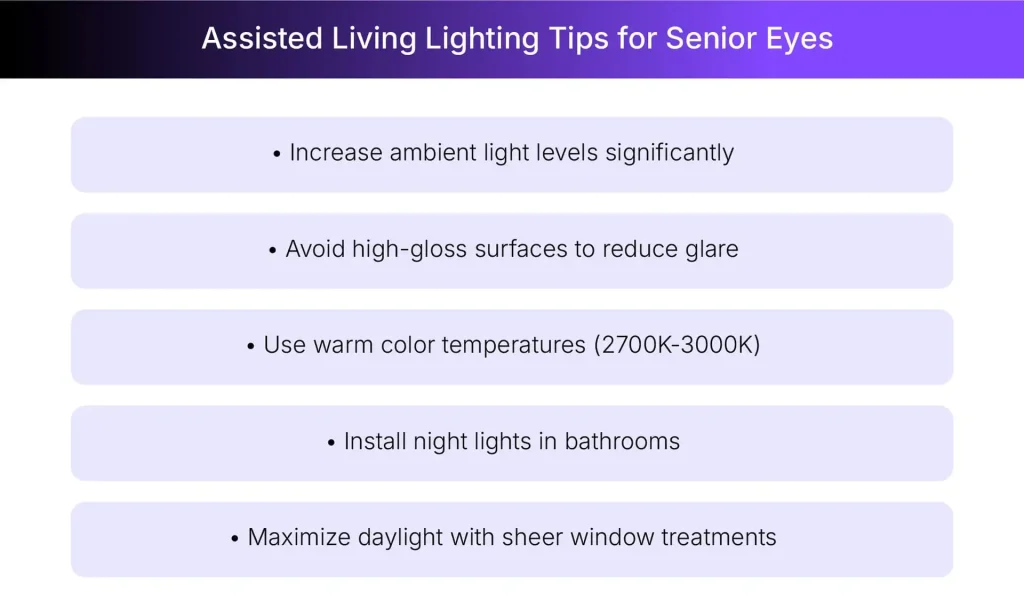
Aging eyes need more light. Maximize natural light in your assisted living floor plans with large windows, but manage glare. Artificial lighting should be even and ambient. You can use Foyr to simulate sun paths to ensure common areas aren’t blinding.
Learn how to master lighting for senior living spaces here:
Choose Flooring for Safety and Ambiance
Flooring in assisted living home plans must be a paradox: hard enough for wheelchairs, but soft enough to cushion a fall. Avoid high-gloss finishes that look wet and heavy patterns that can look like obstacles. Vinyl plank with cork backing is ideal.
Design Kitchenettes for Independence, Not Hazard
Kitchenettes in assisted living room floor plans promote independence but require guardrails. Install induction cooktops that cool instantly or sensors that shut off power. Microwaves should be at counter height, not overhead, to prevent spills of hot liquids on the resident.
How Foyr Helps You Design Better Assisted Living Floor Plans, Faster
You are balancing safety, compliance, budget, and aesthetics. It’s a lot. This is where you can lean on our interior design software to get your assisted living floor plans right, faster, and with fewer revisions from your clients.
- Instantly convert 2D assisted living floor plans into 3D walkthroughs to check sightlines.
- Drag and drop furniture to verify wheelchair turning radii and clearance in your assisted living layout.
- Create photorealistic renders in minutes to show investors exactly how the finished community will look.
- Use the library of 50,000+ models to find ADA-compliant furniture for assisted living floor plans.
- Share your assisted living floor plans online for real-time feedback from contractors and staff.
Foyr Neo empowers you to iterate quickly. If a client wants to see how a ‘neighborhood’ concept fits their footprint, you can adjust your assisted living floor plans in real-time. You stop wrestling with complex CAD software and book a 14-day free trial for Foyr Neo and start designing.
FAQs
What are the primary goals of assisted living floor plans?
The primary goals are safety, accessibility, and dignity. Assisted living floor plans must minimize fall risks and support mobility aids while looking like a comfortable home, not a clinic. They aim to foster independence for as long as possible while ensuring care is immediately available when needed by the resident.
How do assisted living floor plans balance privacy and community?
Great assisted living home plans achieve this through zoning. Private apartments offer a sanctuary for rest and hygiene. Meanwhile, clustered ‘neighborhoods’ and central common areas entice residents out for socialization. The layout controls the level of interaction, giving the resident the power to choose their level of engagement.
Are there specific building codes or guidelines for assisted living facilities?
Yes, absolutely. Beyond standard local building codes, assisted living layout designs must adhere to the Americans with Disabilities Act (ADA) and the Fair Housing Act. This dictates corridor widths, ramp slopes, grab bar placement, and door lever styles. Always check your specific state regulations for healthcare facility licensing requirements.