

Multi-family home floor plans are the foundation of smart residential design today because they address the growing need for density. Whether you are building a modern duplex or a complex fourplex, the goal remains relatively simple and consistent. You must maximize the livable square footage without sacrificing the private ‘home’ feel for the future residents.
Designing these spaces requires a strategic approach that balances shared structural elements with necessary individual privacy for every tenant involved. We see a shift toward layouts that prioritize functional flow over excessive size, ensuring that every room serves a purpose. This approach ultimately helps developers and homeowners create high-value sustainable designs that stand the test of time.
Navigating the complexities of multi-family home floor plans can feel overwhelming without the right guidance or visualization tools. We will explore essential layouts, modern features and visualization techniques to help you execute your vision with absolute confidence. This guide provides the foundation you need to transform a blank plot into a thriving community.

What Are Multi-Family Home Plans?
Multi-family home plans are residential blueprints designed to accommodate multiple family units within a single building. This category is not limited to massive apartment complexes; it also includes charming duplexes, triplexes, townhomes, and increasingly popular ADUs. These versatile structures allow separate households to live independently while sharing walls or roofing to reduce costs.
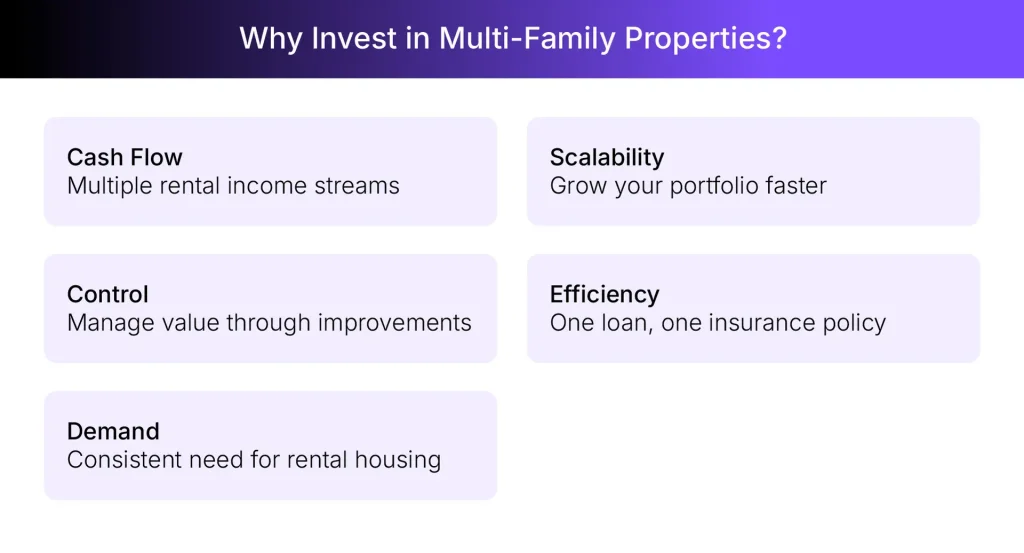
The demand for these layouts is spiking due to skyrocketing property costs and a desire for shared resource efficiency. Investors see the rental income potential while families appreciate the ability to house aging parents or adult children nearby. This housing style provides a flexible solution that adapts to the economic realities of modern living.
Key Features of Modern Multi-Family House Plans
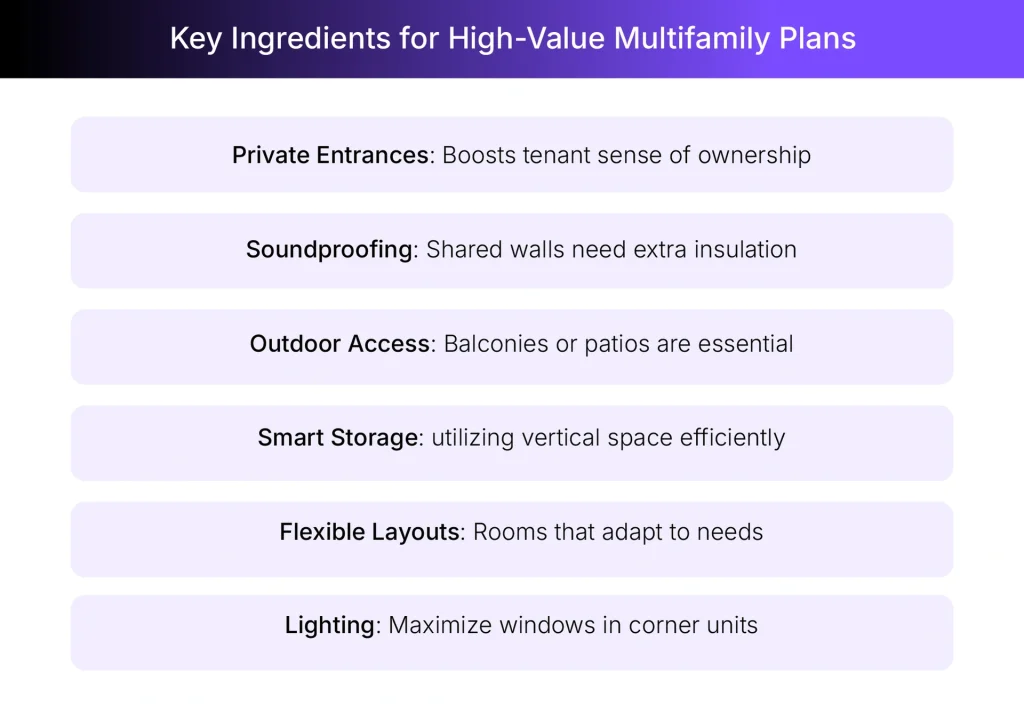
To ensure your property remains competitive in 2026, you must incorporate specific design elements that appeal to contemporary tenants.
- Open Living Areas: Residents today reject chopped-up rooms in favor of airy living spaces that encourage connection and maximize natural light penetration. You should remove unnecessary partitions between the kitchen and the lounge to create an open floor plan.
- Smart Home Integration: Modern families expect their homes to seamlessly accommodate technological advancements, so you must plan for integrated wiring and connectivity hubs. Including infrastructure for smart thermostats and smart locks increases property value and attracts tech-savvy renters who value convenience.
- Sustainable Materials: Using eco-friendly materials and planning for renewable energy sources reduces long-term utility costs and appeals to eco-conscious residents. You might even incorporate roof designs that accommodate solar panels to offset the building’s collective energy use further.
9 Essential Multi-Family Home Floor Plans to Inspire Your Next Project
Selecting the right layout depends heavily on your lot size, budget, and the specific demographic you intend to target. Here are some of the popular multi-family home floor plans you can consider:
1. The Mirrored Duplex
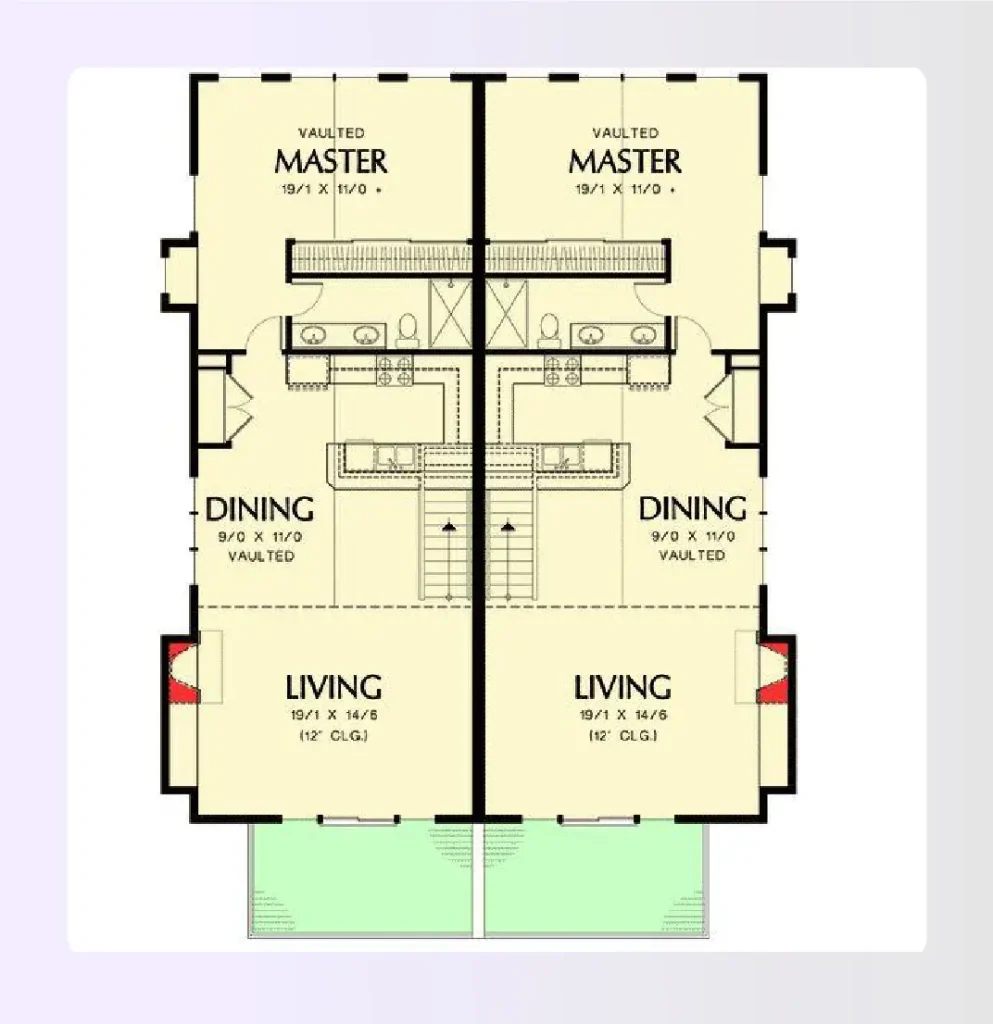
The mirrored duplex remains a staple in multi-family home floor plans because it simplifies construction through symmetrical design elements. You can use Foyr Neo’s ‘Duplicate’ feature to instantly copy one unit’s layout and flip it, ensuring perfect symmetry. This saves hours of drafting time when you are trying to align plumbing walls efficiently on the plan.
The Concept: The most common entry-point for investors involves two identical units that share a central wall and mirror each other perfectly.
Why It Works: It is cost-effective to build because you centralize the plumbing and HVAC systems along the shared wall efficiently. It feels like a traditional single-family home which appeals to long-term renters who want stability and privacy.
Best For: Standard suburban lots and first-time developers looking for a straightforward project.
2. The Stacked Triplex
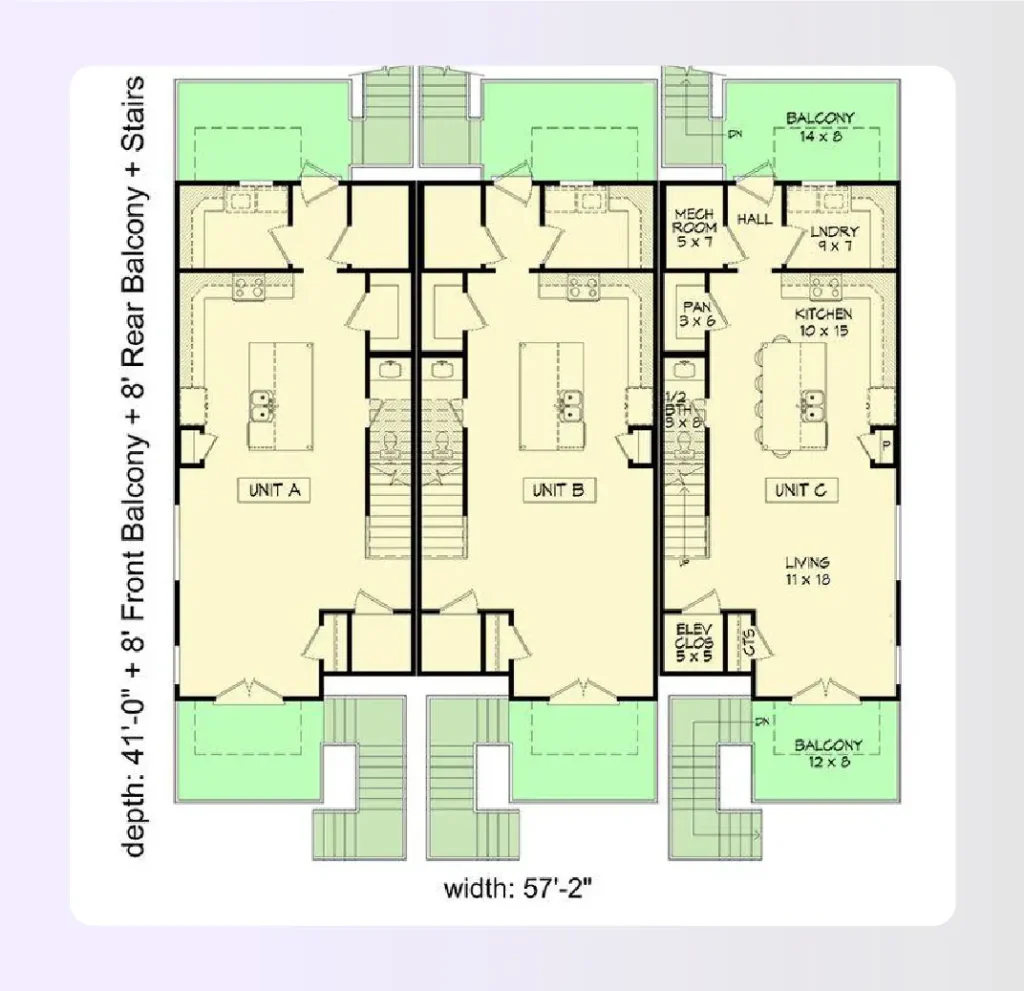
This vertical approach is the ultimate multi-family home layout for maximizing density on smaller urban footprints without expanding outward. With Foyr’s 3D visualization, you can toggle between floors to ensure the plumbing stacks correctly from top to bottom. This helps you catch potential conflicts in the vertical shafts before they become expensive construction headaches on site.
The Concept: Three units stacked one on top of the other maintain the footprint of a single-family house.
Why It Works: This is the ultimate layout for narrow urban lots because it maximizes rentable square footage. You optimize the land use without needing a sprawling piece of land while plumbing stacks vertically to save costs.
Best For: Tight city lots where horizontal space is a premium commodity.
3. The ‘Fourplex Box’
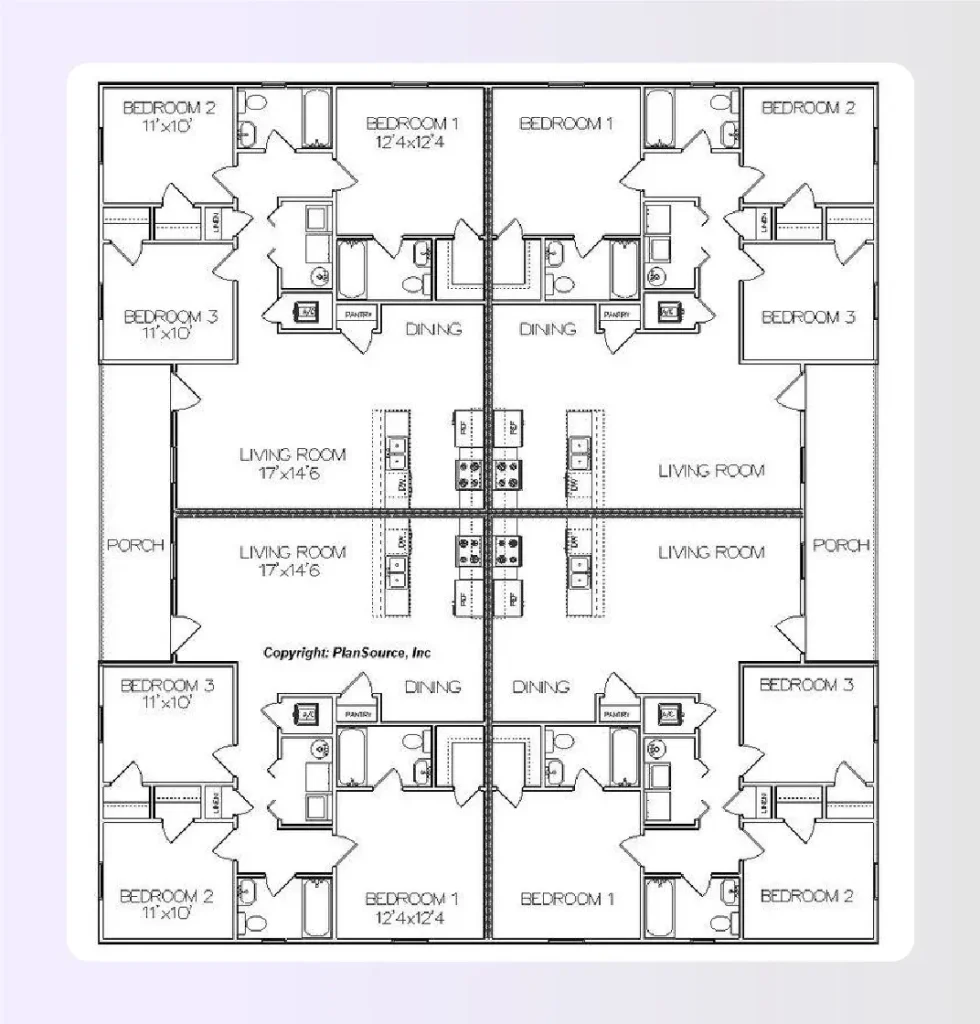
The fourplex box offers high density and excellent rental income potential by fitting four distinct units under one large roof. You can utilize the Foyr Neo library to drop in pre-modeled furniture to verify that each quadrant offers enough space. This ensures that despite the density, every living room design feels spacious rather than cramped for the future tenants.
The Concept: A square building divided into four equal quadrants provides a highly efficient use of exterior walls and roofing materials.
Why It Works: It minimizes the exterior surface area relative to the interior volume which significantly lowers long-term heating and cooling costs. This design creates a compact single structure that generates four income streams from one standardized foundation pour.
Best For: Investors seeking maximum yield from a standard rectangular residential lot.
4. The U-Shaped Courtyard Complex
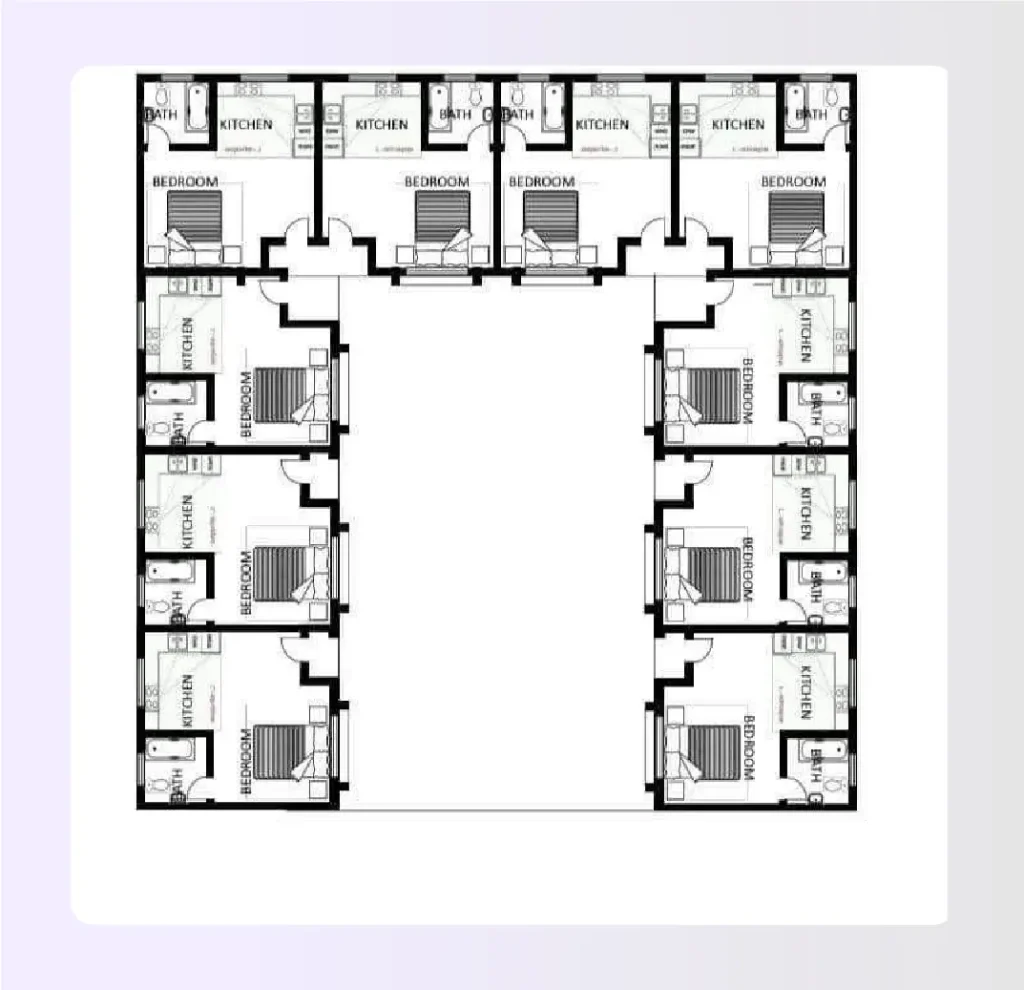
This layout focuses on creating a sense of community by orienting all units toward a central, shared green space. Using Foyr’s landscaping tools, you can populate the central area with trees and benches to visualize the social potential. This helps you sell the ‘lifestyle’ aspect of your multi-family house plans with courtyard to potential investors or residents.
The Concept: Units are arranged in a U-shape around a central garden or patio that serves as a communal focal point.
Why It Works: It provides every unit with natural light from two sides and encourages safe social interaction among neighbors. The central courtyard acts as an extension of the living space which makes smaller individual units feel expansive.
Best For: Larger lots where creating a community atmosphere is a priority.
Creating complex multi-unit layouts requires a tool that handles walls and zones effortlessly. Watch how quickly you can draft these spaces with Foyr.
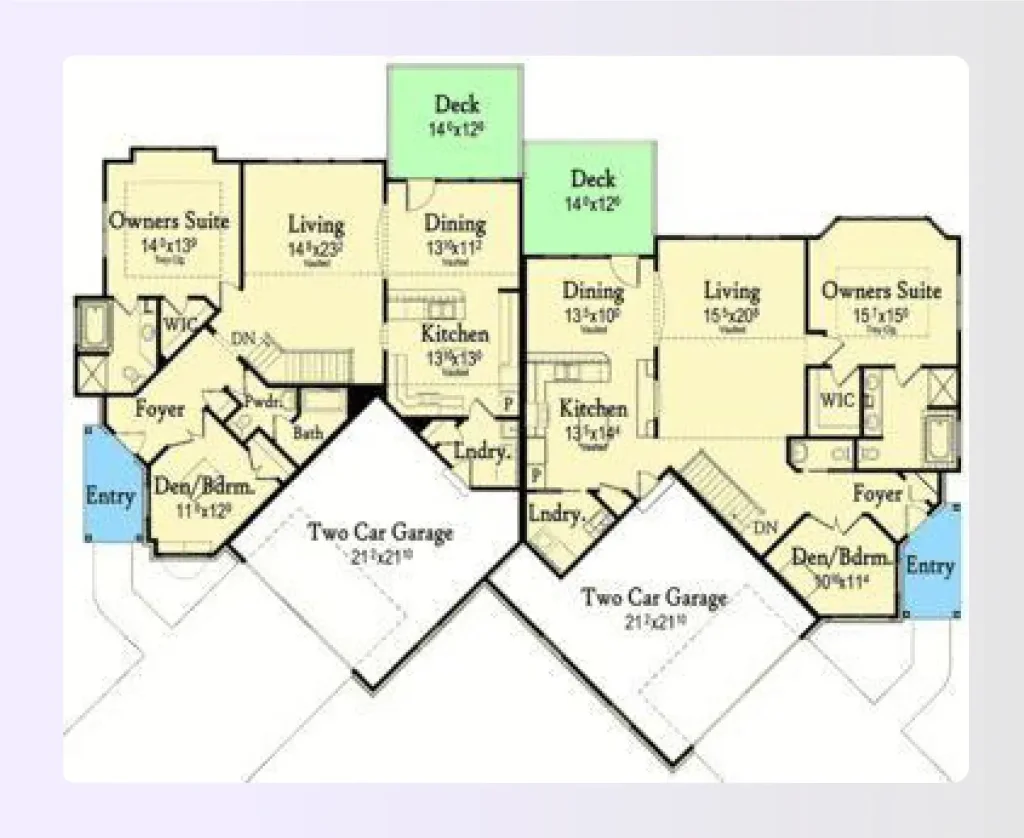
5. The Butterfly Duplex (Privacy Focused)
In this design, the units angle away from each other to maximize privacy and reduce the feeling of sharing a wall. You can test the sightlines from the main floor master bedroom windows using Foyr’s camera tools to guarantee privacy. This ensures that neighbors cannot look directly into each other’s private spaces despite their proximity on the lot.
The Concept: Two units connect at a central point but wing outward to orient their views in completely different directions.
Why It Works: It virtually eliminates the shared wall noise issue and gives each unit a distinct private outdoor area. This design feels more like a detached home which allows you to command higher rents for the perceived luxury.
Best For: Corner lots or irregularly shaped properties that allow for angled footprints.
6. The Townhouse Row (The Sawtooth)
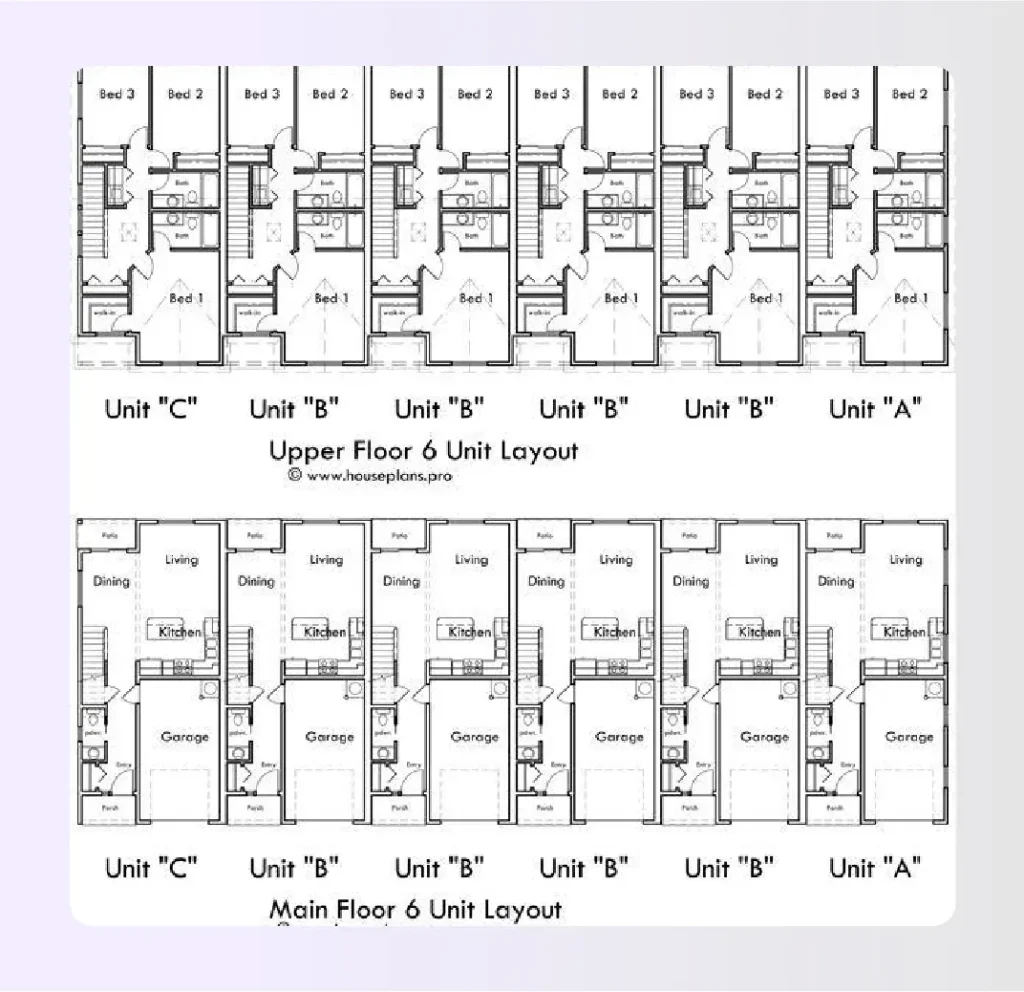
Row houses are a classic solution for high-density living, often featuring a garage stall on the ground level. Foyr’s ‘Array’ tool allows you to replicate a single townhouse unit multiple times in a perfectly straight line. This feature helps you quickly visualize a collection of luxury townhouse plans spanning the entire length of a city block.
The Concept: Side-by-side multi-story units share side walls and typically feature individual street entrances and private rear yards.
Why It Works: It offers high density while giving residents vertical ownership from the ground up to the roof line. This layout creates a strong street presence and allows for individual expression within a cohesive architectural framework.
Best For: Urban infill projects where maximizing street frontage is critical.
7. The Main House + ADU (The House Hack)
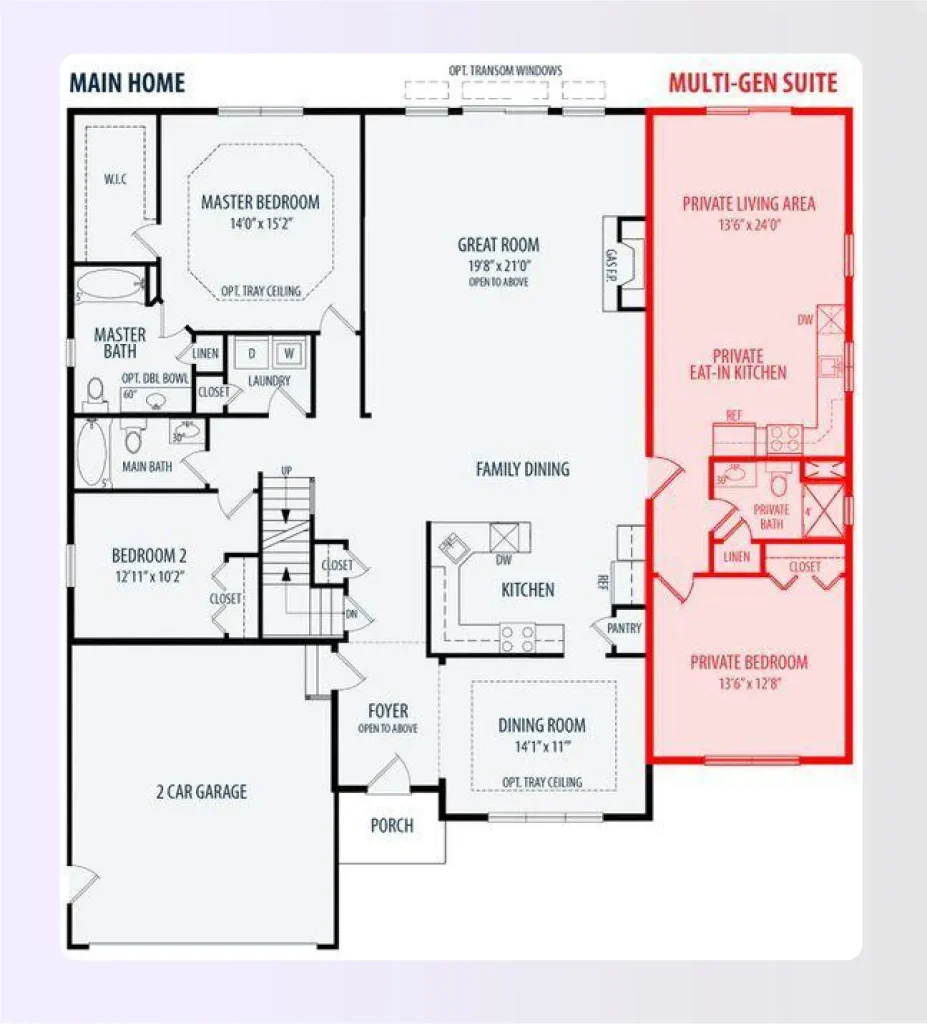
This is a popular trend for homeowners wanting to offset their mortgage by renting out a smaller, secondary unit. You can use Foyr to plan the ADU conversion to ensure it meets sq ft requirements for local zoning laws. Visualizing the connection points helps you maintain privacy between the main residence and the new rental unit.
The Concept: A standard single-family home includes a secondary, smaller dwelling unit either attached or built as a detached structure.
Why It Works: It allows homeowners to enter the landlord game gently while increasing the property value and versatile layouts. This setup supports multigenerational living or provides a steady income stream without buying a separate commercial property.
Best For: Homeowners with large backyards or basements suitable for conversion.
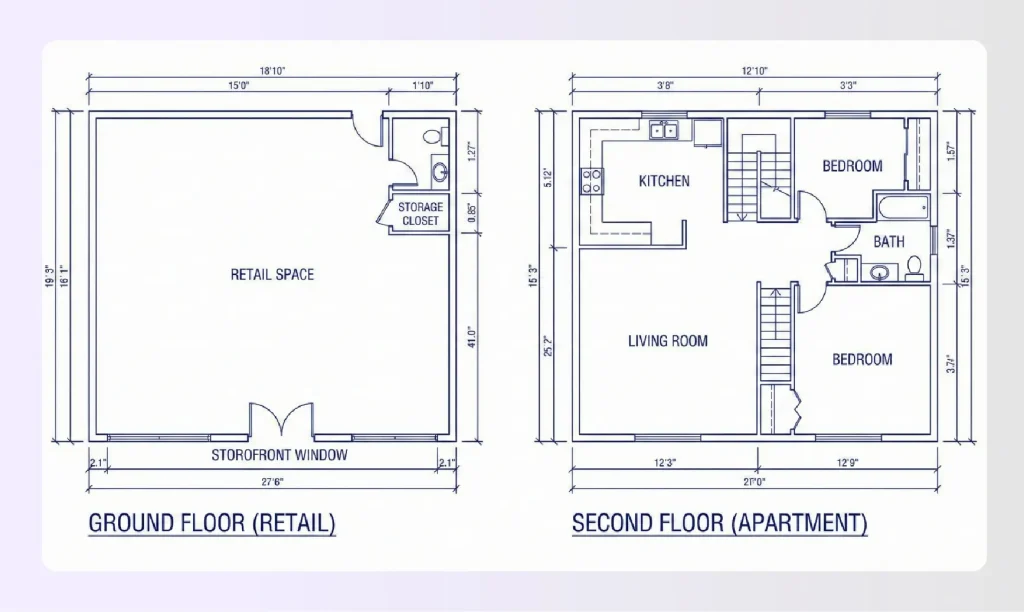
8. The Live-Work Unit (The Modern Hybrid)
With remote work rising, these units combine commercial frontage with residential living spaces in the back or upstairs. You can use the Foyr Neo rendering engine to show how the commercial space looks distinct from the residential area. This clear visual separation is crucial for convincing zoning boards and potential tenants of the unit’s dual functionality.
The Concept: The ground floor serves as a commercial office or retail space while the upper floors function as residential.
Why It Works: It eliminates the commute for the business owner and revitalizes neighborhoods by adding mixed-use activity to the street. This design appeals to entrepreneurs who want to reduce overhead costs by combining their lease and mortgage.
Best For: Neighborhood commercial districts transitioning to residential zones.
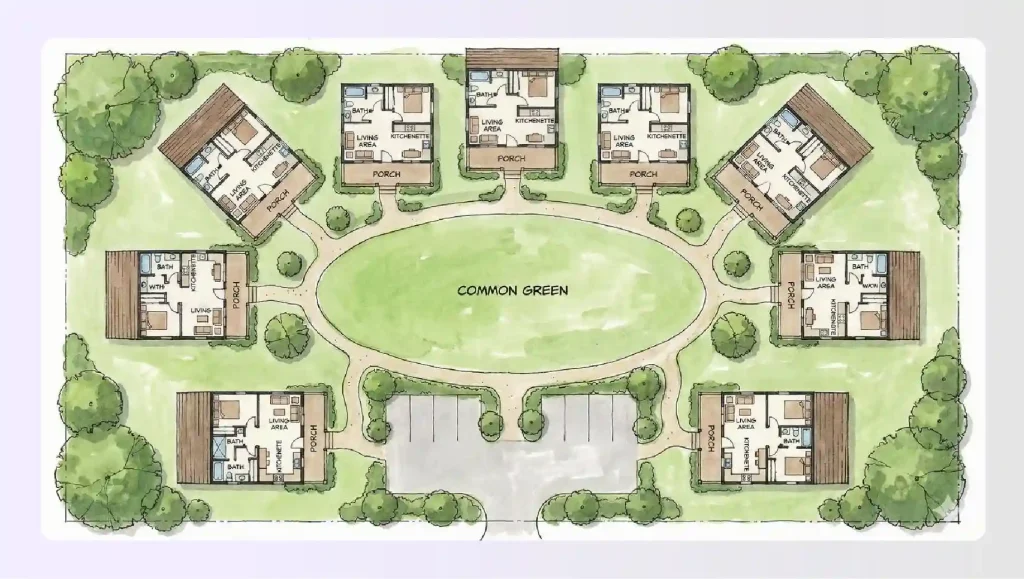
9. The Cottage Court (The Cluster)
This charming layout features small, detached homes arranged around a shared green, often creating a village-like atmosphere. Foyr’s lighting tools help you simulate evening ambiance in the common areas to showcase the cozy community feel. You can demonstrate how ensuring good lighting enhances safety and aesthetics in this unique multifamily design.
The Concept: A grouping of small, detached single-family residences oriented around a shared common open space or garden.
Why It Works: It provides the privacy of a detached home with the density and community benefits of a condo complex. This offers a wide range of options for downsizers who want a garden without the maintenance of a large yard.
Best For: Deep lots where you can create a private internal street or path.

Best Practices for an Efficient Multi-Family Home Layout
Creating a successful multi-family home floor plan requires attention to detail beyond just fitting rooms into a box.
- Zoning: You must place closets, hallways, or bathrooms against shared walls to act as a sound buffer between units. This simple multifamily design choice significantly reduces noise complaints and improves tenants’ daily quality of life.
- Traffic Flow: Design entryways and corridors that are spacious enough to allow two people to pass comfortably with groceries. You should plan wide doorways and clear paths to ensure smooth movement during busy morning and evening rush hours.
- Storage Solutions: Apartment living often fails because of a lack of storage, so you must integrate creative solutions early. You can add dedicated closets near entryways or allocate space in the basement for fitness centers or secure lockers.
Once your floor plan is set, bringing it to life with realistic details is the next step. See how easy rendering can be with Foyr Neo.
How to Visualize Multi-Family Home Floor Plans with Foyr Neo
Designing the perfect multi-family home floor plan is a balancing act between density and dignity for residents. But let’s be honest: 2D blueprints might be great for contractors, but they are terrible for visualizing the actual ‘livability’ of a space.
This is where our interior design software, Foyr Neo emerges as your best partner:
- Transform your flat 2D blueprints into immersive 3D models with a single click to identify potential structural conflicts instantly.
- Simulate exact natural lighting conditions using AI controls to ensure every unit receives adequate sunlight throughout the entire day.
- Populate your layouts instantly using 50,000+ pre-modeled 3D items, eliminating the need to build furniture elements from scratch.
- Generate immersive 3D walkthroughs in a few clicks to verify privacy sightlines between shared walls and communal outdoor areas.
- Work together on layouts in real-time from any browser, streamlining feedback loops between architects, developers, and interior designers
By instantly converting your multifamily home plans from 2D to an immersive 3D walkthrough, you can test sightlines, track natural light patterns across different times of day, and ensure the traffic flow feels like a community, not a dormitory.
Don’t wait until the concrete is poured to find the flaws in your modern multi-family house plans. Stop guessing and start visualizing your vision today. Sign up for the Foyr Neo free trial today to render your first multi-family masterpiece in minutes.
FAQs
What is the 1% rule for multi-family?
The 1% rule is a quick screening tool used by investors to evaluate the potential profitability of a property. It suggests that the monthly rent collected should be at least 1% of the total purchase price. This helps you quickly assess if a multi-family home floor plan is financially viable.
How much does it cost to build a multi-family home?
Costs vary widely by location, but you can generally expect to pay between $200 and $400 per square foot. Factors like smart technology, high-end finishes, and complex rooflines will drive this price up. Efficient floor plans can help keep these construction costs manageable.
What are common multi-family home problems?
Noise transfer between units is the number one complaint, closely followed by inadequate parking and storage. Poorly designed residential buildings often lack natural light in central units. Addressing these issues in the planning phase provides valuable insights for long-term success.
Are multi-family homes harder to sell?
Generally, no, because they appeal to both investors and owner-occupiers looking for income help. However, a poorly designed multi-family home layout with awkward flow or dark rooms will sit on the market longer. High-quality visuals and diverse housing needs compatibility make them easier to sell.