

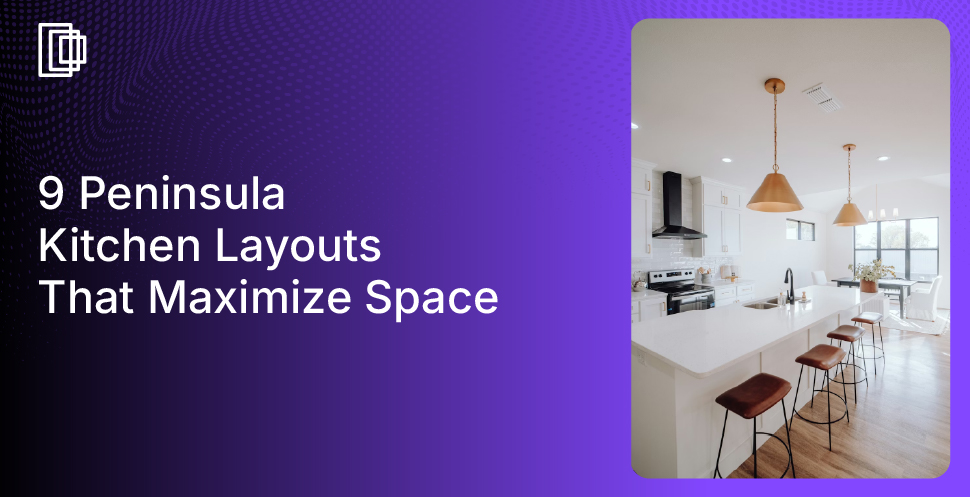
Everyone dreams of having an expansive kitchen island, but for your standard home, that feature is actually a massive space-killer. A bulky central unit often chokes the room, forcing you to squeeze through narrow walkways just to reach the fridge or sink during busy meal prep.
The peninsula layout is the unsung hero of efficient kitchen design, offering the exact same counter space as an island but with better flow for smaller rooms. It provides a practical compromise, keeping your floor plan open while maximizing usable surface area for cooking and socializing.
This guide covers everything from versatile peninsula kitchen layout templates to the precise technical dimensions needed for success. It will help you decide if this layout is the right choice, ensuring that your final renovation project maximizes every inch of available square footage efficiently and beautifully.

What Is a Peninsula Kitchen Layout?
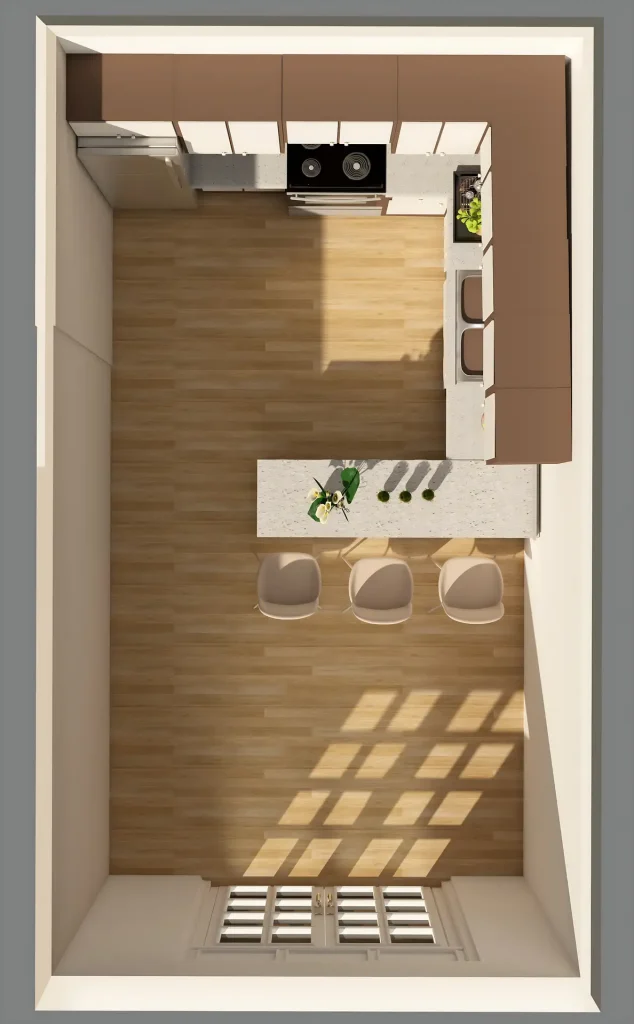
Unlike a floating island that sits in the middle of the room, a peninsula is connected to the main workspace on one side. This structure acts as an attached island, seamlessly extending your cabinetry run while keeping the central floor area open for easier movement within the home.
It effectively turns a standard L-shape into a U-shape or a G-shape, effectively maximizing the famous ‘Golden Triangle’ efficiency for the user. This strategic configuration optimizes the peninsula kitchen layout by keeping all key appliances within easy reach while physically separating the culinary zone from the social areas.
If you are struggling to get the dimensions for your peninsula kitchen right, check out this guide on creating precise floor plans with Foyr

Peninsula vs. Island: Which One Is Right for You?
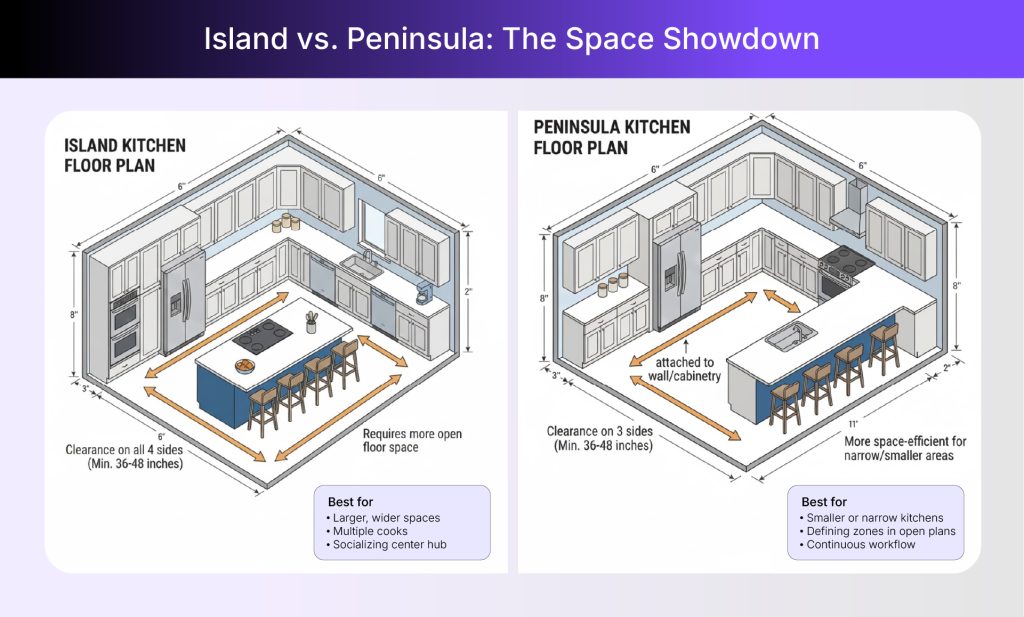
While the kitchen island is often viewed as the ultimate status symbol, the peninsula is frequently the practical winner for spatial efficiency.
Islands require clearance on all four sides, which eats up valuable floor area rapidly. A peninsula only needs three sides of clearance, effectively anchoring the workspace. This simple difference between these kitchen floor plans recovers lost square footage, making your kitchen feel significantly larger and more open to guests.
- Space Requirements: Islands usually require substantial clearance on all four sides to function well; however, peninsulas only need clearance on three sides to work. This makes them significantly more adaptable for homes that lack the necessary width for a central unit.
- Traffic Flow: Peninsulas are essentially effective barriers that protect the cook, whereas islands encourage circulation around the center which can interrupt workflow. This makes the peninsula layout excellent for directing household traffic away from the hot stove and busy prep zones.
- Storage: Both options offer great storage potential for pots and pans, but a kitchen layout with peninsula often allows for continuous corner cabinetry. This connection permits the installation of specialized solutions like lazy Susans to maximize the often-wasted corner space.
Pros and Cons of a Kitchen Layout with Peninsula
Before committing to a kitchen renovation, carefully weigh the functional trade-offs of this classic design choice for your home.
Pros:
- Space Maximization: This layout is absolutely perfect for narrow rooms where an island simply won’t fit without blocking the necessary walking paths.
- Zoning: It creates a natural physical divider between the kitchen and living/dining area, which is excellent for defining zones in open plans.
- Surface Area: It adds significant counter space and seating for guests without requiring the massive footprint that a standalone island would typically demand.
Cons:
- Corner Issues: The design can sometimes create a ‘dead corner’ in cabinetry known as blind corner cabinets, which can be difficult to access.
- Traffic Jams: It can create a frustrating bottleneck if there is only one entry or exit point to the kitchen for the family.
Top 9 Peninsula Kitchen Floor Plan Templates
Choosing the right configuration for your peninsula kitchen layout depends entirely on your available square footage and how you prefer to cook and entertain guests.
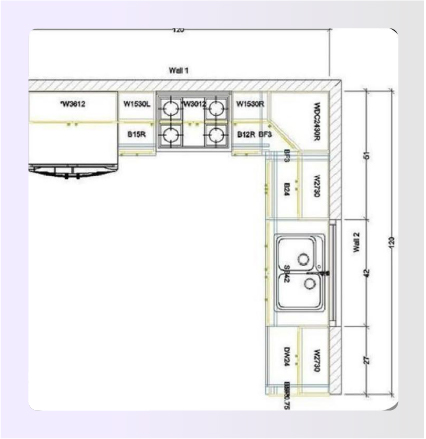
1. The Classic L-Shape with Peninsula
This is the most common adaptation, effectively turning a standard L-shape into a highly functional workspace. With Foyr Neo’s intuitive drag-and-drop functionality, you can pull this kitchen peninsula extension onto your canvas and instantly use one-click 2D to 3D conversion to see if the walkway feels cramped before you ever commit to a contractor.
Why it works: It creates a natural ‘social triangle’ where the cook is protected in the L-shape, but guests can perch on the peninsula. This ensures that visitors can socialize comfortably without ever getting in the way of dangerous knife work.
Best for: Open-concept homes where you want to clearly define the kitchen zone without putting up a restrictive wall.
Floor layout: Two walls of cabinets with a perpendicular extension creating an efficient workspace that remains open to the adjacent room.
2. The G-Shaped Powerhouse
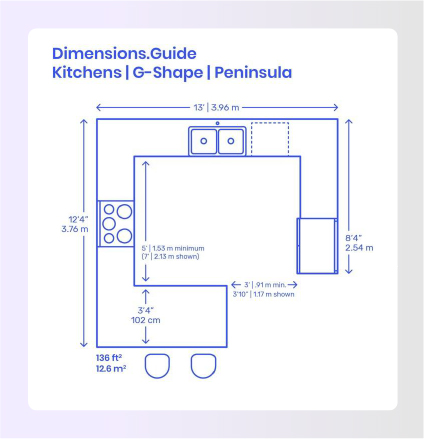
The G-shape essentially adds a fourth leg to a U-shaped kitchen, often utilizing the peninsula as that operational leg. To prevent this layout from feeling too closed-in, use Foyr’s Ruler Tool to verify that the clearance at the ‘mouth’ of the G meets code requirements. You can create precise measurements between objects to ensure your family won’t get stuck in a bottleneck.
Why it works: It offers the maximum amount of counter space possible in a residential kitchen by utilizing every available inch of wall space. You effectively get a wraparound workspace that keeps every single appliance within easy arm’s reach.
Best for: Avid cooks who need extensive prep areas and peninsula design efficiency for complex and multi-course meal preparation.
Floor layout: Three walls of storage plus a return peninsula that creates a distinct and enclosed cooking environment for the chef.
3. The One-Wall Layout
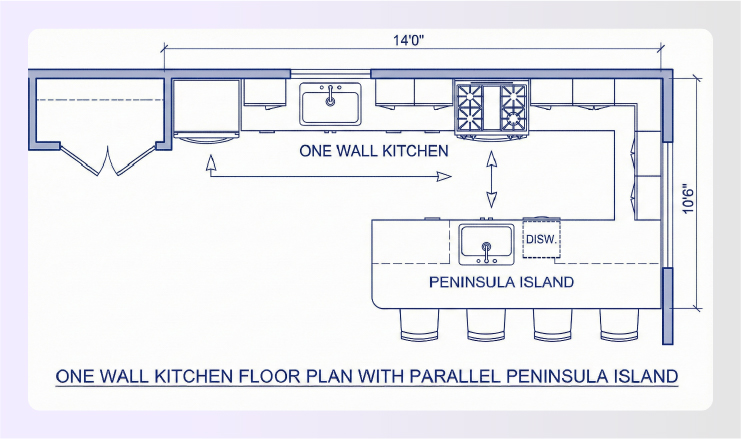
For tight urban apartments, adding a peninsula opposite a single wall of cabinets creates a pseudo-galley. Using the Pan Feature in Foyr Neo, you can adjust camera positions without changing angles to inspect the sightlines from the dining room. This ensures the peninsula defines the space without making the room feel claustrophobic or blocking the light.
Why it works: It provides comfortable seating and a prep surface without the footprint of a full island, saving valuable floor area. It transforms a linear kitchen into a social hub where guests can gather while the host prepares the meal.
Best for: Studio apartments or long, narrow spaces needing a seating area without blocking the main walkway through the home.
Floor layout: A single run of cabinets with a parallel peninsula that acts as a room divider and workspace.
The Galley End Style
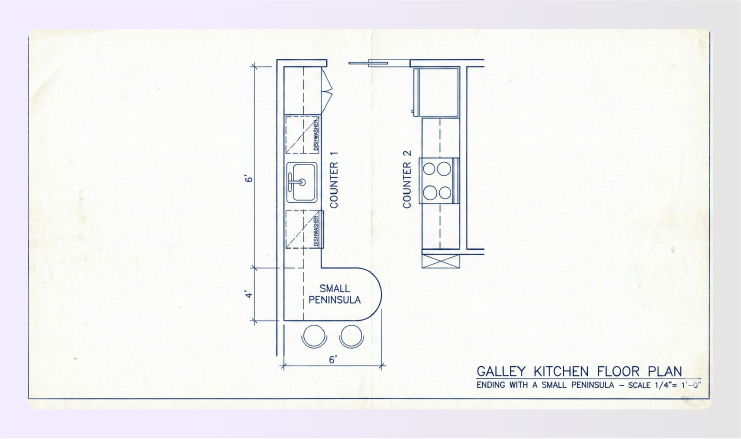
In a classic corridor kitchen, you can cap the open end with a short peninsula to add functionality. Use Foyr’s precise measurement tools with customizable dimension units to test different breakfast bar depths. This allows you to verify that the seating area doesn’t intrude into the living area or block the path to the backyard door.
Why it works: It stops the kitchen from feeling like a hallway and provides a visual termination point for the cabinetry run. It provides a visual termination point and an easy way to pass food to the dining area during parties.
Best for: Separating the cooking zone from the rest of the kitchen traffic to keep the cook undisturbed.
Floor layout: Two parallel runs of cabinets joined by a short perpendicular run that closes off one end of the galley.
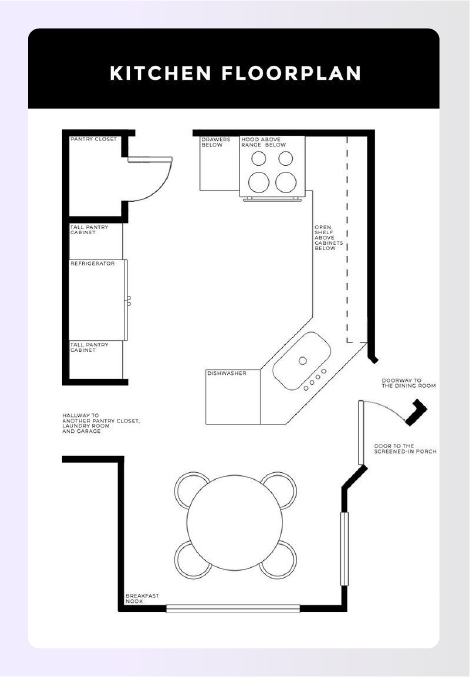
5. The Angled Peninsula
Not all rooms are perfect rectangles, and an angled peninsula can soften the look. If your room is irregular, you can use the Trace Your Floor Plan service where the AI creates the base for you, or use the Create New Product Tool to design custom countertops that fit unique angles. This ensures your interior design flows smoothly without awkward gaps.
Why it works: It breaks the monotony of straight lines and directs traffic more gently around the exterior of the workspace. It is particularly useful in small kitchen designs where sharp corners might impede movement or cause injury in tight spaces.
Best for: Irregularly shaped rooms or maximizing views of the living space where a 90-degree angle feels too rigid.
Floor layout: L-shaped base with a peninsula set at a 120 or 135-degree angle to create a softer flow.
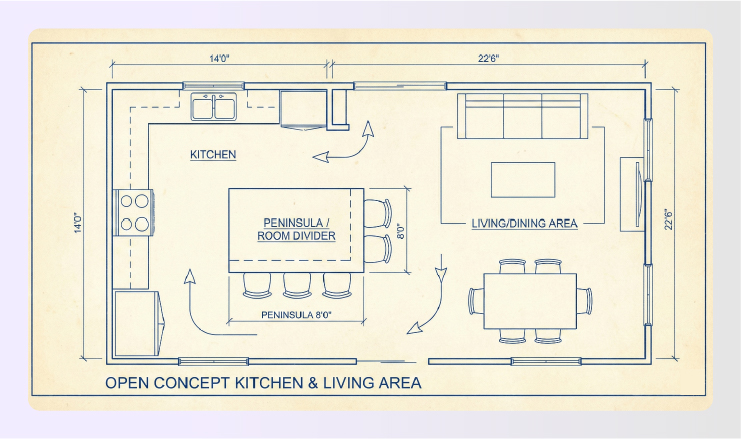
6. The ‘Broken Plan’ Divider
This design uses shelving or columns on the peninsula to create a boundary without blocking light. You can utilize individual product lighting controls in Foyr to turn on or off specific lights in your renders. This helps you visualize exactly how shadows fall through open shelving, ensuring the areas of the house remain bright and inviting.
Why it works: It embraces the ‘broken plan’ trend, offering the light of an open kitchen plan with the privacy of a closed room. Kitchen experts love this for hiding dirty dishes from guests while maintaining a sense of openness and airiness.
Best for: Homeowners who want enough space to hide mess while entertaining without completely walling off the kitchen.
Floor layout: Standard peninsula with integrated vertical shelving or glass partitions that rise above the countertop level for separation.
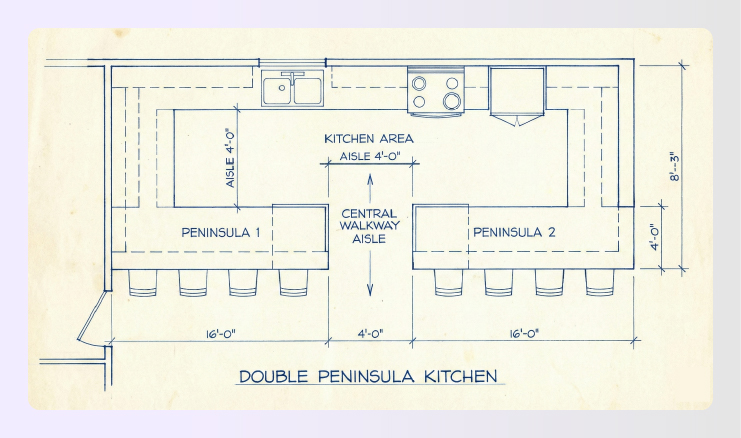
7. The Double Peninsula
If you have a very wide room, you can actually have two peninsulas extending from opposite walls. Since traffic flow is critical here, you can generate immersive 3D walkthroughs with just 5 clicks to virtually walk through the center path. This confirms that the peninsula kitchen layout templates you chose allow enough room for two cooks to pass each other safely.
Why it works: It creates dual workstations, allowing two cooks to prepare quick meals simultaneously without crossing paths or bumping elbows. It’s the perfect solution for large families who cook together and need separate zones for prep and cleanup.
Best for: Wide, short kitchens where an island would interrupt the flow or feel too small for the large space.
Floor layout: Two peninsulas facing each other with a central walkway that allows for easy movement between the two sides.

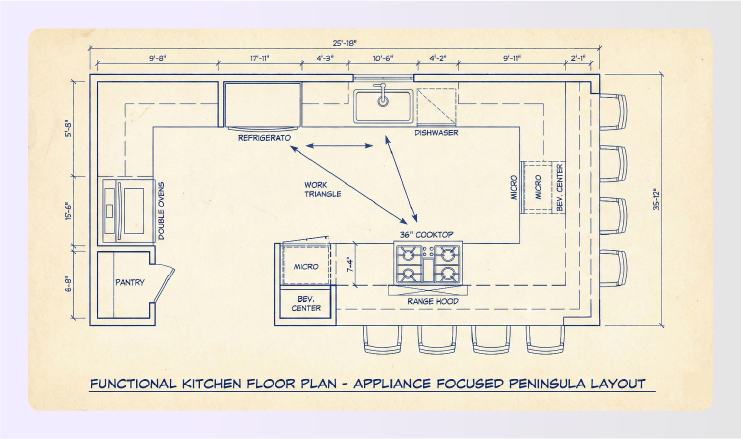
8. The Workstation Peninsula
This peninsula is dedicated entirely to appliances, housing a sink or cooktop. Foyr’s extensive asset library containing over 60,000+ pre-built 3D models lets you swap out different sinks and cooktops instantly. You can test various kitchen appliances to ensure you have easy access to plumbing and gas lines before finalized construction begins.
Why it works: It frees up the back wall for full-height pantry storage or double ovens, maximizing vertical storage space. It allows the cook to face guests while working, highlighting the benefits of a kitchen peninsula layout for socialization.
Best for: Social cooks who don’t want to stare at a wall while preparing meals for their family and friends.
Floor layout: Peninsula containing the sink or stove, acting as the primary work zone facing the living or dining area.
9. The Multi-Level Peninsula
This design features a split-level counter: one height for working and one for eating. You can use Foyr’s guidelines to maintain consistent heights across elements or the Detach Clone feature to customize specific cabinet units. This visualization ensures the set of cabinets is accessible and the bar stools fit comfortably under the raised overhang.
Why it works: It physically hides the mess of food prep from the dining side, keeping the view clean for guests. It provides additional storage accessible from the dining room side for table linens or rarely used serving platters.
Best for: Families who want a distinct separation between the adjacent countertop mess and the eating area during meal times.
Floor layout: A single peninsula unit with two distinct countertop heights that creates a visual and physical barrier for mess.
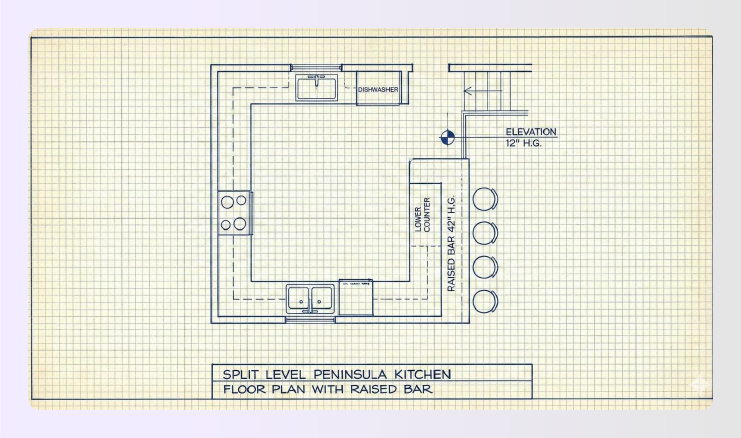
Image Credit: Gemini (AI-generated)
Visualizing these peninsula kitchen layouts can be tricky, so watch how easily you can build a functional space using a reliable kitchen design software like Foyr
Get Your Peninsula Kitchen Designed by Experts at Foyr
Sketching complex peninsula layouts on napkins often leads to costly errors during construction. If you don’t want to use interior design software and prefer a hands-off approach, you can skip the learning curve entirely.
Foyr offers professional interior design services where experts handle everything from a single room to an entire home, starting at just $99.
- Collaborate with experienced interior designers who understand spatial flow and ergonomics.
- Enjoy transparent and affordable pricing without hidden fees or surprise costs.
- Receive stunning 12K renders that visualize your new kitchen perfectly.
- Get editable 3D project files along with your final high-quality walkthroughs.
- Experience a fast turnaround time so you can start your renovation sooner.
The process is simple: share your concepts, sketches, or mood boards, and the team will outline the scope. Once you approve the timeline, they get to work immediately, delivering exceptional custom designs tailored specifically to your unique vision.
Get in touch with our team today and let’s start designing your dream Peninsula kitchen.
FAQs
What kitchen layout do chefs prefer?
Chefs often prefer the U-shape or G-shape because it surrounds them with counters on three distinct sides. This setup creates a highly efficient pivot zone where the sink, stove, and fridge are just steps away, making it a great way to minimize movement during busy service.
What is the ideal size for a peninsula?
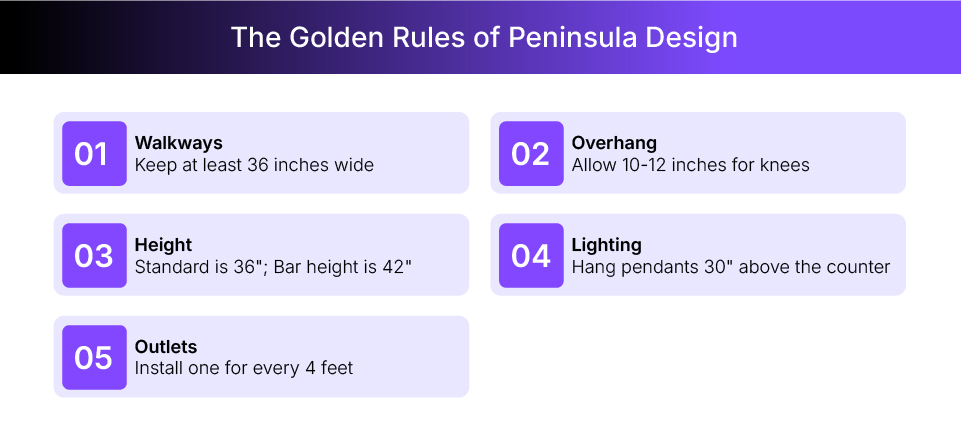
The ideal peninsula is at least 24 inches deep and 4 feet long to be truly functional. This provides enough benefits of a kitchen island—like prep space and seating for two—without cramping the room. Ensure you have 36 inches of clearance behind it for traffic.
Is a peninsula kitchen layout outdated?
Not at all; it is actually seeing a resurgence because homeowners are prioritizing flow over massive furniture pieces. While islands had a moment, the peninsula remains the most practical choice for the extra workspace needed in urban homes. Modern designs use waterfalls and mixed materials to update it.
What are the disadvantages of a peninsula in a kitchen?
The main disadvantage is the blind corner where the peninsula meets the wall lower cabinets and blocks access. However, modern swing-out shelving solutions solve this, but traffic flow planning is essential to avoid bottlenecks. Also, unlike an island, it can create a dead-end for multiple users.