

U-shaped kitchen layouts feel airy, open and modern. However, you also have questions. Will it feel like a claustrophobic box? How do you deal with two sets of dead corners? And the big one: Can I squeeze an island?
Whether you are a homeowner sketching on a napkin or an interior designer looking for exact clearance dimensions, this guide to creating kitchen designs is for you. We understand the challenges of maximizing a kitchen space while trying to maintain a stylish and cohesive aesthetic.
We are going to break down the layouts, the math, and the style hacks to make your U-shaped kitchen the hardest working room in the house. Get ready to transform your culinary zone into a masterpiece of efficiency and stunning design.

What Is a U-Shaped Kitchen?
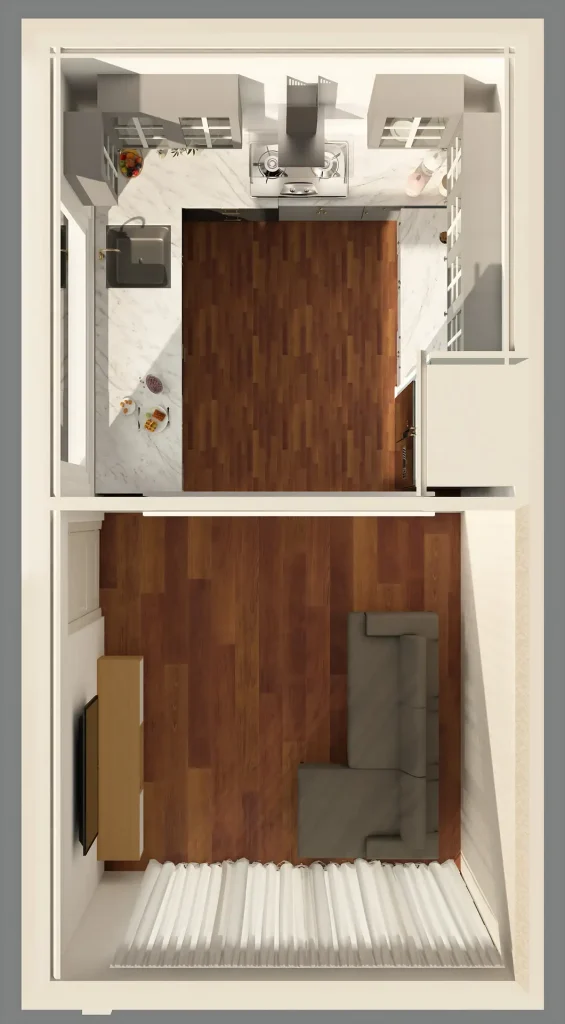
A u-shaped kitchen design features three walls lined with cabinetry and appliances to create a U-shape. It maximizes wall space for storage and keeps the cooking zone separate from the household traffic, ensuring a focused environment for meal preparation.
Who Is It For? This layout works for separate rooms and open-plan spaces using a peninsula as the third wall. It creates a natural flow between the kitchen and dining area, allowing the cook to interact with guests without crowding the work zone.
Pros and Cons of U-Shaped Kitchen
Before starting your kitchen renovation, you must weigh the practical benefits against the spatial limitations of this layout.
Pros
- It naturally maximizes efficiency for your golden triangle workflow by keeping appliances within easy reach.
- The layout provides massive storage and counter space potential across three dedicated walls of cabinetry.
- It effectively separates the cooking zone from household foot traffic to prevent dangerous kitchen collisions.
Cons
- The two deep corner cabinets are often tricky to organize without installing expensive specialty hardware.
- The enclosed shape often feels cramped and enclosed in smaller spaces without adequate natural lighting.
- It is often difficult to accommodate a kitchen island addition without compromising the walkway clearance.

Optimizing Workflow in U-Shaped Kitchen Layouts
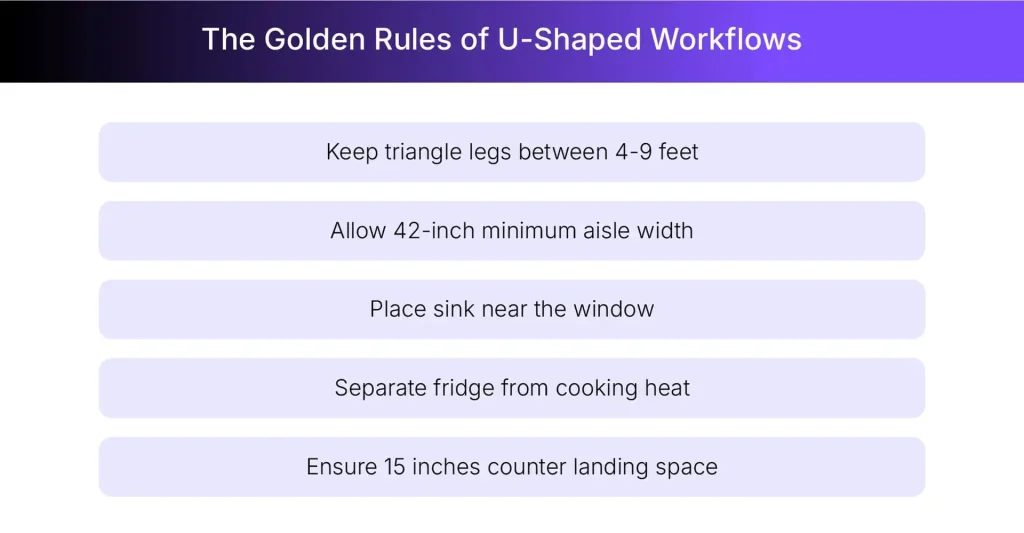
The U-shape naturally supports the sink-stove-fridge triangle, but precise measurements are critical. You must get the distances right to ensure the kitchen functions smoothly without feeling like a chaotic gym workout.
Let’s have a look at the key technical specifications of u-shaped kitchen layouts:
- The Triangle Sum: The sum of the three legs of the work triangle should be between 12 feet and 26 feet to ensure you are not walking too far or feeling too cramped while cooking meals.
- Walkway Width: The open area in the center of the U needs to be at least 42 to 48 inches wide to allow two people to pass each other or one person to open the oven safely.
- Opposing Drawers: If you have kitchen cabinets facing each other, ensure you can open drawers on both sides simultaneously without them hitting, which is a common oversight in many hasty DIY kitchen renovation projects.
7 Essential U-Shaped Kitchen Layouts & Floor Plans
We have analyzed seven distinct variations to help you find the best u-shaped kitchen layout. Here are the most effective ways to configure your space for maximum style, storage, and cooking efficiency.
1. The Classic Symmetric U-Shaped Kitchen Layout
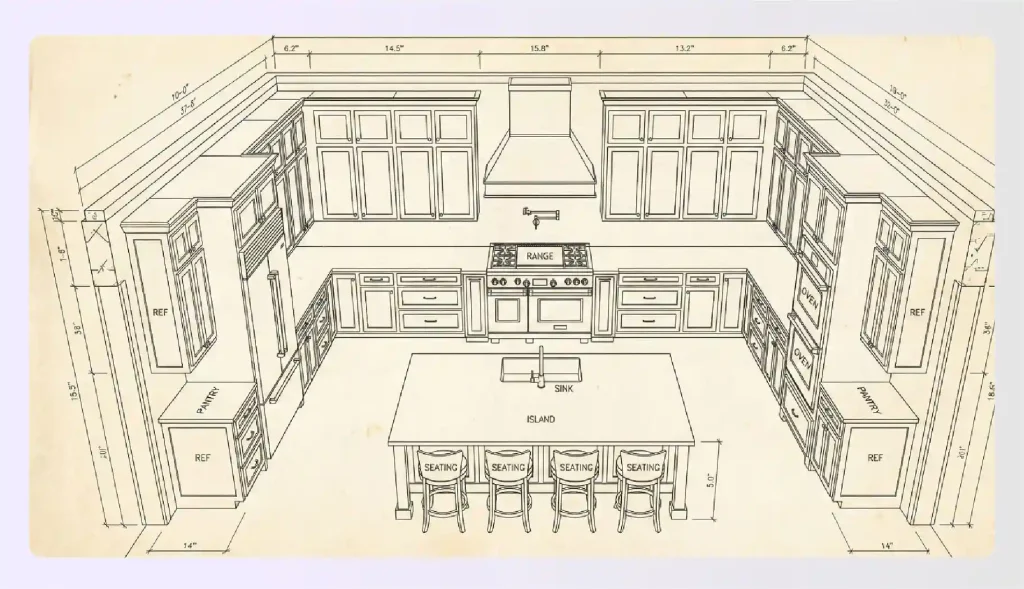
This is the most balanced approach where appliances are centered on each wall. The sink usually sits in the middle of the base U, often under a window. It provides equal counter space on the left and right sides. This symmetry pleases the eye and creates a predictable, efficient workflow for a single cook.
💡 Foyr Tip: Use the Trace Your Floor Plan feature to instantly digitize your rough sketch into a precise symmetric layout within hours.
Why it Works
- Creates a focused and distraction-free cooking zone for the chef.
- Offers maximum continuous countertop space for all your prep work.
- Keeps all major appliances within easy reach of the cook.
Best For
Medium-sized enclosed kitchens where you want to maximize wall storage and maintain an organized aesthetic without compromising on the available kitchen floor plan area.
2. The Peninsula U-Shaped Kitchen Layout
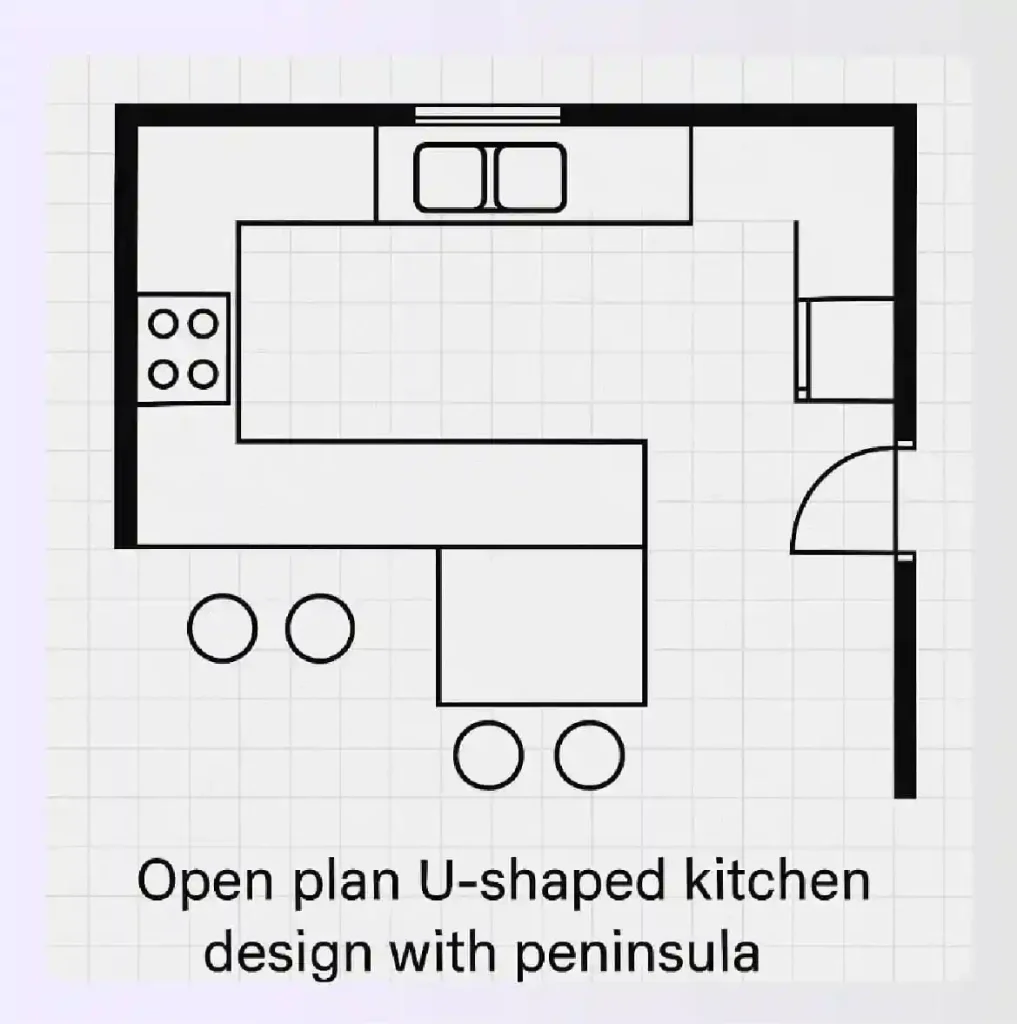
You replace one of the three walls with a peninsula counter. This opens the kitchen up to the adjacent dining or living room without losing the U-shape functionality. It is perfect for social cooking as it allows the cook to interact with guests while keeping them out of the danger zone.
💡 Foyr Tip: Drag and drop bar stools from the 50,000+ model library in Foyr Neo to visualize seating clearances accurately behind the peninsula.
Why it Works
- Connects the kitchen to living areas socially for better interaction.
- Adds casual seating with a convenient breakfast bar for mornings.
- Maintains the efficient kitchen work triangle despite the open wall.
Best For
Open-concept homes where you want separation between the kitchen and lounge without building a full wall to maintain open floor plans’ connectivity.
3. The Broken U-Shaped Kitchen Layout
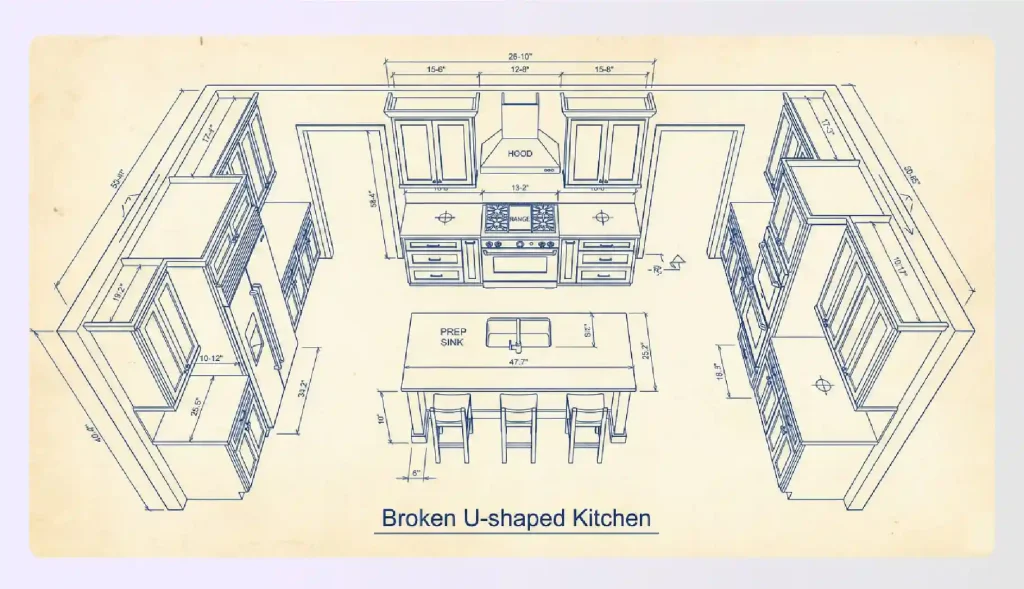
This layout includes a doorway or a walkway cutting through one of the legs of the U. While it technically breaks the continuous counter, it allows for better traffic flow in busy households. You often place the fridge or pantry on the separated wall to create a dedicated food storage zone.
💡 Foyr Tip: Use the Ruler Tool to verify that the walkway clearance meets code requirements to avoid congestion in high-traffic areas.
Why it Works
- Improves traffic flow in multi-entry rooms with distinct pathways.
- Allows flexibility in placing large appliances like fridges comfortably.
- Prevents the cook from feeling trapped in the kitchen corner.
Best For
Older homes with multiple entry points or kitchens that serve as a thoroughfare to the backyard or garage, requiring careful planning of traffic.
Need to build a custom solution for a tricky space? Watch how to create custom elements from scratch using Foyr Neo:
4. The Center Island U-Shaped Kitchen Layout
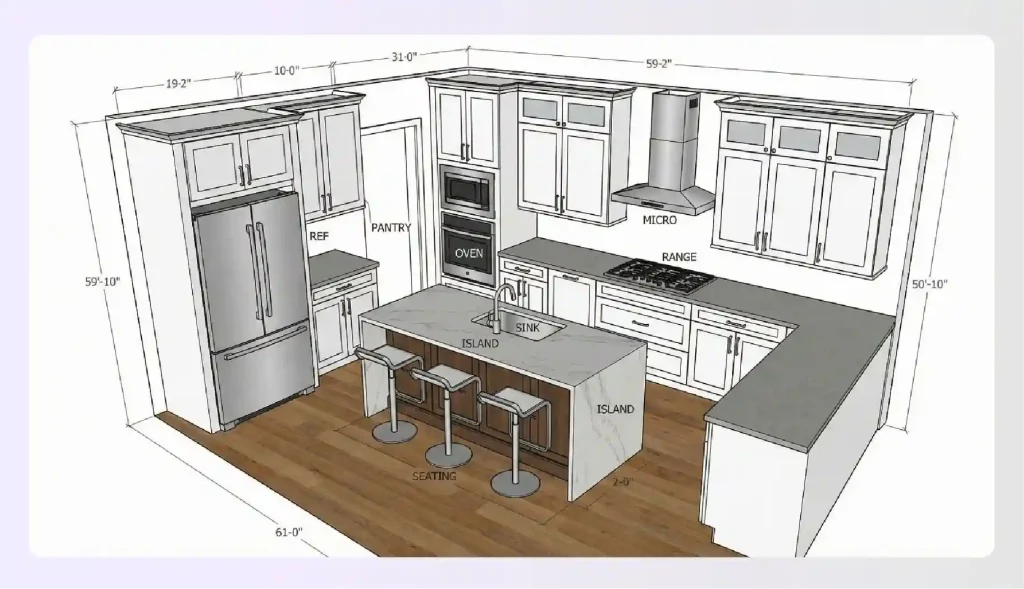
If you have a massive space, a standard U can feel too spread out. Adding an island bridges the gap. It provides a central landing zone for groceries and serves as a secondary prep station. This island kitchen layout turns a cavernous room into an ergonomic workspace.
💡 Foyr Tip: Use the AI Magik Bar to instantly reconfigure the island style and materials to match your perimeter cabinets seamlessly.
Why it Works
- Reduces steps between opposing counters for better movement efficiency.
- Adds a secondary sink or prep zone for meal preparation.
- Creates a stunning architectural focal point for the entire room.
Best For
Large kitchens with at least 15 feet of width to accommodate the island and surrounding walkways, ensuring you have plenty of room to move.
5. The Windowless U-Shaped Kitchen Layout
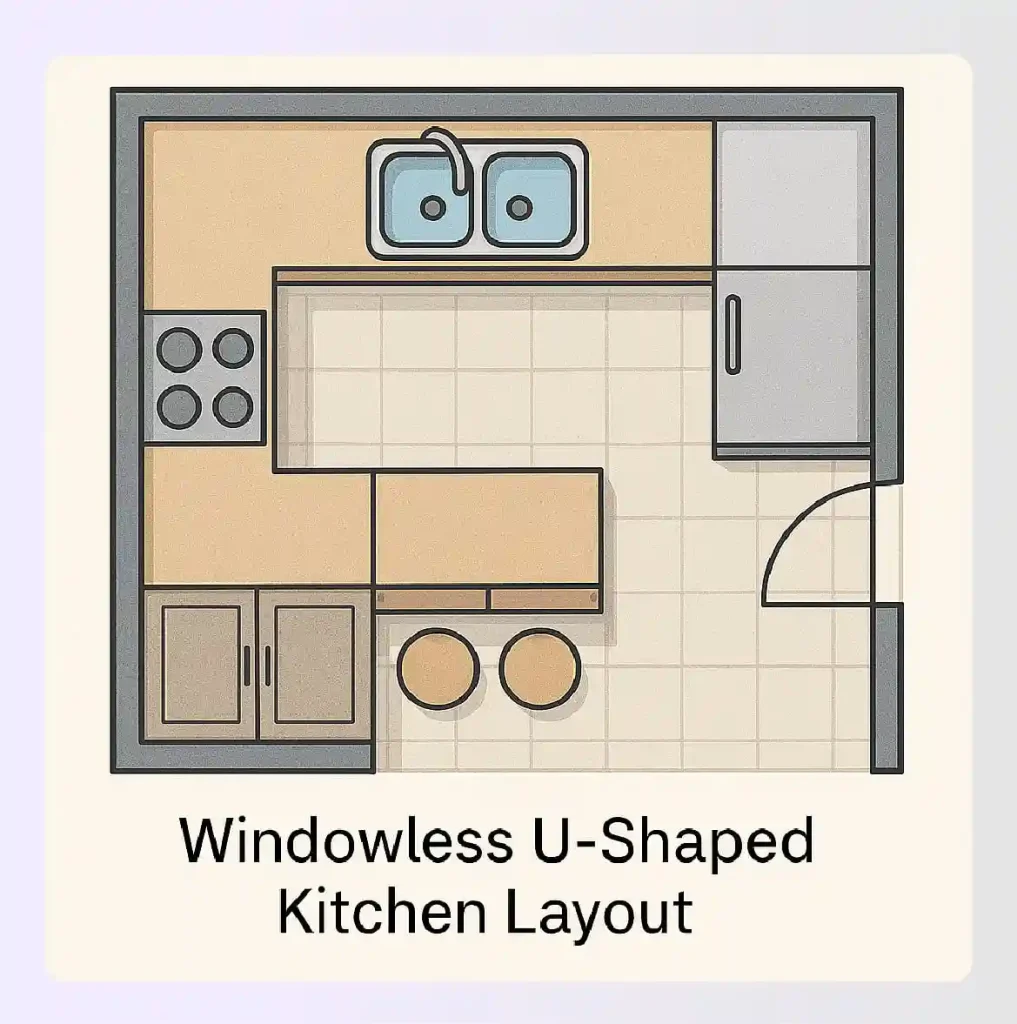
Not every kitchen has a view. In apartments or interior rooms, you rely on lighting and cabinetry to create depth. You utilize the third wall for upper cabinets instead of a window. This dramatically increases storage capacity but requires careful lighting design to avoid feeling dark.
💡 Foyr Tip: Use Individual Product Lighting controls to simulate under-cabinet LEDs and ensure the space feels bright and welcoming.
Why it Works
- Maximizes vertical storage on all walls for increased capacity.
- Eliminates glare on screens or appliances from outdoor windows.
- Allows for complete control over ambient lighting and mood.
Best For
Apartments, condos, or basement conversions where natural light sources are unavailable or limited, making it a small u-shaped kitchen layout solution.
6. The Asymmetric U-Shaped Kitchen Layout
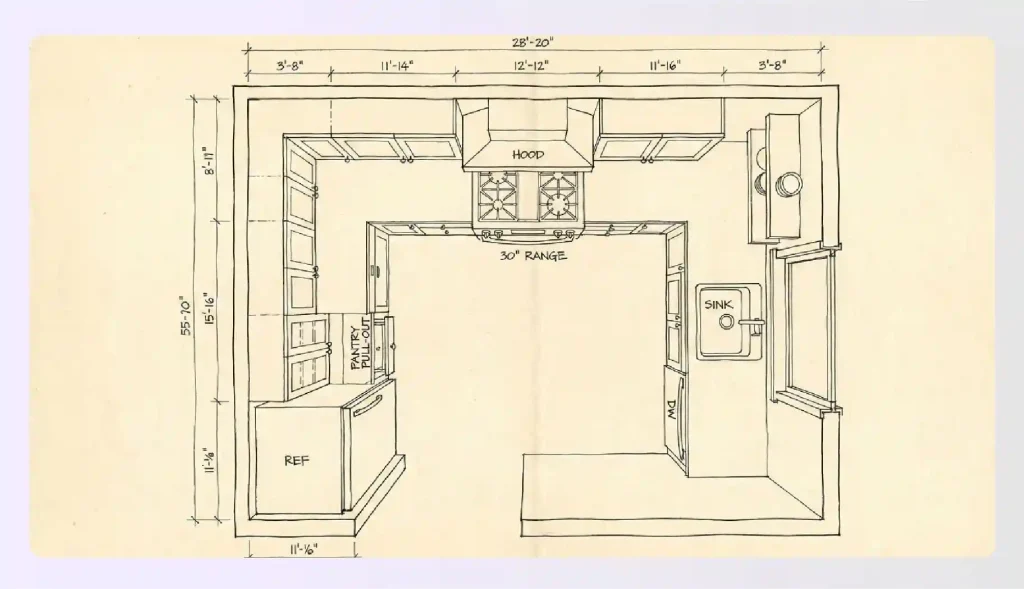
Sometimes walls aren’t equal length. One leg of the U might be shorter due to a door or hallway. You adapt by placing shallower cabinets or open shelving on the short leg. This prevents the room from feeling tunnel-like and adds visual interest.
💡 Foyr Tip: The Detach Clone feature lets you modify standard cabinet depths to fit perfectly into asymmetric niches and corners.
Why it Works
- Adapts to quirky or older architectural footprints and angles.
- Reduces the ‘tunnel effect’ of long walls in narrow kitchen.
- Creates distinct zones for coffee or prep in corners.
Best For
Renovations in older houses where you must work around existing structural anomalies or varying wall lengths, creating a unique small kitchen design.
7. The Zone-Focused U-Shaped Kitchen Layout
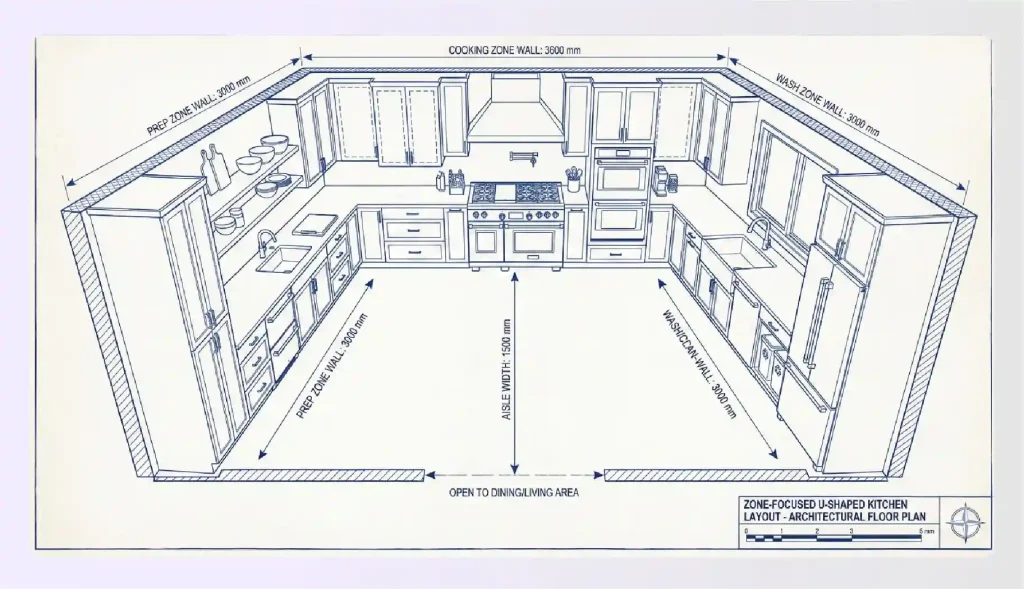
Instead of the traditional triangle, you organize the U into functional zones: prep, cook, and clean. One entire wall might be floor-to-ceiling storage (pantry/fridge), while the others handle the active work. This modern approach suits multiple cooks working simultaneously.
💡 Foyr Tip: Use Guidelines to ensure consistent heights across different zones for a cohesive professional look across the entire space.
Why it Works
- Supports multiple cooks working at once without physical interference.
- Streamlines tasks like baking or plating into specific areas.
- Keeps dirty dishes separated from prep areas and food.
Best For
Professional chefs at home or large families where kitchen duties are often shared among several people, requiring efficient workflow zones.
Watch this tutorial to see how easy it is to drag, drop, and visualize these layouts yourself.
Solving the ‘Dead Corner’ Nightmare
U-shaped kitchen layouts have two corners which is often the biggest pain point for storage. Let’s have a look at the solutions to this problem:
- Classic Rotating Shelves: A Lazy Susan brings the back of the cabinet to you so nothing gets lost in the dark abyss of your deep corner cabinets ever again.
- Pull-out Swing Shelves: These magic corner units swing contents entirely out into the room to ensure you have easy access to heavy pots and pans without straining your back.
- Diagonal corner cabinets: These cut across the corner to provide a wider opening and easier visibility for all your stored items compared to standard right-angle corner cabinet doors.
- Appliance garages: Use the countertop corner to hide toasters and blenders behind a roll-top door to keep your work areas looking clean and clutter-free for guests.

Design Ideas to Keep U-Shaped Kitchen Layouts from Feeling ‘Boxy’
Since you are surrounded by three walls of cabinets, it can feel heavy. You need to break up the visual weight to keep the space feeling open and welcoming.
- Use Open Shelving: Replace upper cabinets on the window wall with floating shelves to create breathing room and display your stylish kitchen dishware collection beautifully.
- Two-Tone Cabinetry: Paint lower cabinets a dark color and uppers a light shade to make ceilings feel higher and the room feel significantly more spacious.
- Focus on Lighting: Layer your lighting with under-cabinet strips and statement pendants to banish shadows and ensure your small u-shaped kitchen feels bright and cheerful.
Visualize Your U-Shaped Kitchen with Foyr Neo
U-shaped kitchen layouts are incredibly versatile, offering maximum storage and efficient workflows for any home style. However, visualizing complex corner solutions requires precision. Foyr Neo is the advanced interior design software designed to streamline your planning and bring your vision to life instantly.
- The 2D to 3D AI feature helps convert furniture elements of the kitchen in a click.
- Access over 50,000 render-ready models including specific global kitchen brands for your client projects.
- Adjust sunlight and rendering settings to see your kitchen at any time of day.
- Get photorealistic 12K renders in minutes to show clients exactly what they are buying.
- Access separate catalog specifically for kitchens, so you never have to hunt for the right cabinet style
Stop guessing and start designing with the tool that professionals trust. You can visualize every detail of your dream kitchen before spending a single dollar on contractors or expensive materials.
Sign-up for a 14-day free trial of Foyr Neo and start creating impressive u-shaped kitchen layouts.
FAQs
What is the best layout for a U-shaped kitchen?
The most efficient u-shaped kitchen floor plan places the sink at the center of the U, with the stove and fridge on opposite side walls. This creates a perfect ‘golden triangle’ that minimizes walking distance while maximizing the available kitchen work triangle efficiency for prep work.
What are common U-shaped kitchen mistakes?
The biggest mistake is ignoring the corner storage options. Failing to install Lazy Susans or pull-outs results in wasted space. Another error is making the aisle too narrow; you need at least 42 inches of clearance to prevent the space from feeling like a small u-shaped kitchen.
Where should a refrigerator be placed in a U-shaped kitchen?
Place the refrigerator at one of the outer tips of the U shape. This ensures that family members can grab a drink or snack without crossing through the cook’s ‘danger zone’ near the stove. It keeps traffic out of the main work triangle effectively.
What is the ideal size for a U-shaped kitchen?
An ideal U-shaped layout requires roughly 107 square feet (10 square meters). You need a width of at least 9 feet to accommodate two rows of 24-inch deep cabinets and a generous 4-5 foot walkway in the center for comfortable movement and maximum efficiency.
Are U-shaped kitchens out of style?
No, they are timeless. While open-plan layouts are trendy, the U-shaped kitchen design remains the top choice for serious cooks because of its efficiency. Modern versions often remove upper cabinets or add a peninsula to blend the functionality of a U-shape with an open aesthetic.
What is the best sink placement in a U kitchen?
Ideally, position the sink under a window at the base of the U. This provides plenty of natural light and a view while you wash dishes. If you have a small layout, placing the sink here maximizes the continuous prep space on the adjacent legs.
What is another name for the U-shaped kitchen?
It is often referred to as a ‘C-shaped kitchen’ or a ‘horseshoe kitchen.’ These terms describe the same three-walled configuration. In open-plan homes, if one wall is a peninsula, it might occasionally be grouped with ‘G-shaped kitchens’ depending on the complexity of the added leg.