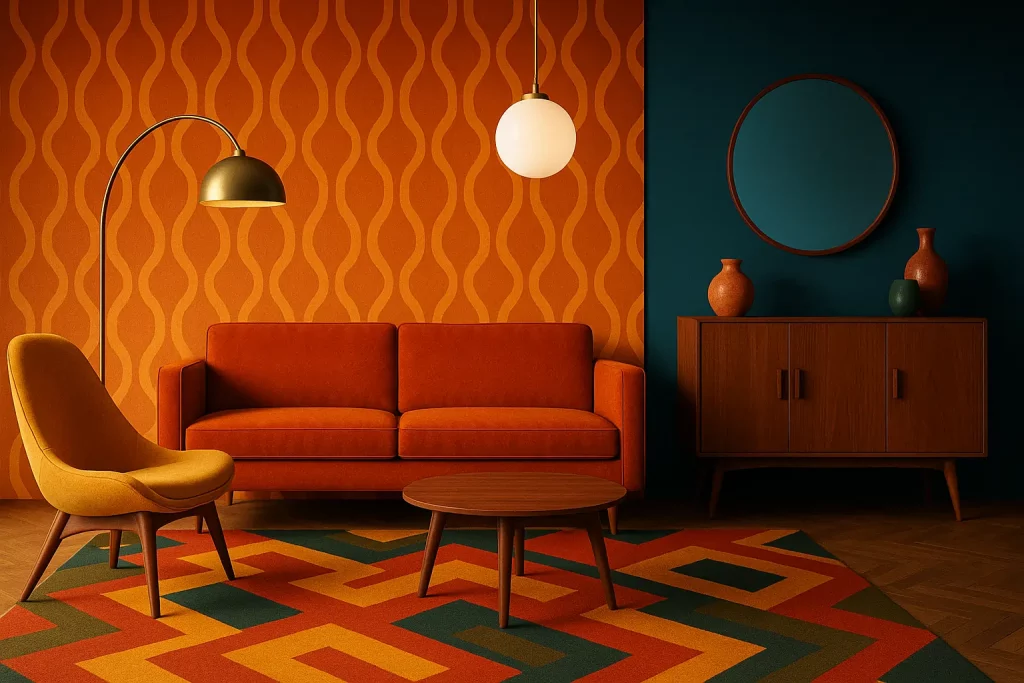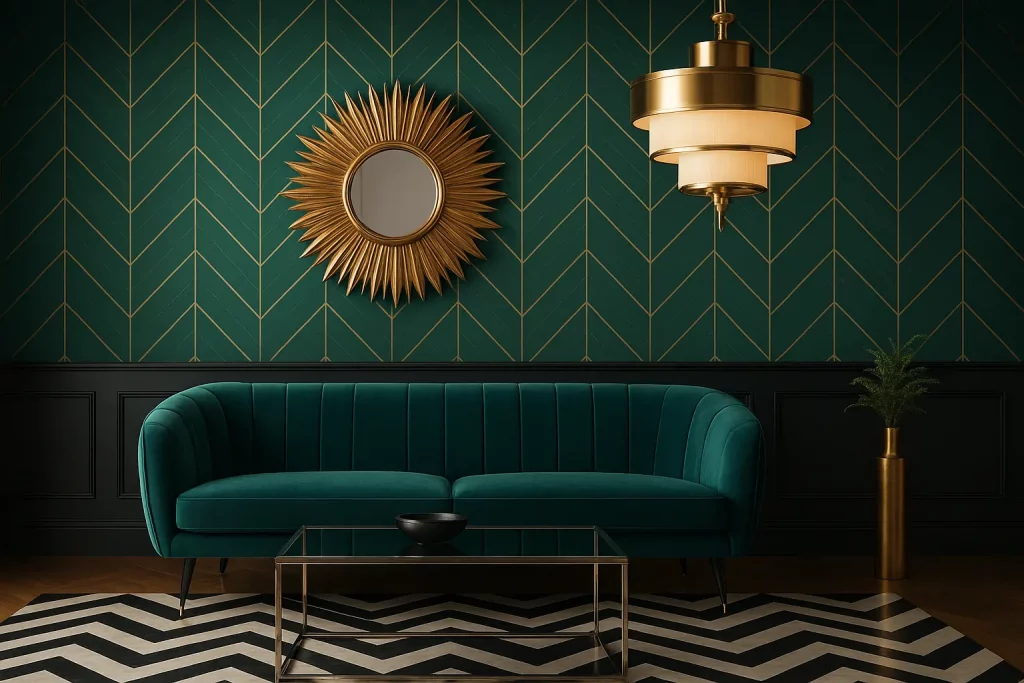


From the sleek curves of an Eames lounge chair to the clean geometric lines of a Saarinen Tulip table, mid-century modern interior design remains one of the most enduring and instantly recognisable styles in the world of interiors.
Emerging between 1945 and 1975, this movement redefined how people thought about their living spaces — blending function with form, and embracing a fresh optimism that came in the wake of the Second World War.
Today, the style continues to inspire architects, interior designers, and homeowners who are drawn to its characteristic clean lines, organic shapes, warm wood tones, and seamless connection between indoor and outdoor spaces.
If you have ever watched the television series Mad Men and admired the effortlessly sophisticated homes on screen, you have already encountered mid-century modern interior design at its finest.
In this guide, we will explore its history, signature features, and iconic furniture, while sharing practical styling tips on lighting and colors to help you master this timeless aesthetic.
💡Interesting Facts: Mid-century modern interior design draws its name from its era: the mid-twentieth century. The term was formally coined by author Cara Greenberg in her 1983 book Mid-Century Modern: Furniture of the 1950s (Random House), which brought renewed attention to this influential design period.

What Is Mid-Century Modern Interior Design?
Mid-century modern interior design refers to the functional, accessible, and innovative style that emerged in the mid-20th century. It is characterized by a minimalist approach that rejects unnecessary ornamentation in favor of functionality. The aesthetic blends organic and geometric shapes, creating spaces that feel uncluttered yet warm and inviting.
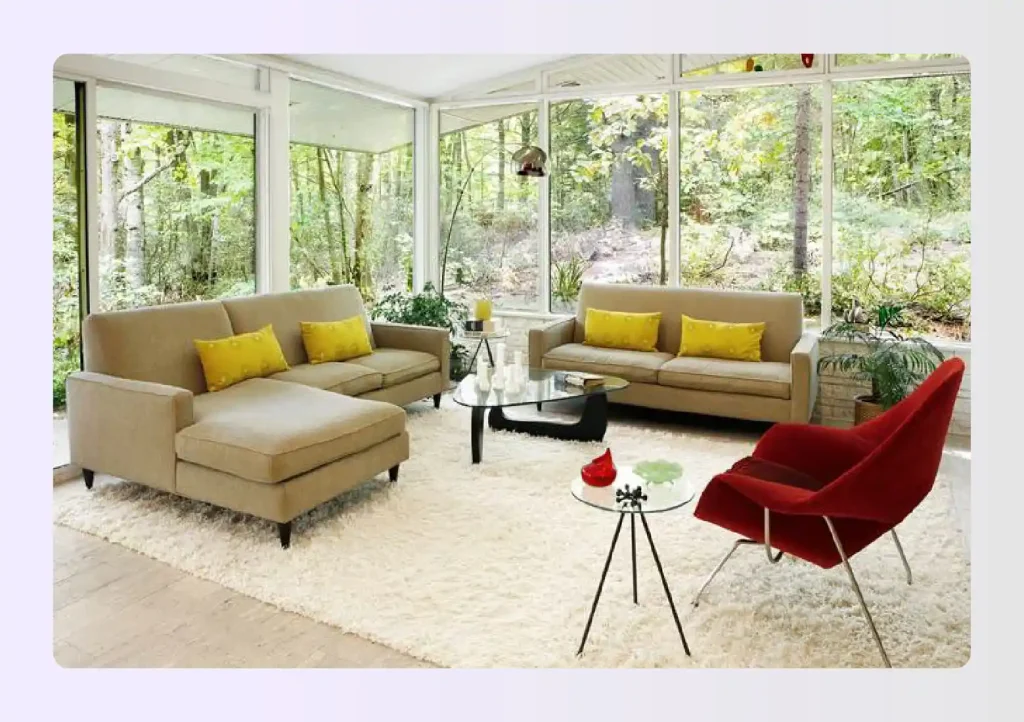
This style emphasizes a seamless connection between indoor and outdoor spaces, often utilizing sliding doors and large windows. Mid-century modern interior design champions the use of contrasting materials, pairing traditional wood with non-traditional materials like metal, glass, and vinyl to create a look that is sophisticated, democratic, and undeniably timeless.
What Is Mid-Century Modern Interior Design?
Mid-century modern interior design refers to the functional, accessible, and innovative style that emerged in the mid-20th century. It is characterized by a minimalist approach that rejects unnecessary ornamentation in favor of functionality. The aesthetic blends organic and geometric shapes, creating spaces that feel uncluttered yet warm and inviting.
This style emphasizes a seamless connection between indoor and outdoor spaces, often utilizing sliding doors and large windows. Mid-century modern interior design champions the use of contrasting materials, pairing traditional wood with non-traditional materials like metal, glass, and vinyl to create a look that is sophisticated, democratic, and undeniably timeless.
The Fascinating Origins of the Mid-Century Interior Design Movement
The roots of mid-century modern interior design can be traced back to the Bauhaus movement, which originated in Germany in the early twentieth century. The Bauhaus school championed the union of fine art and functional craftsmanship, insisting that good design should serve everyday life.
When the Nazi regime shut the school down in 1933, many of its most influential teachers and alumni emigrated to the United States, carrying their design philosophy with them. Once in America, these designers encountered a country experiencing a significant housing boom, particularly after the Second World War. Returning soldiers were settling into newly built suburban homes, and there was enormous demand for modern, affordable, and well-designed furnishings.
Industrial advances meant that new materials such as moulded plastics, fibreglass, plywood, and aluminium could be produced at scale, opening up a world of creative possibility for designers eager to push boundaries.
By the 1950s, mid-century modern interior design had become a cultural movement. It was characterised not only by furniture and architecture, but also by a broader lifestyle philosophy — one that embraced openness, the connection between indoor and outdoor spaces, and the idea that beauty and functionality were not mutually exclusive.
Paired with the International Style popularised in architecture, the movement found global resonance, influencing everything from private homes to commercial spaces. For a broader look at how historical design movements shape contemporary spaces, read our guide to vintage and retro interior design trends.
Signature Features of a Mid-Century Modern Home
What sets mid-century modern interior design apart from other styles is a consistent set of defining characteristics that remain as recognisable today as they were in the 1950s and ’60s. Whether you are outfitting an entire home or simply adding a few key pieces, these principles form the backbone of the aesthetic.
- Clean lines and minimal ornamentation: The defining visual language of mid-century modern design is the straight and purposeful line in furniture legs, window frames, and architectural details alike. There is no room for fussiness; every element earns its place.
- Organic shapes alongside geometric forms: While lines are clean, the style also embraces curves drawn from nature. Think kidney-shaped coffee tables, tulip chairs, and softly rounded sofas that balance angular structures with warmth and comfort.
- A seamless indoor-outdoor connection: Large windows, sliding glass doors, skylights, and open patios are hallmarks of mid-century modern interior design, blurring the boundary between interior living spaces and the natural world outside.
- Experimentation with materials: While warm wood, particularly teak, walnut, and rosewood, is central to the aesthetic, mid-century modern design also embraced new-age materials such as moulded plastic, fibreglass, plywood, vinyl, Lucite, and Flexiglass, many of which remain popular today.
- A curated clutter-free approach: Spaces in this style are intentional and uncluttered, with large statement furniture pieces taking centre stage over collections of small ornamental items. Vintage accents, plants, and organic forms add character without chaos.
- Bold use of colour and pattern: From warm neutrals and earthy tones to vibrant bursts of mustard yellow, burnt orange, and teal, colour in mid-century modern interior design is deliberate and expressive. Graphic shapes, saturated hues, and geometric patterns are used to energise rooms while remaining anchored by a neutral base.
- Marble and natural stone: Marble countertops, backsplashes, and coffee table surfaces feature prominently, lending a sense of timeless elegance and texture to the otherwise streamlined aesthetic.
- Statement lighting: Pendant lights, architectural floor lamps, and sculptural table lamps serve as design objects in their own right, contributing to the ambience of the space as much as to its illumination.
What sets the mid-century modern interior design style distinctly apart from its predecessors is the use of unconventional, mass-produced materials, which made it far more accessible.
Tips to Build a Mid-Century Modern Styled Home
Creating a cohesive mid-century modern interior design scheme requires balancing vintage charm with modern liveability. Start by identifying the specific mood you want—be it the sleek sophistication of the late 50s or the playful colors of the 60s.
Cost
Authentic vintage furniture can be prohibitively expensive, making a full renovation daunting. However, you don’t need to break the bank to achieve mid-century modern interior design. Many contemporary brands release high-quality replicas of iconic pieces that fit standard budgets. Prioritize investing in one or two high-quality items, like a sofa or armchair, and mix them with more affordable accessories to keep costs down.
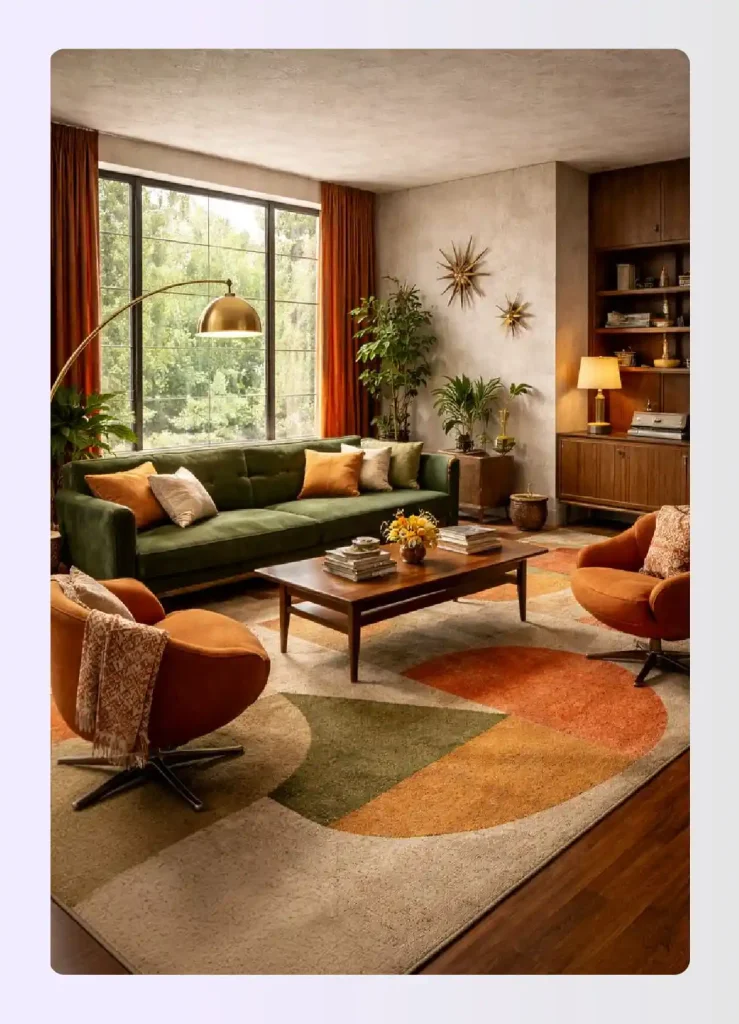
Focal Piece
In mid-century modern interior design, less is often more. Instead of filling a room with decor, select one stunning focal piece to anchor the space. This could be a vintage credenza, an Eames lounge chair, or a sculptural coffee table. Building the room around this single item ensures the space feels curated and intentional rather than chaotic or cluttered.
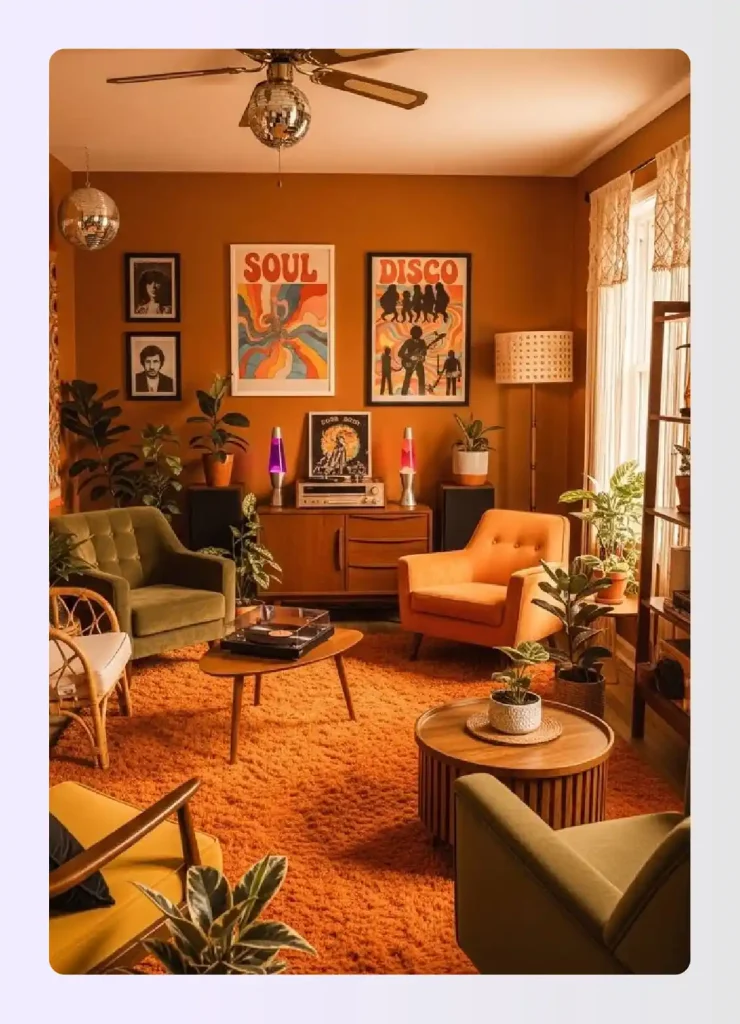
Lighting ideas
Lighting is a jewel in the crown of mid-century modern interior design. Avoid generic recessed lighting; instead, opt for sculptural fixtures that act as art. Look for pendant lights like the Sputnik chandelier, Arco floor lamps with sweeping curves, or bubble lamps. These fixtures not only provide illumination but also reinforce the futuristic, atomic-age aesthetic that defined the era.
Read also – Types of Lighting in Interior Design
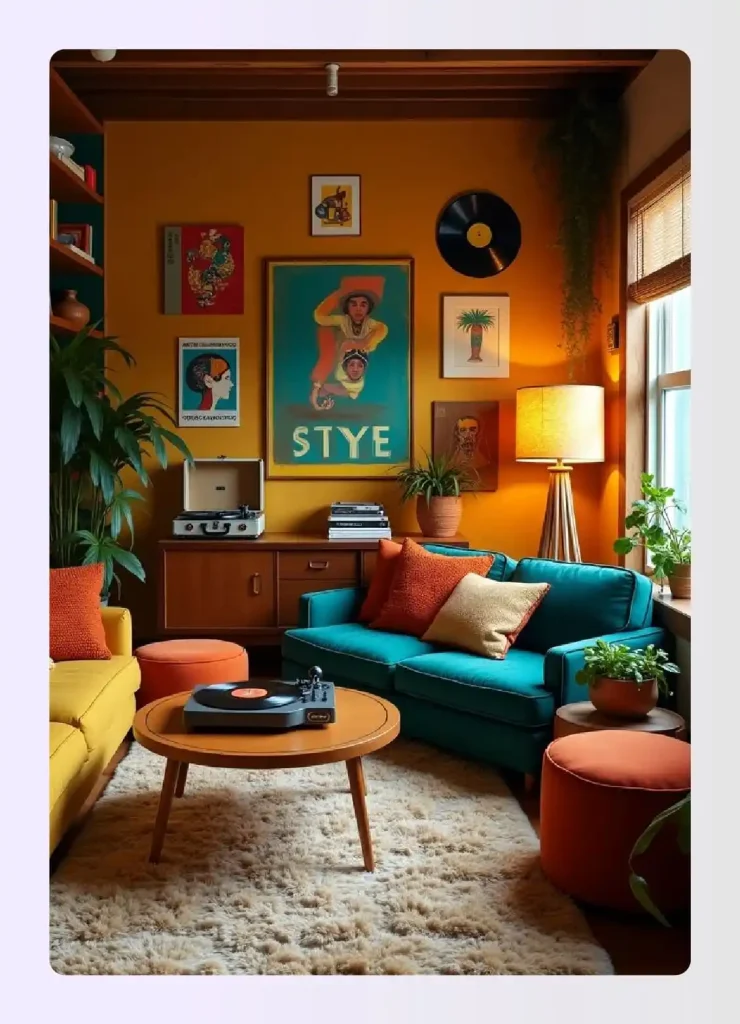
Play of Colours
While wood tones ground the style, mid-century modern interior design is famous for its playful use of color. Don’t be afraid to experiment with earthy hues like olive green, burnt orange, and mustard yellow, or go bolder with teal and fire engine red. The trick is to use these colors on accent walls, rugs, or upholstery while keeping the shell of the room neutral and airy.
Read also – Psychology of Colors in Interior Design
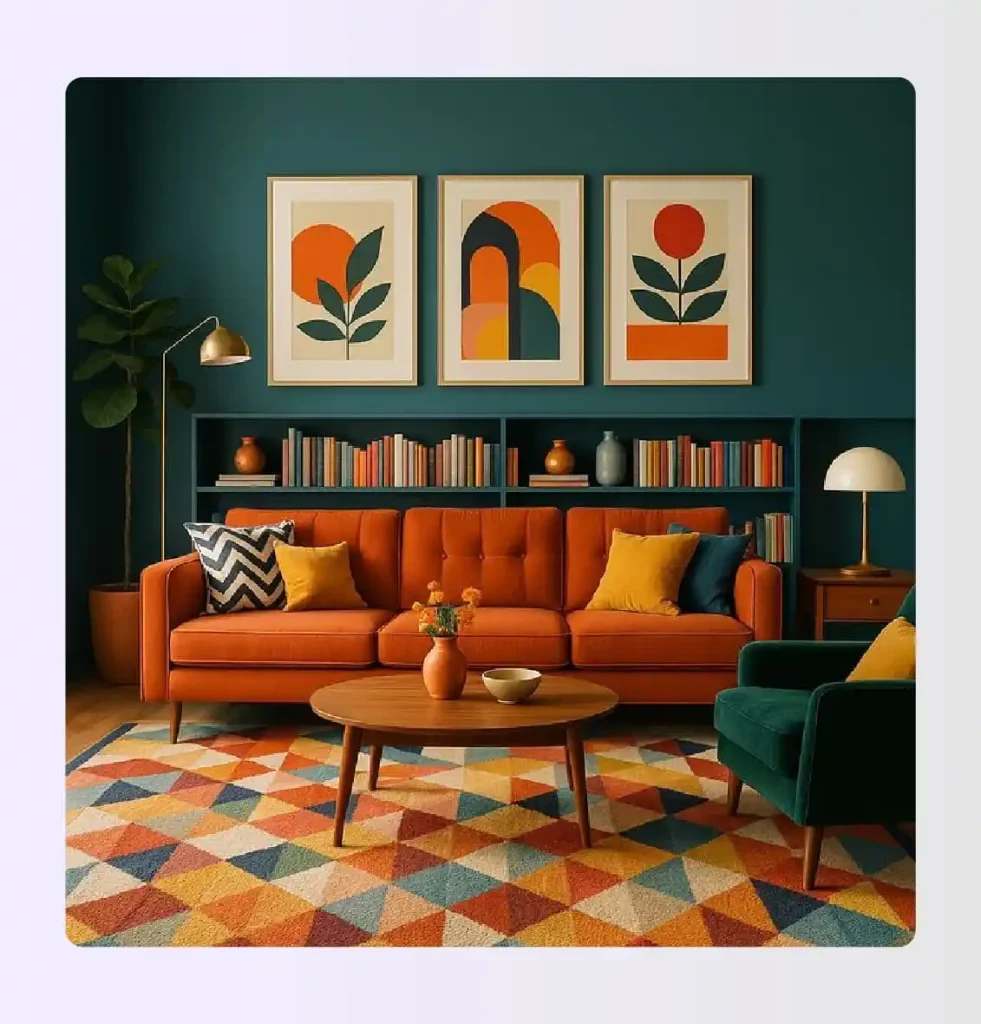

Top 5 Furniture Ideas for Your Mid-Century Modern Home
Mid-century modern interior design offers one of the most liberated and creatively satisfying approaches to furniture selection. The guiding philosophy is both simple and bold: choose pieces with purpose, let negative space breathe, and never be afraid to mix materials and forms. Here are the key principles to guide your furniture choices.
- Embrace eccentric shapes and abstract upholstery: The mid-century modern interior design movement celebrated sculptural, whimsical furniture forms. Kidney-shaped sofas, tulip chairs, shell chairs, and egg chairs are all fair game. Abstract geometric patterns and bold upholstery fabrics (graphic stripes, retro florals, and textured weaves) add visual interest without overwhelming the space.
- Keep it open and minimal: The signature of this style is generous negative space. Rather than filling every corner, allow rooms to breathe. A single statement seating arrangement or a sculptural corner table can anchor a room far more effectively than an overcrowded collection of smaller pieces. For tips on making the most of limited space, see our guide to space-saving furniture ideas for small homes.
- Wood is central, but not exclusive: Teak, walnut, and rosewood are the most iconic woods in mid-century modern interior design, prized for their warm grain and clean finishing. However, the style also enthusiastically incorporates moulded plastic, acrylic, and fibreglass — materials that were revolutionary in their time and remain visually striking today.
- Hairpin legs and low profiles: Hairpin legs on tables, sideboards, and sofas are a signature detail of mid-century modern interior design, lending furniture an elegant, elevated quality that keeps rooms feeling open and light. Low-profile seating, such as lounges, cocoon chairs, and shell seats, reinforces the relaxed, horizontal quality of the aesthetic.
- Mix, don’t match: Unlike more traditional decorating styles, mid-century modern interior design does not require furniture pieces to match one another. Mixing a teak sideboard with a Knoll marble dining table and a set of moulded plastic chairs is entirely in keeping with the eclectic spirit of the era. Add patterned cushions to sofas and lounge chairs for an extra layer of personality.
For a broader look at furniture design tools and inspiration, explore our guide to the best free furniture design software.
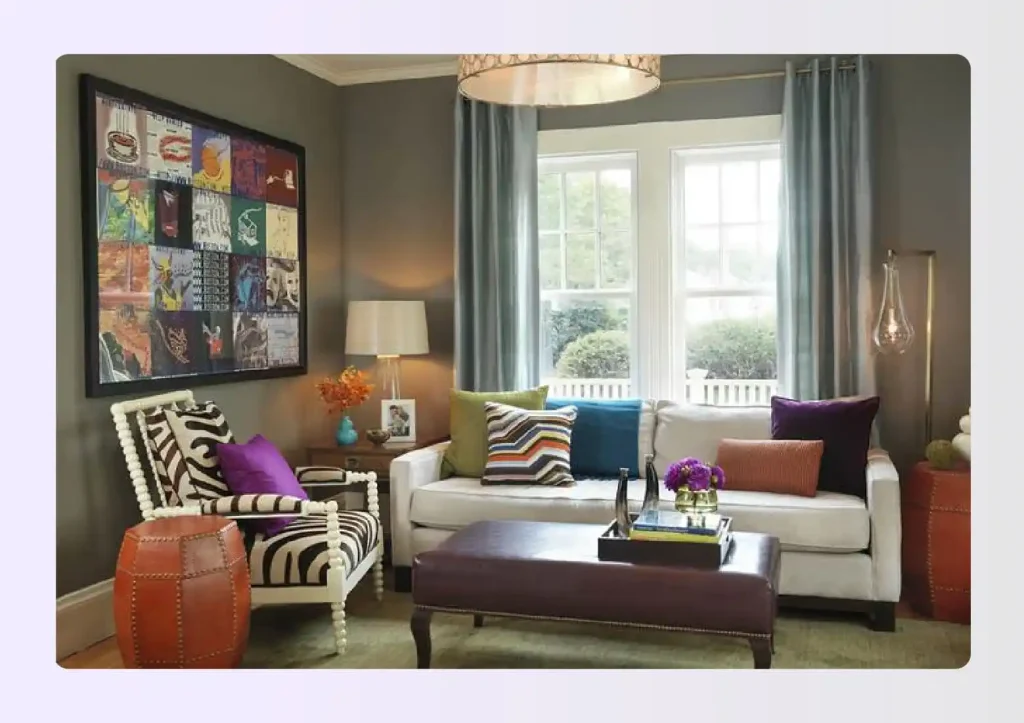
Iconic Mid-Century Modern Style Designers Who Defined the Era
No survey of mid-century modern interior design is complete without acknowledging the visionary designers whose work shaped and continues to shape the movement.
Charles and Ray Eames
Perhaps the most celebrated duo in the history of mid-century modern interior design, Charles and Ray Eames pushed the boundaries of material and manufacturing to create furniture that was simultaneously beautiful, comfortable, and affordable. Their partnership with Herman Miller produced some of the twentieth century’s most iconic pieces.
| Their Eames Lounge Chair (1956), constructed from moulded plywood and leather, remains a universally recognised symbol of mid-century modern design and is still in production today. |
Eero Saarinen
Finnish-American architect Eero Saarinen had a profound influence on both architectural and furniture design. His rejection of the ‘slum of legs’ led to the creation of the pedestal or Tulip Chair (1956) and matching Tulip Table — elegant, single-stem designs that anticipated the organic minimalism of later decades. Saarinen also designed the iconic TWA Flight Center at JFK Airport, a landmark of mid-century modern architecture.
| Saarinen’s Tulip Chair and Table, manufactured by Knoll, pioneered the concept of furniture as sculpture: form and function in perfect harmony. |
Isamu Noguchi
Japanese-American sculptor and designer Isamu Noguchi brought a fine-arts sensibility to mid-century modern interior design, most notably through his biomorphic Noguchi Coffee Table (1944). A freeform glass top supported by two interlocking wooden legs, it embodies the movement’s most poetic, organic, sculptural spirit.
| The Noguchi Coffee Table is one of the most replicated furniture pieces in design history, prized for its fluid organic form and timeless beauty. |
Florence Knoll
As the creative force behind the Knoll furniture company, Florence Knoll transformed mid-century modern interior design for corporate and residential spaces alike. Her rigorous, architectural approach focused on clean lines, precise proportions, and an unwavering commitment to quality helped define the look of the modern American office and living room throughout the 1950s and ’60s.
| Florence Knoll’s Planning Unit introduced a total design approach — furniture, textiles, and interiors conceived as a unified whole — that remains influential in commercial design. |
George Nelson
George Nelson served as design director at Herman Miller from 1945 to 1972, making him one of the most influential figures in American mid-century modern interior design. His designs ranged from the Marshmallow Sofa, a playful stack of circular cushions, to the iconic Bubble Lamp series, which brought organic, sculptural lighting into the domestic interior.
| Nelson’s Bubble Lamp (1947), a luminous globe of self-webbing polymer, is a defining lighting design of the mid-century era and remains in production by Herman Miller. |
Frank Lloyd Wright
Although his career began in the late nineteenth century, Frank Lloyd Wright’s Usonian houses and principles of organic architecture profoundly influenced mid-century modern interior design. His insistence on the seamless integration of architecture, interior design, and the natural landscape, most famously demonstrated in Fallingwater (1935), established principles of indoor-outdoor connection that remain central to the mid-century modern aesthetic.
| Wright’s concept of ‘organic architecture’ where buildings emerge naturally from their surroundings became a foundational principle of mid-century modern design philosophy. |
For a broader exploration of design movements and how they continue to shape interior design today, read our guide to art deco interior design style and see how contrasting eras can inspire your spaces.
Designing Your Dream Space with Foyr Neo
Bringing the timeless beauty of mid-century modern interior design to life requires both creative vision and precise planning. Foyr Neo gives designers and homeowners the tools to visualise, refine, and realise their mid-century modern interior design ideas with remarkable ease and accuracy, all from an intuitive platform.
Here are the key features that make our interior design software the ideal tool for your mid-century modern design project:
- Foyr Neo’s vast library of 50,000+ furniture assets includes authentic mid-century modern pieces, letting you experiment with iconic designs in your space before committing to a purchase.
- The platform’s real-time 3D visualisation engine allows you to instantly see how different furniture arrangements, colour palettes, and material choices transform a room’s entire look and feel.
- With photorealistic rendering capabilities, Foyr Neo produces high-quality images that capture the warm wood tones, organic shapes, and clean lines essential to mid-century modern interior design.
- Foyr Neo’s intuitive 2D-to-3D floor plan conversion makes it straightforward to plan open-concept layouts, a foundational element of authentic mid-century modern spatial design.
Whether you are an experienced interior designer or a homeowner embarking on your first renovation, Foyr Neo simplifies every stage of the design process from initial concept through to final client presentation.
Start your free 14-day trial of Foyr Neo today and discover how effortlessly you can design your perfect mid-century modern interior.
Frequently Asked Questions
Is mid-century modern going out of style in 2026?
No, the style is considered timeless due to its clean lines, gentle corners, and functionality. It is currently being majorly revived in the 21st century. The aesthetic design and variety of materials ensure it remains an enduring topic for contemporary designers rather than fading away.
What are the most common wood types in mid-century furniture?
Wood is the primary material of choice for this design style, valued for its simple and practical appeal. Designers frequently experimented with plywood during this era. While the text specifies wood generally, it notes that materials were used to create furniture with clean lines and organic shapes.
What time period is midcentury modern?
Mid-century modern interior design refers to the significant design movement that took hold between 1945 and 1975. It specifically encompasses the design style of the mid-1900s, stretching from the 40s to the 60s. The term itself was coined later, first appearing in the mid-1950s.
What are common mid-century modern layouts?
These layouts prioritize a seamless flow from the indoors to the outdoors, often utilizing sliding doors, patios, and skylights. The interiors are kept clutter-free and minimalist, focusing on large furniture pieces rather than small ornaments. Open spaces bordering on a central focal point are key to this style.
What colors define mid-century modern homes?
The palette ranges from monochrome and neutral shades to vibrant, saturated bursts of color. Common choices include moody hues like orange and rust for living rooms , or playful colors like sunny yellow, turquoise, and gold. Designers often use contrasting materials to lend impact.
Who are the famous mid-century modern interior designers?
Prominent designers who defined this era include Ray and Charles Eames, Frank Lloyd Wright, Eero Saarinen, and Isamu Noguchi. Companies like Herman Miller, associated with stalwarts like George Nelson, also played a massive role in popularizing the modern furniture movement during this period.
What’s the difference between midcentury modern design and art deco?
Mid-century modern focuses on functionality, organic shapes, and minimalism with little ornamentation. In contrast, Art Deco is characterized by glamour, luxury, geometric patterns, and rich materials. While MCM embraces simplicity and connection to nature, Art Deco emphasizes opulence and stylized, decorative elements that preceded the mid-century era.
What styles go well with mid-century modern?
The style’s versatility allows it to blend with various aesthetics. The source notes that vibrant hues can infuse a bohemian or boho effect. Additionally, its roots in the Bauhaus and International Style make it compatible with minimalist and contemporary designs that share its focus on clean lines and function.